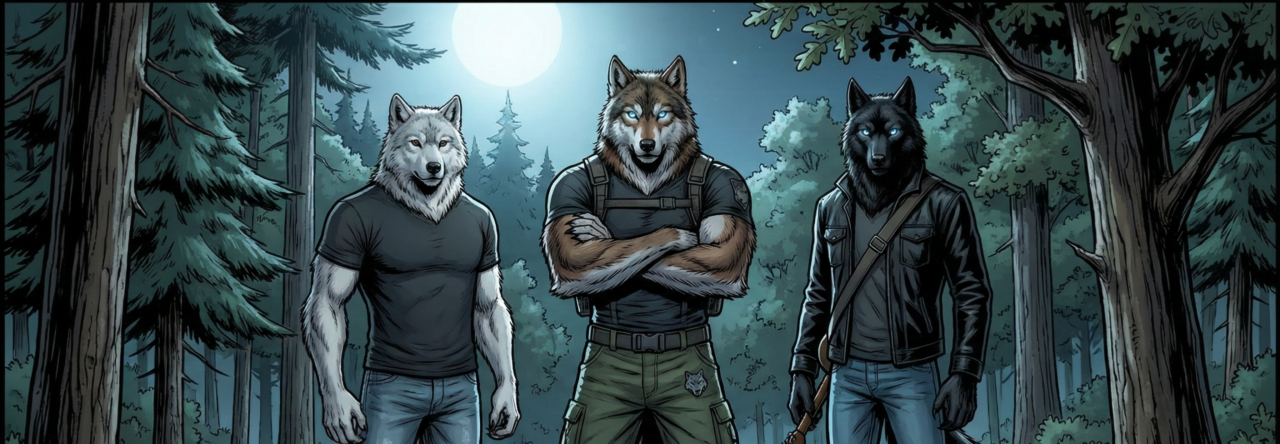
The first morning in Libby hit different.
Mia woke to warmth.
For a long, drifting second, she didn’t know where she was. There was weight on top of her—blankets, thick and soft and heavier than anything she’d had since the world fell apart. The air smelled faintly of soap and old wood instead of mold and rust. Her back didn’t hurt.
She opened her eyes to a dim, golden light spilling through a curtain. The room was small but clean: two beds, a solid wooden dresser, a small table with a glass of water on it, and a radiator ticking quietly under the window like a friendly heartbeat.
Beside her, in the other bed, Lucas snored lightly, one arm sprawled over his face.
For a moment, Mia just lay there and listened. The silence was different than the bunker silence. That had been heavy, suffocating, as if the world outside were holding its breath before swallowing them.
Here, she could hear things.
Faint footsteps in the hallway. Someone laughing downstairs. A door closing somewhere far off. A low, constant hum in the walls.
Power, she realized. That quiet thrum they’d heard on the road in, now all around them.
The world didn’t end here.
She sat up slowly. No vertigo. Her hands weren’t shaking as badly. The hollowness in her chest remained, but there was something softer around its edges now. A cushion of warmth, of possibility.
There was a gentle knock at the door.
“Mia? Lucas?” a woman’s voice called. “You two awake in there?”
Mia hesitated, then cleared her throat. “Yeah,” she said. “One of us is, anyway.”
The door opened, and Mrs. Renner stepped in with a smile that looked like it had been practiced over many tired years and never quite worn out. She carried a folded pile of clothes over one arm.
“Good morning,” she said. “I’m Mrs. Renner. We met last night, very briefly. I’m the schoolteacher. Also part-time grandmother to every stray child who wanders through town.”
Lucas groaned from the other bed. “I’m not a child,” he mumbled into his arm.
“Good,” Mrs. Renner said mildly. “Then I expect you to help me with the little ones later.”
He peeked at her from beneath his elbow. She handed him a small smile and turned to Mia, setting the clothes on the end of her bed.
“We raided the donation closet,” she said. “Should be close to your sizes. We’ll find you better once you’re fully settled.”
Mia reached out and ran her fingers over the fabric. Soft, clean, smelling faintly of detergent. “Thank you,” she said quietly.
“Breakfast is in the lobby,” Mrs. Renner went on. “Stew, bread, real coffee if your stomach can handle it. After that, Marta wants to see you at Town Hall. Just a quick orientation. Then we’ll talk school.”
“School,” Lucas echoed, incredulous.
“Yes,” Mrs. Renner said. “School. Pencils, paper, books, the whole dangerous package.”
Mia blinked. “You really have school?”
Mrs. Renner’s eyes softened. “We do. We started again not long ago. It’s not like it was before, but… it’s here. And if you want it, it’s for you too.”
Mia swallowed. “I don’t know if we remember how to be normal.”
“Nobody here does,” Mrs. Renner said. “We just practice at it together.”
She reached into her pocket and placed two small objects on the table between the beds—short yellow pencils, freshly sharpened.
“Keep those,” she said. “They’re your tickets in.”
When she left them to dress, Mia stood for a long moment at the window. Outside, the street glistened with last night’s rain, but the sky was clearing, patches of blue breaking through the gray. A couple of people walked by—one carrying a crate, another pushing a wheelbarrow. A child skipped between them, hopping over puddles.
A shadow moved at the edge of her vision. She looked down.
A gray-and-tan wolf leaned casually against a lamppost across the street, arms folded, watching the hotel entrance. Varro. He glanced up, met her gaze, and nodded once in acknowledgment before returning his eyes to the door below, on guard even while standing still.
We’re safe, she realized. Or as close to it as the world allows now.
She nudged Lucas with her foot. “Come on,” she said softly. “We’ve got stew and pencils waiting.”
Downstairs, the hotel lobby buzzed with quiet morning energy. A pot of stew steamed on a table with bread laid out beside it. A woman from the diner poured coffee into mismatched mugs. A few other guests—traders passing through, a family from Kalispell—ate at scattered tables.
Darren sat near the window, leg stretched out on a chair, his bandages freshly changed. Hank stood beside him, broad-shouldered and gruff in a way that somehow still managed to look fatherly. They were in a low conversation that stopped as Mia and Lucas approached.
“You two sleep?” Darren asked.
“Like dead people,” Lucas said, then winced. “Uh. Sorry.”
Darren’s mouth quirked. “I get it.”
Hank inclined his head. “Doctor’s ready to see you when you’re done eating,” he said. “Clinic’s just next door. We’ll keep it quick.”
Lucas frowned. “We’re not sick.”
“Doesn’t matter,” Hank said. “You’ve been through hell. We’re not sending you into town life without making sure you won’t fall over halfway there.”
Mia studied him. “You’re the sheriff, right?”
“Something like that,” Hank said. “I keep the peace so the wolves don’t have to do all the scary work.”
“Sometimes we help,” a familiar voice said from behind them.
Mia turned to see Rime sliding through the open door, fur still damp from the rain but eyes bright. He shook himself once, carefully away from the food, then trotted over.
“You woke,” he said, pleased. “Good. Today we show you town.”
“We?” Lucas echoed.
“Me,” Rime said. “Maybe others. But I best guide.” He sat back on his haunches with a proud flick of his tail. “Know every street. Every smell.”
Hank snorted. “He’s not wrong.”
They ate. Stew so thick it nearly held the spoon upright, bread that was a little too dense but tasted like heaven after months of ration crackers. Mia caught Rime watching them, eyes soft, as if the simple act of eating well brought him as much satisfaction as their actual rescue.
When they finished, Hank escorted Darren out toward the clinic. Rime waited by the door for Mia and Lucas, then walked with them out into the street.
The town looked different in daylight.
Mia had only seen it through exhaustion and rain the day before, shapes and smells and sounds blurring. Now, with a full stomach and a clearer mind, she took it all in.
Buildings patched and repurposed. Power lines humming quietly overhead. People moving with purpose but without the frantic edge she’d grown used to. Smoke curled from chimneys. Somewhere close by, a hammer struck metal in steady rhythm.
Rime matched his pace to theirs, close enough that his fur brushed their shoulders now and then.
“What do you do here?” Mia asked. “I mean—the wolves. What’s your… job?”
Rime tilted his head. “Many things,” he said. “Patrol. Carry. Guard. Hunt. Help build. Make sure humans do not walk off cliffs while staring at sky.”
Lucas snorted. “That’s… fair.”
“Today,” Rime continued, “I show you school. Maybe radio. Maybe cabin if Thane say yes.” He glanced sideways at them. “But we start with school. Marta say is important.”
“Marta’s the mayor?” Mia asked.
“Yes,” Rime said. “She boss of town. Thane boss of pack. They talk. A lot.”
They passed by KTNY’s modest building, the painted sign out front still bearing its pre-Fall logo. Through the window, Mia glimpsed Gabriel and Mark inside, both bent over what looked like a tangle of cables and knobs. Gabriel noticed them, lifted a hand, and flashed a quick grin.
“Is that the radio station?” Lucas asked.
“Yes,” Rime said. “Music, news, Thane talking too serious sometimes.”
“It kept us alive,” Mia murmured. “We thought it was recordings. Old stuff.”
“Sometimes is,” Rime admitted. “AudioVault.” He said the word carefully, like something he’d bitten his tongue on once. “Sometimes is live. Friday nights we talk to valley.”
“We?” Lucas asked.
“Whole pack,” Rime said. “Humans too. ‘House Party.’ Loud. Good. You will hear.”
“Will we… ever get to be on it?” Mia asked, half joking, half not.
“Maybe,” Rime said. “Gabriel like interviews. Mark say ‘human stories matter.’” He mimicked Mark’s calmer cadence surprisingly well. “You have story.”
They continued on to the schoolhouse—a sturdy, repainted building that looked small from the outside but radiated energy from within. Children’s voices floated out, laughing and arguing and reciting something in unison.
Rime’s posture shifted as they approached—taller, more formal, almost proud.
“Here,” he said. “Place of learning.”
Mia looked up at the sign over the door. Someone had carved it by hand: LIBBY SCHOOLHOUSE. Beneath it hung a banner painted with a wolf’s paw and a human hand under a rising sun.
“The valley’s new flag,” Rime said. “Varro made design. Town kids painted.”
“You designed that?” Mia asked, surprised.
Varro appeared at the side of the building as if summoned by his name, a map tube slung over one shoulder. “Was group idea,” he said. “I just draw good.”
He nodded to Mia and Lucas. “First day,” he said. “Big one. Scary. Good scary.”
“Are you… in school?” Lucas asked.
Varro smiled faintly. “No. I teach sometimes. Patrol routes. Reading maps. Not much letters.” His gaze softened. “You two get more letters. World need that.”
Inside, the schoolhouse buzzed. Desks mismatched, chairs slightly wobbly, walls lined with old posters scavenged from somewhere and hand-drawn charts made recently. Mrs. Renner stood at the front, writing the date on the chalkboard:
Day 14 – Year 3 After the Fall
She turned as they entered, wiping chalk dust from her fingers. The chatter dipped, curiosity leaning forward on thirty small faces.
“Everyone,” she said, voice steady and warm, “we have new students joining us today.”
Mia tensed. Lucas shifted closer to Rime instinctively. The wolf gave a small, reassuring huff.
“This is Mia,” Mrs. Renner said. “And this is Lucas. They came from very far north with the help of the pack.”
A murmur rippled through the room—awed, whispering.
“Were there raiders?” one boy blurted.
“Did you see the dam?” a girl asked right after.
“Did you meet Tarrik?” another voice added, wide-eyed.
“Yes,” Mia said, overwhelmed but honest. “We met Tarrik. And the others.”
Rime’s tail flicked. “We pulled sled,” he said. “I carried Lucas. He not heavy.”
Several kids snickered. Lucas flushed but smiled.
Mrs. Renner clapped her hands once, and the room quieted. “You’ll hear their story in pieces,” she said. “And they’ll hear yours. For now, Mia and Lucas are going to sit, breathe, and remember what it’s like to be students.”
She gestured to two empty desks near the middle. As they moved to take their seats, Mia noticed a girl at the next desk over slide a folded paper onto Mia’s tabletop.
Welcome, it read, in uneven pencil letters. There was a crude drawing of a wolf and a human holding hands, both smiling.
Mia’s throat tightened unexpectedly.
The morning lessons were basic but felt monumental: math on the board, reading from salvaged books, history recounted in Mrs. Renner’s quiet, steady voice. The pre-Fall years were spoken of like stories from another age; the Fall itself in simple, unsparing terms; the After as something they were still writing together.
At one point, a hand went up in the back row.
“Yes, Daniel?” Mrs. Renner said.
“Why did some people die from RKV-23 and some didn’t?” he asked. “My mom says it was just luck. But that doesn’t sound like science.”
Mrs. Renner paused, chalk held between her fingers. The room waited.
“We don’t know yet,” she said. “A lot of researchers died. A lot of data was lost. There are theories, but not enough proof.” She set the chalk down. “What we know now is this: some survived. You. Me. These wolves outside. And we’re responsible for using the time we were given.”
Another hand went up. “Did the virus make the wolves?” a little girl asked. “Like… did it turn people into them?”
Mia felt her stomach clench. She glanced out the window automatically.
Thane stood near the fence, talking quietly with Hank and Marta. His fur caught the light, brown-gray and steady. Beside him, Kade listened, arms folded. Varro leaned against the wall inside the play yard. Rime sat near the steps, nose on his knees, eyes half-lidded but alert.
Mrs. Renner followed her glance, then looked back at the class. “No,” she said. “The wolves were here before the virus.”
“How long before?” the girl pressed.
“Long enough that there are stories,” Mrs. Renner said. “Old tales that sound like myths. We just never listened to them as history.” She let that sit. “We’ll learn more when we can. For now, it’s enough to know they aren’t a side effect. They’re neighbors.”
Mia felt something in her chest ease.
At recess, the yard exploded into motion. Children ran, shouted, invented games with a ball so patched it barely held together. Rime took up his self-appointed post near the entrance, tail wagging slowly as kids approached to show him drawings, questions, or just to lean against his side.
Lucas was halfway through a game of tag he hadn’t meant to join when a voice spoke beside Mia.
“Busy?”
She turned to see Thane, one shoulder braced lightly against the fence, watching the chaos. His presence settled the space without dimming it.
“A little,” Mia said. “In a good way.”
“Good,” Thane said. “You holding up?”
She nodded, then hesitated. “Can I ask you something?”
“Sure.”
She looked down at his feet, at the way his claws idly scored faint lines in the dirt, then up at his face. “Did the virus… did it have anything to do with what you are?” she asked. “With you being…”
“Wolves,” he supplied.
“Yeah.”
He was quiet for a moment, eyes on the yard. A kid tripped; Rime caught them gently with one paw and set them back on their feet. Varro intervened in a minor argument over whose turn it was with a few short, firm words that settled it faster than shouting ever could.
“No,” Thane said at last. “We were here before RKV-23. Long before. Just… quieter. Rarer. The world was full back then. People, cities, noise. Easier to stay hidden.”
Mia frowned. “So why now?”
“Because the world changed,” Thane said. “Too many people died. Too many spaces opened. The old ways came back whether anyone wanted them or not.” He glanced at her. “We didn’t choose RKV-23. But we chose what to do afterward.”
“So all those scientists,” Mia said slowly, “trying to figure out what went wrong… they never even knew about you?”
“Some did,” Thane said. “In whispers. Rumors. Files. That’s what Mark thinks, anyway.” His gaze shifted toward town, where the faint outline of Glacier Bank and the government buildings rose against the sky. “Now that we have power again, he wants to find any data we can. Old servers. Research. Might be answers in there.”
“Do you want answers?” Mia asked.
Thane considered that. “I want the valley safe. If answers help, yes.” A corner of his mouth twitched. “If they just make everything more complicated, I’ll let Mark enjoy them.”
She smiled despite herself. “Feels weird that the world had all this science and still lost.”
“It did a lot before it fell,” Thane said. “It’ll do more if we let it. Doesn’t erase what we are.” He tapped his chest lightly. “Or what you are.”
A whistle blew—Mrs. Renner’s call to line up. Kids groaned and shuffled back toward the door. Lucas jogged past, cheeks flushed, eyes bright in a way Mia hadn’t seen since before everything went wrong.
“You’re staying for the House Party on Friday,” Thane said, half statement, half question.
“What’s that, exactly?” Mia asked.
“Radio show,” Thane said. “Music, talking, stories from around the valley. First one since bringing you down. Feels right to have you hear it in town instead of on a broken receiver in a bunker.”
Mia nodded. “We’ll be there.”
“Good,” Thane said. “Town needs to see who they’re sharing this place with.”
As the week unfolded, life in Libby wove the new arrivals into its pattern.
Darren spent time at the clinic, his leg properly examined and braced. Libby’s doctor — an older man with a calm, methodical way about him and hands that looked like they’d reset a thousand joints before the Fall — explained the healing process with crisp efficiency.
“You’ll walk without the brace eventually,” he said, tightening one final strap. “But you’re not climbing anything steeper than the town stairs for a while. Clear?”
“Very,” Darren said. “I’ve had enough slopes for a lifetime.”
Hank checked in daily, not hovering but never far. When Darren confessed, haltingly, that he’d worked in a small hospital before the Fall, Hank nodded slowly.
“So you know what it looked like when it started,” Hank said.
Darren’s gaze drifted somewhere far away. “Yeah,” he said softly. “We saw the first waves. No pattern we could follow. Young, old, strong, sick. Didn’t matter. Some got a fever and never woke up. Some never got sick at all. Some carried it and never knew until someone next to them dropped.”
“Someone like you,” Hank said.
“Maybe,” Darren said. “Or maybe I got lucky. Hard to call it luck with what came after.”
Hank shifted his weight. “Doc’s been collecting stories like that,” he said. “Trying to piece together what we can. If you’re willing, he’d like to write down what you remember.”
Darren’s fingers tightened on the edge of the bed. “If it helps someone, yeah,” he said. “I’ll talk.”
Mia and Lucas spent their days at the schoolhouse, learning and relearning the rhythms of sitting still, of listening, of arguing with other kids about things that didn’t involve survival.
In the afternoons, Rime often waited outside the doors to walk them back to the hotel or to the square. Sometimes Varro joined, carrying updated patrol maps that he’d spread out on a bench while the kids asked questions about the lines and circles.
“This ring?” Lucas asked one day, pointing. “What’s that?”
“Quiet Circle,” Varro said. “Route we walk around town. Keeps valley safe. You were on edge of it when we found your smoke.”
“So you watch all this every day?” Mia asked.
“Not all at once,” Varro said. “We share. But yes. Many eyes. Many claws. Hard for trouble to sneak in.”
“Did the wolves ever think about just… staying hidden?” Mia asked. “Not getting involved?”
Rime snorted. “Try tell Thane to stay hidden,” he said. “See what happen.”
Varro smiled faintly. “World changed,” he said. “We could hide. Let humans fight and fall. Or we could stand next to them and try something new.” He looked at them steadily. “We chose stand.”
On the third evening, Tarrik knocked on the hotel door.
Mia opened it to find him standing awkwardly in the hall, too big for the narrow space, shoulders almost brushing the walls. His fur had dried hard in places from an earlier patrol in the rain. He held something in one hand.
“Can come in?” he asked.
“Yeah,” Mia said, stepping back. “Sure.”
He ducked inside, careful not to gouge the doorframe with his horns—that was what Lucas called them the first time; Mia had to explain they were just ears and head fur.
Lucas sat up on his bed, surprised. “Thought you went back to Eureka,” he said.
“Soon,” Tarrik said. He glanced around, then held out the object he carried.
It was the sled.
Or what was left of it—Varro had cut it down to a smaller section, sanded the edges, and smoothed the warped metal. The ropes were gone, but the surface was familiar.
“I thought we left that outside town,” Darren said from his chair, crutch leaning nearby.
“Varro keep piece,” Tarrik said. “He say… was important story. I agree.” He set it gently against the wall. “You can keep. Or burn. Your choice. Just… wanted you to see not all bad things from north were left behind.”
Mia ran her hand over the metal. It still carried faint scratches from rocks, grooves where Tarrik’s claws had dug in.
“You didn’t have to do that,” she said.
“Yes,” Tarrik said. “I did.” His gaze met hers, then Lucas’s, then Darren’s. “You saw me in old place,” he said. “Pulling sled. Not as monster. As… pack.” He took a breath. “I want you remember that more than stories you heard before.”
Lucas tilted his head. “We heard both now,” he said. “Makes you… complicated.”
Tarrik’s mouth quirked in the tiniest hint of a smile. “That fair,” he said.
Mia stepped closer. “Thank you,” she said. “For pulling it. For coming back north at all.”
“Was duty,” Tarrik said. “But also… choice.” He glanced toward the window, where the first stars were starting to appear. “I go home tomorrow. Eureka my den now. But valley one thing. You see me there someday, do not be afraid.”
“We won’t,” Mia said.
Friday came.
By then, Mia and Lucas had fallen into a rhythm that felt dangerously close to a life. Breakfast downstairs. School. Afternoons at the square, watching people barter, laughing at Holt’s attempts to sell bread without eating half of it himself. Evenings with Darren, sharing memories in pieces they could stand.
That night, as dusk settled and lights flickered on across town, KTNY’s windows glowed brighter than usual. The door stood open to let in the evening air. People drifted in and out—pack members, townsfolk, even a couple of visitors from Spokane who’d timed their trip to catch the House Party live.
Mia and Lucas stood just inside the station, pressed against the back wall, as Thane leaned toward the microphone.
His voice, when it came, rolled smooth and calm through the room—and out through the valley.
“Evening, Libby,” he said. “And Eureka, Thompson Falls, Kalispell, Spokane… everyone listening out there in the dark. This is Thane on KTNY, and tonight’s House Party is… a little different.”
He glanced through the glass at Mia and Lucas, then at Darren sitting in the corner, leg stretched out.
“Some of you have heard the news,” he continued. “Some of you saw us come through the gate a few days back. The first rescue since the Accord. We went north because we saw smoke on the horizon and decided not to ignore it.” He paused. “We found three people who thought they were alone in the world.”
The board lights flickered. Gabriel adjusted a level. Mark leaned against the doorway, listening.
“Turns out,” Thane said, “they were wrong. And that’s the first kind of mistake we’re happy to see in the valley.”
Soft laughter rippled through the studio.
He went on. “You’re going to meet them in the days ahead. At the school. At the diner. In the square. Give them time. They’re learning how to live again the same way we all did. With help.”
Mia felt a strange warmth creep up her face. Lucas nudged her with his elbow, grinning.
Thane’s tone shifted, just slightly. “We’re still figuring out why the world fell,” he said. “Why some of us caught that virus and never got back up, and why others are still here to ask the question. Why there are wolves walking in our streets now instead of hiding in the trees.” He tapped the mic gently; the sound carried soft and sure. “But tonight isn’t about answers. It’s about something simpler: proof.”
He looked through the glass again. At the wolves. At the humans. At the town that had refused to die.
“Proof that the valley is one thing,” he said. “That if you’re out there, scared and alone, and you think no one’s left… you’re wrong. We’re here. And we’re looking.”
He nodded to Gabriel, who queued up the first song—a bright, hopeful rock track that spilled warmth into the air as if someone had opened a door to summer.
Mia closed her eyes and listened.
The music washed over her, layered with the murmur of voices, the low rumble of wolves laughing at some quiet joke, the gentle scrape of Mark’s pen as he made notes on a pad about transmitter levels and battery life.
Somewhere in that mix, in the hum of wires and the beat of drums, she felt something settle inside her.
No answers yet.
But enough.
Enough for one week.
Enough to believe that the long road south had been worth every frozen, terrifying step.