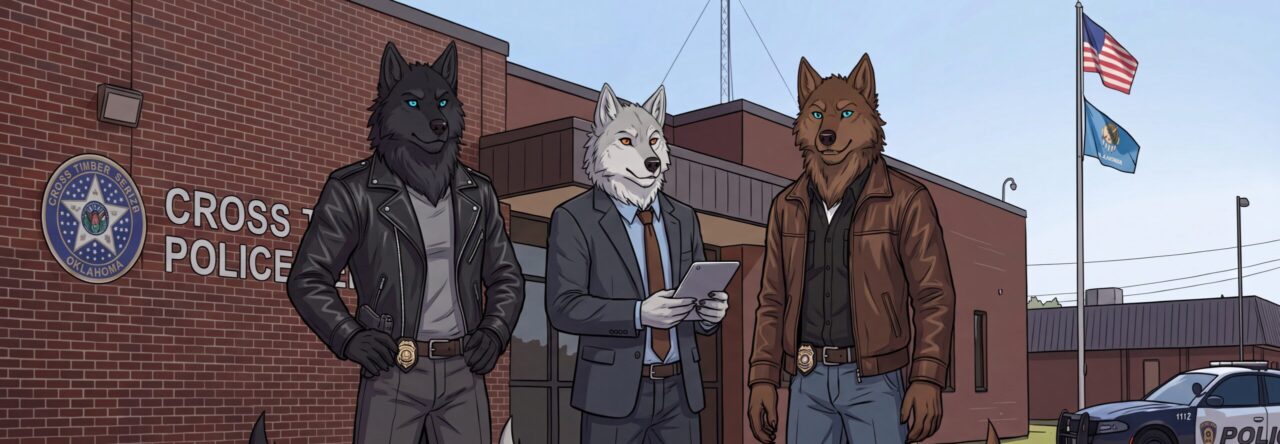
The first body was found in a bathroom.
That was how the case began for Night Shift.
Not with a chase.
Not with gunfire.
Not with someone calling dispatch and screaming for help while the thing was still happening.
Just a bathroom in a duplex off South Cedar, tile floor cold beneath a man who had stopped breathing hours before anyone knew to miss him.
His name was Bobby Crane.
Thirty-two.
Auto-body work when he could keep it. Meth when he could not. A mother in Shawnee who still answered unknown numbers because she had spent ten years afraid one of them would be this call.
Patrol found a small plastic bag near the sink.
Residue.
Pipe.
Burn marks.
Nothing new to anyone who had worked Oklahoma long enough.
Except the next body came six hours later.
Lori Meeks.
Twenty-seven.
Found in the bedroom of a house outside city limits but tied back to Cross Timber through the purchase. The county took the scene, but the text messages on her phone mentioned the same nickname patrol had heard in Bobby Crane’s duplex.
Then came the third.
Calvin Dorsey.
Forty-one.
Behind a closed tire shop in Edmond, folded between a dumpster and a cinderblock wall with one shoe missing and a phone still playing music from a cracked speaker.
Then the fourth.
Seventeen hours after the first.
Tasha Morrow.
Thirty-five.
A mother of two staying with a cousin on the west side, found on a laundry-room floor with a basket of wet clothes beside her and a baggie tucked into the pocket of a hoodie she had borrowed from someone else.
Four dead.
Same rough window.
Same street rumors.
Same product.
By five-thirty in the evening, the conference room at Cross Timber PD had stopped being a conference room and become a wall of names, maps, tox requests, evidence photos, text screenshots, phone numbers, and the kind of silence that made coffee taste worse.
Thane stood at the end of the table, arms folded, looking at the victim board.
Bobby.
Lori.
Calvin.
Tasha.
Four faces.
Four lives with damage in them, yes.
But still lives.
Still people who had been alive two days ago.
Gabriel sat sideways in a chair, one knee moving under the table, expression stripped of humor.
Mark stood near the screen with lab notes already organized into folders because Mark fought chaos by making it searchable.
Lieutenant Crowe entered with Deputy Chief Mercer behind her.
Mercer looked like he had skipped sleep, lunch, and patience.
Crowe looked worse.
That meant the case was bad.
“No speeches,” Crowe said.
Gabriel looked up.
“I was not planning one.”
“That is why I said it before you became inspired.”
Gabriel lowered his head slightly.
“Fair.”
Crowe turned to Mark.
“Prelim lab?”
Mark tapped the screen.
“Field tests confirmed methamphetamine residue at three scenes. Fourth pending, but paraphernalia and packaging are consistent. Medical examiner expedited tox on two decedents. Both show methamphetamine and fentanyl present. Fentanyl levels are significant enough that this is not incidental trace contamination.”
The room tightened.
Mercer looked at the board.
“Bad batch.”
“Yes,” Mark said. “But the phrase may understate intent. We do not yet know whether fentanyl was deliberately added, whether distribution materials were cross-contaminated, or whether someone is mixing without understanding lethality.”
Gabriel’s mouth flattened.
“They understand enough to sell it.”
Mark nodded.
“Correct.”
Crowe looked at Thane.
“Narcotics has been looped in. County and Edmond are sharing. State bureau notified. But all four victims connect back to Cross Timber street traffic in the last forty-eight hours. We have the best chance of tracing the local source before more people die.”
Thane kept his eyes on the faces.
“What do we have?”
“Nicknames. Half-names. One number that appears in two phones. One message thread referencing ‘clean glass’ that clearly was not clean. Rumor of a dealer called Kettle. Possibly because he cooks. Possibly because idiots enjoy nicknames.”
Mercer said, “We also have people scared enough to talk if they believe talking will keep them alive.”
Gabriel leaned forward.
“People are dying. That helps.”
“It helps until fear turns everyone stupid,” Crowe said.
Thane looked at Mark.
“Scent?”
Mark changed the display.
“Scene access will matter. Chain of custody will matter. We cannot treat scent as evidence by itself.”
“I know.”
“But,” Mark said, “all three secured packages available so far have a similar odor profile beyond meth residue. Fentanyl itself is not reliable as a scent marker at all concentrations, and we should not pretend otherwise. But the packaging has a distinct combination: cheap nitrile gloves, peppermint gum, diesel transfer, and a sour solvent trace I would associate with a handling location, not individual users.”
Gabriel looked at him.
“You smelled all of that from sealed bags?”
“I smelled it from the exterior evidence sleeves before they were double-bagged.”
Mercer closed his eyes.
“Of course you did.”
Thane looked at the map.
“Same handler?”
“Possibly same packing area,” Mark said. “Or same vehicle.”
Crowe said, “That is why you are on this. Scent gets us direction. Evidence gets us court.”
Thane nodded.
“Where first?”
Crowe pointed at the board.
“Bobby Crane’s duplex. Patrol held it after the initial sweep because the landlord has not re-entered. Then Tasha Morrow’s cousin’s house. We start where the product was closest to the victim and work backward.”
Mercer’s voice came lower.
“There may be more out there tonight.”
Thane looked at him.
“Yes.”
“No clinic-style heroics.”
Gabriel’s ears flicked.
“This is not that.”
Mercer looked at Thane.
Thane held his gaze.
“No. This is slower.”
“Slower still gets people killed.”
“Yes.”
Crowe opened the door.
“Then move.”
Bobby Crane’s duplex was small, hot, and tired.
The air conditioner rattled in one front window but did not win its argument with August. The living room smelled of old carpet, stale smoke, cheap beer, dirty laundry, and the sour-metal chemical smell of meth use layered into walls that would take repainting and prayer to clear.
There was also grief.
Not fresh from family.
Not yet.
But the absence of a person made its own shape.
Thane stood in the doorway for a second and let the scents settle.
Patrol had already processed the body. Evidence tech had photographed and collected the obvious items. The bathroom was still taped. The sink still held a ring of dried water. The mirror above it was cracked at one corner.
Gabriel moved slowly through the living room.
Mark reviewed the scene log.
“Bobby Crane was found by neighbor after missing a scheduled ride to work. Neighbor entered with prior permission, saw him on bathroom floor, called nine-one-one. EMS declared. Patrol secured. No signs of struggle.”
Thane moved to the bathroom.
The smell hit harder there.
Meth residue.
Burned glass.
Sweat.
Vomiting.
Panic.
Death.
And underneath it, the same sharp packaging note Mark had described.
Cheap gloves.
Peppermint gum.
Diesel.
Sour solvent.
Thane crouched by the sink but did not touch anything.
“Same.”
Gabriel came to the doorway.
“Strong?”
“Enough.”
Mark looked up.
“Location?”
“Sink. Counter. Bag was here.” Thane pointed without touching. “But scent trail goes out.”
Mark’s eyes sharpened.
“Out?”
Thane stood and followed it.
Not dramatic.
Not nose to floor.
The scent moved like a thread laid over filth.
Bathroom to hall.
Hall to living room.
Living room to front door.
Then outside.
Gabriel followed him onto the porch.
The duplex sat near the end of a short row. Gravel drive. Patchy grass. Neighbor curtains shifting where someone immediately pretended not to watch.
Thane stepped down from the porch and paused.
The scent was weaker outside but cleaner, carried under the lingering heat.
A person had stood near the front walk.
Young male.
Cigarettes.
Peppermint gum.
Gasoline or diesel.
Cheap laundry detergent.
Nervous sweat.
Not Bobby.
Not neighbor.
Not patrol.
Gabriel smelled it too.
“Delivery?”
“Maybe.”
Mark joined them.
“Doorbell camera?”
“No camera on Bobby’s unit,” Gabriel said, looking around. “Neighbor might.”
The neighbor had a camera.
The neighbor also had a cigarette, a tank top, and the guarded expression of someone who had already decided police presence lowered property values but murder lowered them more.
Her name was Deena Kroll.
She had seen someone two nights earlier.
“Maybe ten-thirty,” she said, standing behind her screen door. “Maybe later. I don’t keep police hours.”
Gabriel smiled faintly.
“Most people don’t.”
“Skinny guy. Hoodie. Ball cap. Came up to Bobby’s door. Didn’t stay long.”
“Vehicle?”
“White pickup. Old. Loud muffler. I thought Bobby was buying weed. I mind my business.”
Thane asked, “Camera catch it?”
Deena looked toward the porch camera like it had betrayed her.
“It catches cats mostly.”
Mark said, “We would like to review the footage.”
She hesitated.
Then looked past them at Bobby’s door.
“Was it bad stuff?”
Gabriel’s face softened.
“Yes.”
She nodded once.
“I’ll get my phone.”
The camera gave them six seconds.
Skinny male.
Gray hoodie.
Dark cap.
Face partly turned.
A white older-model Chevy pickup idling at the curb.
No plate visible.
The man walked to Bobby’s door with one hand in his pocket and something small in the other.
He knocked twice.
Bobby opened.
Exchange.
Door closed.
The man walked away chewing gum.
Mark froze the frame.
“Peppermint gum.”
Gabriel looked at him.
“You cannot see peppermint.”
“No. But he is chewing, and the scent indicates gum. The video supports behavior, not flavor.”
Gabriel stared.
“I hate when that makes sense.”
Deena sent the footage to Mark through proper evidence intake.
Before they left, she looked at Thane.
“Bobby wasn’t a bad guy.”
Thane looked toward the duplex.
“No.”
“He was a pain in the ass.”
Gabriel said, “Those can overlap.”
A corner of Deena’s mouth moved.
“He fixed my sink once. Didn’t charge me. Then stole my lighter.”
Thane nodded.
“Both things can be true.”
Deena looked down.
“I don’t want more people dying.”
“Neither do we.”
She closed the screen door softly.
Tasha Morrow’s cousin met them on the porch with red eyes and anger enough to stand upright.
Her name was Monique Harris, and she had no interest in soft language.
“She was using again,” Monique said before they could ask. “I know that. I am not stupid. But she was doing better. She was doing better, and now everybody is going to say she did it to herself.”
Thane stood at the bottom of the steps, letting her decide whether to let them closer.
Gabriel said, “We are not here to say that.”
Monique looked at him like she wanted to believe it but had been disappointed by systems before.
Mark said, “We are trying to identify who sold the product that killed her.”
That helped.
Specificity often did.
Monique let them in.
The laundry room was small and narrow. The washer lid remained open. A basket of wet clothes sat exactly where Tasha had left it, because Monique had not been able to touch it and no one had made her.
Thane respected that.
He stood near the doorway and smelled the air.
Detergent.
Wet cotton.
Bleach.
Fear.
Grief.
Meth residue from the hoodie pocket where the bag had been found.
And there it was again.
Cheap gloves.
Peppermint gum.
Diesel.
Sour solvent.
Same thread.
Thane looked at Gabriel.
Gabriel nodded.
Mark asked Monique, “Did Tasha mention where she bought it?”
Monique folded her arms.
“She said she had a guy who was cheaper than the old guy.”
“Name?”
“She said nobody uses names if they’re smart.”
Gabriel looked around the laundry room.
“Did she say nickname?”
Monique’s mouth tightened.
“Kettle.”
Mark’s eyes lifted.
Crowe’s note had been right.
Thane asked, “Did she meet him here?”
“No. She went out. Came back with it.”
“When?”
“Friday night. Maybe midnight.”
“Vehicle?”
Monique shook her head.
“She walked to the corner and got picked up. I told her not to. She told me to stop acting like her parole officer.”
She looked toward the wet laundry.
“I should have acted more like one.”
Gabriel said quietly, “You did not sell it to her.”
Monique’s eyes flashed.
“No. I just let her walk out.”
“You could have locked her in the house and she still would have had addiction on the other side of the door.”
Monique looked at him.
Gabriel’s face held no joke.
“I am sorry.”
Monique looked away first.
Mark asked about Tasha’s phone.
Patrol had bagged it.
Mark already had the extraction request started.
While they talked, Thane stepped outside and followed the street to the corner where Monique said Tasha had been picked up.
It was a normal corner.
Stop sign.
Cracked curb.
Grass overgrown along a fence.
A beer can crushed near the gutter.
And faintly, beneath exhaust and street heat, the same white pickup scent.
Diesel.
Peppermint.
A man leaning out the passenger window.
Tasha approaching.
Fear? No.
Want.
Need.
Something like hope, ruined by chemistry.
Thane stood in the street and felt the cold anger return.
Gabriel came up beside him.
“Same guy?”
“Same vehicle at least.”
Mark joined them, tablet in hand.
“Tasha had one recent deleted thread partially recoverable. Number not in contacts. Message: ‘corner after eleven. bring cash. clean glass.’ Sender used a burner. The same tower sector as Bobby’s incoming call within an hour of his purchase.”
Gabriel looked toward the corner.
“Kettle.”
“Maybe,” Mark said. “Or a runner for Kettle.”
Thane looked down the street.
“Find the truck.”
They found the truck through Calvin Dorsey’s phone.
Not directly.
Nothing was direct in cases like this.
Calvin had not texted Kettle.
He had texted a woman named April T. and asked whether “the new stuff” was still around. April had replied with a location pin behind the tire shop and one word:
Soon.
April T. became April Timmons.
Thirty-one.
Bartender sometimes.
House cleaner sometimes.
Known to patrol because patrol knew everyone who orbited certain problems long enough.
No felony convictions.
No active warrants.
Address in Cross Timber.
Car registered to her mother.
Boyfriend: none listed.
Associates: many.
One of them was Rhett “Kettle” Ketterman.
That should have been satisfying.
It was not.
Rhett Ketterman did not look like the center of anything.
His driver’s license photo showed a soft-faced man in his late thirties with thinning hair, pale eyes, and a mild expression. He had a job history full of ordinary local things. Appliance repair. Small engine work. Seasonal HVAC helper. Church food pantry volunteer twice a month, according to one old news article Mark found. One misdemeanor assault twelve years ago. One dismissed paraphernalia charge. Nothing that screamed four dead people.
Gabriel stared at the screen.
“That is Kettle?”
“Possibly,” Mark said.
“He looks like he sells used refrigerators with suspicious confidence.”
Thane looked closer.
Ketterman owned no white pickup.
But his cousin did.
A 2004 white Chevy Silverado registered to Mason Ketterman, who lived at an address outside Cross Timber and had no serious record beyond traffic.
Mark pulled DMV image.
White truck.
Old.
Loud muffler noted in a citation two months earlier.
Thane looked at the photo.
“There.”
Crowe approved the pickup alert.
Not a stop for vibes.
Not a stop because a werewolf smelled peppermint and death.
A stop based on witness description, video, proximity to overdose deaths, and the vehicle tied to a named suspect in recovered phone messages.
They got it at 9:42 p.m.
Officer Darnell spotted the white Chevy leaving the parking lot of a closed laundromat on the east side.
Two occupants.
Driver: Mason Ketterman.
Passenger: unknown male in gray hoodie.
Night Shift was six blocks away.
Darnell initiated the stop carefully. Mark listened to the radio traffic while Thane turned the Humvee.
“Plate matches. Vehicle slow to stop. Driver looking back. Passenger moving.”
Gabriel’s voice went flat.
“Gun.”
“Maybe.”
Darnell’s voice came over radio, controlled.
“Vehicle stopped. East alley behind Washland. Occupants not complying yet.”
Thane arrived thirty seconds later.
The white Chevy sat crooked near a chain-link fence under a flickering security light. Darnell’s unit was behind it. Another patrol car rolled in from the opposite end.
Darnell stood behind his door, weapon out.
“Driver! Hands out the window!”
The driver had both hands visible.
The passenger did not.
Thane stepped out of the Humvee.
Gabriel moved left.
Mark moved right, watching the driver, the alley, the truck, the windows.
Thane smelled it before he saw it.
Meth residue.
Cheap gloves.
Peppermint gum.
Diesel.
Sour solvent.
And gun oil.
“Passenger,” Thane called. “Hands where we can see them.”
The passenger turned.
Skinny face.
Dark cap.
Gray hoodie.
Same jawline from the porch camera.
His eyes widened when he saw Thane.
Not enough.
His right hand came up with a pistol.
Darnell shouted.
The driver screamed.
The passenger fired twice.
The first round hit Thane in the upper chest.
The second struck lower, punching through shirt and flesh above the ribs.
Pain snapped hot and immediate.
Thane took one step back from impact.
Then forward.
The passenger stared.
The pistol remained up, but his face forgot what it was doing.
“That’s supposed to be bullshit.”
Thane kept walking.
Gabriel’s weapon was out but angled, no clean shot through glass without risk to the driver.
Mark moved on the driver’s side, ordering Mason out, controlling one problem before it became two.
The passenger fired again.
Missed high.
Glass shattered.
Thane reached the passenger door.
He ripped it open.
The hinges did not like that.
Too bad.
The passenger tried to swing the pistol toward him.
Thane caught the wrist, drove it up and away, and squeezed until the gun fell into the footwell.
The man screamed.
Thane pulled him out of the truck and put him face-down on the asphalt.
Not slammed.
Placed hard.
Controlled.
One paw between shoulder blades.
Blood ran down Thane’s shirt from wounds already closing.
“Hands behind your back.”
The passenger sputtered against the pavement.
“You ain’t supposed to—”
Gabriel cuffed him.
“You really need to stop believing marketing.”
Mark had Mason Ketterman on his knees on the other side of the truck, hands secured, eyes huge.
Darnell came up, breathing hard.
“You hit?”
Thane looked down.
Blood.
Holes.
No active wounds.
“Yes.”
Darnell stared.
Then remembered himself.
“EMS?”
“No.”
Mark said from the other side, “Medical documentation required.”
Thane sighed.
Gabriel looked at Darnell.
“He means yes, but with emotional resistance.”
The passenger twisted enough to look at Thane again.
Fear had replaced disbelief now.
“You’re really—”
Thane looked down at him.
“Quiet.”
The man went quiet.
Gabriel retrieved the pistol safely from the footwell.
Mark called out, “Driver secured. Visible plastic bags under center console. Cash in cup holder. Multiple phones. Strong odor consistent with narcotics packaging.”
Darnell looked at the truck.
Then at the blood on Thane’s shirt.
Then at the cuffed passenger.
“Who is he?”
Gabriel checked the wallet from the passenger’s pocket after proper search.
“Colby Ray Sutter.”
Mark looked up.
“Known associate of April Timmons.”
Gabriel smiled without humor.
“Thread tightening.”
The truck search waited for authorization and proper procedure. A K-9 unit was requested, partly for evidence protocol and partly because Mark was not going to write “werewolf smelled death truck” as the sole basis for searching anything.
But the plain-view items were enough to hold them.
Cash.
Burner phones.
Bags.
Pistol.
Spent casings.
Assault on an officer.
Colby Sutter kept looking at Thane’s shirt while patrol loaded him into a unit.
“That’s real,” he said once.
Gabriel leaned near the patrol car window.
“So are the charges.”
Colby Sutter talked after two hours.
Not because he was brave.
Because he was not.
He had shot a werewolf twice and watched the holes close.
Some people found religion after that.
Colby found cooperation.
His lawyer looked exhausted before the interview began.
Colby gave them Kettle.
Rhett Ketterman.
Then April Timmons.
Then Mason Ketterman.
Then four more names, none of which sounded like criminal empire and all of which sounded like people someone might wave to at a gas station.
Darren Polk, who owned a lawn-care trailer and moved product in fertilizer bins.
Sheila Brackett, who managed storage-unit rentals and looked the other way for cash.
Benji Arnett, who ran delivery between Cross Timber and Shawnee twice a week under cover of selling used tools online.
Carolyn Rader, who volunteered at fundraisers, worked part-time at a feed store, and allegedly kept cash ledgers in a church cookbook because no one searched church cookbooks.
Gabriel stared through the interview-room glass.
“Carolyn Rader?”
Mark checked.
Colby did not know where the product originated.
Or said he did not.
He claimed he only moved bags from Kettle to buyers.
He claimed he did not know fentanyl was in it.
He claimed a lot of things men claimed once death arrived carrying a receipt.
Mark documented the claims.
Thane listened.
Gabriel watched body language and fear.
Crowe came into observation near midnight.
“This is bigger than one idiot with a truck.”
“Yes,” Mark said.
“Local network?”
“Local network expanding outward. Cross Timber, Edmond, Shawnee, possibly Guthrie and Stillwater if Benji Arnett’s routes are accurate.”
Crowe’s face hardened.
“Production?”
“Unknown,” Mark said. “Colby says Kettle gets supply from ‘the quiet room.’ Could mean stash location. Could mean cutting location. Could mean nothing.”
Thane looked through the glass at Colby Sutter.
The man sat hunched beside his lawyer, face pale, one hand wrapped around a paper cup of water. He had believed the rumors were bullshit.
Four people were dead because someone else believed dosage, contamination, greed, or indifference could be managed by luck.
Thane said, “He smells like the packaging.”
Crowe looked at him.
“All of it?”
“No. He smells like the truck, product, gun oil, fear. But not the deeper solvent trace as strong as the bags.”
Mark nodded.
“Suggesting he handled finished product more than source materials.”
Gabriel looked at the names on the board.
“Kettle is not just dealing.”
Crowe’s eyes moved to him.
Gabriel continued.
“Appliance repair. Small engines. HVAC helper. He knows tools, shops, garages, ventilation, people’s houses, who is home, who has cash, who uses, who talks. He is boring enough to disappear.”
Mark added, “And practical enough to run logistics.”
Thane looked at the board again.
Bobby.
Lori.
Calvin.
Tasha.
Then the new names.
Kettle.
April.
Mason.
Colby.
Darren.
Sheila.
Benji.
Carolyn.
Not a cartel.
Not a television empire.
Locals.
Unassuming.
Useful.
Greedy.
The kind of people who built a machine out of errands and favors and storage units and pickup trucks, then pretended the machine did not kill anyone because they never personally watched the breathing stop.
Mercer entered with a fresh coffee he had no business drinking at that hour.
He looked at the board.
Then Thane’s replacement shirt, which was once again temporary because the shot-up one had become evidence.
“You were shot.”
Thane nodded.
“Twice.”
“Again.”
“Yes.”
Mercer looked at Gabriel.
Gabriel lifted both paws.
“I did not design this one.”
Mercer closed his eyes.
“Why do I ask questions?”
Mark said, “To establish facts.”
Mercer opened his eyes and looked at the board again.
“Tell me we are closer.”
“We are closer,” Mark said.
“Tell me that because it is true.”
“It is true.”
Crowe pointed at the network names.
“We have distribution. We have a shooter. We have a vehicle. We have phones. We have at least one local hub forming. But we still do not know whether the fentanyl was added here or came from supplier level.”
Thane looked at the victim photos.
“It is here.”
Mark turned.
“That is inference.”
“Yes.”
“What supports it?”
Thane tapped the evidence photo of Bobby’s bag.
Then Tasha’s.
Then the truck.
“The same sour solvent trace on the exterior packaging. Stronger on the product bags than on Colby. Not user-level. Not random. Something in the handling place.”
Gabriel nodded.
“And Kettle is called Kettle.”
Mark looked at him.
“That is not evidence.”
“No, but it is annoying.”
Mercer leaned over the table.
“If they are cooking locally, we need to know before the next batch hits the street.”
Crowe’s jaw tightened.
“Yes.”
The room settled into that.
Four dead already.
Maybe more if they were too slow.
Mark began building the next warrant list.
Phones.
Truck.
April Timmons’s house.
Rhett Ketterman’s known addresses.
Storage units tied to Sheila Brackett.
Financial records.
Trash pulls where possible.
Surveillance.
Partner agencies.
Thane stood at the board, still smelling meth, fentanyl contamination, gunpowder, and his own blood drying in fabric now sealed in evidence.
Some cases arrived loud.
Some arrived quiet.
This one had arrived as four bodies and a smell human officers could not follow.
But they could.
That did not make it easy.
It made it theirs.
Gabriel came to stand beside him.
“You okay?”
Thane looked at Colby Sutter’s booking photo now added to the board.
“He was surprised.”
“About the shooting?”
“Yes.”
Gabriel’s mouth curved without humor.
“They always are.”
“He thought the rumors were bullshit.”
“Many people build entire lives on bad research.”
Mark, from the table, said, “That is accurate.”
Thane looked back at the victims.
“Four people died from bad research.”
Gabriel said nothing.
There was no joke that belonged there.
Crowe’s phone buzzed.
She read the message and looked up.
“Lab just confirmed the fourth tox. Tasha Morrow. Methamphetamine and fentanyl. Same pattern.”
Mercer swore quietly.
Thane stared at the board.
Four for four.
Bad batch.
No uncertainty now.
Crowe looked at them.
“Find Kettle.”
Mark’s fingers moved across the tablet.
Gabriel pushed away from the board.
Thane took one last breath.
Peppermint.
Diesel.
Solvent.
Death.
Then he turned toward the door.
“We will.”
At dawn, the cabin smelled like eggs, coffee, and Silas trying not to ask before they were fully through the door.
He was at the island in his Red Dirt shirt, lunch bag packed, phone clipped at his belt, one eye on the stove and one eye on them as they came in.
Then he saw Thane’s shirt.
The replacement one.
Not the same shirt he had left in.
Silas’s expression changed.
“Again?”
Gabriel dropped onto a stool.
“That is an unfortunately efficient question.”
Thane hung his keys near the door.
“Twice.”
Silas’s jaw tightened.
“Are you okay?”
“Yes.”
“Everyone?”
“Yes.”
Mark set his tablet down.
“Minor ballistic injury to Thane only. No lasting damage.”
Silas looked at Mark.
“Your normal words are terrible.”
“I chose precise ones.”
Silas turned back to Thane.
“Drug case?”
The kitchen went still for half a beat.
Thane looked at him.
Silas lifted one paw.
“I am not asking details. Calder texted the volunteer group that fire may get called for standby if police locate hazardous drug materials.”
Thane nodded.
“Yes. Drug case.”
Silas’s face darkened.
“Bad?”
“Yes.”
“People dead?”
Thane hesitated.
Not because Silas had no right to know public facts.
Because the number had weight.
“Four.”
Silas closed his eyes briefly.
Then opened them.
“Damn.”
Gabriel accepted a plate from him when Silas handed it over automatically, because pack still ate even when the world was ugly.
Silas sat across from Thane.
“I never got into that scene.”
Thane looked at him.
Silas’s voice stayed quiet.
“Before. I mean. I stole things. High-end property, cash, electronics, anything that could move clean if you knew the right buyer. I am not making that sound better than it was.”
“No,” Thane said.
“But drugs were a whole other kind of mess. Dealers, users, guns, people desperate before the job even starts. You cannot control a room like that. You cannot plan all the exits because the product eats the exits.”
Gabriel paused with his fork halfway to his mouth.
Mark watched Silas closely.
Silas looked down at his coffee.
“I saw enough around the edges to stay away.”
Thane nodded.
“That was smart.”
Silas’s mouth twitched without humor.
“I occasionally was.”
Gabriel said softly, “Five steps.”
Silas looked at him.
This time, the phrase did not feel like a joke exactly.
More like a small bridge across an old place.
“Yeah.”
Thane said, “We will not talk case details here.”
“I know.”
Silas looked up.
“You never do. Not really.”
Mark said, “Separation matters.”
Silas nodded.
“It does.”
He picked up his lunch bag.
“Calder might ask if I know anything because of my past.”
Thane’s ears shifted.
“What will you say?”
Silas held his gaze.
“That I do not. And that you do not bring cases home for me to chew on.”
Thane smiled faintly.
“Good.”
Silas stood.
“And if he asks whether I ever ran with drug crews, I will tell him the truth. No. I was a thief. Different kind of stupid.”
Gabriel looked at him.
“Growth is weird.”
Silas smiled.
“Yes.”
At the door, he paused.
“Be careful.”
Thane nodded.
“Yes.”
Silas looked at the replacement shirt one more time.
Then at Thane’s face.
“Careful for real.”
Thane held his gaze.
“For real.”
Silas left.
The door closed behind him.
Gabriel looked at Thane.
“He is getting better at worrying.”
Mark said, “More direct.”
Thane looked toward the window as Silas’s truck started outside.
“Yes.”
Outside, morning brightened over Cross Timber.
Inside, the board at the station waited.
Four dead.
A bad batch.
A local network pretending it was only business.
And somewhere behind the names, behind the pickup, behind the peppermint gum and diesel and sour chemical trace, a quiet room waited to be found.