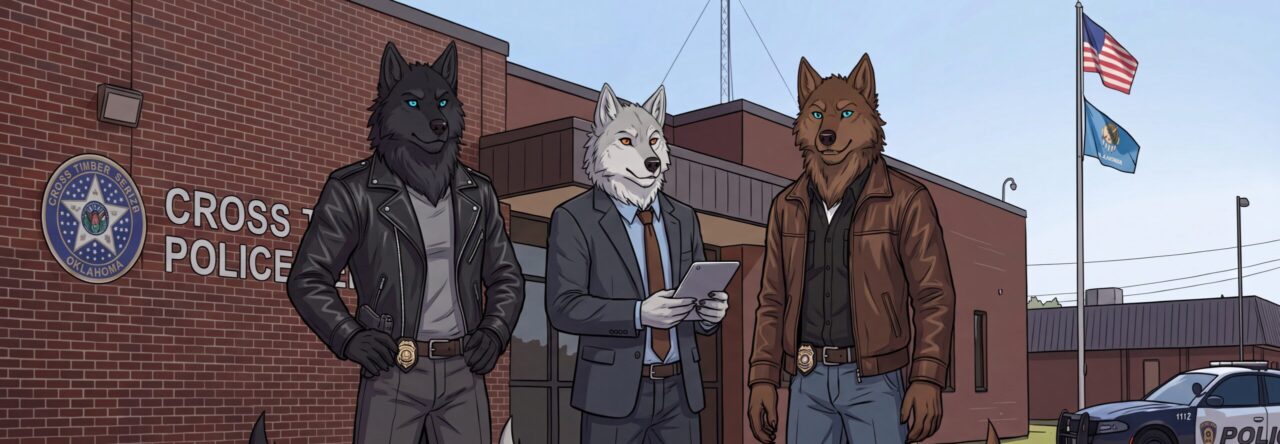
By nine in the morning, the board had grown teeth.
The first version had been four victims and a bad batch.
The second version had names.
By morning, Mark had turned the names into structure.
Colored lines connected phones, vehicles, storage units, traffic stops, old addresses, purchase receipts, license-plate reads, witness statements, and one very angry handwritten note from Gabriel that read:
KETTLE IS TOO BORING TO BE THIS BUSY
Mark had left the note on the board because it was technically accurate.
Rhett Ketterman, called Kettle by people who apparently enjoyed making federal charges sound like a county fair nickname, sat near the center of the map.
Not at the top.
Mark had refused to put him at the top.
“Hierarchy is not established,” he said when Gabriel objected. “Only connectivity.”
Gabriel stared at the board.
“He is in the middle of everything.”
“That is connectivity.”
“He has a nickname.”
“That is not hierarchy.”
“He is called Kettle.”
“That is unfortunate.”
Thane stood behind both of them, arms folded, staring at the victim photos.
Bobby Crane.
Lori Meeks.
Calvin Dorsey.
Tasha Morrow.
Four dead.
Their photographs anchored the left side of the board so no one could pretend the rest of it was only lines and names.
Lieutenant Crowe entered with Deputy Chief Mercer and Chief Whitaker.
Crowe looked at the board first.
Whitaker looked at Thane’s shirt second.
It was not the shirt from the shooting.
That one was evidence.
It was not the replacement shirt from last night either.
That one had gone into a laundry basket with a kind of grim resignation.
This was shirt three.
Whitaker noticed.
“Detective Thane.”
“Yes, Chief.”
“Do we need to put uniform replacement in the deployment matrix?”
Gabriel murmured, “Textile attrition.”
Mark said, “That is a valid category.”
Thane did not look away from the board.
“No.”
Whitaker let it sit for one beat, then turned to Crowe.
“What do we know this morning?”
Crowe moved to the table.
“Colby Sutter remains in custody. Mason Ketterman remains in custody. Sutter’s statement gave us Kettle, April Timmons, Darren Polk, Sheila Brackett, Benji Arnett, and Carolyn Rader. We have warrants in progress for phones and vehicles. Surveillance teams are sitting on Ketterman’s residence, Timmons’s apartment, Polk’s lawn-care lot, and three storage locations tied to Sheila Brackett.”
Mercer looked at Mark.
“Phones?”
Mark tapped the screen.
“Preliminary extraction from Colby Sutter’s primary burner shows message traffic consistent with low-level distribution. He received pickup locations through coded language. ‘Tools,’ ‘glass,’ ‘clean,’ ‘hot,’ and ‘quiet’ recur. His phone does not show source supply directly.”
Gabriel said, “Because Colby was disposable.”
“Yes.”
Mark moved to another image.
“Mason Ketterman’s phone is more useful. Multiple messages with Rhett Ketterman. References to ‘moving boxes’ and ‘keeping the quiet room fed.’”
Whitaker’s eyes narrowed.
“Fed?”
“Likely supply movement. Unknown whether that means money, materials, packaging, or product.”
Thane looked toward the far right of the board, where Mark had placed the phrase QUIET ROOM in black marker.
It bothered him.
Not because it was mysterious.
Because Colby had said it like a place.
Not a person.
Not a metaphor.
A place.
Crowe crossed her arms.
“What did the lab say about fentanyl levels?”
Mark’s expression tightened.
“High. Inconsistent across samples, which argues against a controlled pharmaceutical mixture and toward reckless addition or severe cross-contamination. Tasha Morrow’s sample had the highest concentration. Any user-level dose from that bag could have been fatal.”
The room went quiet.
Gabriel’s jaw worked once.
Mercer looked down.
Whitaker did not.
She kept her eyes on the board.
“Intent?”
“Unknown,” Mark said. “But legally, at this stage, they knew or should have known people were dying after distribution continued. After the first deaths, continued sales become harder to frame as ignorance.”
Crowe nodded.
“We still need source.”
“Yes.”
Thane moved closer to the board.
“Where is the smell strongest?”
Mark changed the display again.
“Evidence packages from Bobby, Tasha, and the truck all share the same odor profile: meth residue, cheap nitrile glove powder, peppermint gum, diesel, and a sour solvent trace. Colby Sutter smelled strongly of finished product and vehicle residue. Mason smelled of truck, cash, and packaging, but less solvent.”
Gabriel pointed to April Timmons’s photo.
“What about her?”
“Patrol contacted her before we had probable cause to detain. She refused consent to search. Legal. She appeared nervous. Officer Boyd reported chemical odor on clothing but could not identify it. When Night Shift drove near her apartment this morning, exterior air at the parking lot had a faint matching solvent trace.”
Mercer stared at him.
“You drove near?”
“Yes.”
“You did not stop?”
“No.”
“You did not sniff under her door?”
Mark looked offended.
“No.”
Gabriel said, “We have standards.”
Thane said, “Sometimes.”
Crowe ignored them.
“Storage units?”
Mark pointed to the map.
“Sheila Brackett manages Red Prairie Storage. Ketterman rented Unit 18B under a cash arrangement not in the normal system. She also granted gate access after hours to Mason’s truck and Darren Polk’s lawn-care trailer. Search warrant signed twenty minutes ago.”
Whitaker looked at Thane.
“You think source is there?”
Thane studied the map.
“No.”
Mark turned to him.
“No?”
“Packaging maybe. Money. Product. Not source.”
“Basis?”
“Sutter didn’t smell like a cook site. The truck didn’t either. It smelled like product moved through it, not made in it. If the storage unit was the quiet room, Sutter would smell more like it.”
Gabriel leaned back in his chair.
“That is grossly specific.”
“Yes.”
Mark considered.
“Agreed. But storage may lead us to the source.”
Crowe nodded.
“Then we take storage first.”
Whitaker looked around the room.
“Narcotics leads the warrant. Night Shift supports. No shortcuts. No creative entries. No turning this into a story about wolves unless someone makes it one.”
Gabriel glanced at Thane.
Thane looked back.
“What?”
“You do tend to become visually memorable.”
“I was shot.”
“And kept walking. Memorable.”
Mercer rubbed his forehead.
“Please stop before I remember I supervise you.”
Crowe pointed at the board.
“Storage in thirty.”
Red Prairie Storage sat on the northeast edge of Cross Timber, where town thinned into lots that had once promised development and had mostly delivered gravel.
Rows of orange doors baked under the August sun. A small office stood near the entrance, its window filled with faded signs about late fees, moving boxes, and security cameras that did not work as well as the sign implied.
The warrant team moved clean.
Narcotics in front.
Patrol securing the property.
Evidence tech ready.
Night Shift present but not performing.
Thane liked that less than he understood it.
Sheila Brackett stood outside the office in cuffed hands.
Unit 18B opened on the second cut of the bolt.
The smell rolled out.
Finished meth.
Plastic bags.
Cash.
Cardboard.
Cheap gloves.
Peppermint gum.
Diesel.
And the sour solvent trace.
Stronger.
Not source strong.
But enough to make Thane’s nose wrinkle.
Gabriel’s ears flattened.
“There it is.”
Mark stepped near the threshold but did not enter.
“Photograph first.”
Evidence tech moved in.
The unit contained lawn equipment in the front, exactly as advertised by Darren Polk’s cover.
Mowers.
Trimmers.
Gas cans.
Plastic fertilizer bins.
Behind them, hidden by a hanging tarp, sat stacked plastic totes, vacuum-sealed bags, digital scales, empty packaging, boxed phones, and cash bundled in amounts that said business had been brisk and moral failure had been profitable.
Rusk looked into the unit.
“Not a hobby.”
Voss said, “No.”
Mark watched evidence tags appear.
“Packaging hub.”
Thane smelled the air.
“Product came through here. Fentanyl trace too.”
Gabriel looked at the sealed bags.
“They were mixing here?”
Thane shook his head.
“No.”
“How do you know?”
“The solvent is on the outside of things. Not soaked into the room. This is where they touched what came from elsewhere.”
Mark nodded.
“Consistent with distribution packaging. Not primary production.”
Rusk glanced at him.
“You are saying that with your nose.”
“Partly.”
Voss said, “I hate that it helps.”
Gabriel smiled faintly.
“You get used to it.”
She looked at him.
“No, I do not.”
From the office, Sheila Brackett grew louder.
“I want a lawyer!”
Mercer, who had arrived with the posture of a man who knew exactly how much paperwork a storage-unit warrant could become, called back, “Excellent instinct.”
Gabriel whispered, “He sounds proud.”
Mark said, “Lawyer requests simplify interviews.”
The deeper they searched, the more the network stopped looking like a few dealers with ambitions and started looking like a business that had made spreadsheets emotionally unnecessary by using fear, cash, and habit instead.
Unit 18B gave them:
Burner phones.
Packaging.
Cash.
Product.
A small notebook with initials and numbers.
Shipping boxes.
Receipts for supplies purchased from stores in multiple cities.
A laminated route schedule hidden inside a mower manual.
And a church cookbook with folded pages.
Gabriel stared at the cookbook in the evidence bag.
“No.”
Mark looked at it.
“Yes.”
“No.”
“Carolyn Rader was not subtle.”
Gabriel looked wounded.
“They put a drug ledger in a church cookbook.”
Rusk said, “People hide things where they think good people will not look.”
Voss added, “Or where bad people think good people are too polite to look.”
Thane stared at the cookbook through the plastic.
Four people dead.
Numbers tucked beside casserole recipes.
The world was ugly in very specific ways.
Mark opened a map on his tablet and compared route notes to toll data and license-plate hits.
“Benji Arnett’s routes align with Shawnee and Guthrie drops. Darren Polk’s lawn-care trailer accessed this unit after three of the four likely batch distributions. Mason’s truck accessed it the night before Bobby and Tasha purchased.”
Crowe arrived while Mark was speaking.
She listened without interrupting.
When he finished, she looked into the unit.
“This still does not give us the source.”
“No,” Thane said.
Crowe turned to him.
“But?”
Thane stepped away from the unit and walked slowly down the storage row.
The others watched.
The air was a mess of old dust, hot metal, engine oil, mouse droppings, and human fingerprints layered over years of things people did not want in their garages but could not throw away.
But a thread led away from 18B.
Not product.
Not cash.
Not diesel.
The sour solvent trace.
Faint.
Carried on a tarp.
On the edge of a fertilizer bin.
On the rubber wheels of a dolly near the unit door.
Thane followed it to the gravel lane.
Then to the back of the property, where a locked service gate opened toward a maintenance road.
He stopped near the gate.
Gabriel came up beside him.
Mark behind.
Crowe waited a few steps away.
Thane breathed in.
There.
Different vehicle.
Not Mason’s white Chevy.
Not Darren’s lawn-care trailer.
Older van, maybe.
Chemical trace stronger on tire path.
Not from the storage unit.
To it.
“Something comes through here,” Thane said.
Mark crouched near the gravel.
“Camera?”
Gabriel looked toward the office.
“If they lied about the front cameras, I assume the back camera is decorative.”
Crowe called to patrol.
“Find me every camera facing this service gate. Businesses, traffic, residences, game cameras, anything.”
Mark looked at the service gate lock.
“No forced damage.”
Gabriel looked back toward Sheila in the office.
“She opened it.”
“Or gave the code.”
Thane stayed near the gate.
The scent went out into the maintenance road and faded into sun-baked dust.
But now they had direction.
Not proof.
Direction.
Sometimes direction was the only difference between a board and a case.
By late afternoon, the storage-unit warrant had become five warrants, three arrests, two pending interviews, one emergency meeting with the district attorney, and a migraine Mercer had started calling “policy weather.”
April Timmons was arrested leaving a nail salon with $3,400 cash in her purse and fentanyl residue on a folded lottery ticket.
Darren Polk was stopped legally after patrol observed him leave the storage facility under surveillance and commit three traffic violations in four blocks because guilt did not improve driving. His trailer held lawn tools in front and packaged meth hidden inside a false compartment behind pesticide jugs.
Benji Arnett was picked up in Shawnee by a joint team after he tried to toss a phone into a drainage ditch and missed.
Carolyn Rader was not home when officers arrived.
Rhett Ketterman was gone.
That was the problem.
Kettle had disappeared sometime between Colby’s arrest and the storage-unit warrant, which meant someone had warned him or he had been watching the network collapse in real time.
Crowe stood at the board, arms crossed.
“We have the body. We need the head.”
Gabriel looked at Ketterman’s photo.
“He does not feel like the head.”
Crowe looked at him.
“Explain.”
Gabriel leaned back against the table.
“He feels like the practical center. The guy everyone texts because he fixes problems and moves things. But this network has too many separate pieces. Storage, routes, cash, sourcing, cutting, expansion. Kettle may be running operations, but someone else may own the risk.”
Mark pointed at Carolyn Rader’s photo.
“Cash ledger suggests a finance role.”
Mercer said, “Please do not make church cookbook woman the kingpin. I cannot emotionally absorb that headline.”
Mark adjusted the board.
“I do not think she is the top. I think she tracked debt and cash because she was trusted.”
Thane looked at the route schedule.
“What about quiet room?”
Mark pulled up the recovered back-gate camera footage from an industrial building half a block behind the storage facility. Grainy. Bad angle. But enough.
A gray cargo van approached the storage service gate at 2:13 a.m. three nights prior.
No plate visible.
Driver unknown.
Passenger got out.
Used code.
Gate opened.
Van entered.
Twenty-six minutes later, it left.
Mark paused the video.
“The van appears in two other feeds along the maintenance road. Same night. It continues north, then east, avoiding primary intersections.”
Crowe asked, “Where does that road lead?”
Mark expanded the map.
“Eventually to county roads. Several industrial lots. Two abandoned properties. One active agricultural chemical storage facility. One old church camp. And the former Greenway Cabinet Works property.”
Thane looked up.
The name hit something.
Not memory.
Scent.
He had been near that property once during a stolen-tools call while still in patrol. Closed business. Large metal building. Dust. Old wood glue. Solvents trapped in concrete.
“What is there now?”
Mark opened property records.
“Owned by an LLC registered six months ago. Mailing address is a rented box in Oklahoma City. Utilities reconnected three months ago. Water usage low. Electric usage inconsistent but high at night. No active business license.”
Mercer closed his eyes.
“There it is.”
Crowe turned to Thane.
“Scent?”
“Maybe.”
“That is not enough.”
“No.”
Mark said, “But utilities, van route, recent purchase, LLC, and storage connection may support further investigation.”
Whitaker, who had been silent from the far side of the room, spoke.
“Do it clean.”
Everyone looked at her.
She looked at the board.
“We have four dead people and a network that already knows it is being squeezed. If there is a lab, it is dangerous. If we move too early, evidence burns, suspects scatter, and responders get hurt. If we move too late, more product hits the street.”
Crowe nodded.
“Surveillance first. Thermal if available. Air monitoring from fire if we can do it without tipping them.”
Mercer looked at Thane.
“No sniffing your way into a chemical plume.”
Thane’s ears shifted.
“I was not going to.”
Gabriel coughed.
Thane looked at him.
Gabriel looked away.
Mark said, “Hazardous chemical environments may overwhelm or damage scent capacity and create exposure risk. The smell advantage is perimeter intelligence only unless fire/hazmat clears entry.”
Mercer pointed at Mark.
“That. Put that in every memo.”
Thane looked at the map.
Greenway Cabinet Works.
Quiet room.
Maybe the cook house.
Silas heard about it at Station One before dinner.
Not details.
Never details.
Just tone.
The firehouse changed when certain calls came in, even before anyone said the words out loud. Conversations shortened. Coffee cups got set down. Radios became louder without anyone touching the volume. People who had been joking about ladder drills became serious in the same breath.
Silas noticed.
He was cleaning hose couplings with Wes Boone near Engine 2 when Chief Calder came out of his office with his phone in one hand and his jaw set.
“Torres. Boone. Check hazmat support inventory. Not full deployment yet. Standby posture.”
Nina Torres looked up.
“Chemical?”
“Possible.”
Wes muttered, “Drug lab?”
Calder gave him a look.
Wes shut up.
Silas kept his hands on the hose coupling.
His ears had already lifted.
Calder noticed.
Of course he did.
“Creed.”
Silas looked up.
“Yes, Chief.”
“With me.”
Silas stood and followed him toward the side of the apparatus bay.
Calder did not take him into the office.
He stopped beside the gear lockers where they had privacy without secrecy.
That mattered.
“Police are working a case,” Calder said.
Silas nodded.
“I figured.”
“I am not asking for inside information.”
“I do not have any.”
Calder studied him.
Silas kept still.
Not defensive.
Not eager.
Just honest.
“Your pack does not talk about case details at home?”
“No, sir.”
“Never?”
“They say enough for safety sometimes. Like if they were shot. Or if something public is already known. They do not bring evidence home. They do not ask me to solve things. They do not use me as a shortcut.”
Calder’s expression shifted a little.
Not much.
Enough.
“That their rule or yours?”
“Both, I think.”
Silas looked across the bay at Engine 2.
“Maybe theirs first. Mine now.”
Calder nodded once.
“Good.”
Silas waited.
There was more.
Calder folded his arms.
“I know you have a past.”
“Yes, sir.”
“I also know people sometimes assume any criminal past means knowing every criminal world.”
Silas huffed softly.
“That is stupid.”
“Yes. It is also common.”
Silas looked at him.
“I do not know anything about drug networks here. I was never in that scene.”
Calder did not interrupt.
Silas appreciated that.
“I stole high-end property, cash, electronics, anything that could move clean if you knew the right buyer. I knew burglars, fences, people who could move watches and laptops and jewelry without asking where they came from. That was bad enough.”
His claws flexed once at his sides.
“But drugs are a whole other kind of mess. Dealers, users, guns, desperate people, sick people, people who think they are in control while the product eats the room around them. I stayed away from that because even when I was stupid, I knew some messes do not stay where you put them.”
Calder watched him for a long second.
“You ever asked to run with them?”
“Yes.”
“What did you say?”
“No.”
“Why?”
Silas’s mouth twitched.
“Because I liked exits.”
Calder almost smiled.
Almost.
“That is a good answer.”
Silas looked down.
“I am not useful on this one except to carry things where you tell me and not ask questions.”
Calder’s face settled into something firmer.
“That is useful.”
Silas looked up.
Calder pointed toward the bay.
“If we get called to support, you stay in the cold zone unless I say otherwise. You move water, rehab supplies, spare gear, cones, whatever Torres gives you. You do not go near chemicals. You do not follow the pack. You do not try to prove anything.”
Silas nodded immediately.
“Yes, Chief.”
“And if anyone asks you for police details?”
“I do not have any.”
“If they push?”
“I tell them to ask police.”
“If they say because you live with them?”
Silas’s ears angled.
“I tell them that pack is pack and police work is police work.”
Calder held his gaze.
Then nodded.
“All right.”
Silas felt something warm and steady settle in his chest.
Not praise exactly.
Trust with a harness on it.
He could work with that.
Calder turned back toward the bay.
“Boone!”
Wes snapped upright like he had not been trying to listen.
“Yes, Chief?”
“Creed is with support if we deploy. You make sure he has a vest.”
Silas blinked.
“A vest?”
Calder looked at him.
“Reflective. Not bulletproof. Do not look hopeful.”
Nina laughed from the compartment.
Silas smiled.
“Yes, Chief.”
Greenway Cabinet Works sat at the end of a county road that had once carried lumber trucks and delivery vans and now mostly carried wind.
The sign remained, faded and cracked:
GREENWAY CABINET WORKS
Custom Kitchens.
Fine Millwork.
Commercial Installation.
The building behind it was long, metal-sided, and low, with a loading dock on the west end and a gravel lot large enough to hide sins behind distance. A chain-link fence surrounded most of the property. The front gate was closed. The weeds were high except where tires had flattened a path.
From the outside, it looked abandoned.
From three hundred yards away, in the tree line south of the property, it smelled alive.
Thane crouched beside a blackjack oak and breathed carefully.
Not deeply.
Carefully.
The wind came in shifting strips.
Dry grass.
Dust.
Old wood.
Rust.
Mouse.
Oil.
Then chemical.
Sour solvent.
Sharp ammonia bite.
Plastic.
Burned residue.
Human sweat.
A faint sweet-medicinal note that might have been fentanyl handling, might have been something else, and definitely did not belong near an abandoned cabinet shop at night.
Gabriel crouched beside him.
His ears were pinned back.
“Well.”
Mark, ten feet behind them, watched the property through binoculars.
“Same solvent trace?”
“Same,” Thane said.
“Stronger?”
“Much.”
Gabriel’s muzzle wrinkled.
“Much, much.”
Mark lowered the binoculars.
“Then we do not get closer.”
Thane looked at him.
“I know.”
“You know, but you dislike it.”
“Yes.”
“That is why I said it.”
Crowe’s voice came softly through the earpiece.
“Night Shift, report.”
Mark keyed the mic.
“Exterior observation from south tree line. Detectives Thane and Gabriel detect chemical odors consistent with the solvent trace from seized packaging, significantly stronger at this location. Additional odors indicate possible active hazardous drug production or processing. Recommend maintaining distance and proceeding with warrant preparation and hazmat support.”
Crowe responded after half a second.
“Copy. Visual?”
Mark lifted the binoculars again.
“Gray cargo van behind loading dock. Partial plate obscured. One pickup. Two heat signatures moving near rear door. Intermittent ventilation from roof unit not consistent with abandoned property.”
Gabriel looked at the roof.
“They are venting death through an old cabinet shop.”
Thane watched the loading dock.
A side door opened.
A man stepped out wearing a respirator around his neck and carrying a black trash bag.
Not Rhett Ketterman.
Younger.
Heavyset.
He walked to a burn barrel near the far fence and dropped the bag beside it.
Then he stopped.
Looked around.
Not toward them.
Just the natural paranoia of someone who had been told the world was safe by people who sold poison.
He went back inside.
The door closed.
Thane breathed through his mouth for a few seconds.
The smell still lived in his nose.
Gabriel whispered, “This is not small.”
“No.”
Mark’s voice stayed quiet.
“Not cartel-scale. Not industrial chemical plant. But large enough for repeated local production and regional distribution.”
“Big enough to kill four people,” Gabriel said.
Thane looked at the building.
“Big enough to be noticed.”
Mark keyed the mic again.
“Crowe, we have observed suspect disposal behavior and likely active operation. Recommend immediate warrant package with exigency review due risk of evidence destruction and public hazard.”
Crowe said, “Hold position. Do not approach. DA is on with judge now. Hazmat notified.”
Mercer’s voice cut in after hers.
“And if either of you decide to sniff a wall, I will personally write the dumbest reprimand in city history.”
Gabriel looked at Thane.
Thane looked at the building.
Then keyed the mic.
“Understood.”
Mercer said, “That was not reassuring.”
Mark said, “I am present.”
Mercer sighed.
“That was.”
The warrant came through at 10:18 p.m.
The raid did not happen at 10:19.
That mattered.
Television would have kicked the door in.
Real life brought maps, wind direction, hazmat staging, fire support, ambulance standby, evacuation considerations, utility shutoff planning, suspect count estimates, air monitoring, evidence preservation, and the grim acknowledgement that some chemicals were more dangerous after being disturbed by idiots with badges and good intentions.
The command post set up half a mile away at a closed feed-store lot.
Patrol blocked roads quietly.
County units covered the north approach.
Narcotics staged with entry.
Fire rolled in without sirens.
Hazmat support came with equipment that made Gabriel mutter, “That is how you know the building is bad. The firefighters brought moon suits.”
Mark said, “Protective suits.”
“Moon suits has clarity.”
“No.”
Silas arrived in the second wave with Station One.
Reflective vest.
Work pants.
Fire department volunteer shirt.
Hairline tension around his eyes.
He stepped off the support vehicle carrying two cases of bottled water as if they weighed nothing, then stopped when he saw the Humvee.
He did not look for Thane.
Not obviously.
He knew better.
But his eyes found him anyway.
Thane stood near the edge of command with Gabriel and Mark, far enough from the hot zone, close enough to brief.
Silas did not wave.
Thane did not either.
Pack was pack.
Police work was police work.
But Thane gave the smallest nod.
Silas returned it once, then turned toward Nina Torres and started unloading supplies.
Calder noticed.
Of course he did.
The fire chief came to the command table while Crowe reviewed the building layout.
“Lieutenant.”
Crowe nodded.
“Chief.”
Calder glanced at Night Shift.
“My people are staged for cold-zone support and hazmat assistance. No volunteers near the hot zone.”
His eyes flicked toward Silas, who was stacking water and rehab chairs under Torres’s direction.
Thane appreciated the clarification.
Crowe said, “Understood.”
Mark laid out the property map.
“Likely production or processing area in rear third of building. Venting through roof unit. Loading dock west side. Front office likely unused. Two to five suspects observed. Unknown additional persons inside.”
Calder looked at the wind indicator.
“Wind from southwest. That puts plume toward north field if something goes wrong. We keep staging south and west unless conditions change.”
Gabriel looked at the building in the distance.
“What counts as something goes wrong?”
Calder looked at him.
“Fire, spill, reaction, explosion, armed suspect doing something stupid, unarmed suspect doing something stupid, police doing something stupid, weather doing something stupid, or chemicals doing what chemicals do.”
Gabriel nodded.
“Comprehensive.”
Crowe looked at Thane.
“You will support entry only until threshold if needed for suspect control. You do not enter active chemical area unless cleared.”
Thane’s ears moved.
“Yes, Lieutenant.”
“I mean it.”
“I heard you.”
Mark said, “I will repeat it if needed.”
Thane looked at him.
Mark looked back.
“I know.”
Crowe continued.
“Narcotics entry team takes front and west. County covers rear. Night Shift assists with suspect identification, perimeter scent tracking if anyone runs, and immediate physical intervention only if someone threatens life safety.”
Gabriel said, “Right tool.”
Crowe nodded.
“Right tool.”
Mercer, standing nearby with a radio and no antacids visible but spiritually present, said, “And no one gets to become a cautionary training slide.”
Gabriel muttered, “Too soon after the sofa poster.”
Thane looked at him.
Gabriel shut up.
The entry started clean.
That lasted fourteen seconds.
The front team breached the office door.
The west team hit the loading dock.
Police announcements cracked the night open.
“Search warrant! Police!”
“Hands! Hands!”
“Get on the ground!”
Inside, someone screamed.
Someone dropped something that shattered.
Then the rear side door burst open and a man ran straight into the darkness toward the north field.
Not Rhett Ketterman.
The younger heavyset man from the trash run.
He wore one shoe, no mask, and the expression of a person who had chosen panic as a life plan.
County shouted.
He did not stop.
Thane moved.
Not into the lab.
Not into the building.
Perimeter.
Clean air.
Open ground.
Right tool.
The suspect sprinted through weeds toward a drainage ditch.
He was fast for twenty yards.
Then his lungs remembered chemistry, terror, and poor conditioning.
Thane caught him before the ditch.
The man tried to turn.
Thane stepped around him and blocked the path.
The man bounced off Thane’s chest like he had run into a padded wall with judgment.
He fell backward into the grass.
“Hands,” Thane said.
The man stared up at him.
“Don’t bite me!”
Gabriel arrived behind Thane, breathing easily.
“We almost never start there.”
The man flipped onto his stomach so fast he nearly cuffed himself.
Gabriel secured him.
Mark’s voice came over the radio.
“One fleeing suspect in custody north field. Two detained inside west entrance. Hazmat reports visible chemical setup in rear production area. Entry team backing out until air cleared.”
Thane looked toward the building.
The smell worsened.
A door had opened somewhere, and the night carried more of it.
Sour solvent.
Sharp fumes.
Old cabinet glue underneath.
Meth production.
Fentanyl contamination.
Fear.
And one scent he knew from photos and evidence.
Peppermint gum.
Diesel.
Rhett Ketterman.
Thane turned.
Gabriel noticed instantly.
“What?”
“Kettle is outside.”
Gabriel’s face sharpened.
“Where?”
Thane lifted his head.
The wind shifted.
There.
Not north.
Not front.
East.
Past the old loading pallets. Toward a low outbuilding half-hidden behind scrub trees.
“He didn’t run from the main building.”
Mark came over the radio.
“Clarify.”
Thane keyed his mic.
“Rhett Ketterman scent trail east of main building toward secondary structure. Strong. Recent. Request perimeter adjustment.”
Crowe answered immediately.
“Hold. Units moving.”
Thane was already moving, but not running.
Gabriel followed.
County units shifted.
A patrol spotlight swept the scrub line.
The secondary structure had once been a finishing shed or storage annex. Small metal building. Roll-up door. Side door. No lights.
The scent trail went to it.
Then around it.
Then stopped near a half-open storm-cellar-style hatch set into the ground behind the shed.
Gabriel stared.
“You have got to be kidding me.”
Thane crouched several feet away.
Cooler air leaked from the hatch.
Chemical smell.
Human scent.
Kettle.
And something else.
Cash.
Cardboard.
Gun oil.
Mark arrived with two patrol officers and immediately held up one paw.
“Do not open further.”
Thane looked at him.
“I was not.”
“You were considering.”
“I was identifying.”
“You identified.”
Gabriel pointed toward the hatch.
“Quiet room?”
Mark’s face tightened.
“Maybe not the lab. Maybe stash, office, or hiding place.”
Crowe arrived seconds later with Rusk and Voss.
Voss looked at the hatch.
“Of course there is a creepy hole.”
Rusk said, “Secondary warrant scope covers outbuildings and subterranean storage?”
Mark checked.
“Yes. Property and all structures.”
Crowe keyed her radio.
“Entry to east outbuilding. Possible suspect in below-grade storage. Hazmat evaluate air before entry. Suspect may be armed.”
From inside the hatch, a voice called out.
“You don’t know what you’re walking into!”
Gabriel looked at Thane.
“Kettle?”
Thane nodded.
Crowe stepped forward but stayed back from the hatch.
“Rhett Ketterman, this is Lieutenant Crowe with Cross Timber Police. We have a warrant. Come out with your hands visible.”
A laugh came from below.
Thin.
Scared.
Trying to be bigger than it was.
“You got no idea.”
Crowe’s voice stayed steady.
“I know four people are dead.”
Silence.
Then Ketterman shouted, “That wasn’t supposed to happen!”
Thane felt Gabriel go still beside him.
Crowe did not take the bait.
“Come out now.”
“No! No, you back off. You back off or I’ll dump everything.”
Mark’s expression changed.
He keyed his mic quietly.
“Possible evidence destruction and chemical hazard threat. Need hazmat input.”
Calder’s voice came over the channel from command.
“Do not enter that hole without air monitoring. If he starts dumping unknown chemicals, back everyone off.”
Thane stared at the hatch.
Ketterman was below.
Armed maybe.
Chemicals maybe.
Cornered definitely.
The old part of Thane wanted simple.
Reach in.
Pull him out.
End it.
But simple in a chemical hole was not simple.
Crowe looked at him.
Maybe she saw it.
Maybe she just knew him.
“Detective Thane.”
He looked at her.
“No.”
He nodded once.
Good command was sometimes one word before the mistake happened.
Gabriel stepped closer to the hatch, but still outside the danger line.
“Kettle.”
“Who’s that?”
“Detective Gabriel.”
“Another dog?”
Gabriel’s eyes flattened.
Thane’s shoulders rose.
Crowe’s voice snapped.
“Detective Thane.”
Thane held.
Gabriel smiled toward the hatch.
Not kindly.
“You know, if your survival plan is insulting the wolves, I question your strategic foundation.”
Ketterman shouted, “You think you’re funny?”
“Yes,” Gabriel said. “But that’s unrelated.”
Mark closed his eyes briefly.
Gabriel continued.
“You told Colby there were rumors. You told him bullets would work if he had nerve. He tried that.”
No answer.
“He is in jail. Detective Thane changed shirts.”
Thane looked at Gabriel.
Gabriel shrugged.
Ketterman’s voice came back smaller.
“He ain’t dead?”
Thane moved closer, stopping exactly where Crowe’s eyes told him to stop.
“No.”
Silence.
Ketterman breathed hard below them.
“You people don’t understand. This got away from me.”
Crowe said, “Then stop making it worse.”
“It wasn’t meant to be fentanyl like that. It was supposed to stretch. Just stretch.”
Mark’s head lifted.
The admission hung in the night.
Crowe’s face did not change.
“Rhett, listen carefully. You are currently talking yourself into a record. You need to come out with your hands visible.”
“I can’t go to prison.”
Gabriel said, “Four people went into the ground.”
Another silence.
Longer.
Then something scraped below.
Voss raised her weapon.
Rusk shifted angle.
Patrol lights fixed on the hatch.
Thane smelled the movement.
Fear.
Gun oil.
Ketterman coming closer.
Crowe said, “Hands first.”
A hand appeared.
Empty.
Then another.
Then Rhett Ketterman climbed out of the quiet room.
He looked even less impressive in person.
Soft face.
Thinning hair.
Respirator hanging loose at his neck.
Sweat streaking his temples.
One glove on, one glove missing.
Peppermint gum on his breath.
His eyes found Thane and widened.
“You’re the one he shot.”
“Yes.”
Ketterman stared at him.
“Jesus.”
Gabriel said, “He has been invoked a lot around your business model tonight.”
Crowe shot Gabriel a look.
Gabriel shut up.
Ketterman went to his knees when ordered.
Rusk cuffed him.
Voss searched him.
Small revolver in waistband.
Two phones.
A key ring.
A folded paper.
No heroics.
No tackle.
No bite.
No chemical-hole disaster.
Just a man who had built a machine and discovered it did not make him bigger when it broke.
Mark stood near the hatch with an evidence tech, waiting for hazmat.
The air coming from below smelled like cash, ledgers, fentanyl handling, and cowardice.
Thane looked at Ketterman.
“Quiet room.”
Ketterman looked down.
“Office.”
Gabriel stared at the hatch.
“You kept your office in a hole?”
Ketterman did not answer.
Mark said, “Symbolically appropriate.”
The cook house was worse in daylight, even before dawn arrived.
Fire and hazmat cleared the main building section by section. No one rushed the process because the building was a box full of ways to make bravery expensive.
When the rear production area was finally safe enough for protected personnel to document, Thane, Gabriel, and Mark stood outside the exclusion line and watched through the open bay as cameras flashed.
Not entering.
Not touching.
Not sniffing their way into poison.
The smell from outside was enough.
Rows of tables.
Containers.
Tubing.
Glassware.
Improvised ventilation.
Packaging stations.
Fans positioned with criminal optimism.
A separate corner where finished product had been cut, bagged, and contaminated by fentanyl handled with the same gloves, same tables, same lazy disregard for how little of a thing could end a life.
Not Breaking Bad.
No genius lighting.
No clean suits.
No empire-level polish.
Just practical local competence turned rotten.
Big enough to supply Cross Timber.
Big enough to branch outward.
Big enough to kill people in four different rooms before anyone knew they had all been killed by the same place.
Mark documented from behind the line.
“Production, processing, cutting, packaging, distribution staging. All in one facility.”
Gabriel’s voice had gone low.
“They were making it here.”
“Yes.”
Thane looked at the tables.
“They knew after the first deaths?”
Mark checked the timeline.
“Based on recovered messages, yes. Ketterman received notice that buyers were ‘dropping’ before Tasha Morrow purchased. He responded with ‘move fast before heat.’”
Gabriel closed his eyes.
For once, nothing came out of his mouth.
Crowe stood beside them in a mask pushed up onto her forehead now that she was outside the hot zone. Her face was hard in the early light.
“We have him.”
Mercer stood behind her with Whitaker.
“We have the lab,” Mercer said.
Whitaker looked at the building.
“And four families still have funerals.”
No one argued.
From the cold-zone staging area, firefighters rotated crews through rehab. Hazmat personnel moved like astronauts with clipboards. Evidence techs cataloged what could be safely cataloged and flagged what had to be handled by specialists. State bureau agents arrived with equipment and expressions that said Cross Timber had officially stopped having a local problem and started having a regional case.
Silas stood near the rehab tent, carrying a crate of water in one arm and a stack of folded cooling towels in the other.
He did not look toward the lab.
Much.
Nina Torres directed him with two fingers.
He obeyed instantly.
Wes Boone said something that made him smile for half a second.
Then Calder appeared beside him.
They spoke quietly.
Thane watched from across the lot, unable to hear but able to read posture.
Calder asked.
Silas answered.
Calder listened.
Silas’s shoulders stayed square.
Not ashamed.
Not defensive.
Just telling the truth.
Gabriel followed Thane’s gaze.
“Calder?”
“Probably asking.”
“About whether Silas knows anything.”
“Yes.”
Mark looked over.
“He does not.”
“I know.”
“He will say so.”
“I know.”
Gabriel studied Silas.
“And he will say we do not discuss case details at home.”
“Yes.”
Mark’s mouth softened.
“That will matter.”
Thane nodded.
“It should.”
Across the lot, Calder said something.
Silas nodded.
Then Calder clapped him once on the shoulder and sent him back toward the rehab tent with more work.
Silas moved immediately.
Useful.
Contained.
Trusted.
Thane felt pride rise in him, fierce and quiet.
Crowe noticed his attention.
“He okay?”
Thane looked at her.
“Yes.”
“He is not involved in the case.”
“No.”
“Good.”
There was no accusation in it.
Only command.
Thane respected that.
“Pack is pack,” he said. “Police work is police work.”
Crowe nodded.
“Keep it that way.”
“Yes, Lieutenant.”
Rhett Ketterman’s interview took place after sleep had become theoretical.
His lawyer advised silence.
Ketterman kept talking anyway.
People who wanted to be important often could not resist explaining how they had been almost smart.
He said the operation had started with distribution only.
He said that like it was a lesser sin.
April knew users.
Colby delivered.
Mason drove.
Darren moved bulk in lawn equipment.
Sheila provided storage access.
Benji ran routes.
Carolyn tracked cash because she was good with numbers and nobody suspected a woman who brought deviled eggs to fundraisers.
Then supply got unreliable.
Prices moved.
People wanted more.
Other towns were easy.
Guthrie. Shawnee. Edmond. Maybe Stillwater once they had enough drivers.
Ketterman knew tools.
He knew ventilation.
He knew old industrial properties.
He knew enough to convince himself that knowing enough was the same as being safe.
So the cook house happened.
Not overnight.
Piece by piece.
A building under an LLC.
Utilities reconnected.
Equipment moved after midnight.
Production kept in the back.
Packaging at storage.
Cash in places that looked boring.
Everyone got a role.
Nobody used real names unless they were stupid.
Then fentanyl entered the system.
Ketterman blamed Carolyn.
Then April.
Then Colby.
Then the supplier.
Then users.
Then dosage.
Then “bad luck.”
Crowe sat across from him and let the recorder eat every word.
Thane stood behind her near the wall.
Gabriel sat in the corner.
Mark observed from beside the camera with notes.
Ketterman finally looked at Thane.
“You don’t know what it’s like. People ask for it.”
Thane’s ears angled forward.
Crowe lifted one hand slightly without looking back.
Thane stayed silent.
Ketterman pushed on anyway.
“They know the risk.”
Crowe spoke before Thane could.
“Bobby Crane knew he was buying meth. He did not know he was buying your fentanyl-contaminated product after you knew people were dying.”
Ketterman swallowed.
“I didn’t know it was that bad.”
Mark said, “Recovered messages indicate otherwise.”
Ketterman looked at him.
Mark read from the printed extraction.
“Message from April Timmons: ‘Two down maybe more. This glass is dirty.’ Your response: ‘Move fast before heat. Cut less next run.’”
The room went still.
Gabriel’s face went cold.
Crowe leaned forward.
“Four people are dead.”
Ketterman looked at the table.
“I didn’t make them use.”
Crowe’s voice stayed even.
“No. You only made what killed them, sold it after people started dying, and built enough network around yourself to pretend no one hand was dirty enough to matter.”
Ketterman’s eyes flicked toward Thane again.
Maybe he expected anger.
Maybe he wanted it.
Something he could point at later.
The monster in the room.
The huge werewolf looming while a poor local man got blamed for things bigger than him.
Thane gave him nothing.
No growl.
No threat.
No wall.
No ruined cabinet.
No fear to hide behind.
Just presence.
Ketterman looked away first.
Good.
Crowe closed the folder.
“Interview paused at 8:42 a.m.”
The recorder clicked off.
Ketterman’s lawyer exhaled like a man watching a client dig with both hands and asking only for a bigger shovel.
Patrol took Ketterman back to holding.
When the door closed, Gabriel leaned his head back against the wall.
“I hate him.”
Crowe stood.
“Yes.”
Mark collected the notes.
“He will attempt to minimize culpability through user blame, delegation, and lack of intent.”
Crowe’s mouth hardened.
“Then we build the case so he fails.”
Thane looked at the empty chair.
“He wanted me angry.”
Crowe glanced at him.
“Yes.”
Gabriel looked over.
“You noticed that too?”
Thane nodded.
Crowe said, “You did not give it to him.”
“No.”
She held his gaze for a moment.
Then nodded once.
“Good.”
Praise from Crowe was never soft.
That was why it worked.
The press conference happened at noon.
Whitaker took the podium.
Mercer stood behind her.
Crowe to one side.
Representatives from county, Edmond, the state bureau, fire, and hazmat lined the wall in a row that told the cameras this had become bigger than a city case.
Night Shift stood back.
Visible but not centered.
That was intentional.
Reporters wanted blood shirts and bullet holes and werewolf scent miracles.
Whitaker gave them facts.
Four overdose deaths connected to fentanyl-contaminated methamphetamine.
Multiple arrests.
A local distribution network disrupted.
A production and processing site shut down outside city limits with multi-agency assistance.
Significant quantities of methamphetamine, fentanyl-contaminated product, cash, firearms, packaging materials, records, and hazardous production materials seized.
The public should not use any methamphetamine purchased recently in the region.
Anyone with product should contact authorities or seek medical help without delay.
Anyone experiencing overdose symptoms should call emergency services immediately.
She did not say superlab.
A reporter did.
“Chief, would you characterize this as a meth superlab?”
Whitaker looked at him.
“No.”
The reporter blinked.
“But sources describe a large-scale production facility.”
“It was a significant illegal production and processing site for this region,” Whitaker said. “I am not using television language because four people are dead and precision matters.”
Mercer’s face remained blank behind her.
Gabriel, at the back, whispered, “Chief said stop watching cable.”
Mark whispered, “Accurate paraphrase.”
Thane stayed still.
Another reporter asked whether werewolf senses had solved the case.
Whitaker did not look back at them.
“No single tool solved this case. Detectives, patrol officers, narcotics investigators, evidence technicians, analysts, prosecutors, firefighters, hazmat teams, neighboring agencies, witnesses, and lab personnel all contributed. Werewolf sensory abilities helped identify connections and direction. They did not replace warrants, lab analysis, interviews, surveillance, or evidence.”
Thane saw Mark’s ears lift slightly.
That answer had been built for him.
Another reporter asked about the suspect who shot Thane.
Whitaker’s expression changed by less than a millimeter.
“The suspect is in custody and alive. Detective Thane was medically evaluated and returned to duty. I will not comment further on pending charges.”
“Is it true bullets do not affect werewolves?”
Mercer closed his eyes.
Whitaker looked at the reporter.
“Bullets affect everyone. Some people survive them differently. Next question.”
Gabriel whispered, “That is going on a shirt.”
Thane whispered, “No.”
Mark whispered, “Unauthorized shirt distribution will result in consequences.”
Gabriel glanced around.
“Is Silas here?”
“No.”
“Then consequences are theoretical.”
Thane slowly looked at him.
Gabriel shut up.
At the end, Whitaker stepped away from the podium without offering drama.
Because drama was not the point.
The point was four names.
The point was a building shut down.
The point was product off the street before more bodies appeared on bathroom floors, laundry rooms, alleys, and bedrooms.
The point was not enough.
But it was something.
Silas was still at Station One when the press conference played on the bay television.
He stood with Wes Boone and Nina Torres near the apparatus, watching Whitaker refuse the word superlab with a steadiness Silas respected immediately.
Calder stood behind them, arms crossed.
When Whitaker said werewolf sensory abilities helped but did not replace evidence, Wes glanced at Silas.
Silas did not react.
When the clip ended, Calder turned the television off.
No one said anything for a moment.
Then Wes said, “That was bigger than I thought.”
Nina said, “It usually is.”
Calder looked at Silas.
“Walk with me.”
Silas followed him outside to the apron in front of the bay.
The afternoon heat sat heavy on the concrete. The smell of diesel and sun-warmed rubber surrounded them. Compared to the distant chemical memory still clinging faintly to some returned gear, it felt clean.
Calder stopped near the bumper of Engine 2.
“You handled yourself well today.”
Silas looked down.
“I carried water.”
“You followed instructions, stayed where assigned, did not ask for case details, and did not try to turn proximity into importance.”
Silas looked up.
Calder’s face was as dry as ever.
“That is not nothing.”
Silas swallowed once.
“Thank you.”
“I asked earlier because I needed to know whether there was any immediate safety issue I should be aware of. I did not ask because I assumed you were dirty.”
“I know.”
“Do you?”
Silas thought about lying.
Did not.
“No. Not entirely.”
Calder nodded.
“Fair.”
Silas looked toward the closed bay doors.
“In my old life, people assumed a lot. Some of it was earned. Some of it was lazy. I learned to hear both the same way.”
“That will make probation interesting.”
Silas huffed softly.
“It has.”
Calder leaned back against the bumper.
“You said pack does not bring cases home.”
“Yes.”
“That impressed me.”
Silas looked surprised.
“Why?”
“Because boundaries are how people survive jobs that see too much. Firefighters. Cops. Medics. Dispatchers. If your pack dragged you through every case over breakfast because you used to know criminals, that would be bad for you and bad for them.”
Silas looked at the concrete.
“They do not.”
“Good.”
Silas’s voice went quieter.
“They trust me enough not to hide from me. But they respect me enough not to use me.”
Calder nodded slowly.
“That is a good way to put it.”
Silas breathed in.
For a moment, he could smell hose, diesel, coffee through the open bay, and the faint old smoke that lived in the brick.
Not drugs.
Not rot.
Not the scene he had stayed out of even when he was lost enough to steal from people and call planning morality.
Different mess.
Different life.
Calder pushed off the bumper.
“Next volunteer night, we are doing ladders.”
Silas’s ears lifted.
“Ground ladders?”
“Yes.”
“Can I—”
“No.”
Silas closed his mouth.
Calder pointed at him.
“You do not even know what I am saying no to yet.”
“I had ideas.”
“I could smell them.”
Silas blinked.
Calder walked back toward the bay.
“That was a joke, Creed.”
Silas stared after him.
Then smiled.
“Yes, Chief.”
The cabin was quiet when Night Shift came home.
Not peaceful exactly.
Quiet.
There was a difference.
They arrived late, after reports, after evidence transfers, after interviews, after the press conference, after the kind of day that made the body keep moving only because stopping would make starting again difficult.
Silas had beaten them home.
He was at the kitchen island with dinner warm in containers, plates set out, and no questions waiting in the air.
That mattered.
He looked at Thane first.
Then Gabriel.
Then Mark.
“All intact?”
Thane nodded.
“Yes.”
“No new shirts ruined?”
Gabriel said, “A modern miracle.”
Mark set his tablet down.
“No ballistic incidents today.”
Silas pointed at him.
“That is a normal sentence. See? You can do it.”
Mark blinked.
Gabriel smiled.
Thane sat at the island.
For a while, they ate without much talking.
Chicken.
Rice.
Vegetables.
Something spicy Gabriel approved of immediately and pretended to critique for six seconds before taking more.
Silas waited until plates had real dents in them before he spoke.
“Calder asked.”
Thane looked up.
“I figured.”
Silas nodded.
“I told him I did not know case details. Told him you do not talk about cases at home. Told him I did not run in drug circles.”
Gabriel’s expression softened.
“How did he take it?”
“Like Calder.”
Mark said, “Dryly?”
“Yes.”
Thane asked, “Did it bother you?”
Silas thought about it.
“A little.”
Thane waited.
“Not because he asked. He had reason to ask. Big drug case. I have a record. I live with the detectives. I am volunteering at the fire station that got called. It is not irrational.”
“No,” Mark said.
“But part of me still heard it like the old thing. Like, of course I would know. Of course criminal meant all crime. Of course pack would use me.”
Gabriel set his fork down.
Silas looked at him.
“I know you do not.”
Thane said, “Good.”
Silas’s mouth moved faintly.
“Calder said boundaries are how people survive jobs that see too much.”
Mark nodded.
“Correct.”
Gabriel looked toward the den.
“Fire chief has layers.”
Silas smiled.
“He also said no before I finished asking about ladders.”
Thane chuckled.
“What were you going to ask?”
Silas looked innocent.
“Nothing.”
Mark said, “He was going to ask whether he could jump with a ladder.”
Silas stared at him.
Gabriel laughed.
“You absolutely were.”
Silas lifted both paws.
“I was going to ask about safe ladder movement.”
“Jumping,” Mark said.
“Movement.”
“Jumping.”
Thane smiled for the first time in hours.
“Do not rewrite their expectations of gravity twice.”
Silas sighed.
“That phrase is going to follow me.”
Gabriel pointed his fork.
“Could be worse. You could be a sofa safety poster.”
Thane slowly turned toward him.
Gabriel immediately lowered the fork.
“Too soon.”
Silas looked between them.
“Felony face?”
Gabriel said, “No.”
Thane said, “Stand by.”
Silas smiled into his plate.
The laughter did not erase the day.
It did not bring Bobby Crane back.
Or Lori Meeks.
Or Calvin Dorsey.
Or Tasha Morrow.
It did not change the smell of the cook house or the quiet room in the ground or Ketterman’s thin excuses over a recorder.
But it let the kitchen remain a kitchen.
That mattered too.
After dinner, Mark went to finish one more note because he did not know how not to. Gabriel followed him to argue that “significant illegal production and processing site” was a terrible phrase for normal humans, and Mark argued back that precision was not a popularity contest.
Silas gathered plates.
Thane helped.
For a while, they stood side by side at the sink.
Water ran.
Steam rose.
Outside, cicadas worked the trees.
Silas said, “Drugs are a whole other kind of mess.”
Thane nodded.
“Yes.”
“You shut it down?”
“One site.”
Silas looked at him.
“One site.”
“Yes.”
The distinction mattered.
Silas understood it.
“Still.”
“Yes.”
Silas handed him a plate.
“Four people.”
Thane took it.
“Yes.”
Silas did not say at least you saved others.
He did not say you did everything you could.
He did not make it smaller so it would fit more comfortably in the room.
He washed the next plate.
Thane dried it.
After a while, Silas said, “I am glad you do not bring cases home.”
Thane looked at him.
Silas kept his eyes on the sink.
“But I am also glad you come home.”
Thane set the plate down.
That one landed.
He put one arm around Silas’s shoulders.
Silas leaned into him immediately.
No hesitation.
No flinch.
No accounting.
Thane held him for a moment.
Then Gabriel called from the den, “If this is emotional, I support it from a respectful distance!”
Mark called, “You are standing beside me.”
“I am emotionally distant!”
Silas laughed softly against Thane’s shoulder.
Thane closed his eyes.
The cook house was shut down.
The case would continue.
Charges.
Reports.
Labs.
Hearings.
Families.
Funerals.
A network unwound one ugly strand at a time.
But for that moment, in the kitchen, there was warm water, clean plates, pack voices in the other room, and Silas leaning against him like home was not a thing anyone had to earn twice.
Outside, Cross Timber breathed through another dangerous night.
Inside, the den held.