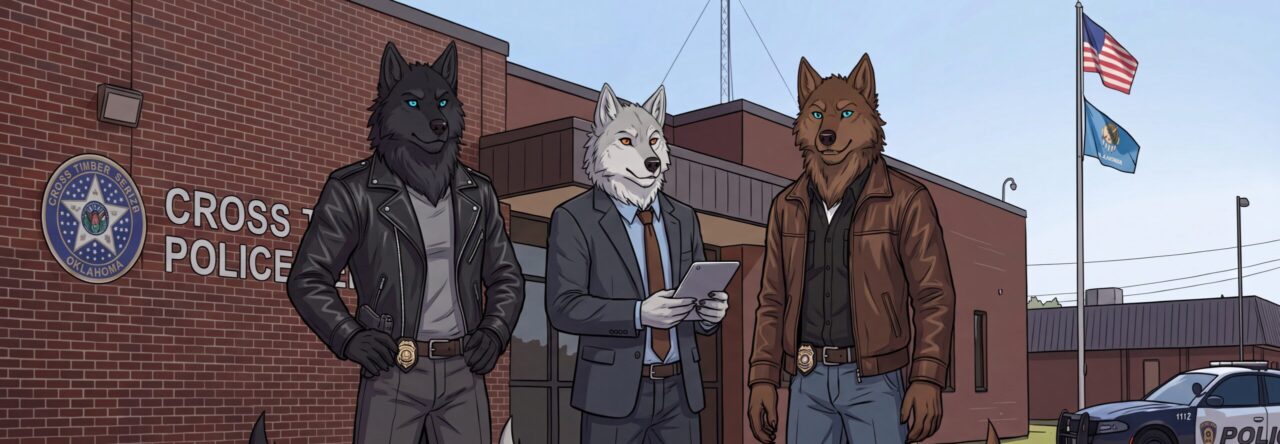
The board did not answer.
Boards rarely did.
They stood there anyway.
Fairland.
Lowell.
Marlowe.
Three addresses.
Three fire scenes.
Three pieces of missing copper too small to make sense.
Three owners who had heard the same words dressed in different emails.
Corridor risk.
Vacancy exposure.
Mitigation.
Cash purchase.
Cleanup.
Gabriel stared at the words until his coffee went cold.
“I hate when paperwork gets creepy.”
Mark did not look away from the board.
“Paperwork is often creepy. It just usually has better margins.”
Thane stood beside them, arms folded, eyes moving from photo to invoice to map.
The case had a shape now.
Not a full shape.
Not enough for court.
Enough to make his instincts stop pacing and point.
Crowe returned from command with her phone in one hand and her patience in the other, neither fully charged.
“Tell me we have something that is not another metaphor.”
Gabriel opened his mouth.
Crowe pointed at him.
“Not you.”
Gabriel closed his mouth.
Mark turned.
“We have a potential next target.”
Crowe’s expression changed.
That was all.
Just a tiny shift from tired irritation to command attention.
“Show me.”
Mark tapped Evelyn Harrow’s spreadsheet.
“Property at 1208 Kestrel. Vacant. Renovation permit active. Owner is Lucinda Pratt. Ridgemark contacted her twice in June. Briggs Restoration and Recovery performed a vacant-property assessment last week after a reported broken side window. Briggs sent a follow-up email this morning referencing increased corridor risk and recommending an emergency mitigation retainer.”
Gabriel leaned over the table.
“Which is the sentence bad guys write when they think they’re poets.”
Mark ignored him.
“Patel contacted Ms. Pratt at 23:22. She confirmed no one from Briggs is authorized to be on-site tonight. She also said a man from Briggs called at 18:30 and asked whether she had reconsidered the retainer. She declined.”
Crowe looked at Thane.
“Is the house secured?”
“Patrol rolled by ten minutes ago,” Thane said. “Exterior looked secure from the street. No vehicle present.”
Mark pulled up a map.
“Kestrel is two blocks east of Fairland and one block south of Lowell. Same corridor. Same utility layout according to permit drawings. Side utility entrance faces an alley.”
Crowe’s jaw tightened.
“Convenient.”
“Yes.”
Gabriel said, “Can we sit on it?”
Crowe looked to Mark.
“Legal?”
Mark was ready.
“Owner consent can allow officers onto the property and inside secured perimeter. Exterior surveillance from public right-of-way is already lawful. If owner provides written consent for police to enter and inspect due to suspicious fire pattern and unauthorized contractor contact, we can place units discreetly. We should coordinate with Valdez because any fire-related evidence belongs in her lane.”
Crowe nodded once.
“Get owner consent in writing. Quietly. No lights unless something happens. Patrol takes outer roads. Night Shift watches the property. Valdez on standby or scene if she’s willing. Nobody manufactures a crime. If someone shows up with permission, we verify. If someone breaks in, we act.”
Gabriel lifted one paw.
“That sounds like sitting near a hole and waiting for the idiot to bring his own shovel.”
Crowe stared at him.
Mark said, “That is unfortunately not inaccurate.”
Crowe pointed at Mark.
“Don’t encourage him.”
Thane looked at the map.
“If this is their rhythm, Fairland just happened. They may wait.”
“Maybe,” Crowe said. “Or maybe Fairland didn’t scare Pratt enough, and somebody wants to improve the lesson.”
No one joked at that.
Thane’s ears shifted back.
“Then we go.”
Lucinda Pratt signed the consent form from her kitchen table by email at 23:41.
She was seventy-two, lived with her sister across town, and had inherited the Kestrel house from her father. She wanted to renovate it for her grandson.
Ridgemark had offered cash.
Briggs had offered services.
Lucinda had offered both of them the same answer.
No.
Gabriel read her email twice.
“She writes angry in complete sentences.”
Mark glanced over.
“That is a valuable skill.”
The last line of her email said:
If someone is using fire to scare me, I want them caught before they scare anyone else.
Thane folded the printout and set it in the folder.
“Good enough.”
Valdez met them two blocks away from Kestrel in an unmarked fire marshal vehicle. She had a go-bag, a camera, and the look of someone who had been waiting for the pattern to become rude enough to touch.
Crowe had assigned Patel and Grant to outer traffic points in unmarked positions. Darnell held a block north, lights off. No circus. No dramatic takedown plan. Just patient eyes on a quiet house.
The Kestrel property sat dark behind a chain-link fence and a half-built porch. Plywood covered one rear window. A temporary permit board leaned near the front walk. The utility room was on the alley side, exactly where Mark said it would be.
Night had settled thick over the corridor.
Vacant houses always sounded empty until people listened.
Then they sounded like old wood, loose siding, raccoons in distance, traffic three streets over, wind under eaves, and every small noise a guilty mind wanted to become.
Thane crouched beside the alley fence with Gabriel to his left and Mark behind him.
Valdez waited near the fire marshal vehicle with line of sight to the side entrance, close enough to enter if needed, far enough not to contaminate anything before something happened.
Gabriel whispered, “I dislike patient crime.”
Mark whispered, “Crime does not exist for your pacing needs.”
“It should consider them.”
Thane lifted one hand.
Quiet.
They went still.
At 00:28, a vehicle turned into the alley with its headlights off.
Not all the way off.
Parking lights only.
A white high-roof panel van rolled slowly past the first house.
Stopped.
Moved again.
Stopped behind Kestrel.
The rear passenger brake light flickered weak red through tape.
Gabriel’s voice was barely air.
“Well, hello, business model.”
The van sat idling for eight seconds.
Then the engine shut off.
Two men got out.
One wore a dark ball cap and a work jacket. The other carried a small tool bag. Neither approached the front of the house. Neither knocked. Neither called out. Neither acted like someone with permission.
Mark’s phone buzzed silently.
Patel’s text appeared on the shared thread.
Van arrived. No visible plate from my angle. Rear light matches.
Grant added:
No other vehicles. Street clear.
Thane watched the man in the ball cap lift the side gate latch.
Not cut.
Not break.
Lift.
Like he knew where it was.
The second man followed him in.
They moved to the side utility door.
The man with the bag knelt.
Gabriel’s shoulders lowered.
Mark’s voice was low.
“Attempting entry.”
Thane keyed his mic once.
“Night Shift to units. Two subjects on Kestrel property, unauthorized, at side utility door. Hold until breach or fire setup. Valdez, stay back.”
Crowe’s voice came through his earpiece.
“Copy. Do not let it burn.”
Thane’s eyes stayed on the door.
The lock gave quietly.
The door opened.
Probable cause became more than theory.
Still, they waited one breath longer.
Long enough to see the man in the ball cap step inside.
Long enough to see the second man carry the tool bag through the threshold.
Long enough for Valdez’s camera to catch what mattered from her angle.
Then a small light flared inside.
Not a fire yet.
A work light.
The men moved in the utility room.
Mark whispered, “Copper?”
Thane breathed in.
Old dust.
Fresh human sweat.
Metal.
Solvent.
That same sharp sweet bite.
His claws flexed once against his palm.
Gabriel saw it.
Thane stilled them.
Name it first.
Move second.
“Chemical odor present,” Thane whispered.
Gabriel keyed up.
“Subjects inside. Possible fire materials. Moving.”
Crowe answered.
“Take them.”
Thane rose.
He did not run like a monster out of the dark.
He moved like a detective who had been given lawful reason to enter.
Fast.
Controlled.
Gabriel and Mark split with him, covering angles they had practiced so often the shape lived in their bodies.
Thane reached the side door first.
Inside, the man in the ball cap stood near the utility wall holding a short length of copper pipe in one gloved hand.
The second man crouched near the base of the wall with a cloth bundle and a small container beside him.
Gabriel’s voice cut through the room.
“Police! Hands!”
The crouching man jerked so hard he fell backward.
The man with the copper turned.
For one stupid second, his eyes tried to understand what his body already knew.
A seven-foot brown werewolf detective stood in the utility doorway.
A black werewolf detective stood behind him with a firearm trained low and steady.
A gray-white werewolf detective had the side angle and was already calling positions.
The man holding the copper dropped it.
The second man reached toward the bag.
Thane’s voice hit the room like a door closing.
“Don’t.”
The man froze.
Good.
One percent was enough.
Gabriel moved in.
“Hands open. Away from the bag.”
Mark covered him.
The man in the ball cap lifted his hands.
“This is a job.”
Gabriel said, “Then your timecard is going to be fascinating.”
Thane stepped over the threshold only where the floor was clear.
“Names.”
The man in the cap swallowed.
“Caleb Briggs.”
The second man said nothing.
Mark said, “Hands first. Poetry later.”
The second man lifted his hands.
Gabriel cuffed Caleb.
Mark cuffed the second man.
Thane stepped back out to avoid crowding the fire origin area.
Valdez entered after Crowe cleared her over the radio, camera already up.
She looked at the utility wall.
At the cloth bundle.
At the container.
At the copper on the floor.
Then at Caleb Briggs.
Her voice was flat.
“You picked the wrong night to improve the corridor risk profile.”
Gabriel glanced at her.
“That was excellent.”
Valdez did not look away from Caleb.
“I’ve been awake too long.”
The second man was Wesley Moran.
Employee.
Driver.
Bad liar.
Caleb Briggs was better at lying, which only made him worse at stopping.
They separated them before transport.
Patel took Moran.
Darnell took Caleb.
The van was secured pending warrant.
The house was photographed, documented, protected, and preserved before any scene traffic got greedy.
Lucinda Pratt arrived only after Crowe told her it was safe to stand behind the outer line. She wore a cardigan over pajamas and the expression of a woman who had planned to be frightened later but had become furious now.
She looked at the utility door.
Then at the van.
Then at Thane.
“That him?”
“We have two in custody,” Thane said. “We still have work to do.”
Lucinda nodded.
“I know. I watch television.”
Gabriel stood nearby and smiled despite himself.
She pointed one sharp finger toward Caleb as Darnell placed him in the patrol unit.
“If that man was trying to burn my father’s house, tell him he has poor taste and worse timing.”
Thane said, “I’ll make sure your statement is taken.”
“I have more than a statement. I have every email that little cleanup ghoul sent me.”
Mark’s ears lifted.
“Little cleanup ghoul?”
Lucinda looked at him.
“You may quote me.”
Gabriel whispered, “Please.”
Mark said, “No.”
Valdez came over with her camera at her side.
“Ms. Pratt, your house is safe tonight. There is some minor damage to the side door and utility wall from attempted entry and preliminary staging. No active fire damage.”
Lucinda closed her eyes.
Only then did her anger shake.
“Good.”
Thane softened his voice.
“Yes, ma’am.”
She opened her eyes again.
“Do you need coffee? I brought a thermos because my sister said police always look tired.”
Gabriel immediately said, “Your sister is wise.”
Crowe appeared beside him.
“No.”
Gabriel looked wounded.
“Community relations.”
“Evidence scene.”
“Coffee is not evidence.”
“With you, anything is possible.”
Mark took the thermos from Lucinda only after Crowe allowed it to be placed on the hood of Patel’s unit outside the tape.
No one drank until photographs were done.
Gabriel considered that cruel but lawful.
Warrants took time.
They always did.
Time was paperwork wearing boots.
By 03:12, the judge had signed the search warrant for the van and Caleb’s work phone based on the Kestrel arrest, the matching van footage, the three prior fire patterns, and owner statements placing Briggs at all relevant properties.
The van opened under lights in the impound bay.
Not the prisoner garage.
The vehicle processing area.
Mark was very clear about that.
Inside, they found what cases liked to pretend they didn’t need and juries liked to see.
A tubing cutter with copper residue.
Short copper sections in a plastic bin.
Three removable magnetic Briggs signs.
A replacement brake bulb still in packaging.
Work gloves.
A notebook with addresses, dates, and shorthand notes.
Two solvent containers.
Receipts from hardware stores near the corridor.
A printed list of vacant renovation properties.
And, folded in the sun visor, a Ridgemark broker email thread printed with several addresses circled.
Not proof of Ridgemark conspiracy.
Not yet.
Maybe never.
But definitely proof that Caleb Briggs had been watching the same properties Ridgemark wanted.
Gabriel looked at the replacement brake bulb.
Mark photographed it.
“People often possess solutions they do not use.”
Thane looked at the bin of copper pieces.
“Props.”
Valdez stood beside him, gloved hands still.
“Yes.”
Caleb did not confess.
Moran did.
Not fully at first.
Then enough.
Then too much.
He told Patel and Voss that Caleb said vacant houses were “opportunities with doors.” He said Caleb claimed small fires made owners call the first restoration company they remembered. He said Caleb talked about RidgeMark buying properties anyway, so “damage only sped up decisions.”
Moran insisted nobody was supposed to get hurt.
Voss, who had joined for the interviews once arrests were made, gave him the kind of look that made people regret sentences before lawyers did.
“Firefighters go into burning buildings, Mr. Moran.”
Moran looked down.
No answer helped him.
Caleb maintained it was a misunderstanding right up until Mark matched his notebook shorthand to Fairland, Lowell, Marlowe, and Kestrel.
Then Caleb asked for an attorney.
Good.
That was his right.
It also saved everyone from listening to more nonsense.
By 05:40, the case had stopped being elegant and started being heavy.
Arrest reports.
Supplemental reports.
Evidence logs.
Photo logs.
Consent forms.
Search warrant returns.
Witness updates.
Scene preservation notes.
Valdez’s fire marshal coordination.
Patrol canvass sheets.
Owner notification documentation.
Case link summaries.
Mark wrote like a machine that had learned irritation.
Gabriel wrote like someone who believed adjectives should be permitted under supervision.
Thane wrote carefully.
Cleanly.
No anger in the report.
No satisfaction.
Just facts.
They had caught Caleb Briggs and Wesley Moran at 1208 Kestrel without fire spreading, without anyone hurt, without damage beyond the attempted entry and staging.
They had tied the van to three previous scenes strongly enough to charge and continue building.
They had evidence pointing to a business model.
They did not yet have evidence that RidgeMark ordered or knew about the fires.
That stayed separate.
That mattered.
Truth did not improve when shoved.
At 06:30, they handed off to Voss, Rusk, Crowe, Valdez, and a deputy district attorney who had arrived with damp hair and the expression of someone whose morning had been kidnapped.
Voss reviewed Mark’s timeline.
Rusk reviewed the van photos.
Crowe reviewed the arrest reports.
Valdez reviewed the fire-origin summaries.
The prosecutor reviewed everything and said, “I’m going to need more coffee before I enjoy how much paperwork this is.”
Gabriel lifted one paw.
“There’s community coffee in the evidence-adjacent area.”
Crowe looked at him.
“Don’t call it that.”
“It was near evidence, but not evidence.”
Mark said, “Technically accurate.”
Crowe stared at him.
Mark looked back down.
“Unhelpful.”
Voss looked at Thane.
“Good work.”
Thane accepted the words with a nod.
“Thank you.”
Rusk tapped the board.
“You solved the fire wearing copper theft.”
Gabriel looked pleased.
“I said bad theater.”
“You were right.”
Gabriel froze.
Rusk smiled.
“Enjoy it. It expires in thirty seconds.”
Crowe moved the active case folder into day shift’s stack.
“Briggs and Moran are in custody. Valdez keeps fire. Voss and Rusk coordinate warrants and interviews on the day side. Night Shift goes home.”
Mark looked at his unfinished supplemental.
Crowe pointed at him.
“After you submit that.”
“I know.”
Gabriel leaned back in his chair.
“The victory has footnotes.”
“All victories in government have footnotes,” Rusk said.
The prosecutor pointed at him.
“That’s going in my office.”
Voss closed the folder.
“Ridgemark?”
Crowe’s face settled.
“Carefully. No assumptions. No headlines. We have pressure emails and shared language. We do not have conspiracy.”
Thane nodded.
“Yet.”
Voss looked at him.
“Yet is allowed. As long as it doesn’t become because I want it.”
“It won’t.”
She held his gaze a moment.
Then nodded.
“I know.”
The final reports went in at 07:18.
The folder became several folders.
The board stayed full.
The case was not over in the way cases were never over after arrest. Lab results would come. Motions would come. Defense questions would come. Ridgemark would either become a witness, a target, or an ugly coincidence with expensive stationery.
But the fires had stopped for now.
Kestrel had not burned.
Lucinda Pratt’s father’s house still stood.
No firefighters had gone into another staged utility-room trap.
That was enough to let the tiredness feel earned.
They walked out through the normal hall, past patrol, past the front desk, past a records clerk who gave them a thumbs-up without looking away from her monitor.
The morning sun hit them in the station parking lot.
The Humvee waited outside, broad and dusty and theirs.
Not in the garage.
The garage was for prisoners, suspects, evidence transport, and other things that came with locked doors and bad decisions.
Thane opened the driver’s door.
Gabriel looked at him.
“Are we celebrating?”
Thane paused.
“With what?”
“Breakfast.”
Mark said, “We have been awake all night.”
“That’s why breakfast exists.”
Thane climbed in.
“Cabin first.”
Gabriel got into the back.
“Cabin breakfast?”
“Cabin sleep.”
Gabriel looked offended.
“Sleep is not a celebration.”
Mark climbed in beside him.
“It is the biological celebration of survival.”
Gabriel stared.
“That’s terrible.”
“It’s accurate.”
Thane started the Humvee.
Gabriel leaned forward.
“You know what would make this perfect?”
“No,” Thane said.
“Cold Stone breakfast.”
“No.”
“Ice cream contains dairy.”
Mark said, “Do not reopen this category.”
Thane pulled out of the parking lot.
The station receded behind them.
The city moved into morning around them: delivery trucks, early commuters, sprinklers hissing in front yards, heat already waiting under the day.
For once, nobody called.
No goat.
No fire.
No interview.
No camera shoved toward Silas.
No child stuck in a tree.
No white van sliding through an alley.
Just the road home.
Gabriel fell quiet first, which meant he was more tired than he wanted to admit.
Mark reviewed something on his tablet until the motion of the vehicle finally convinced his eyes to close.
Thane drove through the familiar streets toward the trees, the folder of the night packed away in the back of his mind where solved things rested until court made them move again.
Good shift.
Hard.
Clean.
Useful.
He liked useful.
At 07:46, the cabin appeared between the trees.
The sight of it settled something in his chest.
Home.
The driveway curved under shade. Gravel shifted beneath the tires. The Humvee rolled past the front deck and into its usual spot.
Silas’s Yukon was parked near the side.
That made Thane smile before he realized he was doing it.
Gabriel opened one eye.
“Silas home?”
“Yes.”
“Good. We can tell him we caught the cleanup ghoul.”
Mark opened his eyes.
“We should not call Caleb Briggs that.”
“Lucinda Pratt gave us permission.”
“She cannot authorize terminology.”
“She absolutely can. She has cardigan authority.”
Thane shut off the engine.
“Inside.”
They climbed out tired, dusty, and lighter than they had been when the shift began.
Usually Thane reached the front deck first.
He did not plan it that way.
His stride was longer. His body moved ahead without asking. Gabriel complained about it sometimes.
This time, Gabriel went first.
He bounded up the steps with a yawn big enough to show fang and reached for the front door.
Mark followed beside him, tablet tucked under one arm, already saying something about evidence terminology that nobody deserved after sunrise.
Thane came last.
Three steps behind.
Slow because he was tired.
Because the morning was warm.
Because the case had ended well enough.
Because home was right there.
Gabriel’s paw closed around the door handle.
Mark turned his head slightly, about to say something.
The sound arrived almost at the same time as the impact.
Not a crack.
A hard, flat thunderclap from the trees.
Thane’s left shoulder came apart in a burst of red mist.
One second he was stepping onto the deck.
The next, he was gone over the railing.