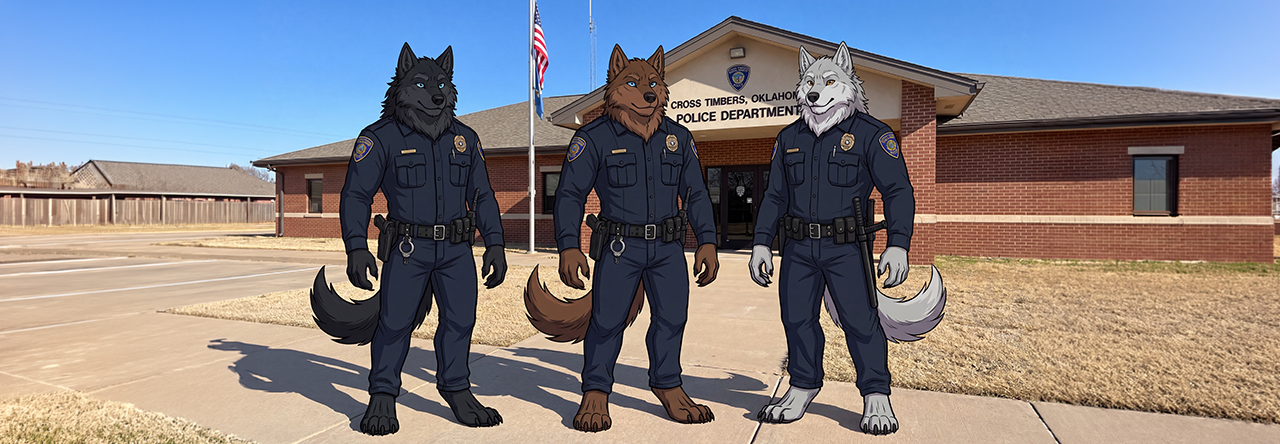
Night Shift Header

Month: June 2026 Page 1 of 3

Chapter 25 — The Search Grid

Seven weeks after Emily Carter came out of the trailer alive, the department stopped pretending the wolves’ abilities were an administrative inconvenience.

It did not stop being careful.

That part mattered.

It just stopped treating every useful thing the three of them could do as something dangerous that needed to stay locked in a drawer.

The policy arrived as a twelve-page general order with three appendices, two signature blocks, a training acknowledgment form, and a title that Mark insisted was “surprisingly efficient for government writing.”

SPECIAL CAPABILITIES SUPPORT

Gabriel had read the title over Mark’s shoulder at breakfast and said, “That sounds like we are being issued as optional equipment.”

Mark had not looked up from the packet.

“It means they have created a formal structure for requesting our assistance during appropriate incidents.”

Thane took the Humvee keys from the bowl beside the garage door.

“It means we get called when useful.”

Mark looked up.

“It means we get called when directed.”

Thane considered that.

“Same thing.”

“It is not remotely the same thing.”

Gabriel leaned against the kitchen counter with coffee in one hand and an expression of deep satisfaction.

“The Alpha has spoken. The systems wolf has filed a dissent.”

Mark folded the policy packet carefully.

“Humvee use is unrelated to Special Capabilities Support.”

Thane opened the garage door.

“Still driving it.”

“Of course you are.”

The storm had begun before dawn.

Rain hammered the cabin roof in long, hard sheets. Water ran down the windows in silver ropes. The gravel drive had become dark mud between the trees, and the low places near the creek were already filling.

For once, Mark had not objected to the Humvee.

Not out loud.

That was as close as anyone was getting to victory.

The Humvee pushed through standing water on the way into Cross Timber, tires hissing through rain-black streets. Gabriel sat in the passenger seat with his coffee secured between his knees. Mark sat in back with the Special Capabilities packet open again, reading it for perhaps the fourth time.

Thane glanced in the mirror.

“You memorizing it?”

“I am verifying the language.”

“You already read it.”

“Yes.”

“Four times.”

Mark looked up.

“Three.”

Gabriel smiled.

“Top of class.”

Mark’s ears flattened.

“Relevant policy review is not a character flaw.”

“Not by itself,” Gabriel said.

The station parking lot was nearly empty when they arrived. Most officers had already been inside for briefing. The rain came down hard enough to blur the cruiser lights and turn every puddle into a trembling mirror.

The Humvee rolled into its usual two spaces.

Mark got out, looked at the angle, looked at the rain, and said nothing.

Thane noticed.

“Nothing?”

Mark shut the rear door.

“Ground clearance is currently operationally justified.”

Gabriel stopped in the rain.

“Did anyone hear that?”

“No,” Mark said immediately.

“You just complimented the Humvee.”

“I did not.”

“You did.”

“I made a narrow, weather-dependent observation.”

Thane started toward the station.

“Alpha review complete.”

Mark made a sound from behind him that was too tired to become an argument.

Inside, the department had that particular storm-day energy where everyone moved faster and no one smiled. Wet uniforms. Damp boots. Radios carrying flooded-road reports. Dispatch screens filled with yellow weather alerts and traffic notifications.

Nina looked through the dispatch window as the three wolves came in.

“Morning.”

Gabriel blinked.

“No insult?”

“I have seventeen flooded-road calls holding, three alarm systems reporting water intrusion, one tree in a power line, and a woman on River Road who has called six times because her neighbor’s trampoline blew into her koi pond.”

Gabriel nodded solemnly.

“Crisis conditions.”

“Exactly.”

Crowe stood near the briefing-room doorway with a tablet in hand.

“Inside. Now.”

The briefing room was full.

Bell stood near the front wall, arms crossed. Ortiz sat with one boot hooked beneath her chair. Cho had a paper cup of coffee in one hand and a stack of weather-response forms in the other.

Voss and Rusk were not there.

That made sense.

The Emily Carter case had gone to investigators after Kyle Brenner and Derek Vane were charged. Patrol had done its part. Now detectives, prosecutors, victim advocates, evidence technicians, and people with offices took over the longer work.

The trio had returned to patrol.

Real patrol.

Flooded roads. Welfare checks. Public-assistance calls. Broken-down cars. Alarm calls. Routine reports. Traffic direction. The thousand small things that kept a city from becoming worse before anyone noticed.

Crowe began.

“Storm conditions are expected to continue through midday. Low-water crossings are closed. Do not drive around barricades. Do not let citizens drive around barricades. If somebody says, ‘I know this road,’ you say, ‘That is not the same as knowing where the water is.’”

She tapped the tablet.

“Fire and county rescue are handling a flooding response east of town. We may be called for traffic management, evacuation support, or search assistance. Use your heads.”

Her eyes settled briefly on the trio.

“Today is also the first operational day under General Order 4.17.”

A few officers looked toward them.

Not with suspicion.

Not exactly.

With awareness.

Crowe continued.

“Special Capabilities Support does not mean three probationary officers are suddenly a superhero team. It means their documented abilities may be requested by incident command during appropriate events. Search. Rescue. Evacuation. Hazardous conditions. Evidence location. Every use is directed. Every use is documented. Every officer remains subject to the same standards, the same command structure, and the same common sense.”

Gabriel raised a hand.

Crowe closed her eyes.

“Why?”

“Can we get jackets?”

“No.”

“Patches?”

“No.”

“Small embroidered—”

“No.”

Mark said, “The policy does not authorize visual insignia.”

Gabriel turned toward him.

“You read the appendix?”

“There are three.”

Crowe pointed at the trio.

“Bell. Ortiz. Cho. Same assignments. Later-phase FTO means they will take more lead responsibility today. It does not mean you stop supervising them.”

Bell nodded.

Ortiz nodded.

Cho sipped coffee.

Crowe’s expression shifted as Nina’s voice came through the room speaker.

“Lieutenant, Fire Command requesting Special Capabilities Support at Hollow Creek crossing. Missing adult female. Vehicle located. Possible water rescue and search operation.”

The room changed.

Crowe glanced at the dispatch screen.

“Details.”

Nina came back immediately.

“Thirty-one-year-old female, Megan Rourke. Vehicle found partially off the low-water crossing at Hollow Creek Road east of town. Caller is her employer. Rourke left the hospital night shift approximately ninety minutes ago and sent a partial emergency call after her vehicle entered floodwater. Call disconnected. Vehicle located by county deputy. Driver absent. Rescue teams searching downstream.”

Crowe looked at Bell, Ortiz, and Cho.

“You are requested.”

Thane’s posture changed.

Bell saw it.

“Not yet.”

Thane looked at him.

“We are not moving until command says move.”

“Yes.”

Crowe handed Bell a printout.

“Fire Command has incident control. You do exactly what they ask, nothing they do not ask. This is not a police rescue with firefighters invited.”

Bell nodded.

“Understood.”

Crowe looked at the trio.

“Listen to your FTOs. Listen to fire command. Do not make me regret policy implementation before lunch.”

Gabriel stood.

“No capes.”

Crowe stared at him.

Gabriel raised both hands.

“No capes.”

The drive east took fifteen minutes through rain and standing water.

Thane drove the Humvee because it was their vehicle, because the roads were bad, and because Bell had looked at the weather and said only, “Take something that won’t float away.”

Mark had sat in the back without argument.

That was still victory.

The road narrowed as they left the developed part of Cross Timber. Trees crowded close to the shoulders. Fields had become shallow lakes. Ditches ran brown and fast. Low clouds pressed close enough to feel like another layer of weather under the sky.

The radio gave them fragments.

“—county unit holding east approach—”

“—water rising at bridge marker—”

“—vehicle confirmed unoccupied—”

“—fire command requests the three probationary officers stage at south command—”

Gabriel looked out the windshield.

“Does anybody else hate the phrase ‘vehicle confirmed unoccupied’?”

No one answered.

They all did.

Hollow Creek crossing had vanished beneath water.

What had been a narrow concrete road over a shallow creek was now a broad, fast-moving brown channel cutting across the countryside. Rainwater rushed through the trees on either side, pulling branches and trash and broken fence posts along with it.

Fire engines lined the south approach. County rescue trucks stood farther back. A sheriff’s office command trailer sat on higher ground with its awning down against the rain. Personnel in bright rain gear moved between vehicles, carrying rope bags, radios, helmets, and equipment that looked designed for situations everyone hoped never occurred.

Megan Rourke’s car rested at an angle near the far edge of the crossing.

A gray sedan.

Front end partly submerged in the runoff.

Driver’s door open.

Rear lights blinking weakly beneath the rain.

Thane saw it and felt his stomach tighten.

Bell parked the Humvee where directed. It looked almost normal beside the rescue trucks for once.

Almost.

A woman in a yellow incident-command jacket approached them. She was in her late forties, broad-shouldered, rain plastered across the edges of her dark hair, and carried herself with the calm of someone who had already made twenty decisions before anyone else finished asking questions.

“Battalion Chief Calder,” she said. “You’re the police support?”

Bell stepped forward.

“Officer Bell. These are Probationary Officers Thane, Gabriel, and Mark. Their FTOs are present.”

Calder looked at the trio.

Not with awe.

Not with fear.

With evaluation.

“Good. I need useful.”

Bell nodded.

“That’s what they do.”

Calder’s eyes went to Thane first.

“Your people can track?”

Thane answered carefully.

“Yes, ma’am. Under the right conditions.”

“Can you tell me whether she left the vehicle?”

“Possibly.”

“Can you hear beyond what my people can?”

Gabriel said, “Sometimes.”

“Can you organize search coverage?”

Mark said, “Yes.”

Calder looked at all three again.

“Good. You work under my command while we are on this incident. You do not enter water, unstable ground, or a rescue zone unless I approve it. You report observations. You do not turn observations into conclusions. You do not become casualties.”

Thane nodded.

“Yes, ma’am.”

Calder pointed toward the vehicle.

“First question. Did Megan Rourke leave the car, and if so, where did she go?”

The sedan sat beyond a rope line established by fire rescue. A deputy in rain gear stood near it, keeping anyone from approaching too close. Two rescue technicians had already assessed the vehicle from a tethered position and confirmed no one was trapped inside.

Bell walked with Thane toward the edge of the safe approach.

“Same rules,” he said.

Thane looked at the floodwater.

“Yes.”

“Say them.”

“I report before motion. I do not enter water without command approval. I do not assume. I do not run because I smell something.”

Bell nodded.

“Good.”

They stopped where the ground began to slope toward the submerged crossing.

Thane closed his eyes.

Rain complicated everything.

Water carried scents apart, blended them, broke them open against mud and grass and wet stone. The air smelled like runoff, gasoline, soaked wood, exhaust, creek silt, wet leaves, frightened people, rescue gear, and rain itself.

But beneath it—

Megan.

Not from memory. From her jacket, perhaps, or the car interior. A human scent that separated from the rest because it traveled away from the vehicle.

Thane opened his eyes.

“She left the car.”

Bell looked at him.

“Direction?”

Thane pointed toward the downstream tree line.

“Southwest. She went toward the trees, not the road.”

“Can you tell when?”

“No. Rain damages it.”

“Any injury?”

Thane hesitated.

“Blood. Small amount. Not enough to tell how serious.”

Bell keyed his radio.

“Fire Command, police support. Probationary Officer Thane reports adult female scent leaves vehicle area heading southwest toward tree line. Possible small blood presence. Rain degradation prevents time estimate. Recommend search focus downstream on southwest bank.”

Calder answered.

“Copy. Search Group One, shift southwest. Marking that as Zone Bravo.”

Mark heard it from the command trailer and looked toward the terrain map spread across a folding table.

Cho stood beside him.

“What does that change?”

Mark leaned over the map.

The crossing. The creek. The slope. The drainage channel. A washed-out footpath that ran along the southwest bank before disappearing beneath tree cover.

“The road rises here,” Mark said. “If she left the car and tried to get away from the water, she would likely move uphill toward the old maintenance trail. But the floodwater cuts that trail off about four hundred yards down.”

Cho nodded.

“Likely shelter?”

Mark studied the map.

“Old footbridge support. There is a raised concrete culvert here. If she reached it before the water rose, it would provide cover from wind and visibility from the creek.”

Calder looked over from the command position.

“You certain?”

Mark shook his head.

“No. It is the next place I would search.”

Calder nodded.

“Good. That is all I need.”

She pointed to the map.

“Search Group One takes the southwest bank. Group Two checks the maintenance trail. Group Three works the bridge and culvert. Mark, you stay at command with Cho. Update the grid as teams clear zones.”

Mark blinked.

He looked toward the woods.

Then toward the map.

Then toward the radio log.

“Yes, ma’am.”

Cho watched him.

“You heard her.”

“Yes.”

“What is your job?”

“Give people the next place to look.”

Cho nodded.

“Then do it.”

Gabriel and Ortiz were assigned near the south bank where the tree line began.

A rescue team in helmets and harnesses moved ahead along the cleared edge, probing the ground for washouts. Ortiz stood beside Gabriel near a temporary marker line, both of them in rain gear over their uniforms.

“Do not wander,” Ortiz said.

“I know.”

“You are not a search dog.”

Gabriel looked at her.

“I am very aware of that distinction.”

“Good. You are an officer with ears.”

“That is somehow less flattering.”

Ortiz glanced down the slope.

“It is more legally accurate.”

Gabriel listened.

The creek roared beneath the rain.

Wind shoved through bare branches. Water slapped against half-submerged rocks. Rescue radios crackled. People called out Megan’s name in measured intervals.

“Megan!”

Nothing.

“Megan Rourke!”

Nothing.

Gabriel tilted his head.

There.

Not a voice.

Not exactly.

A thin, high sound beneath the flood noise.

Three notes.

Pause.

Two more.

He looked toward the downstream culvert.

Ortiz saw the change in him.

“What?”

Gabriel held up one hand.

He listened again.

Three notes.

Pause.

Two.

A whistle.

Weak.

Farther than it should have carried.

“Over there,” Gabriel said.

Ortiz followed his gaze.

“You hear her?”

“I hear something.”

“Report it.”

Gabriel keyed his radio.

“Search Group One to command. Possible whistle signal downstream near the old footbridge culvert, southwest bank. Repeating pattern, three notes, pause, two notes. Request search team check.”

Calder’s answer came immediately.

“Copy. Group Three redirecting. Do not self-deploy.”

Gabriel did not move.

Every part of him wanted to.

The sound came again.

Fainter.

Three.

Pause.

Two.

Ortiz watched him remain where he was.

“That hard?”

“Yes.”

“Good.”

Gabriel gave her a look.

“You and Bell have been hanging out.”

“No. You are all just predictable.”

At command, Mark marked the sound location on the map.

Then he looked again at the terrain.

The culvert sat beneath what had once been a pedestrian footbridge. The footbridge itself had collapsed years ago and been closed off, but the concrete abutments remained. Water now ran around both sides, forming a deep pocket where debris collected.

If Megan had gone there for shelter, she might be trapped.

If the water rose much higher, she might lose the only ground under her.

Mark picked up the radio.

“Command, mapping update. Culvert pocket is accessible from south bank via old maintenance trail, but the direct route crosses unstable ground near the washout. Recommend rescue team approach from east with rope line, not from creek side.”

Calder looked at him across the table.

“You see that from the map?”

“And the contour lines. Water is draining toward the low point here.”

Calder nodded.

“Rescue, confirm approach from east. Marking south trail as unstable.”

Cho looked down at the grid.

“You are not drawing a perfect map.”

Mark’s eyes stayed on the paper.

“I know.”

“You are giving people the next place to look.”

Mark nodded.

“Yes.”

The first search team found Megan’s shoe near the maintenance trail.

The second found a small smear of blood on a broken branch.

Thane smelled both before the technicians reached them.

He did not touch them.

Did not move them.

Did not follow the trail without direction.

He stood beside Bell at the rope line and reported what he could.

“Same scent.”

“Any change?”

“Stronger.”

“Direction?”

“Toward culvert.”

Bell relayed it.

Calder approved movement.

“Thane, you may accompany Rescue Team Three to the east approach. You stay tethered. You follow their instructions. You do not enter the water unless ordered.”

Bell looked at him.

Thane met his eyes.

“Yes.”

Bell checked the harness himself.

It was custom-fitted, adapted for Thane’s shoulders, tail, chest, and the reality that a normal rescue harness had not been designed for a full-time werewolf built like a truck.

The straps were reinforced.

The line anchored to a rescue technician.

A second rescuer checked the buckle.

Bell watched all of it.

“You feel it pull wrong, you stop.”

“Yes.”

“You lose footing, you call it.”

“Yes.”

“You see her, you report before you move.”

“Yes.”

Bell held his gaze.

“You are not the rescuer until they tell you you are.”

Thane nodded.

“Yes.”

The east approach was worse than it looked from the map.

Mud sucked at Thane’s footpaws. Water ran through the grass in thin brown rivers. The trees leaned over the bank, roots exposed where the ground had washed away beneath them.

The rescue team moved ahead slowly.

One technician tested each step with a probe.

Another managed rope.

Thane stayed between them, not leading, not pushing, not trying to save time by being faster than everyone else.

That was harder than the terrain.

At the edge of the culvert pocket, the whistle sounded again.

Three.

Pause.

Two.

Gabriel heard it from above and answered through the radio.

“Possible victim signal confirmed.”

Then, from the other side of the ravine, his voice rose.

“Megan! This is Cross Timber Police! If you can hear me, whistle again!”

The answer came.

Three.

Pause.

Two.

Thane saw her then.

A shape beneath the remains of the old footbridge.

Megan Rourke lay against the concrete abutment on a narrow shelf of mud and broken stones. One leg was trapped beneath a fallen tree limb. Her rain jacket was torn at the shoulder. Her face was pale beneath wet hair.

But she was conscious.

Her eyes were open.

Thane stopped.

“Victim located,” he said into the radio. “Adult female, conscious. Lower leg trapped beneath fallen limb. Water rising around location.”

The rescue team moved into practiced motion.

“Do not approach yet,” the lead technician said.

Thane’s body went tight.

Megan saw him through the rain.

Her eyes widened.

He understood why.

A huge brown wolf in a police uniform, standing in stormwater beneath a broken bridge, was not what anyone expected to see when they thought they might die.

Gabriel’s voice carried from the higher bank.

“Megan! You’re not alone. We have rescue teams with you. Keep talking to us if you can.”

Megan tried to answer.

Her voice did not carry.

She lifted one hand.

Gabriel called back.

“That’s enough. We see you.”

The rescue technician assessed the limb.

Too heavy to shift by hand.

The tree had been carried down in the flood and wedged against the concrete abutment. Moving it wrong could worsen her leg injury or push debris into the water.

The technician looked at Thane.

Then at the branch.

Then at the command radio.

“Fire Command, Rescue Three. We have victim trapped by approximately ten-inch tree limb. Request authorization for special capabilities support to stabilize and lift obstruction.”

Calder’s voice came fast.

“Approved. Thane, follow Rescue Three lead. Lift only when directed. Maintain position until victim is clear.”

Thane’s chest tightened.

“Yes, ma’am.”

The technician moved beside him.

“Listen carefully. You take the limb here and here. Do not pull it upstream. Lift vertical just enough for us to free her leg. We will tell you when. If it shifts, stop.”

Thane nodded.

He stepped into position.

Mud pressed cold between his toes. Water surged around his ankles. His rope line tightened behind him.

Megan looked at him.

Afraid.

Thane kept his voice low.

“I’m going to move the tree. They are going to get your leg free.”

Her lips parted.

“You’re—”

“Police,” he said.

The rescue technician gave the signal.

“Lift.”

Thane placed both hands beneath the limb.

He felt the weight.

Wet wood. Mud. Water. The pressure of the branch against stone.

He did not rip it aside.

He did not throw it.

He lifted.

Slowly.

A few inches.

The limb groaned.

The technician slid a stabilization block beneath it.

“Hold.”

Thane held.

Water pushed against his legs. His muscles locked. The rope line pulled taut.

One rescuer worked at Megan’s trapped boot and lower leg. Another kept her head steady and checked circulation.

“Almost there,” the rescuer said.

Megan made a sound between pain and fear.

Gabriel’s voice carried down through the rain.

“Megan, look at me if you can.”

She turned her face toward the sound.

“You are doing exactly what you need to do. Stay with us.”

The rescuer called, “Clear!”

The technician looked at Thane.

“Lower it slow. Not on her.”

Thane lowered the limb onto the stabilization block and let it settle.

Then he stepped back.

Immediately.

The rescuers moved Megan onto a rescue blanket and secured a harness around her torso.

Calder’s voice came through the radio.

“Water is rising. Can she be moved through the east route?”

The lead technician looked toward the narrow slope.

“Not safely on foot. We can guide-line her, but the shelf is collapsing.”

The rope team studied the route.

Thane looked at Megan.

She was shivering hard now.

Her lips had turned pale.

The technician looked at him again.

“Thane.”

He turned.

“You have the strength to carry her through the first section?”

“Yes.”

“Can you do it without losing balance?”

“Yes.”

“Not your estimate. Can you do it tethered, guided, with two rescuers alongside?”

Thane looked at the route.

At the ropes.

At the shallow-but-fast water between the culvert shelf and the higher ground.

At the rescue technician.

“Yes.”

The technician keyed command.

“Request authorization to use Thane as assisted extraction carrier. Victim will be secured in rescue harness and guide-lined. Two rescuers alongside. Route checked.”

Calder did not hesitate.

“Approved. Rescue Three lead maintains control.”

Bell’s voice came over the radio.

“Thane.”

Thane answered immediately.

“Yes.”

“Slow.”

“Yes.”

“One percent.”

Thane looked at the water.

“Maybe two.”

For the first time all morning, Bell’s voice changed.

“Good.”

They secured Megan against Thane’s chest with a rescue harness and a guide line anchored to the east bank. One rescuer stayed at Megan’s side, checking her airway and keeping her head supported. Another moved beside Thane with the main safety line.

Thane stood.

Megan’s weight was almost nothing.

The route was everything.

He took one step.

Tested the mud.

Second step.

Water pushed against his legs.

Third.

The current shoved harder.

The rope line tightened.

“Stop,” the technician said.

Thane stopped.

A branch rolled past downstream, fast enough to remind everyone what the water could do.

“Two feet right,” the technician directed.

Thane moved two feet right.

“Good. Keep coming.”

Gabriel stood on higher ground where Megan could see him between branches and rain.

“You’re doing it,” he called. “You’re almost out.”

Megan’s fingers clenched weakly in Thane’s uniform shirt.

He kept his eyes on the ground.

Not the strength.

Not the weight.

The next safe place.

Step.

Check.

Step.

Check.

The slope rose.

The water lowered.

Rescuers moved in closer.

Then Thane reached solid ground.

The team took Megan from him immediately, transferring her to the stretcher with practiced hands.

Thane stepped back as the paramedics closed around her.

He was soaked through. Mud streaked his uniform. His shoulders ached from holding still more than from lifting the tree or carrying her.

Bell reached him first.

“You okay?”

“Yes.”

Bell looked at the water behind him.

Then at Megan on the stretcher.

Then back at Thane.

“You listen?”

Thane breathed hard once.

“Yes.”

Bell nodded.

“Good.”

Megan’s eyes fluttered open as paramedics prepared to move her toward the ambulance.

She looked toward the line of officers and rescue workers.

Then found Gabriel.

He came close enough to be heard, not close enough to crowd.

“You made it,” he said.

Megan’s voice was barely there.

“I heard you before I saw you.”

Gabriel’s ears softened.

“That was the plan.”

She looked past him at Thane, then Mark standing near the command map, then the rescue workers.

“Thank you,” she whispered.

Gabriel shook his head slightly.

“Save your strength.”

The ambulance doors closed around her.

They drove away through rain and flashing lights.

No applause followed.

No crowd waited behind barricades.

No one chanted.

The storm went on.

But there was a woman alive inside that ambulance who had not been alive in the plan an hour earlier.

That was enough.

At command, Calder stood over the damp map with Mark and Cho.

The search grid was full of colored marks now. Vehicle location. Last phone point. scent trail. whistle location. discovered shoe. blood on branch. teams cleared. unstable ground. safe route.

A map of every place they had looked.

And one place they had found her.

Calder tapped the culvert mark.

“Good work.”

Mark looked at the map.

“Thank you.”

“You got the teams to the right place.”

“I suggested a route.”

“You did not order anyone into danger. You gave command a better decision.”

Mark’s ears lifted.

Cho looked at him.

“Write that down later.”

Mark blinked.

“Write down praise?”

“No. Write down the process that got us there. The next person needs the road.”

Mark nodded.

“Yes.”

Mercer arrived just as the incident shifted from rescue to recovery.

He stood beneath an umbrella that did nothing useful against the wind and watched the teams pack rope, fold equipment, mark evidence, and reload vehicles.

Crowe stood beside him.

The three wolves gathered with their FTOs near the command trailer, wet and exhausted.

Mercer looked at each of them.

Then at Bell, Ortiz, and Cho.

Then at Calder.

“This is exactly what General Order 4.17 was written for,” he said.

No speech.

No podium.

No cameras.

Just the truth.

Calder nodded.

“I requested support. I got support. Nobody freelanced. Nobody became the problem. Your officers helped find her, helped keep her alive, and followed command.”

Mercer looked at the trio again.

“We did not spend months teaching you restraint so we could leave your strengths in a drawer.”

The rain softened around them.

“We taught you restraint so this department could use them without fearing them.”

Thane felt the words settle somewhere beneath his ribs.

Gabriel looked down briefly.

Mark’s hands tightened around the damp edge of his clipboard.

Bell stood beside Thane.

Quiet.

Solid.

After a moment, Bell said, “You used what you are.”

Thane looked at him.

“Yes.”

“You did not make us rescue the rescuer.”

“No.”

“You did not treat the command structure like a suggestion.”

“No.”

Bell nodded.

“That is progress.”

Gabriel smiled faintly.

“High praise.”

Ortiz looked at him.

“You heard the whistle. You reported it. You stayed in position until the team could act.”

Gabriel nodded.

“Yes.”

“You did not ask her for her story while she was trapped.”

“No.”

“You helped her hold on.”

Gabriel’s expression softened.

“That part I can do.”

Ortiz nodded.

“I know.”

Cho turned to Mark.

“You built a search grid with incomplete information in bad weather.”

Mark looked at the soaked map.

“It was not complete.”

“No.”

“I did not know where she was.”

“No.”

“I only knew where to look next.”

Cho’s eyes held his.

“That is enough more often than you think.”

For once, Mark did not argue.

They returned to the station near the end of shift.

The Humvee was covered in mud along the lower doors. The front tires looked like they had been used to excavate a creek bed.

Mark saw it and took a long breath.

Thane waited.

Gabriel waited.

Mark looked at the mud.

Then at Thane.

“Ground clearance remained operationally justified.”

Thane nodded.

“Alpha review complete.”

Mark got into the back before the argument could start.

At the station, reports waited.

Of course they did.

Fire Command’s incident log. Patrol supplemental reports. Support use documentation. Search-grid preservation. Witness summaries. Vehicle recovery notes. Medical transfer times. Team locations. Every small thing that had become part of the route to Megan Rourke alive in an ambulance.

Gabriel sat beside Ortiz at a report terminal.

“I have to write that I heard a whistle.”

“Yes.”

“That sounds insane.”

“You heard a whistle.”

“I heard it better than anyone else.”

“Then write exactly that.”

He sighed.

“Do I get to say I have excellent ears?”

“No.”

Mark built the search grid again in the department system, cleaner this time, with the zones, terrain hazards, team routes, and corrected time stamps.

Cho stood behind him.

“You are making it too pretty.”

“It needs to be readable.”

“It needs to be usable.”

Mark removed one shading layer.

Thane sat beside Bell, staring at the line where he had written:

At the direction of Rescue Team Three and under Battalion Chief Calder’s incident command, I lifted the fallen limb approximately six inches to permit rescuers to free Megan Rourke’s lower leg.

Bell tapped the screen.

“Good.”

Thane looked at him.

“No correction?”

“Not yet.”

Thane waited.

Bell read the next sentence.

I then transported Rourke through the approved east extraction route while she was secured in a rescue harness and guide line, accompanied by two rescue technicians.

Bell nodded.

“Also good.”

Thane looked at him suspiciously.

Bell continued.

“Do not get used to it.”

There it was.

Normal again.

At the end of the night, the three of them walked out to the Humvee together.

The storm had finally moved east.

Clouds broke over Cross Timber, leaving the pavement dark and shining beneath the streetlights. The creek water would keep rising for a while. Roads would remain closed. The city would continue needing patrol officers for ordinary trouble.

Gabriel climbed into the passenger seat and let his head rest against the window.

“We saved someone.”

Thane started the engine.

“Yes.”

Mark sat in the back with the folded Special Capabilities policy packet in his hands.

“No,” he said quietly.

Gabriel opened one eye.

“No?”

Mark looked down at the pages.

“Fire rescue saved her. EMS saved her. Command made the decisions. We helped.”

Thane looked at him in the rearview mirror.

Mark looked back.

Then added, “But we helped well.”

Gabriel smiled.

“There he is.”

The Humvee pulled away from the station.

Mud dried along its doors.

The city slid past in wet reflections.

They were still probationary officers.

Still in field training.

Still writing reports that came back with corrections.

Still doing parking complaints, welfare checks, found property, barking dogs, bad traffic, worse weather, and every small human disaster that never went viral.

But somewhere east of town, a woman who had nearly disappeared into floodwater was alive.

The department had asked the wolves to be wolves.

And they had known exactly how.

Chapter 24 — The Door Opens

No one said anything about the Humvee.

That was how Thane knew it was serious.

It sat at the edge of the East Ridge staging lot beneath a dim early-morning sky, broad and matte green and entirely too large for the marked parking space. Under ordinary circumstances, Mark would have looked at the angle, the extra half-space claimed by the rear tire, the nearby patrol units forced to compensate around it, and produced at least one exhausted remark about geometry.

This morning, he only got out.

Gabriel noticed.

“No memorandum?”

Mark checked the seal on his bodycam.

“Not today.”

That was all.

The lot behind the vacant hardware store had become a quiet machine.

Marked patrol units sat dark along the outer edge. An unmarked detective sedan waited nearer the entrance. A mobile command van idled behind a row of trees. Officers moved between vehicles with radios low and coffee forgotten in cup holders. Evidence personnel loaded bags and cameras. EMS waited one block over, close enough to reach the scene quickly and far enough away not to announce themselves.

No lights.

No sirens.

No crowd.

No cameras.

No viral spectacle.

The city did not know what was happening yet.

That was intentional.

Thane stepped away from the Humvee and felt the morning settle around him. Wet grass. Cold pavement. vehicle exhaust. Coffee. anxious humans trying not to smell anxious.

Gabriel came around the front of the vehicle, his black fur flattened neatly beneath the collar of his patrol uniform. He had not made a joke since they left the cabin.

Mark stood beside him, gray-white ears alert, eyes moving over the staging layout with the contained focus of someone who wanted to understand every position, every route, every unit designation, and had been told repeatedly that this morning was not his system to command.

Thane understood the feeling.

They had all spent the night waiting.

Waiting while Rusk’s surveillance team watched Kyle Brenner’s apartment.

Waiting while Voss finished the warrant paperwork.

Waiting while a judge signed it.

Waiting while the department decided what came next.

The warrant had arrived.

Now the waiting had changed shape.

Bell approached from the patrol line, vest adjusted, radio clipped high on his shoulder. He looked at Thane first.

“You good?”

“Yes.”

“That means nothing.”

“I am ready.”

Bell nodded.

“That means less than nothing.”

Thane’s ears shifted back.

Bell’s expression did not.

“You are not going to be the breach team.”

“Yes.”

“You are not going to be the entry team.”

“Yes.”

“You are not going to take initiative because you smell something bad.”

Thane held his gaze.

“Yes.”

Bell paused.

“Good.”

Then, quieter:

“I believe you.”

That landed differently.

The staging briefing took place in the narrow shadow of the command van.

Deputy Chief Mercer stood at the front with Lieutenant Crowe, Voss, Rusk, a warrant-team sergeant named McCall, Priya Shah, and enough senior personnel that the trio knew no one expected this to remain a routine missing-person follow-up.

Mercer held a folder under one arm.

His eyes moved across the assembled officers.

“This is a judicially authorized search operation tied to the disappearance of Emily Carter. Warrants have been signed for Kyle Brenner’s apartment, his known vehicle, and associated property under his control. We are operating from facts, not assumptions. We will execute those warrants cleanly. We will preserve what we find. We will not get ahead of the evidence.”

His gaze briefly touched the trio.

That part was for everyone.

It was especially for them.

Voss stepped forward.

“Emily Carter has been missing since Monday night. Her sister, Riley Nash, gave information placing Emily at the East Ridge apartment before she disappeared. A juvenile witness observed a dark SUV, an unknown male, and an argument outside the apartment. Security video preserved by patrol shows Emily near the vehicle and an unidentified covered object placed in its rear compartment before the SUV departed.”

Mark stood a little straighter.

Voss noticed.

“Probationary Officer Mark’s preservation of that footage and documentation of the timestamp discrepancy are included in the warrant affidavit.”

Mark’s ears lifted.

Only slightly.

Cho, beside him, said quietly, “Do not celebrate with your face.”

Mark’s ears went neutral.

Mostly.

Voss continued.

“Officer Bell and Probationary Officer Thane: rear perimeter and escape-route coverage. You hold your area. You relay observations. You move only on command.”

Bell nodded.

Thane nodded after him.

“Officer Ortiz and Probationary Officer Gabriel: front-side access control, civilian contact, and medical corridor. You manage anyone who comes out of the building and keep the route clear for EMS.”

Gabriel’s expression stayed calm.

Ortiz leaned toward him.

“You are not there to get a statement.”

“Yes.”

“You are there to keep someone breathing.”

Gabriel nodded once.

“Yes.”

“Officer Cho and Probationary Officer Mark: evidence staging, scene-log support, and vehicle documentation. You will assist evidence personnel when directed. Your records need to be exact.”

Cho glanced at Mark.

“Today, perfect paperwork matters because this may become every kind of court case.”

Mark looked at the warrant folder in Mercer’s hands.

“Yes, Officer Cho.”

Mercer closed the briefing.

“Everyone knows their role. Everyone knows their limits. We are not hunting. We are not punishing. We are serving a warrant and looking for a missing woman.”

His eyes moved over the officers.

“Do the work right.”

The apartment complex looked different in daylight.

Building C was no less worn than it had been the day before. The brick still held rain-dark streaks. The narrow breezeway still smelled like damp carpet, cigarettes, laundry soap, and old arguments. The dead planter beside Kyle’s door still held broken soil and a snapped garden stake.

But now there were officers in positions that had been planned.

Marked units were out of sight where possible. The warrant team moved quietly into place. Bell and Thane took the rear route near the carport and service lane. Ortiz and Gabriel stood near the front walkway with a clear line toward the entrance and enough open pavement to move someone safely toward EMS.

Cho and Mark stood beside the evidence van, near the black SUV with the cracked right taillight and faded county-fair sticker.

The vehicle had not moved overnight.

The same reddish-brown smear remained on the rear hatch.

The same rain-dulled dirt clung to the lower panels.

Now it was inside a lawful boundary.

That mattered.

McCall’s warrant team approached Kyle’s apartment.

The announcement came firm and clear.

“Cross Timber Police. Search warrant. Kyle Brenner, come to the door.”

Nothing.

A second announcement.

Nothing.

Thane listened from the rear perimeter.

Television low.

A refrigerator hum.

One male heartbeat.

Not Kyle’s?

Maybe.

The smell of bleach was stronger than yesterday.

Old iron underneath it.

Old blood.

He felt every muscle along his shoulders tighten.

Bell stood beside him, not looking toward the apartment.

“What do you have?”

Thane kept his eyes forward.

“Cleaning chemical. Old iron odor. One adult male inside. I cannot identify him.”

“Anything else?”

“No clear indication of Emily.”

Bell nodded.

“Relay it.”

Thane keyed his radio.

“Rear perimeter. From exterior position, I detect strong cleaning chemical odor and odor consistent with old iron or blood near Apartment C-12. One adult male scent present inside. Cannot identify or confirm source from exterior.”

Voss answered from command.

“Copy. Documented.”

The warrant team made entry.

The door did not explode inward. No one shouted like a movie. There was a sharp controlled sound, then officers moving in sequence, then commands through the opening.

“Police! Show me your hands!”

A man came out from inside with both hands raised.

Not Kyle.

Thane knew it before the man hit the walkway.

Different scent.

Tall. Gray jacket. Ball cap.

The witness description.

Rusk’s voice came over the radio.

“Unknown male detained. Identify as Derek Vane. Hold for interview.”

Derek Vane looked over his shoulder as officers cuffed him.

His eyes landed on Thane in the rear lot.

For a moment, something passed over his face.

Not surprise.

Recognition.

Then calculation.

Thane did not move.

Bell saw the look.

“Stay where you are.”

“Yes.”

The apartment search took twenty minutes.

Then thirty.

Then forty-five.

No Emily.

No Kyle.

But there was evidence.

A broken lamp in the living room. A wall patch that had been painted over badly. Small reddish stains in grout near the kitchen threshold. A trash bag full of chemical-cleaner bottles. A torn strip of Emily’s jacket lining caught beneath the edge of a bedroom dresser.

And in the closet, behind a stack of old moving boxes, a duffel bag containing a gray jacket, a ball cap, duct tape, disposable gloves, and a secondary prepaid phone.

Derek’s phone.

None of it was enough to say everything.

All of it was enough to say the day had become worse.

The SUV search began while the apartment evidence team continued inside.

Mark stood beside Cho at the rear passenger side, both wearing evidence gloves now, both working under the direction of a technician who had opened the vehicle’s center-console storage compartment.

The contents came out one item at a time.

Registration papers.

Fast-food receipts.

A flashlight.

A folded map.

A cheap multi-tool.

Two unopened energy drinks.

A plastic bag with a cracked phone charger.

A ring of keys.

And a small black access fob, no larger than a thumbprint, attached to a receipt folded twice around it.

The technician held it up.

Mark leaned forward only after she offered it.

“Can you read the receipt?”

“Yes.”

“Read it.”

Mark unfolded it carefully.

The print was faded but legible.

Hollow Creek Storage & RV
Outdoor Storage Lease
Unit 17
Customer: Kyle Brenner

His ears lifted.

Cho saw it.

“Facts.”

“Receipt for Outdoor Storage Unit 17 at Hollow Creek Storage and RV. Dated two weeks ago. Fob attached.”

The technician took the receipt back and photographed it where it lay.

Mark saw another line lower down.

Not a normal storage unit.

Travel Trailer Space
Rear Yard Access

His heart moved hard once.

“Officer Cho.”

Cho looked at him.

“Rear-yard access. Travel trailer space.”

Cho did not react outwardly.

“Relay through command.”

Mark keyed the radio.

“Evidence team, vehicle search. Lawful inventory from center-console compartment located a storage receipt and access fob for Hollow Creek Storage and RV, Unit 17, listed as rear-yard travel trailer space under Kyle Brenner.”

There was a pause.

Then Voss.

“Copy. Preserve item. Rusk, verify lease and access records now.”

Rusk answered.

“Already moving.”

Cho looked at Mark.

“You did not find the answer.”

Mark’s ears dipped.

Cho continued.

“You found the next door.”

Mark looked at the fob inside the evidence technician’s gloved hand.

It weighed almost nothing.

A little piece of plastic.

A receipt.

A place no one had known to look.

The evidence technician bagged it.

Mark logged it.

Every number.

Every transfer.

Every time.

Hollow Creek Storage & RV sat on the edge of town beyond a row of industrial lots and a creek line choked with winter-bare brush.

The front half was ordinary enough: chain-link fence, keypad gate, storage buildings, rows of boats under covers, aging travel trailers parked in numbered lanes.

The rear yard was something else.

It stretched beyond the main facility behind a maintenance shed and a line of dead trees, hidden from the road by stacked shipping containers and a tall privacy fence. Old RVs sat there in various stages of decay. Some had flat tires. Some were missing windows. Some looked like they had not moved in years.

Unit 17 was at the far end.

A white travel trailer with faded blue stripes, one cracked side window, and a heavy steel bar bolted across the front door from the outside.

The trailer looked empty.

That was the problem.

There were no cars in the main lane nearby. No civilians. No curious phones. The storage manager stood well back with Ortiz and Gabriel, pale and shaking, his keys clutched against his chest.

“I thought he kept tools in there,” the manager said. “He said he worked oilfield maintenance. I never— I never went inside. He paid on time.”

Ortiz kept her voice gentle.

“You did the right thing calling us.”

Gabriel stood beside her, watching the man’s face.

Not asking questions he did not need to answer yet.

Not making him relive the wrong thing.

The supplemental warrant had arrived quickly.

Voss had taken the receipt, lease verification, apartment evidence, witness statement, and vehicle information to the judge through a secure emergency process. The warrant covered the trailer and rear-yard storage space controlled by Kyle Brenner.

That was why they were here.

Not because Thane had smelled fear.

Not because Mark had found a fob.

Not because everyone wanted to believe the answer was behind the steel bar.

Because they had facts.

Because a judge had read them.

Because the law had opened the path.

The warrant team formed outside the trailer.

Bell and Thane took rear perimeter near the service road, where the fence line opened into a muddy track leading toward a wooded drainage corridor.

Thane stopped the moment they reached position.

The scent hit him.

Not faint.

Not old.

Emily.

Fear.

Blood.

Sweat.

Plastic.

Stale air.

Human waste.

Pain.

He could not tell if she was moving.

Could not tell if she was conscious.

But she was there.

Every part of him wanted to be at the trailer door.

Bell saw him lock in place.

“What do you have?”

Thane did not look away from the trailer.

“Adult female scent consistent with Emily Carter’s clothing from the apartment. Blood. Fear. Stale air. One additional male scent. I cannot confirm whether she is conscious.”

Bell keyed his radio.

“Rear perimeter confirms probable adult female scent consistent with Carter inside trailer. Possible blood. Unknown condition.”

Command went quiet.

McCall stepped closer to the trailer door.

The steel bar had been bolted through welded brackets on either side of the frame. The door itself looked old enough that a normal forced entry risked collapsing part of the front wall inward.

The team examined it.

No one rushed.

Thane hated that too.

Then—

Knock.

A small, uneven sound from inside.

Everyone froze.

Knock.

Knock.

Pause.

Knock.

Knock.

Thane’s breath stopped.

Emily.

Alive.

McCall keyed his radio.

“Possible victim responsive inside. Upgrading urgency.”

Voss’s voice came fast but controlled.

“Proceed under warrant. Preserve safe entry. EMS move to corridor.”

The warrant team moved.

An officer examined the welded bar again.

“It’ll take time to cut. Door frame’s weak.”

McCall looked at the bar.

Then toward Bell.

Then toward Thane.

Bell met his eyes.

The entire world seemed to pause there.

Not because Thane wanted it.

Because command had finally reached the point where his body was useful.

McCall said, “Officer Thane.”

Thane stepped forward.

“Yes, sir.”

“On my command, remove the exterior bar only. Do not open the door. Do not enter. You remove the obstruction, then clear back. Understood?”

Thane’s chest tightened.

“Yes, sir.”

Bell walked with him toward the trailer.

“Slow,” Bell said.

Thane looked at the steel bar.

“Slow.”

“One percent.”

Thane’s ears shifted.

Bell added, “Maybe two.”

For a moment, despite everything, Thane almost smiled.

Then he put both hands on the bar.

Cold steel.

Rust.

Welded brackets.

The door shivered faintly beneath his palms.

Emily knocked again from the other side.

Thane found the points where the bar held to the frame.

Not the door.

The frame.

He breathed.

Not anger.

Not strength.

Control.

Then he pulled.

The first bracket bent with a low metal groan.

The second resisted.

Thane adjusted his grip and applied more.

Not much.

Enough.

The bolts tore free from rotten wood with a sharp crack. The bar came loose into his hands.

The trailer door stayed intact.

The frame did not split.

No walls caved in.

No one inside was harmed.

Thane stepped back immediately and placed the steel bar carefully on the ground.

McCall’s team took over.

“Police! Emily, if you can hear me, we’re coming in!”

The door opened.

The smell hit harder.

Thane’s body wanted forward.

Bell’s hand touched his arm.

Not holding.

Anchoring.

“Stay.”

Thane stayed.

The officers went in.

Commands.

Movement.

Then one voice:

“Female located!”

Another:

“Victim alive!”

The world moved again.

Emily Carter came out on a stretcher beneath a gray emergency blanket.

She was conscious.

Barely.

Her face was bruised. Her lips were dry. One wrist was wrapped in makeshift restraint material that had cut into the skin. Her eyes were wide and distant until the light hit her face and she realized there were people around her.

Uniforms.

Police.

The ambulance corridor.

Gabriel stepped forward only when Ortiz nodded.

He did not crouch close.

Did not fill her vision.

He stayed beside the stretcher, just outside the space where the paramedics worked.

“Emily,” he said gently. “You’re safe.”

Her eyes found him.

Black fur.

Blue eyes.

Badge.

For a second, she flinched.

Gabriel did not move closer.

“You do not have to answer anything,” he said. “You do not have to explain anything. We are getting you out of here.”

Emily’s mouth moved.

No sound came.

Gabriel kept his voice low.

“Just breathe. Let them help you.”

Her hand shifted beneath the blanket.

Gabriel held one open palm beside the stretcher rail.

Not touching.

Offering.

After a moment, Emily’s fingers found his.

She held on.

Gabriel did not look away.

“You’re doing good,” he told her. “You’re out. You made it out.”

The paramedics moved her toward the ambulance.

Gabriel walked with them until the corridor ended.

Then Ortiz touched his shoulder.

“Let them work.”

Gabriel released Emily’s hand.

She was loaded into the ambulance.

Alive.

Not fixed.

Not safe forever.

But alive.

The ambulance doors closed.

For one breath, the entire storage yard seemed to hold that fact.

Then Mark saw the tire tracks.

He had been standing near the evidence staging table with Cho, logging the steel bar removal, noting the time of entry, listing personnel who crossed the perimeter line.

Normal work.

Serious work.

Necessary work.

The muddy rear lane behind the trailer had been quiet for the entire operation.

Now it was not.

Fresh tracks cut across the wet gravel from the service road.

Dark, sharp-edged treads over rain-softened mud.

Not old.

Not from police units.

Mark turned toward the rear fence.

A dark SUV sat beyond the tree line near the maintenance shed.

It had not been there ten minutes earlier.

He knew because he had logged the vehicle positions.

Driver inside.

Passenger too.

Movement.

Wrong.

He did not run.

He did not chase.

He keyed his radio.

“Evidence staging to command. Fresh vehicle movement on rear service lane. Dark SUV beyond maintenance shed. Two occupants visible. Vehicle not in perimeter log. Possible suspect movement.”

Cho was already looking.

“Good call.”

Command came alive.

“Rear perimeter, possible vehicle at maintenance shed. Observe. Do not approach until coordinated.”

Bell heard it.

Thane heard it.

The dark SUV rolled forward.

Not fast at first.

Then faster.

The service road curved toward the rear gate.

The driver had seen the police.

The passenger turned his head.

Kyle Brenner.

Thane knew him from the scent before he saw his face clearly.

Bell moved behind the patrol unit, weapon up but not pointed blindly.

“Rear vehicle, stop! Police!”

The SUV accelerated.

It hit the loose gravel hard, fishtailing as it tried to turn toward the gate.

The rear wheels spun.

Mud sprayed.

The vehicle stopped at an angle.

For half a second, no one moved.

Then the passenger door flew open.

Kyle ran.

He ran toward the tree line with one hand at his waistband.

Bell’s voice cut through everything.

“Thane. Take him.”

That was all.

Thane moved.

Not as a monster.

Not as a miracle.

As an officer with a lawful command and a fleeing kidnapping suspect in front of him.

Kyle saw him coming.

His hand came free from his waistband holding a handgun.

For a heartbeat, Thane saw the weapon.

Kyle saw Thane see it.

The gun dropped into the mud.

Kyle kept running.

Thane did not touch the gun.

“Gun in the mud!” he shouted into the radio. “Rear lane!”

Then he kept moving.

Kyle was fast for a human.

Fast enough that, in another life, Thane might have admired it.

But this was not another life.

Thane closed the distance near the fence line.

Kyle hit the chain-link barrier and tried to climb.

Thane caught him by the upper arm.

Not the throat.

Not the spine.

Not anything that would satisfy the old anger.

He turned Kyle away from the fence, controlled the arm, and guided him down into the wet ground.

Kyle hit the mud hard and screamed.

Thane followed him down, one knee beside his hip, one hand controlling the arm, the other holding his shoulder down.

Kyle thrashed.

“Get off me!”

“Hands behind your back,” Thane said.

“You can’t touch me!”

Thane’s breath came hard through his muzzle.

“I can arrest you.”

Kyle tried to pull free.

Thane applied pressure.

Only enough.

Kyle’s arm stopped fighting.

Bell arrived seconds later, cuffs in hand.

“Hands open,” Bell said.

Thane released pressure the instant Bell had control.

Bell cuffed Kyle, checked him, secured him, and rolled him to his side.

Kyle was crying now.

Not from injury alone.

From fear.

From the reality finally catching him.

“He was supposed to move her,” Kyle said. “That’s all. She was supposed to calm down.”

Bell looked at him.

“Save it for detectives.”

Kyle’s eyes found Thane.

“You don’t understand.”

Thane stood.

Mud streaked his uniform trousers. His claws were dark with wet dirt. His chest rose and fell.

“No,” he said. “I understand enough.”

Behind them, Derek Vane’s SUV had been boxed in near the maintenance shed. Other officers pulled him from the driver’s seat and took him into custody without a shot fired.

The handgun lay in the mud beneath an evidence marker.

No one touched it until the evidence team arrived.

No one needed to.

By the time the scene settled, the sky had gone orange at the horizon.

The ambulance carrying Emily was long gone.

Derek and Kyle had been transported separately.

The travel trailer stood open beneath the storage-yard lights, its ruined steel bar resting on the ground beside the door.

No crowd watched.

No phones recorded.

No one cheered.

That made the silence feel bigger.

Voss walked toward the trio with Rusk beside her.

Crowe followed.

Bell stood near Thane, mud drying on the lower edge of his uniform. Ortiz stood with Gabriel. Cho stood with Mark, one hand still resting on the perimeter log clipboard.

For the first time since the trailer door opened, the three wolves stood together.

Not touching.

Not speaking.

Just there.

Voss looked at them.

“You did not solve this because you were wolves.”

Thane held still.

Gabriel’s ears shifted.

Mark’s eyes lowered briefly.

Voss continued.

“You helped solve it because you became officers before you needed to be.”

The words landed one at a time.

Thane thought of the door at Kyle’s apartment.

Closed.

The trailer door.

Closed.

The steel bar under his hands.

The urge to break everything between him and the people who needed help.

The reports.

The waiting.

The warrant.

The command.

Voss looked at Thane.

“You waited.”

He nodded.

“Yes.”

“You reported what you observed.”

“Yes.”

“You did not force entry until you were authorized.”

“Yes.”

She looked at Gabriel.

“You got Emily out without trying to extract her life story while she was injured.”

Gabriel’s expression softened.

“Yes.”

Then Mark.

“You preserved a video. You documented an item. You reported a vehicle movement instead of chasing it.”

Mark’s ears lifted.

“Yes.”

Rusk leaned against the side of the evidence van.

“The wolves helped.”

Voss looked at him.

Rusk shrugged.

“Both things can be true.”

Crowe exhaled.

“That is the first reasonable thing you have said all day.”

Rusk smiled faintly.

“Write it down.”

Bell stayed beside Thane after the others moved toward command.

For a while, they looked at the trailer.

The open door.

The dark interior.

The bar Thane had removed without breaking the frame.

Bell spoke quietly.

“You wanted to tear that door apart.”

“Yes.”

“You didn’t.”

Thane looked at the steel bar.

“She was inside.”

Bell nodded.

“And she is out.”

That was the win.

Not the captured suspect.

Not the gun in the mud.

Not the warrant packet.

Not the dark SUV.

Emily Carter was alive.

Thane let himself breathe.

Behind them, Gabriel approached with Mark.

Gabriel’s uniform sleeve carried a faint smear where Emily had gripped him. He looked exhausted in the way only people who had held a stranger’s fear without trying to fix it could look exhausted.

Mark held the scene log folder against his chest.

“It will be a long report,” he said.

Gabriel looked at him.

“That is your love language.”

“It is evidence preservation.”

Thane looked between them.

“Same thing.”

Mark blinked.

Then said, “That is not technically correct.”

Gabriel smiled.

“But emotionally?”

Mark considered it.

“Possibly.”

Crowe’s voice carried across the lot.

“Rookies. Reports.”

Gabriel groaned.

Mark straightened.

Thane looked back at the trailer one last time.

The door had opened.

Not because he had forced his way through too soon.

Because they had done the work to open it right.

And Emily had come out alive.

Chapter 23 — Nothing Special

By the time the video passed two hundred million views, Cross Timber Police Department had received enough calls that Nina had stopped counting them aloud.

She still counted them.

She just did it with the expression of someone measuring incoming artillery.

“The current total,” she said through the dispatch window as Thane, Gabriel, and Mark came through the front doors, “is one thousand, eight hundred, forty-six calls, three hundred and twelve emails, forty-seven direct messages to the department’s social accounts, and one handwritten letter addressed to ‘The Big Wolf Who Didn’t Die.’”

Gabriel stopped.

“Handwritten?”

Nina lifted a sealed envelope from beside her keyboard.

“Purple marker. Glitter. I have not opened it because I value my upholstery.”

Mark looked at the counters on one of the dispatch monitors.

“You are tracking correspondence categories?”

“I am surviving correspondence categories.”

Thane glanced toward the lobby windows.

The morning light outside was wrong.

Too bright in flashes.

Camera flashes.

A line of satellite vans stood along the curb outside the department. Local television logos crowded one side of the street. National network trucks crowded the other. A row of portable barricades formed a narrow corridor across the front plaza, and beyond them, packed shoulder to shoulder from the street to the flagpole, stood what looked like half the city.

There were signs.

THANK YOU OFFICER THANE

PROTECT THE PACK

WE LOVE OUR WOLF COPS

ACCOUNTABILITY MATTERS

BELL + THANE = HEROES

One child held a poster with a crayon drawing of a large brown wolf in a police uniform standing in front of a stick figure with a badge. The wolf had a cape.

Thane stared at it.

Gabriel followed his gaze.

“Somebody made you a cape.”

“No.”

“Emotionally, yes.”

Mark stepped closer to the glass.

“There are approximately five hundred people.”

Gabriel looked at him.

“You counted?”

“I estimated.”

“Which is worse.”

The crowd shifted, pressed closer to the barricades, and sent another burst of camera flashes across the station lobby.

Thane’s ears went back.

He hated the sound of people cheering for something they had not been there to understand.

He hated that the video had become a thing strangers owned.

He hated that it had made Officer Bell’s near-death into something people watched between advertisements.

He hated that the badge on his chest had become easier for the crowd to see than the rookie behind it.

A door opened behind them.

Lieutenant Crowe came out of the briefing room with a tablet in hand and a look that said she had already had a difficult morning before sunrise.

She saw the crowd.

Then saw the three of them standing at the windows.

A low murmur rolled through the crowd outside.

Then it rose.

At first it sounded like scattered voices.

Then more joined.

Then nearly everyone in the front of the plaza was chanting.

“Wolf!”

“Wolf!”

“Wolf!”

Gabriel blinked.

“Oh, no.”

Mark went still.

Thane looked toward the podium outside.

Deputy Chief Mercer stood behind it in front of the department’s main entrance, flanked by two city public-information staffers, a line of uniformed officers, and enough microphones to make the entire thing resemble a small political campaign.

Mercer had silver hair, a careful gray suit, and the permanent tiredness of a man whose job required him to explain reality to people who preferred headlines.

He had been speaking for less than a minute.

His voice came through the station’s lobby speakers, faintly delayed.

“—the department recognizes the public interest in the incident involving Officer Bell and Probationary Officer Thane. The matter remains under standard review procedures. The incident was an example of officers responding under immediate threat and using the resources available to them to protect life—”

The chant grew louder.

“Wolf!”

“Wolf!”

“Wolf!”

Mercer paused.

A reporter shouted something from the front row.

Another raised a hand.

The public-information officer beside Mercer leaned close and whispered.

Mercer’s jaw tightened.

Crowe took one step toward the trio.

“No.”

Gabriel looked at her.

“We have not moved.”

Thane had already started toward the front doors.

Crowe’s voice sharpened.

“Officer.”

He stopped.

Just for a second.

The chant outside continued.

“Wolf!”

“Wolf!”

“Wolf!”

Gabriel looked at Mark.

Mark looked at Gabriel.

The pack moved.

Crowe said, “Do not—”

The doors opened.

The first thing the crowd saw was Thane.

The second thing it saw was his badge.

The third thing it saw was that Gabriel and Mark were behind him, both in uniform, both broad-shouldered, both unmistakably themselves.

The chant broke apart into one enormous roar.

It hit like weather.

The crowd surged against the barricades. Cameras lifted. Reporters shouted. Someone near the front screamed Thane’s name. A little girl in a yellow raincoat jumped up and down while holding her wolf-with-a-cape poster above her head.

Deputy Chief Mercer turned.

For one remarkable second, his expression did not change.

Then it changed completely.

Not anger.

Not panic.

Calculation.

He looked at the crowd.

He looked at the three rookie officers walking toward him.

He looked at the cameras.

And he realized that trying to physically stop them now would become the story.

Mercer stepped slightly away from the podium.

Not happily.

Not willingly.

But professionally.

Thane reached the edge of the platform and stopped beside him.

Mercer leaned close without moving his smile.

“Thirty seconds.”

Thane looked at him.

“I don’t know if I can do this in thirty seconds.”

“Then make me regret my career in under a minute.”

Gabriel made a sound behind him that might have been a laugh swallowed by terror.

Thane stepped toward the podium.

The crowd kept roaring.

He raised one hand.

Palm down.

Not hard.

Not commanding.

Just a quiet motion.

The same hand he had learned to keep open.

The same hand that had learned not to become a wall.

The crowd settled in waves.

Not immediately.

Not perfectly.

But enough.

The noise folded down into a tense, excited hush.

Thane looked out at hundreds of people.

At cameras.

At strangers.

At signs.

At children on shoulders.

At people who had come to thank him.

At people who had come to judge him.

At people who had come because the internet had told them something impossible had happened in their town.

He had faced armed men.

He had faced training mats, courtrooms, pepper spray, cameras, interviews, fists, procedures, and every version of himself that wanted to move too quickly.

This was worse.

He leaned toward the microphone.

“If I were Gabriel,” he said, “I would probably have something funny to say right now.”

The crowd laughed.

Behind him, Gabriel put one hand dramatically over his chest.

Thane glanced back at him.

Gabriel gave a small bow.

Even Mercer’s expression moved a fraction.

Thane looked back at the crowd.

“But honestly,” he said, “I don’t have anything clever.”

The laughter softened.

The plaza quieted again.

“All three of us appreciate your concern. Your support. Your interest.” He paused. “And you showing up today.”

The crowd cheered once, then held.

“We became police officers because we wanted to use what makes us unusual to help the community we live in. That was the whole idea. Not to be a show. Not to be special. To help.”

A woman near the front wiped at her eyes.

Someone shouted, “You did!”

Thane’s ears shifted.

He kept going.

“So, I am humbled that you are here. Really. We all are.”

Gabriel and Mark stood a few steps behind him.

Gabriel looked almost comfortable in front of a crowd.

Almost.

Mark looked as though he had become extremely interested in a spot on the pavement near his feet.

Thane turned slightly and pointed toward Mercer.

“What Deputy Chief Mercer is trying to say—professionally, and with more patience than I deserve—is that what you saw in that video was not a stunt.”

Mercer’s eyebrows rose.

The crowd laughed.

Thane continued.

“It was not magic. It was not a show. It was an officer protecting another officer.”

The crowd quieted again.

“Any officer here would have done whatever they could to keep their partner from being shot.”

Behind Thane, Bell stood near the department entrance in uniform, arms folded, expression flat enough to hide anything.

Thane looked at him.

Then back at the crowd.

“Officer Bell was my training officer. He taught me what to do before I ever needed to do it. He gave commands. He did his job. When that gun came up, I had a few advantages that he didn’t.”

The microphones caught every word.

“I heard the trigger moving. I had a better chance of surviving that round than he did. And I was fast enough to get between him and the gun.”

No one made a sound.

Thane looked down for a moment.

“I am sorry the suspect was hurt.”

The crowd shifted.

Mercer’s expression sharpened.

Thane continued carefully.

“That was not the goal. Getting the gun away was the goal. He had already fired once. He was trying to fire again. I used more force than I wanted to, because I needed to make sure he could not do that.”

A reporter lifted a hand.

Mercer did not acknowledge him.

Thane’s voice lowered.

“I cannot help being strong. I cannot help healing faster than most people. But the academy taught me that the hard part is not strength. The hard part is learning exactly how much strength a moment requires.”

He looked at the crowd.

“And stopping there.”

The plaza held still.

“The job is not being the strongest thing in the room,” Thane said. “The job is being just forceful enough to accomplish what has to be done, and gentle enough not to break what doesn’t.”

Bell’s eyes dropped briefly.

Crowe, standing in the station doorway, looked like she was trying very hard not to approve of any of this.

Thane took a breath.

“So thank you. For your support. For your concern. For caring about Officer Bell. For caring about the clerk and the customer who were in that store. For caring about the suspect, too. That matters.”

The crowd made a softer sound then.

Not cheers.

Something warmer.

Something listening.

“But I am not anything special,” Thane said.

Gabriel’s ears lifted behind him.

Mark looked up.

“I am a rookie officer doing his best not to screw up.”

The crowd laughed.

Thane’s mouth shifted.

“Most days, that is a full-time job.”

The laughter became applause.

Thane stepped slightly aside and pointed behind him.

“If you want someone who is actually special and interesting, talk to Gabriel or Mark.”

Gabriel blinked.

Mark’s eyes widened.

“They’re the cool ones.”

Gabriel recovered first.

He gave the crowd a polished, ridiculous little wave.

The crowd cheered.

Mark, after a painful delay, raised one hand and gave a small, awkward wave of his own.

The crowd somehow cheered louder for that.

Gabriel looked delighted.

Mark looked betrayed by human affection.

Thane faced the microphones again.

“Thank you all. We should probably get to work before we are in even more trouble than we already are.”

This time the laughter was huge.

Mercer closed his eyes for half a second.

The crowd erupted.

Applause surged across the plaza. People shouted the trio’s names. The little girl in the yellow raincoat waved her cape poster so hard it bent at the corners. A group near the back started chanting again.

“Wolf!”

“Wolf!”

“Wolf!”

Thane stepped away from the microphone before the chant could become something else.

Gabriel and Mark followed.

Mercer moved back to the podium with the slow, controlled posture of a man who had just watched three rookie officers turn his carefully prepared press conference into a public event he would now have to explain to the mayor.

He looked at the crowd.

Then at the microphones.

Then over his shoulder at Thane.

Mercer’s smile returned.

It was not a happy smile.

“Thank you,” he said into the microphone. “The department will now take no questions.”

The crowd laughed.

Inside the station, the doors shut behind the three wolves.

For one breath, the lobby was silent.

Then the officers standing near the hallway began to clap.

Not everyone.

Not loudly.

But enough.

Bell clapped once.

Slow.

Solid.

Ortiz clapped twice, then stopped before anyone could accuse her of sentiment.

Cho gave Mark a small nod that meant more than applause would have.

Nina leaned out of the dispatch window.

“That was wildly unauthorized.”

Gabriel smiled.

“Thank you.”

“That was not praise.”

“I heard praise.”

Crowe stood near the briefing-room door with her tablet tucked against her chest.

She waited until the applause faded.

Then she said, “Conference room. Now.”

The three of them followed.

The conference room contained Deputy Chief Mercer, Crowe, Hale, Voss, Bell, Ortiz, Cho, and Assistant City Attorney Priya Shah.

The room had never felt smaller.

Mercer stood at the head of the table with both hands flat against it.

He looked at Thane.

“That was not authorized.”

“No, sir.”

“Do you know why public statements by involved officers are normally not authorized?”

“Yes, sir.”

“Do you know why we had communications staff, legal staff, a prepared statement, barricades, crowd control, and an entire press event scheduled around the fact that this department is currently involved in a high-profile use-of-force review?”

“Yes, sir.”

Mercer stared at him.

“Then why did you walk onto my podium?”

Thane considered the question.

“The crowd was chanting.”

Mercer blinked.

“That is not an answer.”

“No, sir.”

Gabriel lifted one hand slightly.

Mercer turned.

Gabriel lowered it.

“Good instinct,” Mercer said. “Keep it lowered.”

Crowe crossed her arms.

“I told you not to become content.”

Gabriel said, “We became a live event.”

Crowe looked at him.

“That was not better.”

“It felt more accurate.”

“It was not.”

Priya Shah sat at the table with a legal pad in front of her. She had listened to the whole statement through the live feed in the room.

Thane could tell.

She had the expression of someone who had just watched a rookie officer walk across a legal minefield without stepping on anything, and now had to decide whether to congratulate him or make him wear protective gear forever.

She looked at Thane.

“You stated that you heard the trigger moving, that you had a better chance of surviving the round than Officer Bell, that the suspect had fired once and was attempting to fire again, and that you used force to stop the firearm.”

“Yes.”

“Those are all consistent with your report?”

“Yes.”

“You did not state that you were invulnerable.”

“No.”

“You did not speculate about the suspect’s intent beyond his observable actions.”

“No.”

“You did not discuss the Emily Carter investigation.”

“No.”

“You did not accuse anyone of anything not already in the record.”

“No.”

Priya set down her pen.

“Then I am irritated by how legally survivable that was.”

Gabriel smiled.

“High praise.”

Priya pointed at him.

“Do not.”

Bell leaned against the wall near Thane.

“You told the truth.”

Thane looked at him.

Bell continued.

“You also hijacked a press conference.”

“Yes.”

“I told you no heroics.”

“It wasn’t heroics.”

Bell looked at him.

“Thane. It was a podium.”

Gabriel lost a quiet laugh.

Bell kept going.

“You do not take unplanned public speaking opportunities because the crowd gets loud.”

“No.”

“You do not make yourself the center of an incident review.”

“No.”

“You do not turn my almost getting shot into a civic festival.”

Thane’s ears lowered slightly.

Bell’s expression softened just enough to be noticed.

“But you did not make it worse.”

Crowe looked at him.

Bell shrugged.

“I am working with the facts available.”

Mercer exhaled through his nose.

“That is the problem. You all keep making it difficult to be appropriately angry.”

Hale lifted his coffee.

“Less than a week.”

Gabriel looked at him.

“Is that all?”

“Less than a week since you graduated. You have been shot, become a national story, and now stepped into an unscheduled press appearance because a crowd started chanting at the building.”

Mark said quietly, “In fairness, they were very coordinated.”

Everyone looked at him.

Mark’s ears flattened.

“I did not mean that as an endorsement.”

Cho said, “That was your first correct statement of the morning.”

Mercer pointed at the three of them.

“Listen carefully. There will be no more spontaneous media contact. There will be no more walking toward microphones because the public appears emotionally enthusiastic. There will be no more speeches unless someone with a title higher than probationary officer tells you to give one.”

Gabriel considered it.

“What if someone asks nicely?”

“No.”

“What if they have a podium?”

“No.”

“What if—”

“Gabriel.”

“Understood.”

Voss had been quiet through the entire lecture.

Now she looked at Thane.

“You were sincere.”

Thane nodded.

“Yes.”

“That mattered.”

He waited.

Voss continued.

“Your statement reminded people that Officer Bell is a person. That the store clerk and customer mattered. That the suspect mattered. That the review matters.”

Her eyes narrowed slightly.

“Do not make me defend a rookie press conference again.”

“I won’t.”

“Good.”

She looked at Mark and Gabriel.

“And you two.”

Gabriel raised both hands.

“I only waved.”

“Exactly. Keep your contributions to waving for now.”

Mark said, “I did not intend to wave.”

Voss nodded.

“Then you were the most truthful person in the room.”

The lecture ended there because dispatch interrupted it.

Nina’s voice came through the wall speaker.

“Patrol units, stand by. We have a loose goat on River Road near the high school entrance. Caller reports the goat is in the roadway and appears to be ‘aggressively judging traffic.’”

There was a pause in the conference room.

Bell looked at Thane.

Thane looked at Bell.

Mercer looked between them.

“No,” Thane said.

Bell said, “Yes.”

Crowe pointed at the door.

“Go be patrol.”

The loose goat was brown, horned, and profoundly confident.

It stood in the right lane of River Road near the high school entrance, staring at a line of stopped cars as if the entire city had failed an exam.

A woman in a minivan honked.

The goat did not care.

Bell parked the patrol unit behind it and stepped out.

Thane followed.

The goat turned its head slowly.

Its eyes landed on Thane.

The goat’s expression changed.

Not fear.

Assessment.

Bell looked at Thane.

“One percent.”

Thane stared at the goat.

“It is a goat.”

“Yes.”

“It weighs maybe eighty pounds.”

“Yes.”

“You want one percent?”

Bell folded his arms.

“I want you to get it out of traffic without launching it into a school zone.”

Thane took a breath.

Across the road, three teenagers had already gathered with phones.

One of them pointed.

“That’s the wolf from the video!”

The goat looked at Thane.

Thane looked at the goat.

“Don’t.”

The goat took three steps toward him.

Bell said, “You are negotiating with it.”

“It started.”

The goat stopped close enough to sniff Thane’s uniform trouser leg.

Then it pressed its head against his thigh.

The teenagers made delighted sounds.

Thane closed his eyes.

Bell’s mouth twitched.

“Apparently it saw the press conference.”

Thane bent slowly, slid one hand under the goat’s chest and the other beneath its hindquarters, and lifted it.

Gently.

The goat kicked once.

Then settled against him with the dignity of an animal that had decided this was now its transport arrangement.

The teenagers cheered.

Thane looked at Bell.

“This is worse than the podium.”

Bell took a photo for the report.

“Much worse.”

By the time animal control arrived, the goat had fallen asleep against Thane’s chest.

The officer from animal control stared.

“Is that goat asleep?”

“Yes.”

“On him?”

“Yes.”

The officer looked at Thane.

“Can I take a picture?”

Bell said, “No.”

The officer looked disappointed.

Thane handed over the goat.

It woke up immediately and attempted to eat the animal-control officer’s radio antenna.

Bell watched it happen.

“Report that.”

Thane looked at him.

“You are enjoying this.”

“No.”

“You are.”

“No.”

Bell’s mouth twitched again.

Thane did not believe him.

Across town, Ortiz and Gabriel answered a routine welfare check at an apartment complex where a woman had called because her elderly father had not answered the phone.

The father was fine.

He had turned his phone off because the same viral video had made every relative he had call him to ask whether he trusted werewolves.

Gabriel stood in the living room while the old man glared at his phone.

“I told them,” the man said, “I have trusted worse people. I used to work city council.”

Gabriel smiled.

Ortiz looked at him.

Gabriel stopped smiling.

The old man looked at Gabriel.

“You’re one of them?”

“Yes, sir.”

“You the funny one?”

Gabriel blinked.

Ortiz looked very interested in the wall.

“Sometimes.”

The old man nodded.

“Don’t get too funny. The gray one looks like he does taxes during emergencies.”

Gabriel stared at him.

Ortiz turned away before he laughed.

At another call, Mark and Cho handled a fender bender in a grocery-store lot.

Two drivers had both backed into the same empty cart return and each insisted the other was responsible.

Mark took photographs, gathered insurance information, and started explaining comparative fault principles.

Cho put one hand up.

“Patrol-sized.”

Mark stopped.

He looked at the dented cart return.

Then at the drivers.

Then at the forms.

“Both parties backed into stationary property.”

Cho nodded.

“Beautiful.”

Mark continued. “Neither party appears injured. Both parties have insurance information. Property owner is the grocery store.”

“Stop there.”

Mark looked almost offended.

“That is all?”

“For this call, yes.”

A little boy standing beside one of the drivers looked at Mark.

“You’re the smart wolf.”

Mark paused.

Cho glanced at him.

Mark considered the child.

“I am one of the officers helping with the accident.”

The little boy nodded.

Then handed Mark a sticker from a sheet he was holding.

It was a gold star.

Mark took it carefully.

“Thank you.”

Cho watched him put it inside his notebook.

“Evidence?”

“No.”

“Property?”

“No.”

“Then what?”

Mark looked at the star.

“I am not sure.”

Cho nodded.

“Good answer.”

By late afternoon, the public crowd outside the station had thinned.

The satellite trucks remained.

The signs remained.

The media remained, because media always did.

But Cross Timber had moved on enough to need police for ordinary things again.

A goat.

A welfare check.

A parking collision.

A barking dog.

A stolen package.

A man locked out of his truck who insisted he had not locked himself out because the truck had “developed betrayal.”

Patrol did not care that someone had become viral.

Patrol kept arriving.

The three FTO units returned to the station just before shift end.

Thane came in smelling faintly of goat.

Gabriel noticed immediately.

“Is that livestock?”

“It was a call.”

“Was it heroic?”

“No.”

Bell said, “It was extremely heroic.”

Thane looked at him.

Bell did not look back.

Mark came in holding a small gold-star sticker between the pages of his notebook.

Gabriel saw it.

“Oh, no.”

Mark closed the notebook.

“Do not.”

“You received a commendation.”

“It is not a commendation.”

“It is a star.”

“It was given to me by a child.”

Gabriel looked delighted.

“Top of class.”

Mark’s ears lowered.

Nina’s voice carried from dispatch.

“Voss wants all three FTO units in the briefing room.”

The humor left the hall.

Immediately.

Bell looked at Thane.

Ortiz looked at Gabriel.

Cho looked at Mark.

The three wolves found each other’s eyes once.

Then they moved.

Voss stood at the front of the briefing room with Rusk beside her.

Crowe was there.

Priya Shah was there.

Deputy Chief Mercer was not, which felt ominous in a different direction.

A folder sat on the table.

Voss looked tired.

Not defeated.

Focused.

“The warrant was signed,” she said.

The room went still.

Thane’s claws flexed once.

Bell noticed.

Voss continued.

“Search warrants for Kyle Brenner’s apartment and the SUV are approved. The affidavit incorporates witness statements, video preservation, the vehicle observations, the documented odor observations, and the inconsistencies in Kyle’s account.”

Mark’s ears lifted.

Gabriel looked at him.

Mark did not smile.

Not yet.

Rusk rested both hands on the back of a chair.

“Before anyone gets excited, you are not entry team.”

Thane’s jaw tightened.

Rusk pointed at him.

“That face is exactly why I said it.”

Voss looked at the trio.

“You will be there with your FTOs. Patrol perimeter. Witness management. Scene support. You will follow commands. You will not enter unless directed.”

Gabriel said, “Understood.”

Mark said, “Understood.”

Thane said, “Yes.”

Voss studied him.

Then nodded.

“Good.”

Crowe looked at the room.

“Brief gear check. Then stage at East Ridge. We move when the warrant team is ready.”

The room broke apart into motion.

Belts checked.

Radios checked.

Bodycams checked.

Evidence bags.

Traffic cones.

Barrier tape.

Patrol units.

The ordinary machinery of a serious thing beginning.

Thane stepped into the hallway with Bell beside him.

Outside the front windows, one remaining child held up a crayon sign with a brown wolf in a cape.

The child saw Thane and waved.

Thane paused.

Then raised one hand.

The child cheered.

Bell stood beside him.

“You ready?”

Thane looked at the station.

At the crowd thinning beyond the barricades.

At the officers moving toward the patrol bay.

At the badge on his chest.

Small.

Heavy.

“No,” he said.

Bell nodded.

“Good. Let’s go anyway.”

The Humvee waited in the lot.

Mark saw it and opened his mouth.

Thane held up the keys.

Mark closed his mouth.

Not because he approved.

Because there were larger things now.

The engine rumbled awake.

Ahead of them, Cross Timber waited under a darkening sky.

The warrant had come.

The door was about to open.

Chapter 22 — No Clean Win

The Humvee took up two spaces outside Cross Timber Police Department.

Mark had stopped commenting on it.

This did not mean he approved.

It meant he had entered the more dangerous stage of disapproval: documentation.

A folded sheet of paper sat in the center console between the front seats. Thane had found it there when he climbed in that morning. The title read:

ONGOING VEHICLE UTILIZATION CONCERNS

He had not opened it.

Gabriel had.

“It’s only one page now,” Gabriel said, looking over the top of it as Thane pulled into the lot. “Mark is growing.”

From the back seat, Mark said, “It is a concise operational memorandum.”

“It has a pie chart.”

“It illustrates fuel inefficiency.”

Thane parked.

The Humvee settled into its two adjacent spaces with all the quiet modesty of a tank at a farmers market.

Mark stared out the rear window.

“Technically,” he said, “you are not within either set of lines.”

Thane unbuckled.

“Technically, I am within both.”

Gabriel made a pleased sound.

“Alpha review complete.”

Mark got out before he could say something regrettable in front of the building.

The air outside carried the cool gray smell of rain that had passed before dawn. Puddles shone in the parking lot. The sky over Cross Timber was flat and low, all cloud and no decision.

Inside, the station was already moving.

Dispatch radios murmured through the walls. A printer somewhere was losing an argument with paper. Someone had burned coffee. Someone else had made fresh coffee and burned it differently.

The three of them had barely reached the briefing room when Mark noticed Voss.

She stood near the back wall beside Rusk, arms folded, dark hair pinned up, expression quiet in the way it became when she was carrying more information than she wanted to share.

Thane saw her too.

Gabriel’s ears shifted.

Nobody said anything.

That was never a good sign.

Lieutenant Crowe started briefing at exactly six-thirty.

“Morning. Overnight report: weather moved east, one collision at Pine and Walnut, no serious injuries. Two car burglaries on the north side. One domestic follow-up. One missing adult follow-up that may become more than a follow-up.”

She looked toward Voss.

Voss stepped forward.

“Emily Carter has not been located.”

The room quieted.

Even officers who had not been at Dollar Barn knew enough now. Riley Nash, seventeen. Liam, her toddler nephew. Baby formula and diapers. A locked car in heat. A sister who had vanished after a fight.

Riley and Liam had been placed overnight through DHS. Liam was safe. Riley was safe enough to sleep.

Emily was still missing.

Voss continued.

“Riley’s initial statement put Emily at the apartment she shared with Kyle Brenner the night before she disappeared. Kyle has declined further contact. A neighbor came forward overnight after recognizing the situation from the welfare call and remembering a dark SUV near the rear lot.”

Rusk, beside her, said, “Which means we have a memory, a vehicle description, and exactly enough uncertainty to ruin everyone’s morning.”

Crowe looked down the room.

“This is not a detective squad exercise.”

That was aimed at several people.

It landed hardest on the three wolves.

Voss’s eyes found them.

“You are patrol officers under field training. You are not going to chase a mystery because you had one difficult call and now the case has a narrative.”

Mark sat straighter.

Gabriel looked perfectly neutral.

Thane’s hands rested open on his knees.

Voss continued.

“But patrol units are closest, and patrol officers often get the first chance to preserve a fact before it evaporates.”

She let that settle.

“Your job today is not to solve Emily Carter’s disappearance. Your job is to secure the next fact before it disappears.”

That was the assignment.

Not justice.

Not answers.

The next fact.

Crowe took over again.

“Bell and Thane, you will conduct a knock-and-talk at the Carter-Brenner apartment. You are there to request contact, request consent, observe what you can lawfully observe, and document what you are told.”

Bell, standing beside the wall with his coffee, looked at Thane.

“No kicking doors because it smells wrong.”

Thane looked at him.

“That is not what I was going to do.”

Bell took a sip of coffee.

“You were thinking it loud.”

A few officers smiled into their notepads.

Crowe continued.

“Ortiz and Gabriel, neighborhood canvass. Talk to people. Get clean statements. You are not interviewing for a documentary. Ask what they saw, what they heard, and when.”

Ortiz nodded once.

Gabriel nodded too.

No speeches.

No performances.

Facts.

“Cho and Mark,” Crowe said, “you will coordinate with the apartment manager and nearby businesses for voluntary preservation of security footage, access logs, and any camera angles covering the rear lot. You are not building a conspiracy map. You are preserving evidence.”

Mark opened his mouth.

Cho put one hand lightly on Mark’s shoulder.

Mark closed it.

Crowe looked around the room.

“Questions?”

Gabriel raised one hand.

Crowe sighed before he spoke.

“Yes?”

“Does the Humvee count as a conspiracy map if it blocks half the rear lot?”

Mark turned toward him.

Thane did not.

Crowe stared at Gabriel.

“No.”

Gabriel nodded. “Important clarification.”

Hale stood near the side wall with coffee and the exhausted expression of a man who had once believed training ended at graduation.

“You’re all still rookies,” he said. “Do not let a missing-person call make you feel promoted.”

Then he looked at Thane.

“Especially you.”

Thane nodded.

“Yes, Sergeant.”

Hale pointed at him.

“And do not take another bullet today.”

Gabriel muttered, “That seems reasonable.”

Bell said, “Vehicle check. Then we go.”

The teams separated.

Thane followed Bell toward the patrol bay, feeling the old pack-instinct discomfort rise as Gabriel and Mark headed in different directions.

It was quieter than it used to be.

Still there.

But quieter.

They had learned that separation was not abandonment.

They were in the same city.

On the same radio.

Doing the same work.

That had to be enough.

Bell’s patrol unit smelled like wet pavement, vinyl, coffee, old paper, and the faint trace of the replacement shirt Thane had worn after the shooting. Bell had cleaned the interior twice. Thane knew because he could smell the citrus cleaner layered over the memory.

Bell started the engine.

“Talk me through the call.”

“Knock-and-talk,” Thane said. “We request contact with Kyle Brenner. Ask about Emily Carter. Ask for consent to enter. We do not enter without consent, warrant, or emergency circumstances.”

“What are emergency circumstances?”

“Immediate threat to life. Sounds of distress. Visible medical emergency. Something that requires action before a warrant can be obtained.”

Bell nodded.

“What are not emergency circumstances?”

“Suspicion. Anger. Bad smell. Wanting answers.”

Bell glanced at him.

“Better.”

Thane looked out the window as the patrol unit pulled into the rain-dark streets.

“What if he lies?”

“He probably will.”

“What if he has her inside?”

Bell’s face stayed calm.

“Then we need facts that make a judge agree with us before we go through that door.”

Thane’s jaw tightened.

Bell saw it.

“The law is not asking you to ignore what you think. It is asking you to explain why you know what you know.”

Thane looked down at his hands.

Claws rested against his uniform trousers.

“The law takes too long.”

“Yes.”

“And sometimes people get hurt while it does.”

“Yes.”

Bell drove another block before speaking again.

“And sometimes the law is the thing that keeps us from hurting the wrong person because we were certain too early.”

Thane did not answer.

He did not need to.

The apartment complex sat off East Ridge Road behind a fading sign and a row of dumpsters that had given up on lids. The buildings were two-story brick boxes with narrow breezeways, cracked sidewalks, and rainwater dripping from gutter seams.

Bell parked near the front office.

No lights. No sirens.

Just a black-and-white patrol unit arriving in a place where people noticed anything official.

Thane stepped out and smelled the apartment complex before he saw much of it.

Wet concrete. Mold. laundry soap. stale cooking oil. cigarettes. old carpet. dogs. a dozen human lives stacked close enough to bleed into each other.

And under it all, somewhere toward the rear lot—

Bleach.

Not fresh.

Strong.

Wrong in a place that already smelled like rain and trash.

Bell saw Thane’s ears shift.

“What?”

“Cleaning chemical.”

“Where?”

“Rear lot. Maybe one of the apartments. I can’t narrow it yet.”

Bell nodded.

“Put it in the report later. Don’t make it a conclusion now.”

They started toward Building C.

A woman carrying a trash bag stopped near the walkway. Her eyes moved from Bell to Thane, then lingered on Thane’s badge.

“You’re here about Emily?”

Bell stopped.

“Yes. Did you know her?”

The woman hesitated.

“Not really. She was quiet. Had that little boy sometimes. The sister too.”

“Riley.”

“Yeah. The teenage one.”

“Did you see Emily after Monday night?”

“No.”

“Did you see Kyle?”

The woman looked toward the second-floor apartments.

“He comes and goes.”

“Did you see a dark SUV?”

Her eyes narrowed as she thought.

“Maybe. There’s always cars back there.”

Bell handed her a card.

“If you remember something specific, call.”

She took it.

Then looked at Thane again.

“I saw that video.”

Bell’s posture changed by a degree.

The woman noticed.

“Sorry. Just… glad you’re okay.”

Thane did not know what to say to that anymore.

“Thank you,” he said.

The woman nodded and went back toward the dumpsters.

Bell looked at him.

“Better than growling.”

Thane gave him a look.

Bell’s mouth twitched.

They climbed the stairs.

Apartment C-12 was at the end of the breezeway.

The door was closed. A cheap plastic planter sat beside it, dead soil and one broken garden stake. A child’s chalk drawing had washed into pale smears near the threshold.

Bell knocked.

“Cross Timber Police. Kyle Brenner, we need to speak with you.”

Nothing.

Thane listened.

Television, low.

Footsteps.

One adult male heartbeat.

A refrigerator hum.

Water running somewhere farther in.

Bell knocked again.

“Kyle, this is Officer Bell. We need to speak with you about Emily Carter.”

The water stopped.

A deadbolt turned.

The door opened three inches and held on a chain.

Kyle Brenner looked out.

He was younger than Thane had expected. Late twenties. Narrow face. Dark stubble. T-shirt with an oilfield logo. Red-rimmed eyes, though that could have been sleeplessness or anything else. His gaze landed on Bell first.

Then Thane.

His face tightened.

“Great,” he said. “They sent the bulletproof one.”

Thane did not move.

Bell said, “We’re here about Emily Carter.”

Kyle’s eyes returned to Bell.

“I already talked to police.”

“You spoke with an officer by phone. We’re following up.”

“She left.”

“When?”

“Monday.”

“What time?”

Kyle’s shoulders shifted.

“Night. I don’t know. Late.”

“Where did she go?”

“I don’t know.”

“Did she take her son?”

“No. Riley was watching him.”

“Why?”

“She said she needed space.”

“From you?”

Kyle gave Bell a tired look.

“From everything.”

Bell held his gaze.

“Were you arguing Monday night?”

“People argue.”

“Were you arguing?”

Kyle’s jaw worked.

“Yes.”

“What about?”

“Money.”

“Did anyone else come to the apartment?”

“No.”

Thane caught it immediately.

Not the lie.

The body.

Kyle’s breath changed too soon. His eyes shifted toward the rear lot.

Bell caught none of that.

But Bell caught Thane catching it.

“What do you have?” Bell asked quietly.

Thane chose his words carefully.

“Strong cleaning chemical. Old iron odor. One additional adult male scent besides Kyle. I cannot say what any of it proves.”

Kyle’s eyes snapped to him.

“What the hell does that mean?”

Bell did not look at Thane.

“It means we are asking you again. Did anyone else come to this apartment Monday night?”

Kyle’s face hardened.

“No.”

Bell nodded slowly.

“May we come inside and speak?”

“No.”

“May we look around to confirm Emily is not in distress?”

“No.”

“May we speak with you away from the door?”

“No.”

Bell stood still.

No anger.

No threat.

“Okay.”

Kyle blinked.

Maybe he had expected a push.

Maybe he needed one.

Bell continued.

“Do you own a dark SUV?”

“No.”

“Do you have access to one?”

“No.”

“Have you driven one recently?”

“No.”

Thane smelled another lie.

Not proof.

Not reportable without context.

Just another stone in the gut.

Bell said, “We’ll be in the area. If Emily contacts you, call us immediately. If you remember anything more about Monday, call us immediately. If you decide you want to speak voluntarily, call us immediately.”

Kyle gave a humorless smile.

“Sure.”

Bell handed him a card.

Kyle did not take it.

The door shut.

The chain slid.

The deadbolt turned.

The door stayed closed.

Thane stared at it.

His body knew how easily it would open.

One shoulder.

One hard step.

One bad decision.

Bell stood beside him.

“Talk.”

Thane’s eyes stayed on the door.

“He lied.”

“About what?”

“Someone else was here.”

“That is your observation?”

“It’s what I smelled.”

“Say it correctly.”

Thane forced the words through his teeth.

“I detected another adult male scent inside the apartment. I detected strong cleaning chemical and an odor consistent with old blood or iron. I cannot determine the source without lawful entry and testing.”

Bell nodded.

“Good. Anything visible?”

Thane looked down the breezeway.

“The floor just inside is damp.”

Bell looked.

A faint wet shine showed under the door seam.

“Could be mopping,” Bell said.

“Yes.”

“Could be cleaning.”

“Yes.”

“Could be a dozen things.”

“Yes.”

Bell looked at him.

“You are allowed to think it is bad.”

Thane’s eyes went back to the door.

“But?”

“But we do not write what we want to be true.”

Bell nodded.

“Now we go look at the rear lot.”

They walked down the stairs and around the building.

The rear lot was half mud, half gravel, with a row of dented dumpsters and a line of covered parking spaces. A black SUV sat near the end beneath a carport.

Cracked right taillight.

Faded county fair sticker in the rear window.

Rainwater beaded on the hood.

Thane stopped.

Bell looked at him.

“Same vehicle?”

“Matches the description we have. Dark SUV, cracked right taillight, fair sticker.”

“Anything else?”

“Same male scent from the apartment. Old cigarette smoke. Cleaning chemical.”

Bell walked around the vehicle without touching it.

The license plate was visible.

Registered to a woman named Crystal Brenner.

Kyle’s sister, maybe.

A small reddish-brown smear marked the lower lip of the rear hatch. It might have been rust. It might have been mud. It might have been nothing.

Bell took photographs from where he stood.

No touching.

No collecting.

No opening.

No searching.

Thane stared at the smear.

His claws pressed into his palms.

A voice came from behind them.

“Y’all gonna tear that place apart?”

A young man stood near the dumpsters with a phone held up, filming.

Bell turned.

“You can remain on the public walkway. Do not interfere.”

The young man lifted his phone.

“Man, I saw the video. You gonna have your wolf kick the door in?”

Thane felt Bell’s attention shift toward him.

Not command.

Trust.

Thane turned his head slightly toward the young man.

“You can film from there,” he said. “You cannot interfere with a missing-person investigation.”

The young man’s face changed.

Not because the words were clever.

Because they were not.

He had expected spectacle.

He got patrol.

Bell keyed his radio.

“Three-oh-four. We have possible vehicle matching witness description in rear lot, registered to Crystal Brenner. Photographing from lawful position. Request records check and advise Detective Voss.”

Nina answered.

“Copy. Voss notified.”

Thane looked at the apartment above them.

The door stayed closed.

Across the complex, Gabriel stood outside Apartment C-6 with Ortiz.

Tessa Walsh’s mother had answered the door in a robe and house slippers, tired eyes, coffee mug in one hand. Tessa stood half behind her, fourteen or fifteen, dark hair in a braid, backpack already slung over one shoulder.

“I told her she can talk,” her mother said. “But I don’t want her dragged into anything.”

Ortiz nodded.

“She won’t be.”

Tessa watched Gabriel.

Not fear exactly.

Caution.

Everyone watched him differently now. The uniform helped. The black fur did not hurt. The video had made him recognizable in a way he did not enjoy.

He kept his hands visible.

“Hi, Tessa. I’m Officer Gabriel. This is Officer Ortiz. We’re trying to understand what happened Monday night. You don’t have to guess. We only need what you saw or heard.”

Tessa looked at her mother.

Her mother nodded.

Gabriel did not rush the silence.

He had learned better.

Ortiz stood beside him, quiet and solid.

Tessa finally said, “I didn’t see everything.”

“That’s okay,” Gabriel said. “What was the first thing you noticed that felt wrong?”

Her eyes lowered.

“The SUV.”

“What about it?”

“It was parked by the dumpsters. That’s weird because it was raining, and nobody parks back there unless they’re trying not to be seen.”

Ortiz’s eyes moved slightly.

Gabriel kept his voice level.

“What time was that?”

“I don’t know. Maybe after ten. I was doing homework.”

“Did you see who was in it?”

“One guy got out. Not Kyle.”

“Can you describe him?”

“Tall. Gray jacket. Ball cap. I didn’t see his face.”

“Did you see Emily?”

Tessa shook her head first.

Then stopped.

“Maybe.”

Gabriel waited.

“She came outside after Kyle started yelling.”

“Did you hear what he said?”

“Not all of it.”

“Anything specific?”

Tessa twisted the strap of her backpack around her fingers.

“He said, ‘You don’t get to leave with him.’ I think. Or ‘You don’t get to leave with it.’ Something like that.”

“Who was he talking to?”

“Emily. I think.”

“Did you see what happened next?”

Tessa swallowed.

“Emily went toward the SUV. The other guy had her elbow.”

Gabriel kept his expression still.

“Was he pulling her?”

“I don’t know.”

“Was she walking on her own?”

“I don’t know.”

“Did she say anything?”

“No. Or I couldn’t hear it.”

“Did the SUV leave?”

“Yes.”

“Did you see Emily inside?”

Tessa looked up.

“No.”

The answer hung there.

Not proof.

Not nothing.

Gabriel nodded once.

“Thank you. You did the right thing telling us exactly what you saw.”

Tessa looked uncertain.

“Am I in trouble?”

“No.”

“Will Kyle know I talked to you?”

Ortiz stepped in before Gabriel could make a promise that patrol could not keep.

“We will not tell him you spoke with us. But if he ever threatens you, comes to your door, or makes you feel unsafe, call us. Right away.”

Tessa’s mother put a hand on her daughter’s shoulder.

Gabriel handed both of them cards.

As they walked away, Ortiz said, “That was clean.”

Gabriel looked at her.

“Clean?”

“You asked. You listened. You did not fill in the blanks.”

Gabriel smiled despite himself.

“That is nearly praise.”

“It is not.”

“Cruel.”

“Accurate.”

At the apartment office, Mark stood with Cho in front of a man named Daryl who managed the complex with the resigned hostility of someone who had spent fifteen years explaining late fees to people who believed consequences were personal attacks.

“I have cameras,” Daryl said. “They’re old. They’re bad. They mostly catch raccoons stealing cat food.”

Cho nodded.

“Do any cover the rear lot?”

“One does. Sort of.”

“Can we view Monday night footage?”

Daryl looked at Mark.

Then at Cho.

“You got a warrant?”

“Not yet,” Cho said. “We’re requesting voluntary cooperation to preserve possible evidence in a missing-person investigation.”

Daryl sighed.

“Fine. But I’m not giving you my whole system.”

Mark spoke before Cho could.

“We only need the rear lot camera between nine p.m. and midnight Monday, and any access logs for Building C from the same period.”

Cho looked at him.

Mark held still.

Daryl looked relieved by the specificity.

“That I can do.”

The office smelled like dust, cheap carpet, and old air conditioning. Daryl sat at a computer with a cracked monitor and clicked through a security system that appeared to have been designed by an enemy of time.

The rear lot footage was grainy.

Black and white.

Fixed angle.

The timestamp in the corner read 9:46 p.m.

Mark watched it for six seconds.

Then said, “The system clock is wrong.”

Daryl looked over.

“How do you know?”

“The rain begins at 9:46 on this footage. City weather logs show the rain started at 10:13.”

Cho looked at him.

Mark continued.

“The clock is at least twenty-seven minutes slow. Possibly more, depending on camera delay.”

Daryl frowned.

“Yeah, it’s always wrong. I keep meaning to fix it.”

Cho looked at him.

“Please don’t.”

Daryl stopped reaching for the keyboard.

Mark watched the footage again.

At 10:02 camera time—actually 10:29 p.m., if his estimate was right—a dark SUV pulled into the rear lot.

Cracked right taillight.

Fair sticker in rear window.

It parked under the carport.

A tall man in a cap got out from the driver’s side.

Twenty seconds later, Kyle came down the stairs.

They spoke.

No audio.

Kyle’s body language was sharp, aggressive. The other man kept his hands low.

At 10:08 camera time, Emily came down the stairs.

She was visible for only a few seconds.

Dark jacket. Hair loose. One arm held close to her body.

Kyle stepped between her and the SUV.

The tall man moved toward them.

There was an argument.

Then the camera’s view was partially blocked by a delivery van passing through the lot.

When the view cleared, Kyle stood alone near the carport.

The other man was loading something into the rear hatch.

Not a person.

Not visibly.

A long shape under a blanket or comforter.

Could have been anything.

A bag.

A box.

Laundry.

A body.

Mark did not say the last thought.

The SUV left at 10:15 camera time.

10:42 actual, maybe.

Emily was not visibly in the front seat.

The rear windows were tinted too dark to tell anything else.

Cho watched without speaking.

Daryl said, “What is that?”

Mark answered carefully.

“An unidentified covered item.”

Daryl looked at him.

“That’s it?”

“That is all the video shows.”

Cho nodded once.

“Good.”

Mark’s ears moved.

He had not overbuilt.

Yet.

“We need to preserve the original file,” Cho said. “Not a phone recording. Not a screen capture. Original system export with metadata if available.”

Daryl scratched his head.

“I can burn it to a drive.”

“Can you make a copy and retain the original system data?”

“Probably.”

Mark leaned forward.

“I can walk you through the export process.”

Cho looked at him.

Mark added, “If you want.”

Daryl looked grateful.

“Yes. Please.”

For the next twenty minutes, Mark did exactly what he was told.

He did not solve the case.

He did not name the blanket.

He did not turn the SUV into certainty.

He preserved the video.

He documented the apparent timestamp discrepancy.

He wrote down the camera angle, the system make, the file name, Daryl’s name, and the exact steps used to create the copy.

When the file finished exporting, Cho said, “Chain of custody.”

Mark nodded.

“I already started it.”

“Say it.”

“I already started it.”

“Better.”

Mark held the evidence drive carefully.

It weighed almost nothing.

That was how evidence worked.

The important things were rarely heavy enough.

By early afternoon, all three FTO units met in the rear lot of the apartment complex.

Voss and Rusk had arrived in an unmarked sedan.

Crowe stood beside them, arms folded, rain darkening the shoulders of her uniform.

The black SUV remained under the carport.

Kyle’s apartment door remained closed.

Thane stood near Bell. Gabriel near Ortiz. Mark near Cho, evidence drive secured in a labeled bag.

For a moment, the trio looked at one another.

No reunion.

No conversation.

Just the quiet acknowledgment that all three had found something.

Voss began with Bell.

“Talk to me.”

Bell gave the clean version.

Contact with Kyle. Denial of anyone else being present. Denial of SUV access. Refusal of consent to enter. Vehicle observed matching witness description. Visible reddish-brown stain on rear hatch lip, not touched or tested. Thane’s observations regarding cleaning odor, old iron odor, and an additional male scent.

Voss looked at Thane.

“Your words.”

Thane stepped forward slightly.

“From the public breezeway, I detected a strong cleaning chemical odor near the apartment and rear lot. I detected an odor consistent with old blood or iron inside the apartment near the doorway. I detected a second adult male scent in the apartment distinct from Kyle Brenner’s scent. I cannot identify the source of any odor without lawful entry, testing, or comparison.”

Voss nodded.

“Good.”

Rusk said, “Bleach is not a felony.”

“No,” Thane said.

“But lying to officers about who was present may be useful later.”

Thane nodded.

Voss turned to Gabriel.

“Tessa?”

Gabriel gave the statement without adding meaning.

Dark SUV. Tall man in gray jacket and cap. Kyle arguing with Emily. Emily moved toward SUV. The other man held her elbow. Tessa could not say whether it was forceful. She heard Kyle say something close to, “You don’t get to leave with him,” though she was uncertain of exact wording. SUV departed. Tessa did not see Emily visibly inside.

Ortiz added, “Mother present for initial contact. Tessa was told only to provide what she saw. No leading questions.”

Voss’s eyes moved to Gabriel.

“You left the gaps open.”

Gabriel nodded.

“Yes.”

Rusk said, “Miracles happen.”

Gabriel looked offended.

Voss moved to Mark.

“Show me.”

Mark handed her the evidence bag.

“Original camera footage voluntarily preserved from rear lot security system. Apartment manager Daryl Mays provided access. System timestamp appears approximately twenty-seven minutes slow based on recorded rainfall onset compared with city weather records. Exact offset pending validation.”

Voss raised an eyebrow.

“Good.”

Mark continued.

“Video shows dark SUV matching the observed vehicle: cracked right taillight, faded county fair sticker. At approximately 10:29 p.m. corrected estimate, a tall male in a cap exits the SUV. Kyle meets him in rear lot. Emily later exits Building C. Argument occurs. View partially obstructed. SUV departs approximately 10:42 p.m. corrected estimate. Emily is not visibly identifiable in front seat. An unidentified covered object is loaded into rear hatch before departure.”

Voss watched the footage on a tablet as Mark spoke.

No one interrupted.

The rain tapped softly on the carport roof.

Crowe looked at the SUV.

Then at the apartment door.

Then at Voss.

“So.”

Voss paused the video on a grainy frame of the dark SUV beneath the carport.

“So,” she said, “we have more than we had this morning.”

Thane looked toward the apartment.

“Can we go in?”

Voss did not look at him.

“Not yet.”

The answer hit like a wall.

Gabriel’s ears lowered slightly.

Mark held the evidence bag tighter.

Voss continued.

“We have a missing adult, a prior domestic history, a child left without responsible care, an inconsistent account from Kyle, an identified vehicle, a witness statement, security footage, possible physical evidence, and observations that may support probable cause.”

Thane waited.

“But,” Voss said, “we do not search a home because we are uncomfortable. We do not search a vehicle because a blanket looks bad on bad footage. We do not force a door because our instincts tell us it is the right door.”

Rusk leaned against the unmarked sedan.

“You search because you can explain it to a judge who does not know you, does not trust you, and will never forgive you for being sloppy.”

Voss looked at the trio.

“You found the door. You did not kick it open. Good.”

Thane’s claws flexed once.

He made them stop.

Crowe turned to Bell.

“Can we preserve the vehicle?”

Bell looked to Voss.

Voss considered.

“Kyle has denied access. Vehicle registration is to Crystal Brenner. We have enough to request a warrant. We do not have enough to turn this lot into a circus while we wait.”

Rusk added, “And if we spook him into moving the vehicle, we’ll need to explain why we let him.”

Voss nodded.

“Rusk, discreet surveillance. Bell, coordinate patrol observation without sitting directly under his window. Ortiz, finish canvass. Cho, verify the timestamp against another source and preserve any additional footage from businesses facing the road.”

Then Voss looked at the trio.

“And you three?”

They stood straighter.

“You write.”

Gabriel sighed.

Mark blinked.

Thane looked briefly betrayed.

Voss’s mouth moved almost toward a smile.

“You think the exciting part is the warrant. It isn’t. The exciting part is whether your reports are good enough to get one.”

That shut them up.

For the next hour, patrol became what it usually was.

Slow.

Necessary.

Uncelebrated.

Bell and Thane drove the perimeter around the complex and nearby roads, checking for the black SUV without flashing lights or building an audience.

The SUV remained parked.

Kyle did not leave.

A curtain moved once in C-12.

Then stopped.

Bell kept the patrol unit rolling past every twenty minutes.

Thane sat in the passenger seat, listening to the city, smelling rain, wet leaves, cold pavement, and the endless low life of Cross Timber moving around them.

“Feels wrong,” he said.

Bell kept his eyes on the road.

“Yes.”

“Feels like we’re letting him sit up there.”

“We are.”

“He could be cleaning.”

“Yes.”

“He could be leaving.”

“Yes.”

“He could be—”

Bell stopped at a red light and looked at him.

“Do you know what the hardest part of this job is?”

Thane looked back.

“Waiting?”

“No.”

Bell turned forward as the light changed.

“Knowing when waiting is the thing that protects the case.”

Thane said nothing.

Bell continued.

“Sometimes patrol is keeping a bad night from becoming an unfindable one.”

That stayed with Thane.

Across town, Gabriel and Ortiz returned to the complex for a second pass.

Not because they expected a new dramatic witness.

Because witnesses remembered details in pieces.

A man walking a pit bull remembered the SUV had been idling for nearly ten minutes before the argument.

An older woman in Building B remembered a gray jacket and a ball cap but said she had thought it was a delivery driver.

A maintenance worker recalled seeing Kyle spray something near the carport early Tuesday morning. He had assumed it was bug spray.

Gabriel did not interpret.

He wrote.

Ortiz watched him work.

“You’re quieter.”

Gabriel looked at his notebook.

“I am learning to save my best lines for people I know.”

“Do not make that sound like a threat.”

“It is a promise.”

She gave him a look.

Gabriel smiled.

Just a little.

Mark and Cho spent an hour at a laundromat across the street because the owner had a camera aimed toward the access road behind the apartment complex.

The owner, a broad man named Vince, wanted to know whether the missing woman had “gone with one of those weird church groups.”

Cho said, “We are not discussing theories.”

Mark added, “We are requesting video.”

Vince squinted at him.

“You’re the smart one, huh?”

Mark paused.

Cho watched him carefully.

Mark said, “I am the officer requesting video.”

Vince blinked.

Then nodded.

“Fair enough.”

The camera footage was worse than the apartment footage.

Rain-streaked lens. Poor angle. Delivery vans blocking half the road.

But Mark found the SUV passing eastbound at a recorded time that matched the apartment footage once adjusted.

The partial license plate became clearer in one reflected frame.

Not complete.

Enough.

Three characters.

Maybe four.

Mark wrote them down.

Cho looked over his shoulder.

“Can you say that without sounding excited?”

“Yes.”

“Do it.”

“Partial plate visible. Three confirmed characters. Possible fourth. Not sufficient for identification alone.”

Cho nodded.

“Good.”

Mark watched the black SUV disappear down the wet road on grainy footage.

No Emily visible.

No answers.

But a direction.

That was something.

By late afternoon, the rain had stopped.

The clouds broke just enough to let a hard gray light spill over the station parking lot.

The trio sat in separate corners of the report room, each writing their own piece of the same day.

Bell sat beside Thane, reading the draft one line at a time.

Thane had written:

I knew Kyle Brenner was lying because—

Bell tapped the screen.

“No.”

Thane changed it.

Kyle Brenner’s verbal responses appeared inconsistent with my observations.

Bell shook his head.

“Still conclusion.”

Thane looked at him.

“What do you want?”

“Tell me what happened.”

Thane stared at the screen.

Then typed:

When Officer Bell asked whether another adult male had been present in the apartment, Brenner stated no. I detected an additional adult male scent distinct from Brenner’s scent inside the apartment doorway area.

Bell nodded.

“Better.”

Thane continued.

I detected a strong cleaning chemical odor and an odor consistent with old blood or iron. I could not identify the source without entry or testing.

Bell read it.

“Good.”

Thane looked at the line.

It felt too small.

Like writing around a fire without saying fire.

But it was true.

Gabriel’s report had fewer corrections than usual.

Ortiz read it in silence, then tapped one paragraph.

“You wrote, ‘Tessa appeared afraid.’ Why?”

Gabriel pointed.

“She repeatedly looked toward Building C, lowered her voice when Kyle’s name came up, and asked whether he would know she spoke to us.”

Ortiz nodded.

“Put those facts first. Then you can write that her behavior was consistent with fear.”

Gabriel adjusted it.

“How does that look?”

“Like you were there.”

“That is nearly poetry.”

“Do not make me take it back.”

Mark’s report was the longest of the three.

Cho had crossed out four paragraphs already.

“This is not a documentary treatment of timestamp discrepancy.”

“It affects the sequence.”

“Yes. In two sentences.”

“It requires context.”

“It requires a report.”

Mark stared at him.

Cho pointed to the clock.

“You have seven minutes to make it useful.”

Mark stared at the screen.

Then, with visible pain, made it shorter.

At six forty-two, Voss came through the report room door carrying a folder thick enough to bend.

The room went quiet.

Rusk followed with two coffees and a face that suggested he had spent the last hour explaining patience to someone who wanted to throw a truck through a courthouse.

Voss set the folder on the central table.

“Affidavit drafted,” she said.

Thane stood.

“Warrant?”

“Requested.”

The word was small.

Heavy.

Mark looked at the folder.

Gabriel looked at Voss.

“What now?”

“Now a judge reads it.”

“And?”

“And we wait.”

Thane’s ears went back.

Voss looked at him.

“I know.”

“Could take how long?”

“An hour. Could take longer. Depends on availability, review, questions, and whether the judge believes our facts support what we are asking for.”

“We have facts,” Mark said.

Voss looked at him.

“Yes. Because you preserved them.”

Mark went still.

That was praise.

Real praise.

Rusk set one coffee beside Voss and kept the other.

“We have enough to ask,” he said. “That is not the same as enough to assume.”

Gabriel leaned against a desk.

“So we go home while he sits there?”

“No,” Voss said. “Rusk has surveillance. Patrol maintains normal visibility. We do not create a siege because a warrant is pending.”

Thane looked at the report in front of him.

The door stayed closed.

The SUV stayed parked.

Emily stayed missing.

No cuffs.

No rescue.

No clean win.

Crowe appeared in the doorway.

“End of shift for probationary officers.”

No one moved.

Crowe looked at them.

“That was not a suggestion.”

Bell stood.

“Come on.”

Thane hesitated.

Bell lowered his voice.

“You did your part.”

“It doesn’t feel like enough.”

“It rarely does.”

Gabriel gathered his notebook.

Mark closed his report file with more force than necessary.

They walked out together.

The Humvee waited in the lot, broad and dark beneath the clearing sky. It still occupied two spaces. Mark saw it, visibly considered resuming the argument, and decided he did not have enough energy.

That was how tired he was.

Thane opened the driver’s door.

Gabriel got in beside him.

Mark settled in the back with the evidence drive receipt tucked safely inside his report folder.

For a while, they sat without starting the engine.

The station glowed behind them.

Inside, Voss’s warrant packet waited.

Rusk watched an apartment.

Somewhere in Cross Timber, Riley sat with Liam in a temporary room and waited for a sister who had not come back.

Thane looked at the steering wheel.

“We should have found her.”

Gabriel turned toward him.

“We found things.”

“Not her.”

“No.”

Mark spoke from the back seat.

“We have the SUV description, partial plate, video, witness statement, possible vehicle evidence, and a reportable inconsistency from Kyle.”

Thane did not answer.

Mark’s voice changed slightly.

“That is not nothing.”

Gabriel looked out the windshield.

“It doesn’t feel like a win.”

“No,” Mark said. “It feels like paperwork.”

Gabriel gave a tired laugh.

“Hope, but administrative.”

Mark considered that.

“Yes.”

Thane started the engine.

The Humvee rumbled awake.

They pulled out of the lot slowly.

No lights.

No siren.

No victory.

Just three probationary officers going home after a day that had given them a closed door, a dark vehicle, a frightened witness, a missing woman, and enough facts to ask for the right to do more.

Behind them, the station remained lit.

Ahead of them, Cross Timber spread under the broken clouds.

They had not found Emily.

They had not fixed Riley’s life.

They had not put Kyle in cuffs.

But the door had not stayed closed because they lacked the courage to force it.

It had stayed closed because they had learned the difference between wanting in and having the right to enter.

Tonight, that difference was the case.

Chapter 21 — Patrol-Sized Truth

Mark had prepared a one-page objection.

This represented growth.

The first version had been six pages, single-spaced, with a parking-lot diagram, risk matrix, fuel economy comparison, and a section titled Community Perception Impacts of Repeated Tactical Vehicle Use in Civilian Contexts.

Gabriel had called it “a cry for help with footnotes.”

Mark had edited it down.

Now the paper sat on the kitchen island beside Thane’s coffee, the Humvee keys, and the small evidence-style bag containing Bell’s training-round joke.

Thane picked up the keys.

Mark placed one claw lightly on the paper.

“I prepared a one-page objection.”

Gabriel, already in uniform and leaning against the counter with dangerous cheer, looked over.

“Growth. It used to be six.”

Mark ignored him.

Thane looked at the paper.

Then at Mark.

“Denied.”

Mark’s ears went up.

“You have not read it.”

“Alpha review complete.”

Gabriel made a small, reverent sound.

“That is terrible governance and excellent pack theater.”

Mark looked at him.

“You are making this worse.”

“Yes,” Gabriel said. “But with discipline.”

Thane pocketed the keys.

Mark’s eyes followed them with the sorrow of a man watching geometry lose in real time.

“The Humvee occupies multiple parking spaces.”

“Yes.”

“It increases citizen attention.”

“Yes.”

“It worsens fuel efficiency.”

“Yes.”

“It creates avoidable commentary.”

Thane picked up his coffee.

“Already had commentary.”

Gabriel’s smile faded a little.

The video was still out there.

Still looping. Still being clipped, argued over, defended, condemned, praised, slowed down, misread, and captioned by people who had never smelled gun oil or heard a trigger move.

The Humvee had become Thane’s answer to all that.

Not a statement.

Not exactly.

More like refusing to shrink because strangers had decided he was easier to handle as either monster or miracle.

Mark understood that.

He still hated the parking.

Both could be true.

Thane headed for the garage.

Mark gathered the objection and folded it neatly.

Gabriel noticed.

“Keeping it?”

“For the record.”

“The record has suffered.”

“The record is resilient.”

The Humvee rumbled out of the garage like it had been waiting all night for vindication.

Thane drove.

Gabriel rode in front, still enjoying the hierarchy far too much.

Mark sat in the back, arms folded, badge straight, duty belt properly set, and top-of-class pride safely hidden under patrol probation irritation.

Mostly hidden.

Not entirely.

Gabriel glanced back.

“Big day, Lord of the Scantron?”

Mark did not answer.

That meant yes.

At briefing, Lieutenant Crowe made sure everyone knew it was not a big day.

That was her gift.

“Yesterday’s media attention continues,” she said, standing at the front with a tablet in one hand and the expression of someone who had already deleted three emails from citizens using the phrase “werewolf accountability” incorrectly. “You will not comment. You will not speculate. You will not become content.”

Her eyes passed over Thane.

Then Gabriel.

Then Mark.

Especially Mark, which seemed unfair.

Mark had not become content.

He had become a secondary figure in the comments, which was different and worse.

Someone online had called him “the gray one who looks like he does taxes during emergencies.”

Gabriel had laughed for four minutes.

Mark had not.

Crowe continued.

“FTO assignments remain. Bell with Thane. Ortiz with Gabriel. Cho with Mark. You are rookies. You are still doing rookie work. The viral video did not promote anyone.”

Hale stood near the side wall with coffee.

“Pity,” Gabriel murmured. “I was hoping to become duke of noise complaints.”

Ortiz, seated two rows ahead, said without turning, “You’re already there.”

Crowe looked at Mark.

“Also, top of class is not a patrol assignment.”

Several officers glanced at him.

Mark stayed still.

Gabriel’s eyes sparkled with betrayal disguised as support.

Cho, standing behind Mark’s row, placed a clipboard on Mark’s shoulder.

Mark looked down at it.

Tow sheets.

Property inventory.

Business contact updates.

A parking complaint.

Mark looked up.

Cho’s face was calm.

“Morning.”

Mark took the clipboard.

“Yes, Officer Cho.”

Cho nodded.

“Top of class means you learn fast. It does not mean the street gives you clean facts.”

Hale lifted his coffee slightly, as if toasting the sentence.

Mark did not respond.

He had learned that responding to accurate statements often made them worse.

The morning began with paperwork that had no respect for academic achievement.

Cho made Mark correct a tow sheet from the previous day.

Not because Mark had filled it out wrong.

Because another rookie had, and Cho wanted Mark to know how wrong felt when it crossed desks.

The form had the wrong VIN, missing condition notes, incomplete owner notification section, and a description that read simply: white truck.

Mark stared at it.

“This is hostile to records integrity.”

Cho sipped coffee.

“Fix it.”

“It is not my form.”

“No.”

“Then why am I correcting it?”

“Because someday someone will correct yours, and I want you to feel shame in advance.”

Mark looked at him.

Cho’s expression did not move.

Mark fixed it.

Then came a business contact update at a plumbing supply store where the owner wanted police to know the back gate latch “looked suspicious” but also admitted it had looked suspicious for nine years.

Mark asked three clarifying questions.

Cho stopped him before the fourth.

“Does the gate secure?”

“Yes.”

“Is there evidence of tampering?”

“No.”

“Any theft?”

“No.”

Cho looked at the owner.

“Call us if that changes.”

Back in the patrol unit, Mark said, “There was a pattern of deferred maintenance.”

Cho started the engine.

“Not a crime.”

“It can contribute to future calls.”

“So can weather. We are not citing humidity.”

Mark looked out the window.

Patrol was full of truths too small to use.

That bothered him.

Thane’s morning, by comparison, involved a parking lot security check and a citizen who wanted a selfie with “the bulletproof wolf.”

Bell shut that down before Thane had to.

“He is not a landmark,” Bell said.

The citizen looked disappointed.

Thane said, “Good.”

Bell glanced up at him.

“Then stop standing like one.”

Gabriel’s morning with Ortiz involved a witness to a minor hit-and-run who spent more time talking about Thane’s video than the vehicle that had actually left the scene.

Gabriel listened for forty-two seconds.

Then Ortiz cleared her throat.

Gabriel shifted.

“Sir, I need the vehicle description, not your theory about regenerative tissue.”

Ortiz nodded once.

Later she said, “You are improving.”

Gabriel looked at her.

“That sounded painful for you.”

“It was.”

The call came just before noon.

Nina’s voice cut through the patrol channel with her usual crisp lack of mercy.

“Units copy shoplifting complaint, Dollar Barn, 1800 block North Mayfield. Caller reports female juvenile detained by store staff for theft of baby formula and diapers. Caller also reports child crying in vehicle outside. Unknown guardian status.”

Cho’s posture changed.

Not dramatically.

Enough.

He keyed the mic.

“Three-eighteen en route.”

Then he looked at Mark.

“What matters first?”

Mark’s mind built six branches instantly.

Shoplifting. Juvenile. Baby formula. Diapers. Child in vehicle. Heat exposure. Guardianship. Store detention. Possible neglect. Possible poverty. Possible coercion. Possible runaway. Need identification. Need EMS if—

Cho said, “No.”

Mark stopped.

“I have not answered.”

“You started answering in your face.”

Mark closed his mouth.

Cho turned onto Mayfield.

“What matters first?”

Mark forced the system smaller.

“Child safety.”

Cho nodded.

“Good. Everything else waits until the child is safe.”

Dollar Barn sat at the edge of a tired strip mall between a nail salon and a vacant storefront with papered windows. The parking lot shimmered under midday heat. A handwritten sign on the door advertised bottled water for ninety-nine cents. Another announced NO PUBLIC RESTROOM in letters that suggested history.

Near the entrance, a compact sedan sat with its windows cracked an inch. A toddler cried in the back seat, face red, hair damp against his forehead.

Mark was out of the patrol unit before Cho finished saying, “Slow.”

He stopped himself.

Not because the child did not matter.

Because rushing blindly did not help.

He looked.

No visible adult in the car. Child strapped in car seat. Engine off. Windows cracked. Door locked? Maybe. No obvious medical collapse. Crying strong. Heat building.

Cho came beside him.

“Now.”

Mark moved.

He tried the rear door.

Locked.

The toddler cried harder.

Mark looked through the front window.

Keys not visible.

Diaper bag on passenger floor.

A man’s gray hoodie in the back seat beside a blanket.

Cho keyed his radio.

“Three-eighteen on scene. Child in locked vehicle, engine off, conscious and crying. Start EMS non-emergency but expedite. Request additional unit.”

Then to Mark:

“Can you open it without breaking the glass?”

Mark examined the door seam, lock style, window gap.

“Possibly with entry tool.”

“Get it.”

Mark retrieved the kit from the patrol unit.

He had practiced.

Practice had been clean.

This was a crying toddler in heat while a store manager shouted from the doorway.

“Officer! She’s inside! We caught her stealing!”

Cho turned.

“One problem at a time.”

“But she stole formula!”

Cho looked at Mark.

“Child first.”

Mark slid the tool carefully through the gap, heart beating faster than he wanted. The toddler’s crying hit his ears in waves. Heat radiated from the car. The lock resisted once.

Then popped.

Cho opened the door.

Warm air spilled out.

Mark unbuckled the car seat with careful claws, moving slower than panic wanted and faster than fear liked. The child reached for him immediately, sobbing.

Mark froze for half a second.

He had not expected that.

Cho’s voice stayed low.

“Pick him up.”

Mark did.

The toddler was small, hot, damp, sticky with tears, and smelled like formula, old crackers, and fear.

He clung to Mark’s uniform with both fists.

Mark held him carefully against his chest.

The child buried his face in Mark’s fur and cried harder.

Mark went very still.

Cho looked at him.

“Breathe.”

“I am.”

“You stopped.”

Mark breathed.

The store manager approached, a square woman in a red vest with a name tag reading DENISE, phone in one hand and anger in the other.

“That’s the kid. She left him out there while she stole.”

Cho moved between Denise and Mark.

“Inside. Air conditioning. Now.”

Denise blinked.

“What?”

“The child needs cooling. Inside.”

Denise looked like she wanted to argue, then saw Mark holding the toddler.

Her anger shifted, confused by the practical.

“Fine. But I want her arrested.”

“Documented,” Cho said.

They moved inside.

Cold air hit immediately. The toddler’s crying softened from panic to exhausted misery. Mark carried him to a bench near the front while Cho directed Denise to get bottled water and a towel.

“I’m not giving free merchandise—”

Cho looked at her.

Denise got the water.

The teenage girl stood near the first register with another employee beside her. Seventeen, maybe. Thin. Dark hair pulled into a messy knot. Oversized sweatshirt despite the heat. One sleeve tugged down over her wrist. A package of diapers and two cans of formula sat on the counter in front of her like evidence in a trial she had already lost.

Her face changed when she saw the toddler in Mark’s arms.

“Liam.”

She stepped forward.

The employee blocked her.

Cho lifted one hand.

“Everyone stop.”

The girl froze.

Mark looked at the toddler.

Then at the girl.

The toddler reached toward her.

“Ri-Ri,” he sobbed.

Mark heard it.

Not Mommy.

Ri-Ri.

Cho heard it too.

His eyes flicked to Mark.

Mark nodded slightly.

Information.

Not conclusion.

Denise pointed at the girl.

“That’s Riley Nash. She stole those. I saw it. Stuffed them under her sweatshirt. We have cameras.”

Riley’s face burned red.

“I was going to—”

“No, you weren’t,” Denise snapped. “You people always say that.”

Cho looked at Denise.

“Stop talking.”

Denise stopped, offended by the simplicity.

Mark adjusted the toddler in his arms.

The child clung harder.

Riley stared at him, terrified now in a different direction.

“Is he okay?”

Cho looked at Mark.

“Assessment?”

Mark almost gave a full medical description.

Then stopped.

“Conscious. Crying. Skin warm and damp. Breathing fast but strong. EMS en route.”

Cho nodded.

“Good.”

Riley swallowed.

“I cracked the windows.”

Cho’s voice stayed level.

“It is hot enough that cracked windows were not enough.”

“I know. I just— I didn’t have—”

She stopped.

Mark saw the bruise then.

On her forearm, half-hidden by the sleeve. Not fresh-purple. Yellowing at the edge. Fingers maybe. Maybe not.

Do not conclude.

Observe.

Cho spoke.

“Riley, how old are you?”

“Seventeen.”

“Is Liam your child?”

Her face twisted.

“No. He’s my sister’s.”

“Where is your sister?”

Riley looked at Denise.

At the employee.

At Mark.

At the toddler.

“I don’t know.”

Denise made a sound.

Cho looked at her.

Denise swallowed it.

Good.

Mark said, “Is anyone hurt?”

Riley looked at him like the question was too big.

Cho waited.

Mark realized he had asked it correctly.

Not perfect.

Correct.

Riley’s eyes dropped to the toddler.

“He needed formula.”

“That is not what I asked,” Mark said, and immediately heard how sharp it sounded.

Riley flinched.

Cho’s head turned slightly.

Correction without words.

Mark adjusted.

Softer. Shorter.

“Are you hurt?”

Riley’s hand closed over her sleeve.

“No.”

“Is Liam hurt?”

“No.”

“Are you afraid of someone here?”

Her eyes filled.

Denise shifted, impatient.

Riley said nothing.

That was also an answer.

Cho stepped in.

“Riley, you are not free to leave right now. You are not under arrest at this moment. We need to sort out Liam’s safety, your sister’s location, and the store’s complaint. Do you understand?”

Riley nodded.

Her eyes stayed on Liam.

Mark looked down at the toddler.

Liam had stopped sobbing and was now hiccuping into Mark’s uniform, one fist still tangled in gray-white fur near the collar.

Mark had been top of class.

He had passed written law with the highest score. He had built clean timelines, clean reports, clean case analyses. He had given testimony that made Shah nod.

None of that told him what to do with a toddler who had decided he was safe enough to cling to.

Cho looked at him.

“Water.”

Mark blinked.

Then took the bottle Denise had brought, opened it, and held it near Liam.

The toddler refused at first, then drank a little.

EMS arrived three minutes later.

So did Bell and Thane.

Then Ortiz and Gabriel.

The store changed when the other two werewolves entered.

It always did.

Denise’s eyes widened, and several customers near the back aisle took out phones.

Of course.

Thane stopped near the front, visibly calm, body positioned between the growing audience and the bench without blocking EMS.

Not the story.

The boundary.

Bell saw him do it and did not correct him.

Gabriel moved in with Ortiz and took in the scene instantly.

Riley. Toddler. Formula. Diapers. Phones. Manager. Shame.

Ortiz murmured, “Do not rescue the whole room.”

Gabriel nodded.

“Understood.”

Cho gave them the short version.

“Shoplifting complaint. Juvenile, Riley Nash, seventeen. Toddler Liam found in locked vehicle, engine off. EMS assessing. Riley says child is sister’s. Sister location unknown. Store wants prosecution.”

Denise cut in.

“I absolutely want prosecution.”

Gabriel looked at her.

Ortiz’s elbow shifted.

Stop.

Gabriel did not verbally dismantle the store manager.

Progress.

Mark remained with Liam until EMS took over. The toddler protested the transfer, reaching back toward him.

Mark’s ears went back.

The paramedic smiled faintly.

“He likes you.”

Mark looked deeply unprepared for that as evidence.

Riley watched EMS check Liam. Her whole body leaned toward him though she had not moved from where Cho told her to stand.

Mark looked at Cho.

“What matters now?”

Cho did not answer immediately.

He wanted Mark to say it.

Mark forced the branches into order.

“Child medically assessed. Confirm Riley’s identity and relationship. Identify legal guardian. Attempt to locate mother. Document store complaint and property. Determine whether Riley can be released to guardian or needs juvenile process. Notify DHS if required.”

Cho nodded.

“Patrol-sized?”

Mark took a breath.

“Child safe first. Theft documented. Riley not free to leave until guardianship is sorted. EMS, DHS notification, attempt to locate mother.”

Cho nodded again.

“There.”

A small warmth moved through Mark’s chest.

Not pride exactly.

Usable.

He turned to Riley.

“Does Liam have a diaper bag?”

“In the car.”

“May I check it for identification or medical information for Liam?”

Riley looked confused.

Then nodded.

“Yes.”

Cho went with him.

Mark retrieved the diaper bag from the passenger floor. Inside were diapers, wipes, a small blanket, a clinic appointment card, a half-empty packet of toddler snacks, and folded paperwork from a county health clinic.

The appointment card listed:

Liam Carter
Mother: Emily Carter
Emergency contact: Riley Nash

Mark read it twice.

Emergency contact.

Not guardian.

Not mother.

Still useful.

There was a phone number on the card.

Cho looked at him.

“Good find.”

Mark waited for the correction.

None came.

“No correction?”

Cho looked at him.

“Do you need one?”

“Statistically, yes.”

“Then write it short.”

Mark almost smiled.

Almost.

Back inside, Gabriel spoke with Riley under Ortiz’s supervision.

Not long.

Not soft enough to drown the facts.

Just enough.

“Riley, we need to find Emily. Is she in danger?”

Riley looked at him.

Something in Gabriel’s voice made the question easier to answer without making it feel safe enough to lie.

“I don’t know.”

“When did you last see her?”

“Last night.”

“Where?”

“Our apartment. She was fighting with Kyle.”

“Who is Kyle?”

“Her boyfriend.”

Ortiz’s eyes sharpened.

Riley continued.

“He left. Then she left. She told me to watch Liam. She didn’t come back. My phone died. I didn’t have money. He was crying.”

Gabriel looked at the formula on the counter.

“You came here for him.”

Riley’s face crumpled.

“I was going to pay it back.”

Denise said, quieter now but still stiff, “People say that all the time.”

Thane looked at her.

Not hard.

Just enough.

Denise looked away.

Bell asked Riley, “Kyle have a last name?”

“Brenner. Kyle Brenner.”

Mark wrote it down.

Cho looked at him.

Mark kept it short.

Gabriel asked, “Did Kyle hurt Emily?”

Riley’s sleeve hand tightened.

“I don’t know.”

“Did he hurt you?”

“No.”

Too fast.

Ortiz stepped in.

“Riley, you don’t have to answer that here. We are going to make sure Liam is safe and try to locate your sister. Do you have somewhere safe to go?”

Riley shook her head.

“My mom’s in Tulsa. She doesn’t answer.”

The call grew branches again.

Not clean.

Never clean.

DHS was notified. EMS cleared Liam for transport not required but recommended follow-up and cooling. Cho contacted dispatch for Emily Carter and Kyle Brenner information. Bell and Thane handled the parking lot because two customers had started filming and one was narrating loudly about “werewolf cops arresting a girl for baby formula.”

Thane stood near the door.

Visible.

Still.

Calm.

A woman with a phone stepped too close.

“You really gonna let them arrest that girl?”

Thane looked at her.

“You can film from there. You cannot crowd the child.”

“She stole formula.”

“You can film from there.”

“You people always—”

Bell said, “Ma’am.”

The woman stepped back.

Thane did not become the story.

That was harder than it looked.

Mark returned to the counter where Denise waited with arms folded.

“The store wants prosecution,” she repeated.

Cho nodded.

“That is documented.”

“Good.”

Mark looked at the formula and diapers.

“Property recovered?”

Denise hesitated.

“Yes.”

“Damaged?”

“No.”

“Value?”

She handed him a receipt printout.

Mark reviewed it.

Denise watched him.

“You think I’m the bad guy.”

Mark looked up.

The wrong answer was easy.

The right one was smaller.

“No.”

She blinked.

“I think you reported theft. I also think there is a child safety issue. Both matter.”

Denise looked toward Riley.

Some of the hardness in her face loosened, but not all.

“She could have asked.”

Mark looked at Riley, then Liam, then the phones near the door.

“Maybe.”

Denise did not argue.

That was something.

Dispatch came back with information.

Emily Carter had a prior domestic report involving Kyle Brenner. No active warrant. Address on file was an apartment complex three miles away. Kyle had a misdemeanor assault history and one pending court date.

Crowe authorized Bell and Ortiz to attempt contact at the apartment after the Dollar Barn scene stabilized. DHS response was delayed but en route. Riley would not be arrested on scene; the theft complaint would be documented and referred, with juvenile services notified. Liam would remain with Riley under officer supervision until DHS arrived or a proper guardian was located.

Denise hated that.

Riley cried when she realized she was not being immediately taken away in handcuffs.

Liam ate crackers from the diaper bag while sitting beside her on the bench, one hand clutching the edge of Mark’s sleeve whenever he came too close.

Mark pretended not to notice.

Everyone noticed.

Eventually the scene cleared into smaller tasks.

Bell and Thane went to the apartment with Ortiz and Gabriel.

Mark stayed with Cho at Dollar Barn to finish documentation, wait for DHS, and gather the store video information.

That stung.

Mark wanted the apartment.

Missing mother. Prior domestic. Kyle Brenner. Larger pattern.

Cho saw it.

“Not your call.”

Mark looked toward the doors.

“It is connected.”

“Yes.”

“We have partial information.”

“Yes.”

“The apartment may produce relevant—”

“Mark.”

He stopped.

Cho’s voice softened by maybe one degree.

“You handled the first right step. Now handle the rest of this one.”

Mark looked at Riley and Liam on the bench.

The toddler was leaning against Riley now, eyelids heavy.

The formula and diapers sat in a bag Denise had eventually agreed to hold for evidence documentation, then release through a store hardship voucher program she insisted she had “forgotten existed.”

Patrol did not solve the whole story.

Patrol kept the next chapter from getting worse.

Mark breathed.

“Yes, Officer Cho.”

Cho nodded.

“Good.”

The apartment call later produced no Emily.

No Kyle.

No clean answer.

A neighbor reported shouting the night before. Another thought Emily left in a dark SUV. Someone had heard a child crying but did not call because “they fight all the time.” Bell documented. Ortiz documented. Gabriel took short statements. Thane stood in the breezeway where he could smell old fear, stale beer, and a trail too cold to act on without more.

They did not find the mother.

Not that day.

That was the truth no one wanted.

Back at the station, Mark wrote the report.

It was difficult for the wrong reasons.

Not because he lacked facts.

Because he had too many beginnings and not enough endings.

Riley was not a simple suspect. Liam was not a simple victim. Denise was not a villain. The formula was stolen, and also needed. The car was unsafe, and also the only shelter Riley seemed to control. Emily was missing, maybe voluntarily, maybe not. Kyle was a name with history but not yet a suspect in anything they could prove that day.

Mark wanted the whole system.

Cho sat beside him and let him type.

For fifteen minutes.

Then he said, “Stop.”

Mark stopped.

Cho turned the monitor slightly.

“You’re doing it again.”

“I am documenting context.”

“You are trying to solve the whole family.”

Mark looked at the report.

Paragraph four had become large.

Too large.

He hated that Cho was right.

Cho tapped the screen.

“What did you do?”

“Responded to shoplifting complaint. Located child in locked vehicle. Removed child to air conditioning. Requested EMS. Identified Riley and Liam. Documented store complaint. Located medical/identity information. Notified DHS. Attempted to locate guardian. Riley remained with Liam under supervision pending DHS.”

“What do you know?”

“Those facts.”

“What do you suspect?”

“That Riley stole because Liam needed formula and she had no lawful way to get help quickly. That Emily may be endangered. That Kyle may be involved. That Riley may also be a victim.”

“Can you prove all of that in this report?”

“No.”

“What do you do with it?”

Mark took a breath.

“Document the observations and referrals so follow-up has the road.”

Cho nodded.

“Patrol-sized truth.”

Mark looked at him.

The phrase was ugly.

Useful.

Inelegant but functional.

He cut paragraph four down to three sentences.

Cho read the final report after Mark submitted it for review.

He took longer than usual.

Mark sat very still.

Finally, Cho said, “Good.”

Mark waited.

Cho added, “Too long.”

Mark’s ears lowered.

“But good.”

The ears lifted slightly.

“Thank you.”

Cho handed the report back.

“You were top of academy because you can hold more information than most people.”

Mark looked down at the report.

“Today that was not enough.”

“No,” Cho said. “Today you had to let go of enough information to act.”

Mark did not like that.

Which meant it was probably going to stay.

At shift end, the Humvee waited in the lot like a large military objection to subtlety.

Thane stood beside the driver’s door. Gabriel leaned against the passenger side. Both looked tired.

Not bullet tired.

Not video tired.

Patrol tired.

Mark came out last, report bag under one arm.

Gabriel saw his face.

“Rough?”

Mark considered the question.

“Yes.”

Thane looked at him over the roof.

“Child okay?”

“Medically cleared on scene. DHS responded. Riley and Liam were transported to a temporary placement while they attempt to locate Emily.”

Gabriel’s expression shifted.

“No mother?”

“Not yet.”

Thane’s jaw set.

Mark shook his head once.

“Not ours to finish today.”

Gabriel was quiet.

Then said, “That sounds like something Cho made you say.”

“Yes.”

“Did it help?”

Mark looked back at the station.

Then at the report bag.

“I dislike that it did.”

Thane opened the Humvee door.

“Patrol-sized truth.”

Mark looked sharply at him.

“Do not.”

Gabriel’s face brightened.

“Oh, that’s staying.”

“It is an inelegant phrase.”

“That means you like it,” Thane said.

“I did not say that.”

Gabriel climbed in.

“He loves it.”

Mark got into the back, offended enough to be recovering.

Thane started the Humvee.

The engine rumbled through the parking lot and into the evening.

For once, Mark did not mention parking geometry.

He looked out the window instead.

Sixteen weeks had taught him to hold facts.

Top of class.

Best reports.

Cleanest structure.

Strongest recall.

Patrol had asked for something harder.

A crying child in a hot car.

A scared girl with stolen formula.

A manager who was right and wrong at the same time.

A missing mother who did not fit inside the first report.

A story too large for one shift, one officer, one form.

Mark had wanted the whole truth before acting.

The street had given him heat, locked doors, and a toddler reaching for fur.

Hold enough.

Let the rest wait.

Take the next correct step.

Gabriel leaned back in the front seat.

“We are barely officers.”

Thane drove, eyes on the road.

“Yes.”

Mark closed his report bag.

“But today we were useful.”

Neither of them argued.

The Humvee carried them home under a sky the color of cooling metal, loud and broad and impossible to ignore, while somewhere in Cross Timber a sister was still missing, a girl was still scared, a child was sleeping somewhere safe for the night, and a report waited to become the next person’s road.

Chapter 20 — The Video

Gabriel watched Thane get shot seventeen times before breakfast.

Not because he wanted to.

Because Cross Timber had decided the moment belonged to everyone.

The video played on a phone propped against the coffee maker, because Gabriel had apparently surrendered to bad judgment before the first cup. The frame shook. The mini-mart sign flashed in the corner. Bell stepped out from cover. The gunman turned. Thane moved.

Shot.

Impact.

Blood.

The bullet fell.

Again.

And again.

And again.

Thane stood on the other side of the kitchen island, arms folded, refusing to look at the screen.

“I am going to break that phone.”

Gabriel picked it up quickly.

“This is my phone.”

“Yes.”

Mark stood beside the table in uniform pants and an undershirt, scrolling on his own device with the expression of a man studying a system failure.

“The public response appears divided into six primary categories.”

Gabriel lowered his phone.

“Please tell me one of them is ‘shut up and let us have coffee.’”

“No.”

“Add it.”

Mark continued anyway.

“Category one: heroic intervention. Category two: excessive force concern. Category three: anti-werewolf sentiment. Category four: pro-werewolf law enforcement enthusiasm. Category five: medical impossibility speculation. Category six—”

Gabriel looked tired already.

“Is category six deeply stupid?”

Mark paused.

“Yes.”

“Finally, a useful taxonomy.”

Thane reached for the coffee.

The sleeve of his uniform shirt shifted, and for a moment Gabriel saw the replacement patch near the upper chest where yesterday’s shirt had been ruined. The wound was gone. The blood was gone. The bullet was in evidence. The video remained.

That seemed unfair.

Mark looked up from his phone.

“There are already three edited versions.”

Thane growled.

Gabriel turned toward him. “Don’t.”

“I didn’t say anything.”

“You growled punctuation.”

Mark nodded. “You did.”

Thane set his mug down too hard.

The island did not crack.

Barely.

“I was there.”

Gabriel’s expression softened.

“I know.”

“They weren’t.”

“I know.”

“They keep making it something else.”

Mark lowered his phone.

That was the thing. The part none of them knew how to fix.

The video showed what happened.

It did not show what the air smelled like.

It did not show the tiny metal sound before the shot.

It did not show Bell’s line of fire, the clerk shaking behind the counter, the old man near the coolers, the exact instant when there was no time for permission.

It did not show Thane choosing.

It showed a werewolf getting shot and not staying shot.

It showed a hand crushed.

It showed enough for everyone to think they understood.

Gabriel put his phone face down.

“Well,” he said, forcing brightness into the room because that was what he did when silence got teeth, “at least today can’t be worse.”

Mark stared at him.

Thane stared at him.

Gabriel sighed.

“Yes. I heard it.”

Thane pushed away from the island.

“We’re taking the Humvee.”

Mark’s ears snapped up.

“No.”

“Yes.”

“No.”

Thane turned slowly.

Mark straightened, which was brave and unwise.

“We have been over this. The Xterra fits in one parking space. It is more practical, less conspicuous, and less likely to invite comment on a day when public attention is already elevated.”

Thane walked to the little bowl by the garage door.

It was empty.

He looked at it.

Then at Mark.

“Keys.”

Mark did not move.

Gabriel picked up his coffee and stepped slightly back because history had become interesting.

Mark said, “This is not a good operational choice.”

“Keys.”

“Thane.”

“Mark.”

The room changed.

Not sharply.

Not cruelly.

But the pack knew.

Thane was not angry. Not really. He was done being moved around by everyone else’s fear of what he looked like. The video had taken his choice and replayed it until strangers owned pieces of it.

The Humvee was ugly, loud, broad, armored by personality, and impossible to pretend was anything other than what it was.

Today, Thane wanted honest.

Mark swallowed.

“You are invoking Alpha privilege over vehicle selection?”

Gabriel nearly choked on coffee.

Thane held out one hand.

“Yes.”

Mark looked offended at the phrase despite being the one who had said it.

“That is not a formal governance structure.”

Gabriel whispered, “It is now.”

Mark glared at him.

Thane’s hand remained open.

Not threatening.

Not asking either.

Mark lasted four seconds.

Then he reached into the pocket of his uniform trousers and produced the Humvee keys.

“I want the record to show that this is geometrically irresponsible.”

Thane took them.

“Noted.”

Gabriel smiled. “The Alpha has spoken.”

Mark pointed at him. “Do not enjoy this.”

“I have never enjoyed anything more responsibly.”

The Humvee rumbled out of the carport like a military appliance with unresolved emotional issues.

Thane drove.

Mark sat in the back with his arms folded, radiating disapproval.

Gabriel sat in the passenger seat, looking absurdly pleased.

The video was everywhere.

So the Humvee would be too.

Cross Timber could stare at something honest.

At the station, the parking lot noticed before the officers did.

The Humvee rolled in, broad and matte and absolutely unwilling to apologize for its dimensions. Thane parked it across two spaces.

Mark made a sound from the back seat.

Thane shut off the engine.

“It is within the lines.”

“There are two sets of lines.”

“Yes.”

Gabriel opened his door. “Democracy has failed geometry.”

They climbed out in uniform.

Several officers looked over.

One laughed quietly.

One did not.

One took in the Humvee, then Thane, then the badge, then decided whatever joke had been forming was not worth Crowe’s future paperwork.

Good choice.

Inside, the station felt different.

Again.

Yesterday, the uniform had changed the way people looked at them.

Today, the video had.

Some officers nodded at Thane with new warmth. Some watched his chest as if the hole might reappear. Some looked away too fast. One older officer Thane did not know touched two fingers to his own shoulder in quiet salute.

Thane did not know what to do with that.

Nina looked through the dispatch window.

“Officer.”

No puppies.

No joke.

Then she added, “Dispatch has taken twelve calls about you, and none of them were useful.”

Gabriel leaned toward the glass. “Only twelve?”

“Before eight.”

Mark said, “That suggests public engagement is accelerating.”

Nina pointed at him without looking away from her console.

“Do not make charts about me.”

Mark closed his mouth.

Crowe’s voice cut across the hallway.

“Briefing. Now.”

Briefing was not normal.

The room was too alert.

Crowe stood at the front with Hale beside her. Hale had coffee again, which meant the world had regained some structure. Voss and Rusk stood near the back, both in plain clothes, both looking like the shooting had followed them home and back again.

Crowe did not waste time.

“The video from yesterday’s officer-involved shooting is circulating publicly. The department has not released bodycam footage pending review. You will not comment on the video. You will not speculate. You will not joke about werewolf healing, suspect injuries, bullets, hands, or anything else that makes me write a memo with your name in it.”

Her eyes moved across the room.

“Nobody says ‘he’s fine’ while there is a bullet hole in evidence and a suspect in surgery.”

Thane’s jaw tightened.

Crowe looked directly at him.

“That includes you.”

“Yes, Lieutenant.”

Hale stepped forward.

“One day.”

Thane looked at him.

Hale’s voice was flat.

“You made it one day before becoming a media event.”

Thane said, “Two days.”

Hale closed his eyes.

“Do not make it worse with math.”

Gabriel looked at the floor.

Mark looked at the ceiling.

Crowe continued.

“Probationary officers remain on FTO assignments. No special treatment. No interviews. No statements. If approached by citizens about the video, you redirect, set boundaries, and continue patrol. You are not the press release. You are patrol.”

Ortiz, seated near the front, turned her head slightly toward Gabriel.

He felt the look before he saw it.

Crowe gave assignments.

Thane with Bell.

Gabriel with Ortiz.

Mark with Cho.

Separate again.

Same as before.

Different now.

Bell approached Thane after briefing.

He looked exactly like Bell, which meant whatever he felt about nearly being shot yesterday had been folded into something clean enough for duty.

“Vehicle inventory.”

Thane stared.

“I was shot yesterday.”

“You healed.”

Gabriel smiled from nearby.

Bell looked at him.

“Your FTO is waiting.”

Gabriel’s smile disappeared.

Ortiz appeared at his shoulder.

“Today you talk less.”

Gabriel turned.

“That feels targeted.”

“It is.”

Mark, meanwhile, stood beside Cho while Cho handed him a clipboard.

“Evidence supplement follow-up from yesterday.”

Mark’s ears lifted.

Cho continued.

“After that, parking complaint, then tow procedure review.”

Mark’s ears lowered.

“I was present at the scene yesterday.”

“Yes.”

“I could assist with video timeline reconstruction.”

“No.”

“I can identify—”

“Not your case.”

“I was going to say—”

“Not. Your. Case.”

Mark closed his mouth.

Cho nodded.

“Good. Patrol begins with staying in your lane.”

The morning was designed to offend them.

Thane checked Bell’s patrol unit while the Humvee sat in the lot like a sulking war monument. Bell made him check everything twice because yesterday apparently did not earn him freedom from napkins under the seat.

“You took a bullet yesterday,” Bell said, leaning against the driver’s door. “Today you take a barking dog complaint. That’s balance.”

The barking dog was named Senator.

Of course it was.

Senator belonged to a retired school principal who insisted the dog only barked when “the neighbor’s aura became hostile.” The neighbor insisted Senator barked because Senator was “a hairy air horn with paws.”

Thane stood between two chain-link fences while Senator barked at him, then stopped, sniffed, and quietly reconsidered his entire social structure.

The neighbor stared.

“Did you just intimidate my complaint?”

Bell looked at Thane.

Thane said, “No.”

Senator sat.

Bell made Thane take notes.

Gabriel and Ortiz handled a coffee shop trespass warning where the trespasser wanted to talk about the video.

“You work with that wolf who got shot?” the man asked.

Gabriel’s smile arrived by instinct.

Ortiz’s boot shifted.

Stop.

Gabriel let the smile die.

“I’m here about the trespass warning.”

“That video real?”

“I’m here about the trespass warning.”

“Man, he crushed that guy’s hand.”

Gabriel looked at the man.

Ortiz watched him.

Gabriel breathed once.

“You are being formally warned not to return to this property. If you come back, you may be arrested for trespassing. Do you understand?”

The man blinked.

“Yeah, but—”

“Do you understand?”

“Yeah.”

Ortiz nodded once.

Outside, she said, “Good.”

Gabriel looked pained.

“That was unbearable.”

“You survived.”

“I had at least four better lines.”

“I know.”

“That makes it worse.”

“Yes.”

Mark’s morning involved a parking complaint outside a medical office where a truck had blocked a wheelchair ramp. Mark documented the plate, owner, location, violation, and accessibility obstruction. Then Cho made him explain it to the truck owner in plain language.

The man argued.

Mark started to cite ordinance.

Cho cleared his throat.

Mark stopped.

“You blocked the wheelchair ramp,” Mark said. “Move the truck.”

The man looked up at him.

Maybe because Mark was a gray-white werewolf in uniform.

Maybe because the sentence was impossible to misunderstand.

The man moved the truck.

Cho nodded.

“Look at that. Law without a footnote.”

Mark looked wounded.

“Footnotes prevent ambiguity.”

“Today ambiguity moved its truck.”

By noon, the video had found them in pieces.

A teenager at a gas pump told Thane he was “badass” and asked if he could see the bullet scar.

There was no scar.

Bell told the teenager to finish pumping gas and stop making bad choices near flammable liquids.

A woman at the coffee shop told Gabriel she had cried watching the video, then immediately asked whether werewolves could donate organs.

Ortiz physically turned Gabriel toward the door before he answered.

A man outside the medical office told Mark the suspect’s hand injury proved the department had “lost control of its monsters.”

Mark’s ears went back.

Cho stepped beside him.

“Not your call.”

Mark said, very evenly, “We are here about the ramp.”

The man opened his mouth.

Mark repeated, “The ramp.”

Cho’s approval was silent.

That made it better.

The main call came at 1:42 p.m.

Nina’s voice came over the radio.

“Units copy disturbance, Red Oak Diner, 2200 block East Cross Timber. Caller reports customers arguing over viral officer shooting video. Staff requesting assistance removing disruptive parties. No weapons reported.”

Ortiz looked at Gabriel.

Gabriel looked at Ortiz.

She said, “No.”

“I didn’t say anything.”

“You thought about speeches.”

“I think in complete paragraphs.”

“Today you don’t.”

Ortiz keyed up.

“Three-twelve en route.”

Bell answered.

“Three-oh-four en route from north.”

Cho followed.

“Three-eighteen available secondary.”

Crowe came on.

“Handle as disturbance. Keep it small.”

That, Gabriel suspected, was aimed at him.

Red Oak Diner sat between a pharmacy and a dry cleaner, all chrome trim, red booths, pie case, and old men who believed coffee refills were a constitutional right.

By the time Ortiz and Gabriel arrived, the argument had moved outside but had not cooled.

Two men stood near the entrance. One wore a construction company shirt and had a phone in his hand. The other was older, in a veterans cap, face flushed with anger. A waitress stood by the door looking furious enough to weaponize a coffee pot.

Several diners watched through the glass.

One person inside was filming.

Of course.

The man with the phone pointed at Gabriel the moment he stepped out.

“There’s one of them.”

Ortiz said quietly, “Let me start.”

Gabriel nodded.

Ortiz approached with hands relaxed.

“Cross Timber Police. Who called?”

The waitress raised one hand.

“I did. They’re yelling at each other, blocking the door, scaring customers, and Cal won’t shut up about that video.”

The man with the phone turned.

“Because it matters.”

Ortiz looked at him.

“Name?”

“Cal Reddick.”

“Cal, step away from the door.”

“I’m not blocking it.”

The older man snapped, “You’re standing in front of it, genius.”

Cal pointed at him.

“I’m talking about police accountability.”

“You’re talking out your ass.”

Ortiz lifted one hand.

“Both of you stop.”

They stopped.

Mostly.

Gabriel stayed half a step behind and to the side, as trained. The room smelled like fryer oil, coffee, anger, pie sugar, old vinyl, and the particular sharpness of people enjoying an argument too much to admit it.

Bell and Thane arrived next.

That changed the scene.

It always did.

Cal’s face lit with the ugly joy of getting the exact audience he wanted.

“Oh, here we go. The bulletproof hero himself.”

Thane stepped out of Bell’s unit.

Hands visible.

Badge on chest.

No reaction.

Bell murmured, “Not your circus unless I say.”

Thane replied, “Yes.”

But his eyes were already on Gabriel.

Gabriel saw it.

Pack instinct.

Concern.

Warning.

Trust.

Mark and Cho arrived last, parking wide enough to observe but not crowd. Mark immediately spotted three phones, one blocked doorway, one waitress near tears, two elderly customers stuck just inside the entrance, and Cal’s phone angled for reaction.

Cho said, “What matters?”

“Door blocked. Multiple recording devices. Argument about officer-involved shooting. No visible weapons. Staff wants parties removed. Need separation.”

Cho nodded.

“Good. Stay patrol.”

Gabriel knew this was his.

Not because he wanted it.

Because the call was words.

The worst kind.

Cal pointed at Thane.

“Your buddy crushed that guy’s hand after getting shot. That normal to you?”

Gabriel felt the old blade in his mouth.

The precise sentence that would cut Cal open without touching him.

You are not angry about force. You are excited that fear gave you a microphone.

It was right there.

Beautiful.

Useful?

No.

Ortiz shifted slightly.

Gabriel let the sentence die.

“You can discuss the video,” Gabriel said. “You cannot block the business entrance or threaten other customers. Move outside the walkway or lower your voice.”

Cal stared at him.

“That all you got?”

Gabriel held his gaze.

“That is all the call requires.”

The older man in the veterans cap made a sound that might have been approval.

Cal’s smile faltered.

“You people always hide behind policy.”

Ortiz stepped in.

“No. We are enforcing a basic disturbance call. You are blocking a business entrance after staff asked you to leave. Move to the side, or you may be cited or trespassed.”

Cal turned his phone toward Gabriel.

“What happens when one of you gets mad, huh? That guy lost his hand.”

Thane did not move.

Bell watched him.

Gabriel answered before the question could become Thane’s.

“What happens right now is you step away from the door.”

Cal laughed.

“You don’t want to answer.”

“I did answer.”

“No, you gave me cop talk.”

Gabriel’s voice stayed even.

“I gave you the lawful options available on this call.”

Ortiz’s eyes flicked to him.

Good.

Do not smile.

Do not perform.

Do not win.

Just work.

The older man stepped forward.

“He saved that officer’s life. You saw the same video I did.”

Cal turned on him.

“I saw a monster shrug off a bullet and crush a man’s hand.”

Thane’s jaw tightened.

Bell said, low, “Officer.”

Thane looked at him.

Bell shook his head once.

Not yours.

Thane breathed.

The waitress snapped, “I don’t care what either of you saw. You’re scaring customers and blocking my lunch rush.”

That did what police had not.

Both men looked at her.

She pointed at Cal.

“You. Leave. You.” She pointed at the older man. “Sit down or leave too. I have pie getting warm and patience getting cold.”

Mark whispered, “Effective command presence.”

Cho murmured, “Do not write that.”

Gabriel turned to Cal.

“The business has asked you to leave. You need to leave now.”

Cal looked from Gabriel to Ortiz to Thane.

The phone stayed up.

For one moment, Gabriel thought Cal would force the issue just to make the video better.

Then Cal stepped back.

“This isn’t over.”

Ortiz nodded.

“It is at Red Oak Diner.”

Cal walked toward his truck, still recording, still talking to the phone about rights and monsters and questions people were afraid to ask.

Gabriel did not answer.

Every step Cal took away felt like swallowing broken glass.

The older man in the veterans cap looked at Thane.

“Hell of a thing you did.”

Thane said nothing.

Bell stepped slightly.

“Sir, if you’re staying, go inside and eat. If you’re leaving, leave.”

The older man nodded.

“Fair.”

He went inside.

The waitress looked at Gabriel.

“Thank you.”

Gabriel nodded.

“Call us if he comes back.”

She looked past him at Thane.

“And you.” Her voice softened. “Glad you’re okay.”

Thane looked uncomfortable.

“Yes.”

Mark saw the discomfort.

So did Gabriel.

So did the phone still recording from inside.

Ortiz cleared the call with dispatch.

Bell kept Thane moving before gratitude became another kind of trap.

Back at the units, Ortiz faced Gabriel.

“You wanted to take him apart.”

“Yes.”

“You didn’t.”

“No.”

“Why?”

Gabriel looked toward Cal’s truck leaving the lot.

“Because he wanted a performance.”

Ortiz nodded.

“And?”

“Because I am not the press release. I am patrol.”

“Good.”

He waited.

She added, “Also, words are force.”

Gabriel closed his eyes.

“I hate that lesson.”

“Most useful ones are ugly.”

Mark and Cho returned to their unit.

Mark looked agitated.

Cho let him sit with it for exactly seven seconds.

“What?”

Mark looked at him.

“The caller wanted a reaction, not an answer.”

“Yes.”

“He nearly got one.”

“Yes.”

“From all of us.”

Cho started the engine.

“Welcome to patrol.”

Thane and Bell drove away last.

Bell did not speak until they were two blocks from the diner.

“You held.”

Thane stared out the window.

“Yes.”

“Harder than getting shot?”

Thane thought about it.

Then said, “Different.”

Bell nodded.

“Video makes people stupid.”

“Were they already stupid?”

“Usually. Video gives it a steering wheel.”

That almost made Thane smile.

Bell glanced at him.

“You do not get to correct everyone.”

“No.”

“You do not get to make them understand.”

“No.”

“You do get to be correct where you stand.”

Thane looked down at his badge.

Small.

Heavy.

“Was I?”

Bell nodded.

“Today.”

By the end of shift, the department had received twenty-seven calls about the video, three emails to the chief, one voicemail claiming werewolf healing was a hoax staged with “military rubber bullets,” and one invitation for Thane to speak at a youth group that Crowe deleted on sight.

Hale found them in the report room.

He looked at Gabriel first.

“I heard you handled Red Oak without making a speech.”

Gabriel looked suspicious.

“Yes.”

Hale nodded.

“Good.”

Gabriel waited.

Hale said nothing else.

Gabriel looked at Ortiz, who was passing behind him.

“That was it?”

Ortiz said, “Take the win.”

Mark sat nearby finishing a short report on the ramp obstruction.

Cho read it and nodded.

“No footnotes.”

Mark’s ears lifted.

“I wanted three.”

“I know.”

Thane and Bell completed the barking dog supplement, which Thane considered beneath the emotional scale of the day, but Bell insisted Senator deserved proper documentation.

When they finally left the station, the Humvee waited in the lot under evening light, vast and unreasonable and perfectly itself.

Mark stopped beside it.

“I maintain my objection.”

Thane opened the driver’s door.

“Noted.”

Gabriel walked around to the passenger side.

“I support the Alpha’s vehicular expression.”

Mark pointed at him.

“You are making the hierarchy worse.”

Gabriel smiled.

“Yes.”

Thane paused before climbing in.

Across the lot, Brent stood near another patrol unit with his FTO, watching him. Brent lifted one hand, not quite a wave.

Thane returned it.

Cass passed behind Brent with her own FTO, caught Gabriel’s eye, and gave him a small nod.

Gabriel nodded back.

No title.

No joke.

Just enough.

They got into the Humvee.

The engine rumbled awake, loud and unapologetic.

For a while, none of them spoke.

Then Gabriel leaned back, eyes on the windshield.

“I wanted to defend you.”

Thane kept both hands on the wheel.

“I know.”

“I hated not doing it.”

“You did.”

Gabriel looked at him.

Thane turned out of the parking lot carefully enough that Mark could not complain about the angle.

“By not making it worse.”

Gabriel went quiet.

Mark’s voice came from the back.

“The public response remains divided.”

Gabriel groaned.

Mark continued anyway.

“But the operational outcome today was favorable.”

Thane looked in the mirror.

Mark looked back.

“Disturbance resolved. No arrests. No force. No additional viral incident.”

Gabriel sighed.

“When he’s right, he’s unbearable.”

Mark nodded. “Top of class.”

Gabriel laughed.

Real this time.

The video kept playing somewhere in the city, over and over, turning one second into whatever people needed it to be.

Hero.

Monster.

Miracle.

Threat.

Shield.

Weapon.

Thane could not stop that.

Gabriel could not talk the city into understanding.

Mark could not categorize the truth cleanly enough to make it safe.

The Humvee rolled through Cross Timber under the fading light, big enough to be seen, loud enough to be heard, honest enough not to pretend.

Sometimes the only way to protect the truth was to stop talking long enough for it to survive.

In the front seat, Gabriel finally let the silence do its job.

In the back, Mark did not mention parking geometry.

At the wheel, Thane drove.

Chapter 19 — The Bullet

Officer Bell believed in rookie work.

Thane had learned this by 8:13 in the morning.

By 8:14, he had begun to hate the phrase.

The day had started with a found bicycle.

Not stolen. Not crashed. Not suspicious. Found.

A faded blue child’s bike with one flat tire and purple streamers hanging dead from the handlebars had been left beside a drainage ditch near a neighborhood park. A caller had reported it with the urgency of someone who had watched too many crime shows and not enough children abandon things.

Bell and Thane responded.

Bell made Thane check the serial number.

Then photograph it.

Then document the location.

Then call dispatch.

Then tag it.

Then load it into the back of the patrol unit, which required folding the front wheel sideways and removing one streamer from Thane’s claw after it wrapped around him like festive evidence.

Bell watched.

Did not help.

Thane held up the tangled streamer.

“This is patrol?”

“This is property recovery.”

“It is a bicycle.”

“It is city property until proven otherwise.”

Gabriel’s voice came over the radio on a different channel, clearing from a noise complaint involving a garage band, a leaf blower, and a man who insisted both were protected speech.

Bell listened, then looked at Thane.

“Your friend sounds tired.”

“Gabriel does not get tired. He becomes dramatic.”

Bell nodded. “Useful distinction.”

The bicycle went into property with a form.

Then came traffic control for a stalled sedan.

Then a civil standby while a man collected fishing equipment from his ex-girlfriend’s porch under the watchful eye of her new boyfriend, three cousins, and one elderly aunt who kept asking Thane if he ate raw meat.

Bell made him stand by the curb.

Visible.

Still.

Useful.

Not involved.

The aunt waved a cane at him.

“You hear me, wolf man?”

Thane looked at Bell.

Bell did not look back.

“Rookie handles questions,” Bell said.

Thane faced the aunt.

“No.”

She squinted. “No what?”

“I do not eat raw meat.”

“Huh.” She looked him up and down. “Cooked?”

“Yes.”

She nodded. “That’s civilized.”

Bell’s mouth twitched.

Barely.

After that came the report.

Bell kicked back Thane’s first draft.

“Too much conclusion.”

Thane rewrote.

Bell kicked back the second.

“Too much attitude.”

Thane stared.

“It says the property exchange was completed without incident.”

“You wrote it like the sentence wanted to punch someone.”

Thane looked at the screen.

Gabriel would have loved that.

Bell leaned against the workstation beside him.

“You still think patrol is waiting around until something real happens.”

Thane did not answer.

That was answer enough.

Bell nodded.

“Rookie mistake.”

“It was a bicycle.”

“It was someone’s bicycle.”

Thane glanced at him.

Bell continued.

“Maybe stolen. Maybe forgotten. Maybe a kid’s ride home. Maybe nothing. Patrol doesn’t get to decide boring means useless.”

Thane looked back at the report.

Bell tapped the desk.

“You want to be useful when it’s loud? Learn to be useful when it’s not.”

Thane hated that.

Which meant it was probably true.

Across the station, Gabriel sat at a desk with Ortiz standing over him like a judgment carved from caffeine.

“You took a noise complaint and returned with band history, neighbor resentment, and a possible drummer custody dispute.”

Gabriel looked at his notes.

“The drummer was relevant.”

“The drummer was twelve.”

“Still rhythmically central.”

Ortiz pointed at the report.

“Facts. Action taken. Warning issued. No editorial comments about the lead singer’s relationship to pitch.”

Gabriel sighed.

“They were crimes against music.”

“Not city ordinance.”

At another workstation, Mark sat beside Cho with found-property forms, a tow sheet, and a level of focus usually reserved for disaster response.

Cho held up the property tag Mark had completed.

“This is good.”

Mark’s ears lifted.

“Thank you.”

Cho flipped it over.

“This is too good.”

Mark froze.

Gabriel, two desks over, whispered, “Dangerous praise.”

Cho tapped the form.

“You do not need a full descriptive taxonomy of the backpack contents. ‘Green backpack containing clothing, broken phone charger, paperback book, and miscellaneous personal items’ is enough.”

Mark looked pained.

“The plastic dinosaur was distinctive.”

“It is not evidence of a dinosaur offense.”

“It may help identify the owner.”

Cho considered him.

Then nodded once.

“Fine. ‘Small plastic dinosaur.’ Not ‘green theropod consistent with juvenile tyrannosaur representation.’”

Mark slowly crossed out a line.

“Rookie work,” Cho said.

Mark muttered, “Rookie compression.”

Cho heard him.

“Also that.”

By late morning, Thane understood that a badge did not make time move faster.

It made every slow thing belong to him.

They were parked near North Pine, eating lunch in the patrol unit because Bell said restaurants on day two created “unnecessary opportunities for citizens to ask whether you shed.”

Thane had a wrapped sandwich in one hand and a bottle of water in the other when Nina’s voice cut through the radio.

“Units copy armed robbery in progress, Quick Stop Mini-Mart, 1412 North Pine. Caller reports male subject with handgun, clerk and one customer inside. Subject wearing gray hoodie, black mask, jeans. No shots fired at this time.”

Bell’s sandwich went untouched.

His entire body changed.

Not panic.

Not hurry.

Purpose.

He keyed the mic.

“Three-oh-four en route.”

Then to Thane:

“Seatbelt off before we stop. Hands visible. You stay behind my left unless I tell you. You do not rush the door. You do not rush the suspect. You do not become the plan unless I make you the plan.”

Thane put the sandwich down.

“No heroics.”

Bell glanced at him.

“Exactly.”

The patrol unit accelerated.

Not wildly.

Not like movies.

Fast enough.

The radio moved around them.

“Three-twelve en route from Danforth,” Ortiz called.

“Three-eighteen en route, south of Pine,” Cho followed.

Crowe came on.

“Supervisor monitoring. Units stage as needed. Advise suspect direction if fleeing.”

Nina updated.

“Caller is clerk whispering from behind counter. Subject still inside, handgun displayed. Customer near rear cooler. Clerk reports subject agitated, demanding cash and cigarettes.”

Bell took a right hard enough that the tires complained.

“Tell me what you know.”

Thane’s eyes stayed forward.

“Armed robbery in progress. Handgun displayed. Clerk and customer inside. Subject agitated. No shots fired yet.”

“What do you assume?”

“That he is dangerous.”

“And?”

“That panic can make him more dangerous.”

Bell nodded.

“What do you do?”

“Stay behind your left. Do not rush the door. Move when told.”

Bell’s jaw set.

“Good.”

The Quick Stop Mini-Mart sat at the corner of North Pine and Wilshire, a glass box under a red-and-yellow sign, pumps out front, cheap beer posters in the windows, and sunlight bright enough to make the interior look darker than it was.

Bell killed the siren before the final turn.

Lights stayed on.

He angled the unit behind a pump island, giving them cover and a view of the front doors without trapping the exit.

“Out slow,” he said. “Door as cover. Eyes.”

They got out.

Thane smelled fear first.

It hit even through gasoline, hot pavement, stale oil, cigarette smoke, trash bins, and the cold metallic edge of the patrol unit.

Fear from inside.

Clerk.

Customer.

Gunman.

Different shapes, same animal.

Then gun oil.

Sweat.

Cheap cigarettes.

Cash drawer metal.

Old coffee.

Bell drew his weapon but kept it low behind the engine block.

Thane stayed behind his left, body angled, badge visible, claws still.

Inside, the gunman stood near the counter.

Gray hoodie. Black mask. Jeans. Pistol in his right hand. Clerk behind the register with both hands raised, face pale. A customer, older man with white hair, stood frozen near the coolers with a carton of milk in one hand like his body had forgotten how to set it down.

Bell keyed his shoulder mic.

“Three-oh-four on scene. Visual on suspect inside, handgun in right hand. Two civilians visible. Holding cover. Additional units expedite.”

Then, quieter to Thane:

“We hold. We talk if he comes out. No entry. No heroics.”

“No heroics,” Thane said.

And meant it.

The front door flew open.

Everything changed.

The gunman burst out backward at first, yelling over his shoulder at the clerk. Cash spilled from one pocket. Cigarette cartons jammed under his left arm. The pistol swung wide as he turned.

Bell stepped from cover just enough to command.

“Police! Drop the gun!”

The gunman startled.

His head snapped toward Bell.

The pistol came with it.

Not slowly.

Not like training.

Fast, ugly, panicked.

Bell’s weapon came up.

“Drop—”

Thane heard the trigger before the shot.

Not the sound.

The tiny mechanical intention.

Finger tightening.

Metal preparing.

The line vanishing.

No time.

No permission.

No one percent.

Thane moved.

He crossed the space between Bell and the gun in less than a breath.

Bell shouted something.

Maybe his name.

Maybe officer.

Maybe no.

The gun fired.

The bullet hit Thane high in the chest, just below the left shoulder.

Impact punched through fabric, flesh, muscle.

For one heartbeat, the world went white-hot and narrow.

Then red.

Then quiet.

Thane stayed standing.

The gunman froze.

Bell froze.

The clerk screamed from inside the store.

Thane looked down.

Blood spread across the dark patrol shirt.

The badge above it caught sunlight.

The wound closed.

Not gently.

Not subtly.

Fur, skin, and muscle pulled inward around the damage, rejecting what did not belong. The bullet pushed back through the closing wound, slick and flattened, and dropped from Thane’s chest.

It hit the pavement.

Tiny.

Loud as church bells.

The gunman stared at it.

Then at Thane.

Then tried to raise the gun again.

Thane closed.

He did not snarl.

Did not roar.

Did not say anything clever.

He took the hand.

Not the man.

The hand with the gun.

His left hand clamped over the gunman’s wrist, turning the muzzle toward the pavement. His right closed over the pistol and the fingers wrapped around it.

The gunman screamed and tried to pull away.

Thane applied force.

Too much for a hand to argue with.

Bones gave.

The pistol dropped.

Thane kicked it back toward Bell before it stopped sliding.

Bell moved.

“Gun secure! Down! Down on the ground!”

The gunman collapsed to his knees, clutching his crushed hand against his chest, shrieking.

Thane released him the instant the weapon was away.

Not one heartbeat longer.

Bell was on him then, cuffing the suspect with quick, hard efficiency while keeping his own breathing under command.

“Do not move. Do not reach. Stay down.”

The suspect cried and cursed and begged in the same breath.

“My hand, my hand, oh God, my hand—”

Bell keyed his mic.

“Shots fired. Officer struck. Suspect in custody. Send EMS. Firearm secured. Two civilians inside. Need additional units now.”

Thane stood beside him, blood cooling on his uniform while the wound beneath it finished knitting.

The hole in the shirt remained.

The body did not.

Bell looked up.

For one second, FTO vanished.

Human remained.

“You hit?”

Thane looked down at the blood.

“Was.”

Bell stared.

“Was.”

“Yes.”

Bell’s face tightened like anger had arrived to hold fear’s place.

“Stay there.”

“I’m fine.”

“Stay. There.”

Thane stayed.

Ortiz arrived first with Gabriel.

The patrol unit swung into the lot, tires biting. Ortiz exited with weapon drawn and moved to cover Bell, eyes snapping across the scene.

Gabriel came out behind her.

He saw the suspect on the ground.

The gun near Bell.

The blood on Thane’s uniform.

The hole in the shirt.

For half a second, Gabriel’s face went empty.

Then he was moving toward the store entrance under Ortiz’s command.

“Check civilians,” Ortiz said.

Gabriel obeyed.

No joke.

No charm.

He entered with hands visible and voice clear.

“Cross Timber Police. Stay where you are unless we tell you. Is anyone hurt?”

Inside, the clerk sobbed behind the counter. The older customer slowly set the milk down and raised both hands, still shaking.

Mark and Cho arrived next.

Cho parked hard near the far side of the lot and got out with his weapon low but ready. Mark followed, eyes moving everywhere at once.

Scene.

Gun.

Suspect.

Bell.

Thane.

Blood.

Hole.

Bullet on pavement.

Mark’s entire body stopped at the sight of Thane’s chest.

Then his eyes found Thane’s face.

Alive.

The system restarted.

Cho said, “Mark.”

Mark blinked.

Cho’s voice was firm.

“Work.”

Mark breathed once.

“Yes.”

“Witnesses. Perimeter. Evidence location. Do not touch the bullet.”

“I know.”

“Say it anyway.”

“Do not touch the bullet.”

“Good.”

Mark moved.

Not toward Thane.

Away from him.

To the perimeter.

To the older customer who had stumbled out with Gabriel’s guidance. To the clerk once Ortiz cleared him. To the world that needed documenting while the pack inside him wanted to close around blood.

That was work.

That was patrol.

Crowe arrived with two more units and took the scene with the kind of command that made chaos remember paperwork.

“No one talks to cameras. No one jokes. No one says ‘he’s fine’ while there is a bullet hole in his uniform. EMS checks everyone. Secure the firearm. Photograph the bullet where it fell. Get crime scene rolling. Separate witnesses.”

A man near pump three had his phone up.

Of course he did.

Crowe pointed at an officer.

“Keep him there. Do not take the phone. Identify him as a witness.”

The man said, “I got the whole thing.”

Crowe looked at him.

“Then congratulations. You are now important and inconvenient. Stay there.”

EMS arrived to a scene that made very little medical sense.

A paramedic named Dwyer, who had clearly made poor career assumptions that morning, approached Thane with gloves on and a trauma kit open.

“Where were you hit?”

Thane pointed at the torn, bloody fabric.

Dwyer looked.

Then looked again.

“There’s no wound.”

“No.”

“There was a wound?”

“Yes.”

Dwyer stared at him.

Bell snapped, “Document the shirt. Document the blood. He still gets checked.”

Thane looked at Bell.

Bell did not look back.

Dwyer tried blood pressure first.

The cuff did not fit.

Of course it did not.

Mark, from ten feet away, said automatically, “Large cuff in their second bag.”

Cho looked at him.

Mark closed his mouth.

Dwyer found it.

Gabriel came out of the store with the clerk, one hand hovering near the man’s shoulder but not touching. The clerk’s knees kept trying to fold.

Ortiz took over, guiding him to the curb.

Gabriel’s eyes found Thane again.

This time there was room for expression.

“Nice shirt,” he said.

His voice was wrong.

Too light.

Too thin.

Scared underneath.

Thane looked down at the ruined uniform.

“Rookie work.”

Gabriel laughed once.

Badly.

Mark finished giving Cho the witness positions and came closer only after Cho nodded permission.

He stopped in front of Thane.

His eyes moved over the blood, the hole, the badge, the lack of wound.

“Exact location?”

Thane stared at him.

Mark swallowed.

“No. Sorry. That was not first.”

His voice changed.

“You are alive.”

“Yes.”

Mark nodded once.

“That was the important question.”

Thane’s chest hurt, but not where the bullet had hit.

Bell finished with the suspect and stood.

The gunman was cuffed, seated on the pavement, cradling his ruined hand while EMS began treating him. He alternated between crying and shouting that the werewolf had crushed him.

“He crushed my hand! He crushed my hand!”

Crowe looked at the pistol in an evidence marker near the patrol unit.

Then at the suspect.

“You pointed a gun at officers and fired.”

“He stepped in front of it!”

Crowe’s expression did not change.

“That will be in the report.”

Hale arrived eleven minutes later.

No one had called him.

At least, no one admitted to it.

He crossed the parking lot in uniform, coffee absent, which made him look more dangerous than usual.

He took in the store, the units, the evidence markers, the suspect, the witnesses, the cameras, the blood on Thane’s shirt, and Bell’s face.

Then he stopped in front of Thane.

For once, he said nothing.

Gabriel looked at him.

“Not permanently?”

Hale’s eyes cut to him.

Gabriel shut up.

Hale looked back at Thane.

“You were shot.”

“Yes.”

“Where is the bullet?”

Crowe pointed.

“Evidence marker four.”

Hale looked at the bullet.

Then at the hole in Thane’s uniform.

Then at Thane again.

“Of course this happened on day two.”

Bell said, “It was a clean shoot.”

Crowe looked at him.

Bell corrected himself.

“Preliminary. Suspect raised firearm toward officers and fired. Thane moved between suspect and me before discharge completed. Suspect attempted to raise firearm again. Thane controlled weapon hand and disarmed him.”

Hale’s gaze remained on Thane.

“Did you move before instruction?”

“Yes.”

Bell looked at Thane sharply.

Thane continued.

“No time.”

Hale’s jaw shifted.

Bell stepped in.

“He saved my life.”

Silence followed.

Not because anyone doubted it.

Because Bell said it like a fact, not gratitude.

A reportable fact.

Hale looked at Bell.

Bell’s voice stayed steady, but his hands were not quite still.

“The suspect had the muzzle coming up. I gave commands. He fired. Thane crossed in front of me. If he doesn’t move, I take that round.”

Hale looked back at Thane.

Thane expected correction.

Needed it, maybe.

Something to put the moment back inside the training.

Hale said, “Immediate deadly threat.”

“Yes.”

“Not impatience.”

Thane breathed.

“No.”

Hale nodded once.

“Then write it that way.”

Of course.

The report waited even in blood.

Maybe especially there.

The first statement happened at the scene.

The second at the station.

The third after Crowe said everyone needed to stop talking in parking lots where half the city apparently owned phones.

The video spread before they finished clearing evidence.

By the time Thane sat in an interview room with Bell, Crowe, Voss, Hale, and an internal review sergeant whose name Thane forgot immediately, Cross Timber had already seen him get shot eight thousand times online.

The department had not released anything.

The pump-three witness had.

The video was shaky and too far away, but clear enough.

Bell stepping out.

The gunman turning.

Thane moving.

Shot.

Impact.

Blood.

Bullet falling.

Gunman trying again.

Thane taking the gun hand.

The suspect dropping.

Bell securing him.

What the video did not show clearly was the restraint.

It showed power.

Videos liked power.

It showed the gunman’s hand crushed. It showed a werewolf officer standing after being shot. It showed blood on a badge and then no wound.

It did not show the tiny moment where Thane released as soon as the gun dropped.

It did not show why two heartbeats mattered.

That was what reports were for.

Voss sat across the table from him, arms folded.

“You understand this is a use-of-force review.”

“Yes.”

“You understand the suspect sustained serious injury.”

“Yes.”

“You understand your healing does not erase the fact that you were shot.”

Thane looked down at the replacement shirt someone had found for him. No hole. No blood. It felt wrong.

“Yes.”

Crowe stood near the wall.

“Start with what you knew.”

Thane did.

Armed robbery. Clerk and customer inside. Handgun displayed. Bell’s instruction. Holding cover. No entry.

“What changed?”

“Suspect exited. Bell gave command. Suspect raised firearm toward Bell. I heard the trigger.”

The internal review sergeant looked up.

“You heard the trigger?”

Thane nodded.

“Explain.”

Thane chose each word.

“I heard mechanical movement consistent with trigger pull immediately before discharge. I also saw the suspect’s finger tighten and the muzzle align toward Officer Bell.”

Voss nodded.

“Good. Continue.”

“I moved between Officer Bell and the firearm. Suspect fired. Round struck me in the upper left chest. My body expelled the round as the wound healed.”

The review sergeant stared.

Hale said, “Write it down exactly like that.”

The sergeant did.

Thane continued.

“The suspect attempted to raise the firearm again. I controlled the suspect’s weapon hand, directed the muzzle down, applied pressure until the firearm released, and kicked the firearm toward Officer Bell. I released the suspect once the weapon was no longer in his hand.”

Crowe asked, “Did you intend to injure his hand?”

“No.”

“Did you understand that level of force could injure him?”

“Yes.”

“Why use it?”

“Immediate deadly threat. Firearm in hand. He had already fired once and was attempting to raise it again.”

Voss’s eyes stayed on him.

“Were you angry?”

Yes.

No.

Not like that.

Thane looked at the table.

“I was afraid for Bell.”

Bell, beside him, went still.

Thane continued.

“I was focused on the gun hand. Not punishment.”

Voss nodded.

That seemed to matter.

After the formal statement ended, the review sergeant left with Crowe. Voss stayed. Hale stayed. Bell stayed.

Gabriel and Mark waited somewhere outside because someone had wisely decided not to let them sit in on the first statement.

Bell had not said much after giving his own account.

That changed when the room emptied.

He leaned back in his chair and stared at the wall for a few seconds.

Then he looked at Thane.

“You took a bullet for me.”

“Yes.”

“I told you no heroics.”

“It wasn’t.”

Bell looked at him.

Thane met his eyes.

“He was firing.”

Bell’s jaw tightened.

“I know.”

“I had time.”

“I know.”

“I didn’t ask.”

“I know.”

Bell looked away.

For the first time since Thane had met him, Bell looked less steady than he chose to be.

“That is the problem with almost dying,” Bell said. “Knowing things doesn’t make them feel better.”

Thane said nothing.

Bell rubbed a hand over his face.

“Do not make me grateful and pissed off at the same time on day two.”

Hale’s mouth twitched once.

Voss looked down at the file to hide whatever her expression had become.

Thane nodded.

“Yes, sir.”

Bell pointed at him.

“Do not sir me while I am emotionally compromised.”

That almost made Thane smile.

Almost.

Voss stood.

“You did not follow his instruction.”

Thane’s shoulders tightened.

“You followed the job,” Bell said.

The room went still.

Bell’s voice was rougher now.

“Do not get used to overriding me.”

“No.”

“Do not decide every threat needs your body in front of it.”

“No.”

“But today?”

Bell looked at the bloodless shirt.

Then at Thane.

“Today you followed the job.”

Hale nodded once.

Voss closed the folder.

“Now write it.”

Thane groaned.

Bell pointed toward the door.

“Too much growl already.”

The report took three hours.

Not because Thane did not know what happened.

Because every sentence mattered.

Bell sat beside him and made him cut anything that sounded like conclusion without fact.

Voss made him specify what he saw, heard, and did.

Crowe made him include that he moved before direct instruction because the threat became immediate and lethal.

Hale made him remove the phrase the bullet came out and replace it with:

The round was expelled from my body during rapid healing and landed on the pavement near my feet.

Gabriel leaned into the report room at one point.

“That is the least poetic miracle I’ve ever heard.”

Hale pointed toward the hall.

“Out.”

Gabriel vanished.

Mark helped only once, after being told three times not to turn the report into a medical appendix.

He suggested:

“Subject retained control of firearm after first discharge and began to reorient muzzle upward.”

Voss paused.

“That’s good.”

Mark looked as if someone had pinned a second badge on him.

Cho, passing by, said, “Still rookie.”

Mark nodded.

“Yes.”

Ortiz came in with the clerk’s statement. The clerk had described Thane as “the big wolf officer who got shot and then didn’t stay shot,” which Shah would probably hate and the internet would probably love.

Bell’s report was cleaner.

Bell wrote exactly what happened.

No emotion.

No gratitude.

No almost.

But Thane saw the sentence when Bell printed it.

Probationary Officer Thane’s movement placed his body between my position and the suspect’s firearm at the moment of discharge. Based on the muzzle direction and my position, I believe his action prevented me from being struck by the round.

A reportable fact.

A life in one sentence.

By evening, the station had changed around them.

People looked at Thane differently.

Some with awe.

Some with unease.

Some with gratitude they did not know where to put.

Nina called through the dispatch window when they passed.

“Officer.”

No puppies.

No joke.

Just officer.

Thane stopped.

She looked at him for one second longer than usual.

Then said, “Try not to get shot again. It clutters the radio.”

There it was.

Gabriel smiled faintly.

Mark breathed out.

Thane nodded.

“Yes.”

They ended the shift late.

Of course they did.

The Xterra waited in the lot under orange evening light. The city around them buzzed with the afterimage of video, rumor, commentary, fear, praise, anger, and the strange public hunger for impossible things caught on phones.

Gabriel leaned against the passenger door, quieter than usual.

Mark stood near the rear door, holding his notebook but not opening it.

Bell walked out of the station behind them.

He stopped beside Thane.

For a moment, neither spoke.

Then Bell held out something small in a clear evidence-style training bag.

Not evidence.

A copy.

Inside was a flattened practice round from the range, not the real bullet. The real one was in evidence. This one had been pulled from a training box and marked with black ink.

REMINDER: DUCKING IS ALSO AN OPTION

Thane stared at it.

Gabriel made a strangled sound.

Mark looked deeply offended by how much he liked it.

Bell said, “Don’t get sentimental. It was Ortiz’s idea.”

Ortiz, walking past, said, “No, it wasn’t.”

Bell did not look at her.

Thane took the bag carefully.

“Thank you.”

Bell nodded.

“You are still doing vehicle inventory tomorrow.”

Thane looked at him.

“I was shot.”

“You healed.”

Gabriel lost the fight and laughed.

Bell pointed at him.

“And you’re taking noise complaints until you stop flirting with witness statements.”

Gabriel placed a hand over his chest. “Cruel but consistent.”

Cho came out behind Mark.

“Mark, tomorrow we review tow procedure.”

Mark’s ears lowered.

“I graduated top of class.”

Cho nodded.

“Then you’ll learn it faster.”

Mark said nothing.

That meant the argument had died before birth.

Progress everywhere.

Bell stepped closer to Thane and lowered his voice.

“Today does not make you invincible.”

“No.”

“It does not make you right next time.”

“No.”

“It does not make you exempt from listening to me.”

“No.”

Bell held his gaze.

“But it does make me alive.”

Thane swallowed.

Bell nodded once.

“See you tomorrow, Officer.”

Then he walked away.

The word stayed behind.

Officer.

Thane got into the Xterra.

Gabriel sat beside him.

Mark settled in back.

For once, no one said they were still not detectives.

They were too tired.

Too aware.

Too changed by the sound of a bullet hitting pavement.

Thane set the small bag Bell had given him in the center console beside the blue tape from Ross.

Tape and bullet.

Boundary and impact.

One step back.

One hundred percent forward.

The badge on his chest felt heavier than it had that morning.

Not because the world had seen him heal.

Because the world had seen him choose where to stand.

Gabriel looked out the windshield.

“That video is going everywhere.”

“Yes,” Mark said.

“Some people will call you a hero.”

Thane started the engine.

“Some won’t.”

Mark’s voice was quiet from the back.

“The report will matter.”

Thane looked at him in the mirror.

Mark looked back.

Paperwork with teeth.

Gabriel leaned his head against the seat.

“We are barely officers.”

Thane pulled out of the lot.

Ahead, Cross Timber moved under the evening sky, full of screens already replaying the moment, full of people deciding what they thought they had seen.

A monster.

A miracle.

A threat.

A shield.

The truth was smaller.

He had been Bell’s rookie.

Bell had been in the line of fire.

The gunman had pulled the trigger.

Thane had moved.

The bullet had fallen.

The rest would have to be written carefully.

Chapter 18 — The Badge Is Heavy

The badge was smaller than Thane expected.

That bothered him.

Something that heavy should have looked heavier.

It rested on the kitchen island in a small black presentation box, polished metal catching the morning light from the tall windows. Beside it lay the rest of the uniform: dark modified patrol shirt, duty trousers cut and reinforced for a tail and full wolf movement, bodycam harness, radio, duty belt, nameplate, department patches, and everything else the city had decided could turn strength into public authority if attached in the correct order.

Thane stared at the badge.

Gabriel stood beside him, arms folded, wearing half his uniform and none of his usual ease.

“Well,” Gabriel said. “We have become government furniture.”

Mark, already fully dressed except for his badge, looked up from the gear checklist he had made and absolutely had not been asked to make.

“That phrase means nothing.”

Gabriel nodded. “Give it time.”

Mark’s own badge sat in its box, aligned perfectly with his nameplate. Beside it lay a framed certificate from CLEET and a smaller plaque that Hale had handed him after graduation with the expression of a man passing over evidence.

TOP ACADEMIC AND OVERALL PERFORMANCE
MARK

Mark had not framed it.

Yet.

He had placed it on the kitchen island where everyone could see it, but at an angle that suggested this was accidental.

It was not accidental.

Gabriel had noticed immediately.

Thane had noticed even before that.

Neither had moved it.

Mark deserved the day.

Sixteen weeks had tested all of them. Thane had learned restraint under pressure. Gabriel had learned to stop turning every room into a room that liked him. Mark had taken every system the academy threw at him and quietly, mercilessly mastered it.

Law. Reports. Radio procedure. Scenarios. Testimony. Evidence. Officer safety. Written exams. Practical exams.

He had not just passed.

He had finished first.

Mark pretended not to care with the stiff posture of someone who cared deeply and wanted no one to touch the feeling with bare hands.

Gabriel touched it anyway.

“So,” he said, looking at the plaque, “class champion.”

Mark adjusted the angle of his duty belt.

“That is not the terminology.”

“Top wolf.”

“No.”

“King of paperwork.”

“Absolutely not.”

“Lord of the Scantron.”

Mark closed his eyes. “Please stop.”

Thane looked at the plaque.

“You earned it.”

The kitchen went quiet.

Mark opened his eyes.

Gabriel’s smile softened and disappeared into something warmer.

Mark looked at Thane, then down at the badge box in front of him.

“Thank you.”

Thane grunted.

Gabriel nudged Mark’s shoulder with his own.

“Also, Lord of the Scantron.”

Mark sighed.

But he did not correct him again.

That meant something.

They dressed in near silence after that.

The uniforms changed the room.

They were not academy clothes. Not training clothes. Not modified business casual for meetings with people trying to decide if they were possible.

These were patrol uniforms.

Real ones.

Dark fabric. Department patches. Duty belts. Radios. Bodycams. Badges.

No shoes, because there would never be shoes. Clawed footpaws rested on polished wood and then tile as they moved through the cabin. Claws visible. Hands visible. Everything visible.

The uniforms did not hide what they were.

They made what they were official.

Mark checked the alignment of his badge in the hallway mirror.

Gabriel leaned against the wall behind him.

“The law will survive three degrees.”

Mark did not look away from the mirror.

“That is not the point.”

“No,” Gabriel said gently. “It isn’t.”

Thane stood at the other end of the hall, fastening his duty belt. It sat differently than training gear. Familiar enough to understand. Strange enough to feel like a warning.

He pinned the badge last.

The metal clicked into place against his chest.

Small.

Heavy.

For a moment, he saw the other version of himself in the mirror.

Not the one from CLEET. Not the one from the interview room. Not the one with dried blood in old memories and no line but the one he chose in the dark.

This one had a badge.

That did not make him better.

It made him easier to see.

Gabriel stepped beside him and looked at all three of them in the mirror.

“Still not detectives.”

Mark said, “Not even close.”

Thane looked at the badges.

“No.”

Gabriel’s ears shifted.

“But?”

Thane picked up the Xterra keys.

“But Monday came.”

They did not take the Humvee.

Mark did not even have to hide the keys.

That was either growth or defeat.

Gabriel called it “strategic maturity.”

Thane called it “temporary.”

The Cross Timber Police Department parking lot was still half dark when they arrived. The sun had not broken fully over the low buildings to the east. Patrol cars sat in rows under lot lights, white and black and waiting. The building glowed with the twenty-four-hour life of dispatch, booking, reports, coffee, stale air, and people whose days began when other people’s lives went sideways.

The trio stepped out of the Xterra.

For the first time, they did it in uniform.

The parking lot noticed.

An officer loading gear into a cruiser paused.

Another looked over, then quickly looked away.

A third gave a nod that was almost normal.

Almost.

Thane felt the shift. Less curiosity than before. Less academy rumor. More institutional fact.

They were not visitors.

They were not observers.

They belonged enough now to be judged properly.

Inside, the station smelled like floor cleaner, old coffee, printer toner, damp uniforms, metal filing cabinets, human fatigue, and the low electric burn of radios.

Nina Alvarez looked through the dispatch window as they passed.

“Well,” she said. “Look at that. The puppies got badges.”

Thane stopped.

Gabriel closed his eyes.

Mark looked pained.

Thane turned his head slowly.

Nina did not look impressed by survival instincts, probably because she worked dispatch and had lost all fear to repetitive stupidity years ago.

“Try that again,” Thane said.

Nina looked him up and down.

“The officers got badges.”

“Better.”

“Barely,” she said, and turned back to her console.

Gabriel smiled. “She respects us.”

“She threatened to staple us to a wall,” Mark said.

“Exactly.”

Shift briefing was held in a room that had seen too many people, too much dry marker, and not enough chair padding.

Lieutenant Crowe stood at the front with a tablet in one hand and a look that dared anyone to be interesting before caffeine had done its work.

Voss stood near the back.

Rusk beside her.

Hale was not supposed to be part of patrol briefing, which meant he stood near the side wall with coffee like a ghost summoned by probationary error.

Ross was not there.

That was good.

Probably.

The room filled with patrol officers coming on shift. Some were friendly. Some were tired. Some watched the trio with the same guarded assessment humans used for weather that might turn severe.

Crowe began without ceremony.

“Morning. We have three probationary officers starting field training today.”

A few heads turned.

Crowe’s eyes sharpened.

“They are probationary officers. Not mascots. Not special weapons. Not urban legends with radios. They do not exist for your amusement, your bets, your social media, your dares, or your unresolved childhood questions about werewolves.”

Gabriel looked at the floor.

Mark stayed perfectly still.

Thane stared straight ahead.

Crowe continued.

“If you haze them, bait them, test them, film them for fun, ask if they get chew toys, or attempt any joke involving leashes, I will assign you reports until retirement learns your name.”

No one laughed.

Smart room.

Crowe looked at the trio.

“And you three are probationary officers. Fresh out of academy. That means you are rookies. Not consultants. Not detectives. Not supervisors. Not tactical solutions in search of a problem. You will ride with your FTOs. You will listen. You will do shit work. You will write reports. You will be corrected. You will not argue every correction into a philosophy seminar.”

Mark’s ears moved.

Crowe looked directly at him.

“Yes, that includes top of class.”

A few officers looked at Mark.

Then at the plaque-sized silence around him.

Gabriel gave Mark a tiny grin.

Mark’s face remained composed, but his ears lifted just enough to betray him.

Crowe’s mouth twitched.

“Probationary Officer Mark graduated first overall from the academy. Strong academic, procedure, and practical scores. Congratulations.”

The room gave a short round of applause.

Not loud.

Not sentimental.

Real enough.

Mark looked like he might prefer to be pepper-sprayed again.

Gabriel clapped the most enthusiastically.

Thane clapped once, slow and heavy, which somehow made it worse.

Crowe continued.

“Probationary Officer Gabriel finished near the top as well. Strong communication and scenario performance, with repeated notes about unnecessary charm.”

A few laughs.

Gabriel placed one hand over his chest and bowed his head slightly.

Ortiz, seated near the front, muttered, “We’ll fix that.”

Crowe looked at Thane.

“Probationary Officer Thane passed well, with strong field performance and repeated instructor notes about intensity management.”

Bell, leaning against the wall, said, “That’s a polite phrase.”

Hale lifted his coffee. “We worked hard on it.”

Crowe set her tablet down.

“Assignments. Thane, Officer Bell. Gabriel, Officer Ortiz. Mark, Officer Cho.”

There it was.

Split again.

Not classroom split.

Not ride-along split.

Work split.

Thane felt the old wrongness rise, but it was smaller now. Still there. Still pack. Still instinct.

Gabriel’s smile thinned.

Mark’s hand moved toward his notebook, then stopped because there was no notebook in patrol briefing.

Progress.

Crowe saw all of it.

“Separate cars. Separate FTOs. Separate evaluations. If you can only function as a pack, you cannot function as officers.”

Hale’s eyes flicked toward Thane.

Old lesson.

New badge.

Briefing moved on.

Stolen trailer overnight. Two domestic calls holding for follow-up. School zone patrol. A rash of unlocked car burglaries. A gas station drive-off. A welfare check pending on an elderly man whose daughter had not heard from him. Road construction on Pine. A barking dog complaint that had generated four calls and one neighbor threatening to “handle it with a trumpet,” which made no immediate sense.

Crowe closed with assignments.

“Rookies, meet your FTOs. Everyone else, try to make good choices or at least document the bad ones.”

Bell approached Thane first.

He was mid-forties, broad without being bulky, brown skin, close-cropped hair, and the calm of someone who had seen enough calls to distrust excitement. He wore his uniform like it was a tool, not a costume.

He looked up at Thane.

“Officer.”

The word hit harder than Thane expected.

Not Thane.

Officer.

“Yes.”

Bell held out a hand.

Thane took it carefully.

Bell’s grip was firm. Human. Unafraid. Not challenging.

“I’m Bell. Today you do what I tell you, ask questions after the call, and touch nothing unless I say.”

Thane nodded.

“I don’t need you impressive,” Bell said. “I need you useful.”

Thane liked him immediately.

That was probably dangerous.

Ortiz approached Gabriel next.

Officer Lena Ortiz was compact, sharp-eyed, and moved like someone who had never wasted a step in her life. Her dark hair was pulled tight, uniform immaculate, expression unimpressed before Gabriel had opened his mouth.

“You’re with me.”

Gabriel smiled. “Looking forward to—”

“No.”

He stopped.

Ortiz pointed toward the garage bay.

“You can talk a snake out of a boot. That’s nice. Today you talk when I say and stop when I say.”

Gabriel blinked.

Then smiled more honestly.

“Yes, ma’am.”

“Don’t ma’am me unless you mean it.”

“I meant it.”

“Then use it less.”

Gabriel looked delighted and threatened at the same time.

Cho found Mark near the back.

Officer Alan Cho was in his late thirties, lean, quiet, and had the sort of calm face that made people underestimate him until their reports came back full of comments. He carried a clipboard. Not a tablet. A clipboard.

Mark noticed.

Cho noticed Mark noticing.

“You top of class?”

“Yes.”

“Good. You know how to learn.”

Mark’s ears lifted slightly.

Cho handed him a stack of forms.

“You can start by learning tow sheets, property inventory, and how to clean coffee out of a patrol cup holder.”

Mark looked at the forms.

Then at Cho.

“I’m sorry?”

Cho’s face did not change.

“Rookie work. It’s not ceremonial.”

Mark took the forms.

Cho pointed toward the patrol bay.

“You are not here to improve my CAD layout. You are not here to optimize reporting workflows. You are not here to understand the whole system by lunch. You are here to handle this call, then the next one, then the one after that.”

Mark looked down at the forms.

Then back at Cho.

“Yes, Officer Cho.”

Cho nodded.

“Good. First lesson: top of class still inventories found property.”

Gabriel, passing behind them with Ortiz, whispered, “Lord of the tow sheet.”

Mark did not look at him.

That was wise.

The first hour of patrol was not heroic.

It was not even interesting.

That seemed intentional.

Bell made Thane check the patrol unit before leaving.

Not glance at it.

Check it.

Lights. Siren. Tires. Radio. MDT. First aid kit. Fire extinguisher. Evidence bags. Barrier tape. Gloves. Forms. Rear seat. Trunk. Shotgun lock. Camera. Mileage.

Thane finished.

Bell stared.

“What did you miss?”

Thane looked back at the unit.

Nothing.

He had missed nothing.

Probably.

Bell waited.

Thane frowned, walked around again, opened the passenger side, looked under the seat, checked the door panel, and found three old fast-food napkins and a cracked pen.

Bell nodded.

“Rookies miss trash. Trash becomes evidence, complaints, or ants. Sometimes all three.”

Thane held up the napkins.

“This is police work?”

“This is patrol.”

Ortiz gave Gabriel a gas station parking complaint.

A truck had been parked across two spaces near the air pump for three days, and the store manager wanted it gone, but also did not want to officially request a tow because the owner was apparently her cousin’s ex-boyfriend and Thanksgiving was already complicated.

Gabriel listened.

Too well.

The manager talked for nine minutes.

Ortiz let it happen.

When they returned to the unit, Gabriel looked at her.

“You let me drown.”

“You jumped in smiling.”

“I was building rapport.”

“You were collecting a family tree.”

He opened his mouth.

Ortiz pointed at him.

“What did we need?”

Gabriel paused.

“Whether she wanted enforcement action, documentation, or advice.”

“What did you get?”

“Her aunt’s casserole history.”

Ortiz nodded.

“Write the call notes.”

Mark’s first call with Cho was an alarm at a closed dentist’s office.

The building was secure.

No forced entry.

Alarm company had wrong contact number.

Mark checked doors, windows, exterior, roofline visibility, and noted a loose panel near the rear entrance.

Cho watched.

“Good.”

Mark’s ears lifted.

Then Cho handed him a form.

“Now document it in three sentences.”

Mark looked at the building.

Then at the form.

“Only three?”

“Three.”

“There are four relevant exterior observations.”

“Pick the relevant three.”

Mark stared at him.

Cho stared back.

Mark wrote three sentences.

Cho read them.

“Too long.”

Mark looked personally betrayed.

The morning continued.

Thane stood traffic control at a minor fender bender while Bell handled insurance information. Two drivers argued about a turn signal. A teenager filmed Thane from the sidewalk until Bell told him he could film from there but not stand in the lane unless he wanted to become a traffic cone.

Thane said nothing for twenty-six minutes.

Bell noticed.

“Hard?”

“Yes.”

“Good.”

Gabriel took a statement from a woman whose mailbox had been hit by a delivery truck, except maybe not a delivery truck, because she had not seen it, but her neighbor’s cousin had heard something, and also the HOA had been ignoring her landscaping concerns.

Ortiz made him sort the statement into facts, claims, and weather.

“Weather?” Gabriel asked.

“She complained about rain for three minutes.”

“Is that not motive?”

“No.”

Mark inventoried a found backpack from a park.

Contents: two shirts, one broken phone charger, a library card, three granola bar wrappers, a screwdriver, one damp paperback, and a plastic dinosaur.

Mark held up the dinosaur.

Cho said, “Describe it.”

“Small plastic theropod, green, approximately—”

“Toy dinosaur.”

Mark paused.

“Toy dinosaur.”

Cho nodded.

“Look at that. Patrol-sized language.”

By late morning, the badges had stopped feeling ceremonial.

They felt like weights attached to chores.

That was probably the point.

The call came just after noon.

Nina’s voice carried over the radio.

“Units copy disturbance, duplex on Briarwood Court. Neighbor reports yelling, possible broken glass, child crying. Male and female voices. No weapon reported. Caller says this has happened before. Units respond routine unless updated.”

Bell looked at Thane.

“Now we work.”

Thane straightened.

Bell keyed up.

“Three-oh-four en route.”

Ortiz answered next.

“Three-twelve en route.”

Cho’s unit was farther away, but his voice followed.

“Three-eighteen available secondary if needed.”

Crowe came on after that.

“Supervisor monitoring. Advise if child present confirmed.”

Thane listened.

Domestic.

Broken glass.

Child crying.

Happened before.

His hands rested open on his knees.

Bell drove without rushing.

“Tell me what you know.”

Thane answered.

“Yelling. Broken glass possible. Child crying. Male and female voices. Caller says prior incidents. No weapon reported.”

“What do you assume?”

“That someone is hurt.”

Bell nodded.

“And?”

Thane forced the next part.

“That we may not be told the truth when we arrive.”

“Good. What do you not do?”

“Decide before we see.”

Bell glanced at him.

“Better than academy notes suggested.”

Thane looked out the windshield.

“Intensive management.”

“Intensity,” Bell corrected.

Thane’s mouth twitched.

Briarwood Court was a narrow residential loop lined with duplexes, small lawns, old trees, and too many vehicles parked along the curb. Midday heat shimmered over concrete. A woman stood on a porch two houses down with a phone already raised. A dog barked from behind a privacy fence with the persistence of a creature deeply invested in local governance.

The duplex in question had a red pickup in the driveway and a child’s bicycle tipped near the walkway.

Bell parked along the curb, not blocking the driveway.

“Passenger side. Slow. Hands visible. Let me take first contact.”

Thane got out.

The porch woman’s phone followed him immediately.

“Oh my God,” she said. “They sent a werewolf.”

Bell looked at her.

“They sent police. Stay on your porch.”

Ortiz arrived behind them with Gabriel. Gabriel stepped out, saw the phone, and adjusted without thinking: hands visible, posture open, no show.

Cho’s unit arrived a minute later with Mark. Cho parked farther back, which made Mark’s ears flick toward the scene geometry.

Cho said, “Do not tell me where I should have parked.”

Mark closed his mouth.

Progress.

Bell and Ortiz approached the front door. Thane stayed half a step behind Bell and angled off the walkway, visible but not blocking.

Gabriel stayed with Ortiz.

Mark remained near Cho, eyes moving across the scene.

Broken blind slat in the front window.

Curtain pulled.

No visible blood through glass.

One child’s shoe on porch.

A dent in the metal screen door frame.

Dog barking from neighboring yard.

Phone filming from porch.

A second neighbor peeking from garage.

Bell knocked.

“Cross Timber Police.”

Inside, voices stopped.

That silence was worse than yelling.

A few seconds later, the door opened.

A man stood there in jeans and a sleeveless shirt, mid-thirties maybe, thick arms, red face, jaw tight. His right hand curled against his leg. Red knuckles.

Behind him, a woman moved in the dim hallway. Her hair was pulled back badly, like it had been done in a hurry or after being grabbed. She wore a long-sleeved shirt despite the heat. One hand held the other wrist.

A child stood halfway behind a doorway farther back.

Small.

Maybe six.

Thane heard the child’s breathing.

Fast.

The man looked at Bell first.

Then saw Thane.

His expression changed.

Not fear.

Calculation.

“What the hell is this?”

Bell’s voice stayed even.

“Police. We got a call about yelling and broken glass. Everyone okay?”

The man looked at Thane again.

“What, they give animals badges now?”

The world narrowed.

One sentence.

One baited hook.

Thane felt the old body answer before the trained mind reached it.

Forward.

Pressure.

Make him regret.

Bell did not look back.

He only said one word.

“Officer.”

Not Thane.

Officer.

The word struck the badge on Thane’s chest harder than insult had struck his ears.

Officer.

Thane breathed once.

The man wanted anger.

He got law.

“Yes,” Thane said.

Just that.

The man blinked.

The porch woman whispered, “Damn,” into her phone.

Bell continued as if nothing had happened.

“What’s your name?”

The man’s jaw worked.

“Darren Hargrove.”

“Darren, we need to make sure everyone is safe. Step out here with me.”

“I didn’t do anything.”

“I didn’t ask that. Step out here.”

Darren looked past Bell toward the woman in the hall.

Gabriel saw it.

Ortiz saw Gabriel see it.

“Wait,” Ortiz said quietly.

Gabriel stopped.

Good.

Bell kept Darren at the doorway but did not crowd him. Ortiz moved just enough to see inside without entering.

“Ma’am,” Ortiz said, “what’s your name?”

The woman’s answer came too soft.

“Marta.”

“Marta, is the child yours?”

She nodded.

Gabriel stayed quiet.

That cost him something.

Ortiz glanced at him.

“Now,” she murmured.

Gabriel’s voice came gentle but not velvet.

“Marta, I’m Gabriel. Nobody has to decide everything right now. We just need to know if you and the kid are safe.”

Darren turned sharply.

“We’re fine.”

Bell stepped half a pace, drawing Darren’s attention back.

“I asked you to step out.”

“I’m in my own house.”

“And we’re investigating a disturbance with a child present. Step onto the porch.”

Darren moved.

Not because he wanted to.

Because Bell had made the next correct thing clear and boring.

Thane shifted one step back, creating room on the walkway.

Not wall.

Not doorway.

Boundary.

Darren stepped outside.

Thane smelled sweat, anger, stale beer from somewhere inside, and fresh adrenaline. Not enough to say drunk. Enough to say volatile.

No blood on Darren.

Red knuckles.

Possible impact.

Mark, from near Cho’s unit, watched the porch, the window, the neighbor filming, the child’s line of sight, and the red pickup.

Cho said quietly, “What matters?”

Mark answered without turning.

“Child present. Possible injury indicators. Red knuckles. Woman holding wrist. Broken blind. Screen door dent. Neighbor filming may have pre-arrival audio.”

Cho nodded.

“Good. Now shut up until I ask.”

Mark shut up.

Mostly.

Inside, Ortiz asked Marta if she would step outside.

Marta hesitated.

Her eyes flicked to Darren.

Gabriel saw the whole sentence in that glance.

He wanted to speak.

Ortiz’s elbow moved slightly.

Stop.

Gabriel stopped.

Ortiz said, “Marta, can you and your child step out here with me so we can talk away from the broken glass?”

There it was.

Not accusation.

Not pressure.

A reason.

Marta looked down.

Then turned and held out a hand.

The child came to her.

A little girl with a purple shirt and one missing sock.

Thane’s chest tightened.

Not Emma.

Not the same.

Never the same.

Still.

Darren said, “This is ridiculous.”

Bell guided him away from the door toward the edge of the porch.

“Hands where I can see them.”

“They are.”

“Keep them that way.”

The porch woman filming called out, “I told y’all he’s been screaming over there all morning.”

Bell looked over.

“Ma’am, stay on your porch.”

“I’m allowed to film.”

“Yes. From there.”

Gabriel, moving with Ortiz and Marta toward the side yard, added without looking away, “If you cross the driveway, you become part of the call.”

The woman stopped with one foot already near the porch step.

Ortiz glanced at Gabriel.

Tiny approval.

He did not smile.

Also progress.

Marta and the child stood near Ortiz by the side yard. Gabriel kept a respectful distance, angled so he did not block their path back to the street or toward Ortiz.

He lowered himself slightly, not crouching fully, but enough that the child did not have to look up forever.

The girl stared at his ears.

Gabriel said nothing about it.

Good.

Marta spoke first.

“We’re okay.”

Ortiz nodded. “I hear you.”

“We just argued.”

“About what?”

“Money.”

The child held Marta’s leg.

Gabriel watched Marta’s wrist.

Slight swelling.

Maybe.

Maybe not.

Ortiz saw it too.

“Did he grab your wrist?”

Marta’s hand closed around it.

“No.”

Too fast.

Gabriel felt the urge to coax. To soften. To make the truth feel safe enough to come out.

Ortiz’s earlier line returned.

Don’t drag her faster than she can walk.

Gabriel said, “You do not have to decide everything right now. But I need to know if you and your daughter can be safe tonight.”

Marta’s eyes filled before her face changed.

That answered more than words.

Ortiz’s voice stayed calm.

“Is there somewhere you can go for tonight?”

“My sister. Maybe.”

“Can you call her?”

Marta looked toward the house.

Darren’s voice rose from the porch.

“This is bullshit. She’s making it dramatic.”

Thane’s attention snapped.

Bell moved first.

“Darren. Look at me.”

Darren did not.

He looked at Marta.

That was the direction everything bad wanted to travel.

Thane took one step.

Bell’s voice cut low.

“Officer.”

Thane stopped.

Bell did not look back.

“Where are you useful?”

Thane breathed.

Not forward.

Not pressure.

He moved to the edge of the driveway, placing himself between Darren and the side yard without closing distance. Visible. Still.

Darren saw him.

The neighbor’s phone saw him.

The child saw him.

Thane lowered his hands slightly, palms open, claws curved but still.

Darren wanted a monster.

He got a boundary.

Mark moved with Cho toward the porch after Bell signaled.

Cho pointed to the broken blind.

“Document visible damage from outside. No entry unless authorized.”

Mark nodded.

He took two photos from the threshold angle after Bell cleared it, careful not to step inside.

“Screen door frame dent,” Cho said.

“Observed.”

“Don’t narrate.”

Mark closed his mouth.

Cho pointed to the porch floor.

“Glass?”

Mark looked.

A few tiny reflective pieces near the threshold.

“Possible glass fragments.”

“Possible?”

“Small reflective fragments consistent with glass, not confirmed until collected.”

Cho looked at him.

Mark added, “Patrol-sized: possible glass.”

“Better.”

Inside the house, the main room became visible when Marta agreed Ortiz could retrieve the child’s shoes and small backpack.

Bell allowed Ortiz entry with Marta’s consent. Gabriel stayed outside with the child.

Thane remained by the driveway.

Mark, with Cho, documented what could be seen and what consent allowed.

Broken drinking glass near the kitchen threshold. Dent in drywall at adult shoulder height. Backpack by the couch. One child’s drawing torn in half on the floor.

Mark’s jaw tightened.

Cho saw it.

“Facts.”

Mark nodded.

“Broken drinking glass. Dent in drywall. Torn drawing. Child present.”

“Good.”

Marta called her sister.

She cried quietly while doing it.

Gabriel kept his gaze away enough to give privacy and close enough to notice if Darren moved.

The child looked at him.

“Are you a police dog?”

Gabriel blinked.

Ortiz, inside, made a sound that might have been a swallowed laugh.

Gabriel considered several answers.

Most bad.

“No,” he said. “Police wolf.”

The child thought about that.

“Do you bite bad guys?”

Darren laughed sharply from the porch.

Thane’s claws flexed.

Gabriel kept his voice even.

“My job is to help people not get bitten by anyone.”

The child nodded as if that made complete sense.

Marta’s sister arrived twelve minutes later in a silver sedan, angry and scared and ready to take them. Ortiz walked Marta through options: statement, emergency protective order information, resources, how to call back, what the report would document.

Marta did not give a full statement.

She did not say Darren hit her.

She did not say he grabbed her.

She did not say he broke the glass.

She said they argued.

She said she wanted to leave for the night.

That was what they had.

It was not enough for the story Thane wanted.

It was enough for the report they could write.

Darren stood on the porch, furious and contained.

“You’re letting her take my kid?”

Bell looked at him.

“She is leaving voluntarily with the child. You are not being arrested at this time. Do not follow them. Do not go to the sister’s house. If you escalate, the next call changes.”

Darren looked at Thane.

“Your attack dog gonna stop me?”

The air tightened again.

This time, Thane did not move.

Bell did not have to speak.

Thane looked at Darren.

“Officer,” he said.

Darren blinked.

Thane continued.

“My title is officer.”

The porch woman whispered, “Oh damn,” again.

Bell almost smiled.

Almost.

Darren looked away first.

Marta and the child got into the sister’s car.

The child waved at Gabriel through the window.

Gabriel lifted two fingers.

Not charming.

Just gentle.

The car left.

No arrest.

No clean win.

No dramatic rescue.

Just a woman and child somewhere else for the night, a report number, documented damage, possible video, resource information, and a man on a porch learning how far he could push before the line moved.

Thane hated it.

Bell saw that too.

They cleared the scene after nearly forty minutes.

Back at the patrol units, Mark gave Cho a concise summary.

“Domestic disturbance. Child present. No weapon observed. Marta denied assault but appeared fearful, held wrist, and left voluntarily with sister. Visible damage documented: broken glass, dented screen door frame, damaged blind, drywall dent, torn child drawing. Neighbor video may contain pre-arrival audio. Darren remained on scene, warned not to follow.”

Cho stared at him.

Mark braced.

Cho said, “Good.”

Mark’s ears lifted.

“Too long?”

“On scene? No. In report? Maybe. We’ll cut it.”

Mark nodded.

Then smiled slightly.

Tiny.

Earned.

Ortiz debriefed Gabriel beside her unit.

“You wanted to pull the statement out of her.”

“Yes.”

“You didn’t.”

“No.”

“Why?”

Gabriel looked toward the street where Marta’s sister had driven away.

“Because she was already carrying enough.”

Ortiz nodded.

“That’s patrol. Sometimes you leave the door open instead of dragging someone through it.”

Gabriel absorbed that.

No joke.

Bell debriefed Thane last.

They stood by the curb, the duplex behind them, the badge still heavy on Thane’s chest.

“You did not take bait.”

“No.”

“You wanted to.”

“Yes.”

“You stayed useful.”

Thane looked at the porch.

“Didn’t feel useful.”

Bell nodded.

“That happens.”

“She didn’t say it.”

“No.”

“He’ll do it again.”

“Maybe.”

Thane looked at him.

Bell’s face was steady, not cold.

“Sometimes the report is the rescue you get today.”

Thane hated that sentence.

It was true.

That made it worse.

At the station, the afternoon became reports.

Rookie reports.

Which meant pain.

Bell kicked Thane’s first draft back twice.

“Too much conclusion.”

Thane rewrote.

“Too much growl.”

Thane stared.

Bell pointed at the screen.

“You wrote, ‘Darren attempted to intimidate Marta.’ What did he do?”

“He looked at her.”

“Write that.”

“He was intimidating her.”

“Maybe. Write what he did.”

Thane rewrote.

Ortiz returned Gabriel’s call notes with three lines highlighted.

“Too pretty.”

Gabriel looked offended.

“It is accurate.”

“It is dramatic.”

“Can it not be both?”

“No.”

He rewrote.

Cho sat beside Mark while Mark built the cleanest domestic disturbance report any rookie had ever attempted.

Cho let him work for ten minutes.

Then said, “Stop.”

Mark’s ears lifted.

“I am not finished.”

“You are overbuilding.”

“This requires detail.”

“Yes. Not architecture.”

Mark looked at the report.

Cho tapped the screen.

“You have the facts. You have observations. You have actions taken. You have resources provided. Stop trying to solve the marriage in paragraph four.”

Mark sat back.

The words hit harder than expected.

“I wasn’t.”

Cho looked at him.

Mark looked at the screen.

Maybe he was.

He removed three sentences.

Cho nodded.

“Top of class can learn.”

Mark looked down.

“Yes.”

Hale appeared behind them at some point, as he did when dread opened a door.

“Nobody broke the city?”

Gabriel, at the next workstation, said, “We are narrowing the target.”

Crowe walked by with a stack of folders.

“They did not make it worse.”

Hale nodded.

“Day-one praise.”

Thane looked up from his report.

“That is praise?”

Bell, Ortiz, and Cho all answered at the same time.

“Yes.”

That might have been the most police thing that had happened all day.

Shift ended after dusk.

Not because the city was done.

Because their first FTO day had reached the point where more learning would become damage.

The trio left the station together, uniforms creased, reports submitted, corrections still echoing, badges still pinned to their chests.

The parking lot lights had come on.

The Xterra waited where they had left it.

Gabriel stopped beside the passenger door and leaned against it.

“I was told my words were too pretty.”

Mark stood near the rear door.

“I was told not to solve the marriage in paragraph four.”

Thane opened the driver’s door.

“I was told my report had too much growl.”

Gabriel considered that.

“Bell is good.”

“Yes.”

Mark looked down at his badge.

“I was also told top of class still inventories found property.”

Gabriel smiled. “Lord of the toy dinosaur.”

Mark’s ears went back.

Thane looked at him over the roof of the Xterra.

“You were top of class.”

Mark stilled.

Gabriel’s smile softened again.

Thane continued.

“Today you were rookie. Both true.”

Mark looked at the station.

Then at the badge on his chest.

“Yes.”

The word carried weight.

Different from pride.

Better.

They got in.

For a moment, none of them started talking. No jokes. No analysis. No complaint about the lack of Humvee. The silence was full, not empty.

Patrol tired was different from academy tired.

Academy had tested whether they could learn.

Patrol had shown them how much learning fit inside one ordinary call.

The badge had not made the world clearer.

It had made every unclear thing their problem in a new way.

Thane looked down at the metal on his chest.

Small.

Heavy.

Gabriel buckled his seatbelt.

“We are still not detectives.”

Mark closed his eyes briefly from the back seat.

“We are barely officers.”

Thane started the engine.

The station glowed behind them. Radios moved inside. Phones rang. Reports waited. Somewhere in Cross Timber, another bad night was already deciding whether to become a call.

Thane pulled out of the lot.

Monday had come.

Patrol had started.

Chapter 17 — Sixteen Weeks

Hale said orientation was over.

Then he handed them a schedule thick enough to be used defensively.

Mark took his copy with both hands.

Gabriel stared at his like it had demanded a blood sample.

Thane flipped through three pages, saw dense blocks of time, acronyms, room numbers, range days, physical assessment dates, scenario rotations, report deadlines, legal modules, and one entry simply labeled OC / CHEMICAL AGENTS.

His ears flattened.

Gabriel leaned over.

“Pepper spray day?”

“No.”

Mark looked at his own schedule. “It is listed.”

“No.”

Hale stood at the front of the room, arms folded, looking at the class with the dry satisfaction of a man who had just issued everyone a map to discomfort.

“Sixteen weeks,” he said. “Law. Procedure. Ethics. Firearms. Driving. Defensive tactics. Report writing. Testimony. Emergency response. Physical standards. Scenario training. Exams. Remediation if you earn it. Paperwork if you deserve it. More paperwork if you complain.”

Mark’s eyes brightened despite himself.

Gabriel saw it.

“He said that last part for you.”

Mark did not look up. “Paperwork is a system.”

“So is punishment.”

Ross stood beside Hale with a stack of binders and the smile of someone who had packed suffering in alphabetical order.

“Some of you think the hard part will be physical,” Hale said. “Some of you think it will be academic. Some of you think wanting this badly will matter.”

His eyes moved across the room.

Cass sat still, calm and ready.

Brent sat two rows over, posture straight, face guarded but less sharp than before.

Jordan Vale sat near the aisle, one hand on his gear bag as if reassuring it.

The trio sat together, because no one had yet been foolish enough to assign otherwise.

Hale continued.

“Wanting it gets you to the door. Training shows what you brought with you.”

He looked briefly at Thane.

Then Gabriel.

Then Mark.

“All of it.”

No one joked.

Not even Gabriel.

Ross handed out binders.

When she reached Mark, she paused.

“One binder.”

Mark looked at it.

Then at the stack in her arms.

“I understand.”

“Do you?”

“Yes.”

“You are not allowed to create a master index for the class.”

Mark’s ears went back.

Gabriel whispered, “Pre-crime.”

Ross handed him the binder.

“You may create a personal index.”

Mark’s ears lifted.

“One page,” Hale said from the front.

Mark froze.

Ross smiled.

“Sixteen weeks,” Hale said. “The academy does not care what you intended to become. It shows you what you are under pressure.”

Thane looked down at the schedule.

Sixteen weeks.

Not possible anymore.

Actual.

The door had opened.

Now they had to walk through it.

Week One

The first week smelled like dry marker, coffee, nervous sweat, new paper, and human fear pretending to be professionalism.

The classroom work began immediately.

Criminal law. Constitutional limits. Search and seizure. Probable cause. Reasonable suspicion. Use of force. Ethics. Department policy. Civil liability. Report structure. Radio procedure.

By Wednesday, several cadets had discovered that being able to yell command presence did not help with case law.

By Thursday, Jordan had apologized to a scantron sheet.

By Friday, Mark had become a problem.

The legal instructor, Lieutenant Brenner, stood at the front of the room with the first written quiz in hand and a frown that suggested either disappointment or mathematics.

“Mark.”

Mark looked up.

“Yes?”

“I need to speak with you after class.”

Gabriel leaned toward Thane.

“He broke the answer key.”

Mark whispered, “I did not.”

Brenner looked down at the page.

“You may have.”

Gabriel’s face lit up.

Mark looked offended and pleased in equal measure.

After class, Brenner held up Mark’s quiz. “Question twelve asked for the best answer.”

“I selected the best answer.”

“You selected the best answer, wrote why the question was poorly worded, and provided two fact patterns where another answer could become correct.”

Mark adjusted his posture.

“Yes.”

Brenner stared at him.

“That is not how multiple choice works.”

“It is how law works.”

Hale, passing by the open classroom door, stopped.

“No.”

Mark turned. “Sergeant—”

“No.”

Brenner pointed at Hale. “Thank you.”

Mark looked betrayed by institutional unity.

Thane did better than expected.

That surprised everyone but him.

Law made more sense when it stopped being paper and became lines. Not polite lines. Hard ones. Lines between force and punishment. Search and trespass. suspicion and proof. help and control.

He did not like all of them.

But he understood why they existed.

Gabriel did well in ethics and communication, though his essay answers came back with comments like persuasive but not responsive and less flourish.

He read the second one aloud.

“Less flourish.”

Hale, walking past, said, “Frame it.”

Gabriel looked down at the paper.

“I might.”

Cass was steady. Not flashy. Never behind. She answered exactly what was asked, and sometimes exactly what the instructor wished everyone else had understood.

Brent worked harder than he wanted anyone to see.

Thane saw anyway.

The first week ended with a room full of cadets who had not yet failed, which Hale described as “statistically acceptable.”

Gabriel called it encouragement.

Hale called Gabriel “incorrect.”

Week Three

The range made the human cadets look at the werewolves differently.

At first, some expected arrogance.

Why would creatures with claws, speed, strength, and fangs care about firearms?

Thane heard that thought in their heartbeats before anyone said anything.

He saw it in the sidelong looks when the modified hearing protection came out. Oversized muffs, fitted around ears that did not fold conveniently into human equipment. Custom eye protection. Adjusted stance. Modified grip discussions because claws changed hand mechanics.

The range instructor, Sergeant Molina, treated all of it with an expression that suggested she had seen worse and would not be impressed until someone gave her a reason.

“A firearm is not a personality,” Molina said. “It is not a symbol of authority. It is not an argument. It is a tool that makes permanent mistakes if you get careless. Respect it or leave.”

Thane liked her immediately.

Gabriel did not like the range.

Not because he was afraid.

Because gunfire with werewolf hearing was an act of violence even through protection.

The first volley cracked down the line and Gabriel’s ears pressed hard under the muffs.

Brent glanced over.

“You don’t like gunfire?”

Gabriel’s smile was thin.

“I enjoy keeping my skull on the inside.”

Brent considered that.

Then nodded like the answer made too much sense to mock.

Mark was mechanically precise. He treated the firearm like a system whose failure modes deserved reverence. Every movement controlled. Every check exact. Every instruction followed with terrifying consistency.

Molina watched him for a while.

“You always this careful?”

Mark looked surprised by the question.

“With objects designed to launch metal through people? Yes.”

Molina nodded.

“Good answer.”

Thane’s accuracy created the first real silence.

Not because it was impossible.

Because it looked unfair.

He fired, adjusted, fired again, and the paper target developed a tight wound in the center mass area that made the cadet on his right lower his own pistol slightly and stare.

Thane noticed.

Molina noticed more.

“Eyes on your own target,” she barked.

The cadet snapped forward.

Gabriel’s grouping was almost as tight, though he grimaced after every string. Mark’s was clinical.

At the end, several humans looked impressed.

A few looked unsettled.

Molina took in the targets and the faces.

“Good. They can shoot.”

She turned on the class.

“Now spend the rest of your careers hoping you never have to prove it.”

That shut down the awe before it grew teeth.

Thane looked at the paper target.

Strength. Accuracy. Speed.

None of it had made the pistol lighter.

Not legally.

Not morally.

Not in the hand.

Week Six

Ross drew a circle on the mat with blue tape.

Thane stared at it.

Gabriel leaned toward him.

“Your old enemy.”

“Tape is getting bold.”

Ross smiled from across the gym.

“Tape remembers.”

Defensive tactics had moved from stance and contact into resistance, balance, holds, disengagement, and survival under pressure. For the human cadets, it was hard physical work.

For the werewolf trio, it was hard because the point was not to be impressive.

Ross reminded them often.

“Do not win unless winning is the assignment.”

“Do not solve every problem by being the largest weather event in the room.”

“Gabriel, stop making eye contact like you’re negotiating with gravity.”

“Mark, bodies are not compliant diagrams.”

“Thane, if you move him by accident, I will make you carry him emotionally next.”

Brent had improved. Not magically. Not completely. But visibly. He asked more questions now. Listened to Cass. Stopped treating every correction like a duel.

That day, Ross pointed to the taped circle.

“Strength and balance demo.”

A low murmur moved through the room.

Ross looked at Thane.

“Circle.”

Thane stepped into it.

“Your job,” she said, “is to stay standing and not hurt anyone.”

He nodded.

Ross pointed to Owen Price, a broad cadet with a county jail background, then to Brent.

“You two. Move him out.”

Owen and Brent exchanged a look.

Brent looked at Thane.

Thane lifted both hands slightly.

“Try.”

Gabriel whispered, “He says that like a haunted house.”

Owen took one side. Brent took the other. Both set their feet and pushed.

Nothing happened.

Not enough happened to count as failure.

Thane stood in the blue circle like a tree that had opinions.

Owen grunted.

Brent reset his stance and tried to angle.

Better.

Still nothing.

Ross crossed her arms.

“Notice something?”

Jordan raised his hand.

Ross sighed. “Yes, Vale.”

“He is not moving.”

“Correct but not helpful.”

Cass said, “They’re using effort against mass and balance, but he’s not contesting them. He’s just rooted.”

Ross nodded.

“Better.”

Brent stepped back, breathing hard, but not angry.

He looked at Thane’s feet.

“No shoes, no slide.”

Thane looked down at his footpaws. Claws lightly touching mat. Pads gripping.

“No shoes.”

Owen muttered, “That is deeply unfair.”

Ross pointed at Owen. “Reality often is. Adapt.”

Then Ross stepped into the circle.

Thane looked at her.

She tapped his shoulder with two fingers.

“Step out.”

Thane stepped out.

The room went quiet.

Ross turned to the class.

“The only person who moved him today was him. Remember that. Control is internal before it is external.”

Hale, watching from the wall, nodded once.

Gabriel whispered, “That almost sounded like wisdom.”

Ross said, “I heard that.”

He smiled. “It was admiration.”

“It had better be.”

The awe in the room did not vanish.

But it changed shape.

It became less about what Thane could do to them.

More about what he had chosen not to do.

That mattered.

Later that week, Gabriel caught a falling baton before it hit the floor.

The instructor had dropped it from shoulder height while demonstrating a disarm. It slipped, spun, and should have clattered against the mat.

Gabriel’s hand flicked out.

He caught it by the end without looking away from the instructor’s face.

The whole row behind him made a sound.

Gabriel looked at the baton.

Then at the class.

“What?”

The instructor stared at him.

Mark said, “Reflexive motion.”

Gabriel handed the baton back. “That sounds more official than showing off.”

“Were you showing off?” the instructor asked.

Gabriel smiled.

“No. If I were showing off, I would have bowed.”

Ross called from another mat.

“Do not bow.”

Gabriel lowered his shoulders.

“Oppressive.”

Mark had his own moment during evidence-handling practice.

Three training dummies had been moved around the room during a scenario. The instructor asked which cadet had handled which dummy based on positions, notes, and observations.

Mark answered before anyone else had finished looking.

“Brent moved dummy two. Cass moved dummy one. Jordan touched dummy three but did not move it.”

The room turned.

Jordan blinked.

“I did touch it.”

The instructor narrowed his eyes.

“How?”

Mark looked confused by the question.

“Scent transfer. Cass had hand sanitizer with aloe. Brent has range-cleaning solvent on his right sleeve. Jordan has the cinnamon gum smell and anxiety sweat.”

Jordan whispered, “Sorry.”

Gabriel patted his shoulder. “Your anxiety has evidentiary value.”

The humans stared.

The instructor held up one finger.

“Impressive.”

Then another finger.

“Also useless unless documented properly.”

Mark nodded solemnly.

“Understood.”

Hale, passing through the doorway, muttered, “They learn.”

Week Nine

The ruck/run started at dawn.

Full gear.

Weighted packs.

Duty belts.

Hydration.

Training uniforms modified for the trio, standard gear for the humans, and enough Oklahoma heat waiting in the rising sun to make the entire exercise feel personally hostile.

The course looped along a gravel service road behind the training grounds, then through a wooded strip, then up a long hill everyone hated by reputation before they met it.

Hale stood at the starting line with a stopwatch.

Ross stood beside him.

“Goal is completion,” Hale said. “Not heroics. Not collapse. Not proving your ancestors crossed mountains. Completion.”

Gabriel looked at the hill in the distance.

“My ancestors made better choices.”

Mark adjusted his pack.

Thane rolled his shoulders under the weight.

The pack felt like a suggestion.

That was part of the problem.

When Hale called start, the group moved.

At first, the run held together.

Boots struck gravel. Gear shifted. Water sloshed. Breath settled into patterns. The trio kept pace with the group, not ahead. Ross had made that point very clear.

“You are not setting the pace,” she had said.

Thane had looked at the course.

“I could.”

“Yes,” Ross said. “And that would be useless.”

So they stayed in formation.

Brent ran near the middle, jaw set, efficient. Cass kept a steady rhythm, watching the people around her as much as the road. Maya paced herself well.

Jordan struggled by mile two.

Not from laziness.

Never that.

He fought for every step. Sweat soaked his shirt. His breathing went ragged. His pack rode wrong no matter how many times he adjusted it. His boots dragged more often. His eyes fixed on the ground too close in front of him.

Thane noticed before the instructors called it.

So did Cass.

She glanced back once, assessing.

Brent noticed too, but he was breathing hard enough that help would cost him more than he could give.

Jordan dropped another ten yards.

Then fifteen.

The line stretched.

Hale’s vehicle moved slowly along the side road, watching.

Thane looked forward.

Then back.

Report before motion.

Cadet falling behind. Heat. Fatigue. Still moving. Not quitting. Needs help.

He slowed.

Gabriel noticed instantly.

Mark did too.

“Thane,” Mark said quietly.

“I see him.”

Ross’s voice came from the side of the course.

“Do not turn this into a show.”

Thane looked at her.

“I won’t.”

Then he dropped back.

Jordan saw him coming and shook his head before Thane said anything.

“Don’t.”

“Bad lie.”

Jordan tried to laugh.

It came out like a cough.

“I’m fine.”

“No.”

“I can finish.”

“Then finish that tree.”

Jordan looked ahead.

A scrub oak stood maybe forty yards away.

“That tree?”

“That tree.”

Jordan gritted his teeth.

They reached the tree.

Thane kept beside him, not touching, not crowding.

“Next cone.”

Jordan’s breathing rasped.

“Why are there so many cones?”

“Government.”

That got a real laugh.

Small.

Painful.

Useful.

They reached the cone.

The hill began after that.

Jordan looked up and his face changed.

Not fear.

Defeat trying to arrive early.

Thane stepped in front of him, angled, not blocking the route.

“Look at me.”

Jordan did.

Barely.

“Not the hill. Next ten steps.”

Jordan nodded.

They made ten.

Then ten more.

Then five.

His legs shook.

His breath hitched.

His foot slipped on gravel and he caught himself on one knee.

Thane stopped.

So did the air around him.

Jordan tried to push up.

Could not.

His face twisted.

“I can’t.”

The words broke something in him as they came out.

“I can’t. I’m sorry.”

The group ahead had slowed. Cadets looked back. Cass stopped at the crest despite Ross calling for forward movement. Brent turned, hands on his knees, chest heaving.

Hale stepped from the side vehicle.

Thane looked at him.

“Permission?”

Hale looked at Jordan first.

Not at Thane.

Good.

Jordan was pale under the flush, soaked, trembling, done. Not quitting. Done.

Hale looked at Thane.

“Do not hurt him.”

Thane knelt.

Jordan shook his head weakly.

“No, no, don’t—”

“You did,” Thane said.

Jordan stared at him.

“You didn’t quit. Now we finish.”

The words landed.

Thane moved slowly enough for everyone to see.

“Arms.”

Jordan hesitated.

Then looped his arms forward.

Thane lifted him.

Full gear. Pack. Belt. Sweat. Embarrassment. Exhaustion.

All of it.

Jordan weighed almost nothing in Thane’s arms.

That was not the point.

Thane settled him across his shoulders in a secure carry, one arm bracing Jordan’s legs, the other steadying his back.

Jordan made a strangled sound.

“Am I heavy?”

Gabriel, from up the hill, called, “Emotionally?”

Ross snapped, “Gabriel.”

Thane looked up the hill.

Then sprinted.

The formation went silent.

Not because Thane moved fast.

They had known he could.

Because he carried Jordan as if the gear, the heat, the hill, and the weight of another grown man were no more than weather.

Gravel kicked behind his footpaws. Claws bit and released. The hill vanished under him.

He passed the rear of the formation.

Then the middle.

Brent stared as Thane went by.

Cass watched, eyes softening.

Maya whispered, “Holy—”

“Keep moving,” Ross barked, but her voice had changed.

Thane reached the front, slowed, and turned back into formation pace.

Not showing off.

Not breaking the run.

Carrying the cadet at the pace the group needed to finish.

Jordan had gone very quiet across his shoulders.

At the final stretch, the whole class moved together. Slower than the werewolves could have gone. Faster than Jordan could have managed alone.

Across the finish line, Hale stopped the clock.

Thane stepped aside and lowered Jordan carefully to his feet.

Jordan nearly collapsed, but Thane steadied him with two fingers at the elbow.

Two fingers.

Not a grip.

Jordan stood.

Barely.

His eyes were wet, though he tried to hide it with sweat and breathing.

“I didn’t finish it.”

Thane looked at him.

“You didn’t quit it.”

Jordan swallowed.

Hale came over.

“There is a difference,” he said. “Learn it.”

Jordan nodded.

Cass handed him water.

Brent stood nearby, still breathing hard, looking at Thane with something that was no longer competition.

Maybe respect.

Maybe something heavier.

Gabriel came up beside Thane.

“That was very noble.”

Thane grunted.

“And slightly ridiculous.”

“Stop.”

“You looked like a rescue truck with ears.”

Ross pointed at Gabriel. “Hydrate before you become paperwork.”

Gabriel took water.

Mark arrived last of the trio, because he had stayed with the formation exactly as instructed. His eyes moved from Jordan to Thane to Hale.

“Completion standard met?”

Hale looked at the group.

Then at Jordan.

Then at Thane.

“Yes.”

Mark nodded.

“As a system, it adapted.”

Gabriel smiled. “He made friendship sound like logistics.”

Jordan, still bent over his water, laughed once.

That was enough.

Week Ten

Someone decided Cass was a problem.

That was unwise.

His name was Mason Rell, a late transfer from another academy group whose confidence had not yet encountered enough correction. He was tall, loud, and had the kind of grin that looked borrowed from someone who enjoyed locker rooms for the wrong reasons.

Cass had beaten him twice in scenario scoring without seeming to notice.

That seemed to bother him.

It happened after a communication practical. Cass had given a clean response to a mock domestic call, controlled the room, separated parties, identified the safety issue, and avoided every trap the instructors had set.

Mason had rushed his scenario, barked commands, escalated the actor playing the suspect, and ended with Ross saying, “Congratulations, you made everyone louder.”

In the hallway afterward, Mason muttered loudly enough to be heard.

“Easy to look good when you’ve got instructors grading for quiet little den mother energy.”

Cass stopped.

Not fully.

Just enough.

Brent, walking nearby, turned.

Thane was down the hall with Mark, speaking to Hale about a gear adjustment.

Gabriel was closer.

Much closer.

Cass did not turn around.

Mason continued, because foolishness often mistook silence for permission.

“Guess babysitting the wolves gets you points.”

The hallway changed.

Not because anyone moved.

Because Gabriel stopped being casual.

He turned slowly.

No growl.

No teeth.

No step forward.

Just attention.

Mason saw him and smirked.

“What?”

Gabriel smiled.

It was not warm.

“Nothing.”

Mason laughed. “Sure.”

Gabriel tilted his head.

“I was just admiring how efficiently you confused quiet with weak. That usually takes people longer.”

The hallway went still.

Cass turned slightly.

Mason’s smirk thinned. “You got something to say?”

“Yes.”

Gabriel folded his hands loosely in front of him, claws visible but relaxed.

“Cass has carried more useful weight in silence than you have produced in every sentence since Monday. You are not angry that she gets special treatment. She doesn’t. You’re angry that she is competent without asking the room to clap for her.”

Brent’s eyebrows lifted.

Mason’s face flushed.

Gabriel continued, voice calm and surgical.

“You barked at a scenario until it became a fight. She spoke to it until it became manageable. That bothers you because loud is the only tool you brought, and it keeps failing in public.”

Mason stepped forward.

Gabriel did not.

That made it worse.

“Careful,” Mason said.

Gabriel’s smile faded.

“No. That is the point. You weren’t careful with her name. You weren’t careful with your ego. You weren’t careful in your scenario. And now you’re trying to borrow intimidation from proximity because substance continues to be unavailable.”

Someone made a small sound.

Possibly Jordan.

Possibly a dying laugh.

Ross appeared at the far end of the hall.

Of course she did.

“Mason.”

Mason stopped.

Ross walked closer, eyes moving from Mason to Gabriel to Cass.

“What happened?”

No one spoke for half a second.

Then Cass said, “Mason made a comment. Gabriel corrected it.”

Ross looked at Gabriel.

“Corrected.”

Gabriel gave her a polite nod.

“Verbally.”

“I noticed.”

Hale appeared behind Ross, drawn by either instinct or administrative dread.

He looked at the scene.

Then at Gabriel.

“Effective?”

Ross said, “Very.”

Hale’s eyes narrowed.

“Clean?”

Ross paused.

“No.”

Gabriel’s ears angled back.

Hale stepped closer.

“Words are force.”

Gabriel nodded once.

“Yes.”

“Use of force still gets judged.”

Gabriel did not smile.

“Yes.”

Hale looked at Mason.

“You, with me.”

Mason opened his mouth.

Hale’s expression stopped him.

“Now.”

Mason followed.

Ross stayed.

She looked at Cass.

“You good?”

Cass nodded. “Yes.”

Ross looked at Gabriel.

“Walk it off before your mouth writes reports your badge can’t cash.”

Gabriel winced. “That was vivid.”

“It was meant to be.”

Ross left.

The hallway exhaled.

Cass turned to Gabriel.

“I didn’t need rescuing.”

“I know.”

“Then why?”

Gabriel looked toward where Mason had gone.

“Because he needed stopping.”

Cass studied him.

Then nodded once.

“Fair.”

Gabriel looked relieved.

Cass added, “But next time, leave some pieces for me.”

A slow smile crossed Gabriel’s face.

“Quiet ally remains terrifying.”

“Still pending.”

Brent, from behind them, muttered, “She’s going to accept the title just to annoy you.”

Cass walked away.

Gabriel watched her go.

“I hope so.”

Week Twelve

Pepper spray day arrived despite Thane’s objections.

He had objected many times.

Privately. Publicly. Philosophically. Once by pointing at the schedule and saying “No” with enough authority to make Jordan drop a pen three rows away.

Hale remained unmoved.

“It is required exposure training.”

“I heal from bullets.”

“Pepper spray is not a bullet.”

“That is my complaint.”

Ross supervised the modified exposure protocol with the seriousness of someone who knew exactly how bad the day could get. The trio’s enhanced senses made standard exposure more complicated, so the instructors reduced intensity and adjusted safety measures.

That did not make it pleasant.

It made it survivable.

For the human cadets, pepper spray was miserable.

For the werewolves, it was a religious experience in hatred.

Thane lasted six seconds before every instinct in his body tried to exit through his skull.

Fire hit his eyes, but the eyes were not the worst.

His nose became the center of the universe and the universe was made of knives.

He could not smell the air.

He could smell pain.

Gabriel lost all charm immediately.

He made a sound that might have been a curse in a language invented by suffering.

Mark tried to recite procedure.

“Contaminated subject should—should be guided to—oh, absolutely not—”

Then he walked into a padded post.

Jordan, already flushed and crying from his own exposure, reached for him.

“Mark, this way.”

Mark held up one claw.

“I know where I am.”

“You are touching a post.”

“I am recalculating.”

Brent guided Thane toward the wash station.

Carefully.

No jokes.

No smirk.

One hand hovering near Thane’s arm, not grabbing unless needed.

“This way,” Brent said. “Water’s right here.”

Thane growled.

Not at Brent.

At existence.

Brent did not flinch.

“Yeah, fair.”

Gabriel stumbled into the rinse station beside them, eyes streaming.

“I have lost confidence in government.”

Hale stood nearby, arms folded, watching every cadet.

“Today’s lesson,” he said, “everyone has something that drops them.”

Thane bent over the water and tried to wash fire out of his face.

Ross’s voice came from beside him.

“Still indestructible?”

Thane could not see her.

He could imagine the smile.

“I hate you.”

“Good. Hate keeps you oriented.”

Gabriel coughed. “I am telling Shah this was cruel and unusual.”

Shah, who had arrived for legal observation at the worst possible time, said from somewhere behind him, “It is documented as training.”

Gabriel groaned.

“Betrayed by paperwork.”

Mark, still rinsing, muttered, “Paperwork has no loyalty.”

The humans saw it.

That mattered.

They saw Thane shaking with pain and not raging.

Gabriel helplessly miserable and not performing.

Mark unable to system his way out of suffering.

They saw Brent guiding Thane without being asked.

Cass helping Jordan breathe through the exposure.

Ross watching for safety under the hardness.

Hale making sure no one laughed at vulnerability.

No one was untouchable.

No one was above needing help.

Thane hated pepper spray with a purity that felt almost clean.

But he understood the lesson.

Everyone had something that dropped them.

The job was getting back up without making it someone else’s injury.

Week Fifteen

The final scenario took place in a fake convenience store built inside the training complex.

Of course it did.

Gabriel saw the shelves, counter, fake glass, taped exits, bystander actors, and one instructor in a gray hoodie and immediately looked at Hale.

“Subtle.”

Hale said, “Reality repeats itself. Training may as well.”

The scenario combined everything.

Bad caller information. Possible weapon. Injured person. Conflicting witnesses. Loud bystanders. Camera phones. A domestic argument bleeding into public space. A child actor crying near the back aisle. A clerk actor who wanted to yell more than help. A suspect actor pacing with one hand hidden.

The cadets rotated through in teams.

Some failed fast.

Some failed quietly.

Some did well until the second complication.

Brent’s team went before the trio.

Thane watched from behind the observation glass as Brent approached too aggressively, realized it, stopped, and took one step back.

Not dramatic.

Not perfect.

But correct.

Cass, on the same team, saw it and shifted into the space he created. Jordan, assigned as radio, stumbled over the first update, corrected himself, and got the essential information out.

The scenario ended with no one tackled, no bystanders “injured,” and only one fake shelf knocked down.

Ross wrote something on her clipboard.

Hale looked almost satisfied.

When the trio’s turn came, the room hummed with old lessons.

Tape.

Passenger seat.

Two fingers.

Report.

Oath.

Thane stood outside the fake store with Gabriel and Mark beside him.

Different now.

Not less wolf.

Not less dangerous.

More placed.

The whistle blew.

The scenario began.

The clerk shouted first.

“He’s got something! He’s crazy!”

The suspect paced near the front, one hand hidden, face flushed.

A bystander filmed.

A second bystander yelled conflicting information.

The child cried near the back aisle.

Gabriel took initial voice.

Not velvet.

Not stage.

Clear.

“I’m Gabriel. Nobody move toward him. Give us space.”

Mark’s eyes moved across the room.

“Right hand hidden. Broken display near east aisle. Child in back corner. North exit blocked by bystander.”

Thane stood at the doorway.

Stopped.

Did not become the door.

One step back.

Angle left.

Hands open.

The suspect saw him and flinched.

Thane stayed still.

Gabriel caught the flinch and spoke before fear grew legs.

“He’s staying there. Look at me.”

The suspect looked at Gabriel.

Mark spoke quietly.

“Child has clear path if bystander moves. Need the north exit.”

Gabriel pointed to the bystander.

“You. Blue shirt. Step back to the wall. Now.”

The bystander actor challenged him.

“I’m allowed to film!”

“Yes,” Gabriel said. “From the wall.”

The bystander moved.

Mark radioed concise information.

“Subject agitated, right hand hidden, possible injury, child in rear aisle, clearing north exit.”

Short.

Useful.

Hale watched through the glass.

Voss stood beside him.

Ross stood with arms folded.

The suspect stumbled.

His hand came out.

Not knife.

A shard of plastic from the display.

Still sharp.

Still dangerous.

Thane did not move until Voss’s voice came over the scenario speaker.

“Thane, guide him left if he advances.”

The suspect advanced.

Thane stepped from the side.

“I’m going to guide your arm. I won’t hurt you.”

Two fingers.

Enough to communicate.

Not enough to move him like furniture.

“Step left.”

The suspect stepped.

Gabriel kept voice control.

Mark called the safe path.

The child actor moved with Cass, who had entered as secondary support in the scenario and took the child out without fuss.

The suspect dropped the plastic after two clear commands.

End whistle.

The room stopped.

For a moment, all anyone heard was the hum of lights.

Then Ross said, “Acceptable.”

Gabriel closed his eyes.

“That is basically a parade.”

Hale entered the training room.

He looked at the three of them.

“Not terrible.”

Mark whispered, “Fireworks.”

Thane kept his hands open until the instructor playing the suspect stepped fully away.

Then he lowered them.

Voss approached from behind Hale.

“You waited.”

Thane nodded.

“Mostly.”

“Mostly is becoming a theme.”

Gabriel said, “A successful theme.”

Ross looked at him.

“You used fewer words.”

Gabriel smiled.

“I mourned every one.”

Mark looked at Hale.

“My radio traffic?”

Hale checked his notes.

“Concise.”

Mark breathed out.

Then looked worried.

“Too concise?”

Hale stared.

Mark shut up.

“Good correction,” Hale said.

That counted too.

Graduation Day

Sixteen weeks did not make them smaller.

It did not make them ordinary.

It did not file down claws, dull teeth, quiet instinct, erase strength, soften senses, or turn wolves into men shaped conveniently for the system.

The academy tried anyway.

It gave them law, forms, scenarios, driving blocks, range qualifications, chemical agents, bodycam review, mock testimony, defensive tactics, emergency response, ethics, radio codes, report standards, and enough acronyms to make Gabriel threaten to defect to poetry.

It gave Mark a binder so organized that Hale refused to look at it directly.

It gave Brent humility in uneven pieces.

It gave Cass recognition she had never asked for.

It gave Jordan a finish line he had crossed on Thane’s shoulders and then spent the next seven weeks earning on his own feet.

It gave the class stories they would probably tell wrong for years.

The day certificates were handed out, the training hall looked almost formal.

Rows of chairs.

Families and department personnel.

Instructors along the side wall.

Hale in dress uniform, looking like the uniform had personally disappointed him.

Ross standing beside him, sharp and proud in a way she would deny under oath.

Voss and Rusk near the back.

Crowe with arms folded, watching like a supervisor counting problems that had become assets against her better judgment.

Shah sat near the aisle, perfectly composed, likely prepared to object to excessive sentiment.

The trio wore modified dress uniforms for the first time.

Not patrol uniforms yet.

Not detective clothes.

Not the final thing.

But close enough that the room understood what was coming.

Dark fabric fitted for shoulders, tails, arms, and movement. No shoes. Footpaws on polished floor. Claws visible. Badges not yet pinned to their chests, but the shape of that future waiting.

The class received certificates one by one.

Cass Morgan walked across the front to steady applause. Ross’s clap was sharper than most.

Brent Talley crossed next, jaw set, eyes forward. Hale handed him the certificate and held it for an extra half second.

Whatever Hale said was too quiet to hear.

Brent nodded.

Jordan Vale crossed later. When Hale handed him the certificate, the class applauded louder than expected.

Jordan looked startled.

Then saw Thane standing in the row.

Thane gave him one small nod.

Jordan straightened.

Then came Gabriel.

Hale handed over the certificate.

Gabriel smiled.

Hale said, “Do not say anything charming.”

Gabriel accepted the certificate.

“I would never.”

Hale stared.

Gabriel added, “Today.”

Ross shook her head.

Mark came next.

Hale handed him the certificate.

“One page,” Hale said quietly.

Mark looked offended.

Then smiled.

“Yes, Sergeant.”

Thane crossed last.

The room felt the size of him even in ceremony.

Hale held out the certificate.

Thane took it carefully.

For a second, Hale did not let go.

His eyes met Thane’s.

“You passed CLEET,” Hale said quietly. “That does not make you a good cop.”

Thane nodded.

“It means you have earned the right to start becoming one.”

The words landed heavier than the paper.

“Yes, Sergeant.”

Hale released the certificate.

Ross caught Thane as he stepped down.

“One step back,” she said.

He looked at her.

“I know.”

“If you forget, I will find you.”

Gabriel, passing behind him, said, “That sounded affectionate.”

Ross looked at him.

“It was a threat.”

“Affectionate threat.”

“Move.”

Voss waited near the back doors when the ceremony ended.

The class scattered into families, photos, handshakes, awkward hugs, and instructors pretending not to care.

The trio approached her together.

For once, none of them joked first.

Voss looked at their certificates.

Then at their uniforms.

Then at the three of them as if seeing the beginning of something she had helped set in motion and was still not entirely sure she should have.

“Congratulations.”

Gabriel smiled. “That sounded almost painless.”

“It wasn’t.”

Mark held his certificate carefully.

“What happens Monday?”

Voss’s mouth twitched.

“Field training assignments. Patrol.”

Thane’s ears lifted slightly.

“Passenger seat?”

“For now.”

Gabriel looked at Thane. “The seat gets another chance to survive.”

Voss ignored him.

“You are not detectives. You are not special enforcement. You are probationary officers entering field training. You will ride with training officers. You will write reports. You will take calls. You will be corrected. Often.”

Mark nodded. “Expected.”

Gabriel said, “Dreaded.”

Thane said nothing.

Voss looked at him.

“You ready?”

He looked past her toward the parking lot, where patrol units sat in rows, white and black under afternoon sun. Doors. Radios. Cameras. Reports. People waiting somewhere in the city to become calls.

Sixteen weeks had not made him safe.

Not harmless.

Not ordinary.

But training had done something harder.

It had taught him where to put the strength.

“Not yet,” Thane said.

Voss’s expression softened.

“Good.”

Gabriel looked at him, then at Mark.

“We are still not cops?”

Mark glanced at the certificate in his hand.

“No.”

Thane looked toward Hale, who stood near the front pretending not to watch them.

“Almost.”

The word felt strange.

Too small for sixteen weeks.

Too large for what came next.

Outside, the day was bright and hot and ordinary. The Xterra waited in the lot, practical and properly parked. Beyond it, Cross Timber stretched under the Oklahoma sky, full of glass doors, bad calls, hidden injuries, loud witnesses, frightened children, angry men, lost keys, blocked exits, and stories waiting to be written down correctly.

Monday waited.

So did the badge.

Chapter 16 — Under Oath

The classroom had become a courtroom.

Badly.

That made it worse.

Someone had moved the instructor’s table to the front and draped a dark cloth over it like fabric could create authority. A single reinforced chair sat off to one side with a printed sign taped to the back:

WITNESS

Three rows of chairs faced forward as a pretend gallery. A side table held folders, water bottles, blank legal pads, and Hale’s red pen, which had apparently survived the report-writing session and returned hungry.

Gabriel stopped in the doorway.

“No.”

Mark nearly walked into him.

Thane looked over Gabriel’s shoulder and saw the chair.

The chair looked normal.

That was suspicious.

Hale stood near the front with coffee in one hand and the red pen in the other.

“Inside.”

Gabriel remained still. “This is theater.”

“This is testimony orientation.”

“It has staging.”

“It has consequences.”

“That’s what theater says when it wants funding.”

Hale pointed with the pen. “Sit down before I cast you as example one.”

Gabriel entered, but with the dignity of someone wronged by interior design.

Mark stepped in behind him, eyes already cataloging the room. The table placement. The witness chair. The sightlines. The stack of case materials. The emergency exit. The complete absence of an actual judge, which somehow did not comfort him.

Thane stopped in front of the witness chair.

Hale saw him looking.

“It has been reinforced.”

“They always say that.”

The rest of the class filtered in around them. Cass took a seat near the side wall, calm as ever, one notebook and one pen in front of her. Brent came in carrying his revised QuickMart report, his expression set in the careful neutrality of a man who had learned that confidence could become evidence against him.

Maya Serrano sat behind Cass. Jordan Vale sat two seats away from Brent and looked deeply worried by the witness chair.

Rusk leaned against the wall near the back, coffee in hand, eyes heavy but alert. Ross sat beside him with crossed arms and a smile that meant she was not teaching today but planned to enjoy the suffering anyway.

Voss stood near the front table.

And at the center of the room, organizing her notes with surgical precision, stood Assistant City Attorney Priya Shah.

Gabriel saw her.

“Oh good,” he murmured. “A professional question assassin.”

Shah looked up.

“I heard that.”

“I meant it respectfully.”

“I know.”

“That makes it worse somehow.”

Hale clapped once.

The room quieted.

“Today, we find out if your reports survive being read by someone who wants them to die.”

Gabriel raised one claw slightly.

Hale pointed at him. “Do not.”

“I was just going to say that’s encouraging.”

“It was not meant to be.”

Hale stepped aside, giving Shah the front of the room.

She wore a dark blue suit, her hair pulled back, legal pad open, three pens aligned beside it. She looked too calm for someone about to make everyone miserable.

“Report writing is only half the process,” Shah said. “If you write something, someone may ask you to defend it. If you observed something, someone may ask how. If you made a conclusion, someone may ask whether you had the right to make it.”

Her eyes moved across the class.

“Testimony is not conversation. It is not persuasion. It is not storytelling. It is answering questions accurately, clearly, and only as far as your knowledge allows.”

Mark wrote that down.

Shah continued.

“Listen to the whole question. Answer only the question asked. Do not guess. Do not argue with counsel. Do not fill silence because it feels awkward. If you do not know, say you do not know. If you do not remember, say you do not remember. If you made a mistake, own it plainly.”

Gabriel leaned toward Thane.

“So everything about this is terrible.”

Thane grunted.

Mark whispered, “It is structured.”

“That is your terrible.”

Shah looked at them.

All three stopped.

Voss stepped forward next.

“A defense attorney does not need to prove you lied,” she said. “Sometimes they only need to prove you liked your conclusion before you had the facts.”

Thane felt that one land.

Voss’s eyes moved to him for only a second.

Long enough.

She continued.

“The witness stand is another place where force control matters. Only now the force is your words. You can damage a case by saying too much, too little, the wrong thing, or the right thing like you’re trying to win.”

Hale lifted the red pen.

“Winning is not the assignment.”

Ross added from the back, “It rarely is.”

Hale looked at her.

Ross smiled.

Shah picked up a folder.

“We’ll use the QuickMart incident as the mock case. Those who were present will testify from their reports. Those who were not present may be questioned on scenario language from their reports or exercises.”

Brent’s face shifted.

Not much.

Enough.

Cass noticed.

Gabriel noticed Cass noticing.

Thane noticed all of it and hated how much training had made him notice.

Shah gestured to the reinforced chair.

“Cass. You first.”

Cass stood without drama.

That was her way.

No hesitation. No performance. No visible panic.

She walked to the witness chair, sat, adjusted her posture, and folded her hands loosely.

The chair did not complain.

Hale looked disappointed, though it was hard to say about what.

Shah stood behind the front table.

“We’ll begin with the oath. This is practice, but treat it seriously. Do you swear or affirm that the testimony you give is the truth to the best of your knowledge?”

Cass said, “I do.”

Clean.

Simple.

Unembellished.

Thane could feel Hale approving against his will.

Shah looked down at Cass’s report.

“You were not present at the QuickMart incident, correct?”

“Correct.”

“You reviewed the scenario summary and wrote an observation analysis?”

“Yes.”

“What information did you identify as most important?”

Cass answered without rushing.

“The subject was reported as possibly intoxicated and possibly armed, but later information indicated he requested orange juice, was bleeding from broken glass, and may have been experiencing a medical issue.”

“Did the later information eliminate the possibility of danger?”

“No.”

“Why not?”

“He still had an object in his hand, was confused, and was near customers and traffic.”

“Could officers safely assume he was only a medical patient?”

“No.”

“Could they safely assume he was a criminal threat?”

“No.”

Shah looked up.

“Then what was he?”

Cass paused.

“An unstable person needing control, distance, and medical evaluation.”

Shah nodded.

“Good.”

Gabriel whispered, “She is dangerous under oath.”

Cass’s eyes flicked toward him.

Hale pointed at Gabriel. “You’re next.”

Gabriel’s smile faded.

“Of course I am.”

Cass returned to her seat, passing Gabriel on the way.

She said, softly, “Answer the question asked.”

Gabriel placed one hand over his heart.

“I feel supported.”

“You should feel warned.”

He sat in the witness chair.

The chair held.

Gabriel looked mildly offended that it had not made the moment about him.

Shah picked up a page.

“Do you swear or affirm that the testimony you give is the truth to the best of your knowledge?”

Gabriel smiled.

“Usually.”

Hale closed his eyes.

Voss looked at the ceiling.

Rusk muttered, “There it is.”

Shah stared at Gabriel.

Gabriel’s smile died slowly.

“That was bad.”

“Yes,” Shah said. “Start over.”

He straightened.

“Yes. I do.”

Hale opened his eyes.

“Miracles continue.”

Shah began.

“You were present at the QuickMart incident?”

“Yes.”

“In what capacity?”

“Observer.”

“Were you a sworn officer?”

“No.”

“Were you giving commands?”

“Under supervision, yes. Detective Rusk and Detective Voss controlled the scene.”

Shah nodded slightly.

So far, survivable.

She looked at his report.

“You wrote that the subject responded better to short instructions than multiple overlapping commands.”

“Yes.”

“Are you trained as a psychologist?”

“No.”

“Are you qualified to diagnose his mental state?”

“No.”

“So when you say he responded better, are you speculating about his internal emotional state?”

Gabriel leaned back slightly.

There.

The trap.

He smiled out of instinct.

Shah waited.

Hale’s voice came from the side.

“The witness stand is not a stage.”

Gabriel glanced at him.

“It has seating.”

Hale lifted the red pen.

“Do not make me prove my point.”

Gabriel looked back at Shah.

“No,” he said. “I am not diagnosing his emotional state. I am describing observed behavior.”

“What observed behavior?”

“His voice lowered after Detective Voss told him his keys were on the counter. He made eye contact when given short direct commands. He stopped moving toward the pump lane after being told where to step. He released the glass after repeated clear instructions and reassurance.”

Shah watched him.

“And your role?”

“I used short verbal prompts to draw his attention and support Detective Voss and Detective Rusk’s commands.”

“Did you believe he trusted you?”

Gabriel’s mouth opened.

Then closed.

Good.

He thought.

The room waited.

“I don’t know,” he said.

Shah’s eyebrows lifted slightly.

Gabriel continued.

“I observed that he looked toward me when I spoke and followed some instructions. I don’t know whether he trusted me.”

Voss nodded once.

Small.

Gabriel saw it.

Tried not to look pleased.

Failed slightly.

Shah closed the folder.

“Better.”

Gabriel let out a breath.

“Terrible compliment. I’ll take it.”

“Do not make me reconsider.”

He stood and returned to his seat.

Thane leaned toward him as he passed.

“No soul?”

Gabriel murmured, “His soul was represented by counsel.”

Mark was called next.

He approached the witness chair with the focused dread of someone who had prepared too well for a format designed to punish preparation.

The chair held.

Mark looked relieved despite himself.

Shah administered the oath. Mark answered correctly, of course.

Then she looked at his one-page report.

“Where were you when you received the CAD update regarding the object in the subject’s hand?”

Mark inhaled.

“In Lieutenant Crowe’s supervisor vehicle, passenger seat, parked east of the scene near the lot entrance, monitoring radio traffic and CAD updates through department systems. The update came from dispatch after the clerk clarified that the object may have been broken glass or a box cutter rather than a confirmed knife, which changed the risk assessment but did not eliminate the need for—”

Shah lifted one hand.

Mark stopped.

“Was that a yes?”

Mark blinked.

The room held its breath.

Gabriel slowly lowered his face into one hand.

Hale said, “Mark, the answer was ‘in Lieutenant Crowe’s vehicle.’”

Mark’s ears went back. “That lacks context.”

Shah smiled.

“Welcome to court.”

Mark looked as if court had personally disappointed him.

Shah continued.

“Please answer only the question asked. Where were you?”

“In Lieutenant Crowe’s vehicle.”

“Were you inside the store?”

“No.”

“Did you personally see the subject holding the object?”

“No.”

“How did you learn the object may not be a knife?”

“Through a CAD update relayed from dispatch based on a clerk statement.”

“Did that prove the object was not a knife?”

“No.”

“What did it prove?”

Mark paused.

Good pause.

“It did not prove. It updated available information.”

Hale looked at Voss.

Voss looked faintly approving.

Shah nodded.

“Good.”

Mark sat a little straighter.

Then she asked, “Did your report include information you did not personally observe?”

“Yes.”

“How did you distinguish that?”

“I attributed it to the CAD update, radio traffic, or Lieutenant Crowe’s direction.”

“Why does attribution matter?”

Mark’s answer came quicker, but not too long.

“Because the source affects reliability and what I can personally testify to.”

Shah nodded.

“Very good.”

Mark looked relieved.

Then she added, “Now answer this yes or no: were you useful at the scene?”

Mark froze.

The room went very quiet.

Gabriel leaned slightly forward.

Thane watched Mark’s hands.

Mark wanted to qualify.

Of course he did.

Useful how?

Directly? Indirectly? As observer? Through systems? Through information relay? Did “useful” imply operational necessity? Did it overstate contribution?

His ears shifted.

Then he said, “Yes.”

Shah waited.

Mark waited back, visibly suffering.

Hale whispered, “Look at that. Growth.”

Gabriel whispered, “Painful growth.”

Shah let the silence sit long enough to hurt, then nodded.

“No further questions.”

Mark returned to his seat with the exhausted dignity of someone who had survived a yes-or-no question and would need time to recover.

Brent went next.

He stood slower than usual.

Not hesitant.

Measured.

That was new.

Shah did not use the QuickMart report because Brent had not been there. She used his earlier scenario language.

“You wrote in your first draft that you would have ‘secured the subject.’ What did you mean by that?”

Brent shifted in the witness chair.

“I meant I would have taken control of him.”

“How?”

He opened his mouth.

Stopped.

Hale’s eyebrow lifted.

Brent saw it.

He exhaled through his nose.

“I don’t know.”

Shah tilted her head.

“You don’t know?”

“I wasn’t there. I didn’t know the subject’s size, state, whether he had a weapon, whether he was sick, where bystanders were, or what officers had already tried.”

“Then why did you write that?”

Brent’s jaw tightened.

Because he wanted to sound useful.

Everyone heard that even before he said it.

“I was writing what I thought I should do instead of what the facts supported.”

Cass looked at him.

Tiny nod.

Brent saw it.

So did Thane.

Shah looked down at the page.

“If asked under oath what you would have done, what is the correct answer?”

“If I wasn’t there and don’t have enough facts, I don’t know.”

Hale’s red pen lowered.

Just slightly.

Shah nodded.

“That is a much better answer than sounding brave.”

Brent looked embarrassed.

But not destroyed.

Progress was ugly sometimes.

Then came Thane.

He stood.

The room felt the movement.

The witness chair sat waiting.

Reinforced, Hale had said.

Waiver, Gabriel had joked.

Thane looked at it and wondered how many metaphors a chair could survive before becoming evidence.

He sat carefully.

The chair held.

Barely.

A small metallic sound came from underneath.

Hale looked at the ceiling.

Ross smiled.

Gabriel whispered, “Under oath, the chair says yes.”

Thane did not look at him.

Shah stood behind the front table, report in hand.

“Do you swear or affirm that the testimony you give is the truth to the best of your knowledge?”

“Yes.”

“Were you present at the QuickMart incident?”

“Yes.”

“In what capacity?”

“Observer.”

“Were you a sworn officer?”

“No.”

“Were you under the direction of Detective Voss?”

“Yes.”

Shah looked down at his report.

“You wrote that from your position outside the store, you detected blood and sweat but did not detect an odor of alcohol. Correct?”

“Yes.”

“Are you saying the subject was not intoxicated?”

“No.”

“Why not?”

Thane’s first answer wanted to be: because I know what alcohol smells like.

That was not enough.

“I can testify only that I did not detect the odor of alcohol from my position.”

Shah nodded once.

“Your sense of smell is better than a human’s, correct?”

“Yes.”

“Much better?”

“Yes.”

“So if you did not smell alcohol, isn’t it fair to say there was no alcohol?”

“No.”

Shah’s expression did not change.

“Why not?”

“I was outside. There were other smells. Gasoline, blood, glass cleaner, food, people, exhaust. He may have consumed something I could not detect from that position. Or the issue may not have been alcohol.”

Hale’s eyes moved to Voss.

Voss did not react.

That probably meant good.

Shah walked a few steps.

“Would you say your nose is more reliable than the caller?”

Thane felt the bait.

Not because it was hidden.

Because it was obvious and still irritating.

The caller had been wrong about the knife.

Maybe wrong about intoxication.

But the caller had also called for help.

Answer the question, not the insult.

“My sense of smell is an observation tool,” Thane said. “It is not a verdict.”

The room went still.

Gabriel stopped moving.

Mark looked up from his notes.

Shah paused for half a second.

Then wrote something down.

“Good answer.”

Thane did not relax.

Good answers were often followed by worse questions.

Shah continued.

“You also wrote that you used minimal guiding contact after Detective Voss directed you to assist.”

“Yes.”

“What contact did you make?”

“Two fingers above the subject’s elbow.”

“Why only two fingers?”

“To guide, not restrain. To communicate direction without grabbing.”

“Could you have restrained him?”

“Yes.”

“How easily?”

Thane’s jaw tightened.

There it was.

Brent shifted slightly in his chair.

Everyone remembered the mat.

Everyone remembered six inches off the ground.

Shah did not smile.

She asked again.

“How easily?”

“Very easily.”

“Are you strong enough to lift an adult man off the ground with one hand?”

“Yes.”

Silence.

Not funny this time.

Brent looked down at his hands.

Shah let the answer sit.

“So when you touched the subject, he had no meaningful ability to resist you, did he?”

The room tightened.

Gabriel’s expression went still.

Mark stopped writing.

Thane felt something in his chest rise.

Not anger.

Not only anger.

The question made him sound like a threat even in the moment he had been most careful.

Maybe that was the point.

Maybe that was court.

He looked at Shah.

“He had less ability to resist my strength than he would have with a human officer.”

“Is that a yes?”

Thane’s claws flexed once against his knees.

Hale’s voice came low.

“Answer clean.”

Thane breathed.

“Yes.”

Shah nodded.

“Then how can this court know your contact was not excessive?”

Court.

Not room.

Court.

He looked at his hands.

Hands open.

Voice first.

Force last.

Paper.

Report.

Proof.

“Detective Voss directed me to guide him left away from broken glass and the pump lane. Before touching him, I told him I was going to guide his arm and that I would not hurt him. I used two fingers above the elbow. The subject stepped under his own power. I released contact once he moved to the safe path.”

Shah watched him.

“Did you move him?”

“No.”

“You touched him.”

“Yes.”

“You influenced his movement.”

“Yes.”

“But you did not move him?”

Thane’s ears angled back.

Words mattered too much.

“I guided him,” he said. “He moved.”

Shah’s expression softened by one degree.

“Good distinction.”

He hated needing it.

He understood needing it.

Shah looked down at the report again.

“Were you afraid of hurting him?”

“Yes.”

That answer escaped too fast.

The room shifted.

Shah looked up.

“Why?”

Thane looked toward Brent.

Brent met his eyes.

No mockery.

No resentment.

Just understanding born six inches above a mat.

Thane looked back at Shah.

“Because trying to be gentle is not the same as being gentle.”

Ross leaned back, satisfied.

Voss looked at Thane like the answer had found the right place to stand.

Shah nodded.

“No further questions.”

Thane stood.

The chair made a tiny sound of relief.

Gabriel whispered, “The witness is excused. The chair requests medical.”

Thane returned to his seat.

Hale did not comment immediately.

That was worse.

Shah faced the class.

“What you just saw is the point. The question is not whether Thane meant well. The question is whether his actions can be described, examined, and understood by someone who was not there.”

She set his report down.

“You may know more than you can prove. You may sense more than you can explain quickly. You may be right before anyone else understands why. That does not free you from proof. It makes proof more important.”

Voss stepped forward.

“The whole truth matters,” she said. “But court gets there one answer at a time.”

Thane looked at the witness chair.

One answer.

Not the whole night.

Not the whole smell of gasoline and blood and fear.

Not the whole shape of a man who was dangerous because he was sick.

One answer.

Then the next.

Voss continued.

“You do not shove the truth at the room. You place it where it can be seen.”

Gabriel’s eyes moved to her.

Mark wrote it down.

Even Brent did.

Hale capped the red pen.

“Words are force. Some of you use too many. Some too few. Some use them like shields. Some like decorations. Some like hammers.”

His gaze moved around the room.

“Under oath, you use them like tools. Right size. Right job. No extra swinging.”

Gabriel leaned toward Mark.

“That metaphor was almost gentle.”

Mark whispered, “Don’t tell him.”

Hale heard them anyway.

“I hear whispers.”

Gabriel straightened. “We know.”

The rest of the session moved through smaller exercises.

Jordan learned that nervous laughter after every answer made him sound unsure even when he was correct.

Maya gave clean testimony with the calm of someone who had already spoken to too many emergency rooms.

Ross demonstrated how a trainer could testify about observed performance without making students sound either heroic or doomed.

Rusk sat in the witness chair and showed them what bored, experienced, precise testimony sounded like.

Shah tried to bait him twice.

He did not bite.

Gabriel whispered, “Rusk has no soul to cross-examine.”

Rusk, still in the chair, said, “My soul retired.”

Hale said, “Best career move it made.”

By the end, the class looked more tired than they had after defensive positioning.

Nobody had sweat.

No one had been pepper-sprayed, tackled, timed, or taped into a doorway.

Still, everyone looked bruised.

Words could do that.

Hale stood at the front as the mock courtroom was dismantled back into a classroom. The dark cloth came off the table. The witness sign was peeled from the chair. The chairs were dragged back into rows.

The room became ordinary again.

That also felt suspicious.

“Good,” Hale said. “Now that we’ve proven you can survive paper, chairs, tape, passenger seats, questions, and your own first drafts, we move into the part everyone thought this was about.”

Gabriel raised his hand.

Hale sighed. “Yes, Gabriel.”

“Please say interpretive dance.”

“No.”

“Worth trying.”

Hale picked up a folder and slapped it against the table.

“CLEET.”

The room changed.

Not sharply.

But everyone felt the word.

Training had been prelude. Orientation. Evaluation. Permission to approach the door.

CLEET was the door.

Hale looked over the class.

“Sixteen weeks. Law. Procedure. Ethics. Firearms. Driving. Defensive tactics. Scenario training. Reports. Testimony. Physical standards. Written exams. Practical exams. More paperwork than you think should be legal.”

Mark’s ears lifted.

Gabriel murmured, “He said that last part for you.”

Hale continued.

“Some of you will pass. Some of you will not. Some of you will discover that wanting this and being suited for it are different things.”

His eyes moved briefly to the trio.

Then to Brent.

Then Cass.

Then the room.

“Orientation is over. The academy will not care what you intended to become. It will show you what you are under pressure.”

Silence.

Good silence.

Hale nodded toward the door.

“Schedules will be distributed. Gear checks begin Monday. Do not be late. Do not be clever. Do not bring me problems I did not order.”

Gabriel leaned toward Thane.

“He’s going to miss us.”

Thane grunted.

Mark whispered, “We will still be present.”

“That’s not the same thing.”

Hale looked directly at them.

“Still hearing whispers.”

Gabriel gave him a polite smile.

When the class dismissed, people moved slower than usual.

Cass gathered her notebook and approached the trio.

“Under oath wasn’t terrible.”

Gabriel looked at her. “That is an alarming standard.”

“It was useful.”

Mark nodded. “Yes.”

Thane looked at her.

“You were good.”

Cass shrugged slightly.

“EMS gives you practice saying only what you know. People don’t need poetry when they’re bleeding.”

Gabriel placed a hand over his heart. “Some people bleed poetically.”

Cass looked at him.

“Still pending.”

Then she walked away.

Brent came by a moment later.

He stopped beside Thane.

“That question about lifting someone.”

Thane looked at him.

Brent glanced toward the witness chair, now just a chair again.

“Shah used me without using me.”

“Yes.”

Brent nodded.

“Fair.”

The word seemed to cost him less now.

He looked at Gabriel, then Mark, then Thane.

“Sixteen weeks.”

Gabriel smiled faintly. “Plenty of time for you to become emotionally enlightened.”

Brent snorted.

“Don’t push it.”

Mark said, “Incremental progress is acceptable.”

Brent pointed at him. “That actually sounds worse.”

“It often does.”

Brent walked away shaking his head.

Gabriel watched him go.

“He’s becoming less terrible.”

Thane grunted. “Don’t scare it.”

Mark looked pleased that Thane had used his line.

Outside, the afternoon was bright and windless.

The Xterra waited in the lot.

The three of them stood beside the vehicle for a moment before getting in.

None of them spoke.

The witness chair stayed in Thane’s head.

Not because of the chair.

Because of the feeling.

Sitting still while someone else shaped the road.

Waiting for the question.

Answering only what fit.

Not chasing every wrong turn.

Not growling at every implication.

Not shoving the whole truth forward because the pieces felt too small.

The witness stand was another passenger seat.

That was annoying.

It was also true.

Thane looked back toward the annex, where Hale stood just inside the glass doors talking to Shah. Ross passed behind them carrying the roll of blue tape like a threat. Voss was there too, arms folded, watching the class scatter into the parking lot.

The baseline was over.

Not the training.

Not the work.

But the part where the question was whether they were possible.

They had become possible.

Now they had to become worthy of it.

Thane got into the driver’s seat.

Gabriel settled beside him.

Mark climbed into the back and immediately opened the CLEET schedule.

Gabriel turned. “Already?”

Mark did not look up. “Sixteen weeks is a complex system.”

“Of course it is.”

Thane started the engine.

As they pulled out, the annex shrank behind them.

The truth still felt too large for one answer.

But maybe that was the point.

One answer.

One page.

One percent.

Enough, if it was the right enough.

Thane drove toward home with both hands on the wheel, claws light against the leather, and the first real door waiting ahead.

Page 1 of 3

COPYRIGHT 2026 © THREE WEREWOLVES LLC. ALL RIGHTS RESERVED.