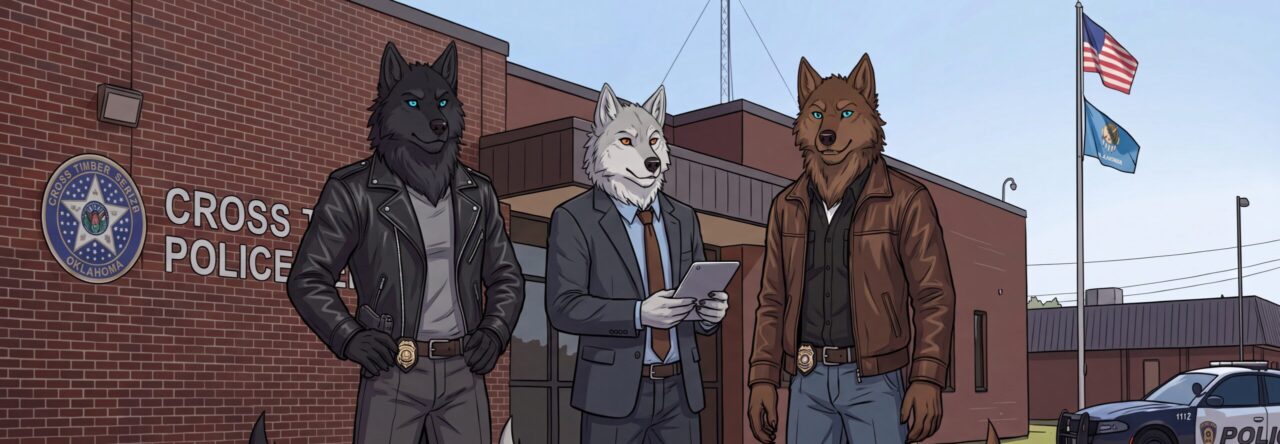
At 23:24, the case room had stopped being a room and become a map of every way a system could fail someone.
The whiteboard held two apartment complexes now.
MARLOWE COURT on the left.
JUNIPER TRACE on the right.
Between them ran lines in Mark’s careful block printing.
Former employee account.
Turnover lists.
Old physical keys.
Blue grease-pencil marks.
Vacant units.
Families in transition.
Children.
Night shifts.
Forwarding addresses.
Documents.
Doors.
At the center of the board, circled twice in dark marker, was one name.
COLE VARELA
Crowe stood at the head of the table with her phone against one ear and a yellow legal pad in front of her.
Mark sat beside the preserved tenant-system audit package Kessler had assembled during day shift, comparing the activity records with the service-road footage from Crosstown Auto Parts.
Gabriel stood near the whiteboard, arms folded tightly over his chest.
Thane watched the map.
Not because the words would change if he stared at them long enough.
Because every word was attached to a person.
Maya Barlow, working nights while her daughter stayed at daycare.
Tara Mendez, trying to get through her mother’s medical emergency without losing the paperwork that kept her son safe.
Alana Reeves, at Juniper Trace, hearing someone outside her apartment door say he was maintenance when he had no business being there.
A man had looked at their move-out dates and their family notes and their work schedules and seen opportunity.
He had not seen people.
He had seen openings.
Crowe ended the call.
“Patrol has Alana and her daughter with the Juniper Trace manager in the leasing office,” she said. “They are safe. Alana did not open the door. Her daughter was in the bedroom and did not see the man.”
Gabriel let out a breath.
“Good.”
“Her apartment is being rekeyed now,” Crowe continued. “The manager is sending their actual maintenance lead with Patel present. No emergency access keys are leaving that office without a written log and an officer watching the handoff.”
Mark nodded.
“Good.”
Crowe looked at Mark.
“What do we have?”
Mark turned his laptop so everyone could see.
The footage from the auto-parts camera filled the screen.
Cole Varela emerging from the fence gap behind Marlowe Court.
The ball cap coming off.
The narrow beard.
The scar near his jaw.
The dark gray Silverado parked along the service road.
The plate visible as he drove away.
Next to it sat his current driver’s-license photograph.
Same face.
Same truck.
No guesswork left in it.
“Identity is confirmed by the vehicle registration and the video comparison,” Mark said. “The truck is registered to Cole Varela. The tenant-management platform shows the same device profile from Jessa Walden’s former laptop accessing both Marlowe Court and Juniper Trace records. That device accessed Alana Reeves’s tenant profile two hours before the suspicious maintenance knock.”
“What did it view?” Crowe asked.
“Her notice-to-vacate entry. Her work order history. Maintenance scheduling notes. Emergency-contact fields. Deposit-refund information. Her forwarding-address field was empty.”
Gabriel’s ears lowered.
“He was checking whether she had someplace else to go.”
“Likely,” Mark said. “Or whether he could get there before she did.”
Thane looked at the Juniper side of the board.
“Does she have a child listed?”
“Yes,” Mark said. “One daughter. Paige Reeves. Seven years old.”
Gabriel stared at the name.
“That should never be useful information to a stranger.”
“No,” Mark said.
Crowe looked toward the three wolves.
“We have enough for the prosecutor to evaluate an arrest request and search warrants for Cole’s truck, residence, electronic devices, and any storage location tied to his name. We have evidence of unauthorized system access, likely unlawful entry, theft of documents, surveillance of tenants, identity-related material, threats through Jessa, and an active suspicious-entry report at Juniper Trace.”
Thane nodded.
“What do you need?”
“Facts,” Crowe said. “Not anger. Not certainty you cannot support. Facts.”
Mark was already moving.
He pulled the Marlowe Court evidence matrix onto the large screen.
The blue grease-pencil marks.
The notebook from Four-B.
The old contractor key ring found in the turnover tote.
The active account logs.
Jessa’s consented message thread.
The photograph of Cole’s screen showing the turnover folder.
The video still of Cole fleeing behind Building Four.
The partial fabric recovered from the fence line.
The Juniper Trace account access.
The suspicious maintenance knock at Seven-D.
The list was not flashy.
That was what made it strong.
Each item did one small piece of work.
Together, they showed the shape of the case.
“Mark,” Crowe said.
He looked up.
“Draft the affidavit sequence. Keep Juniper separate enough that the judge can see the escalation. Start with the access and physical evidence at Marlowe. Then Jessa’s information. Then Cole’s confirmed presence at the site. Then the current Juniper conduct.”
“Understood.”
“Thane,” Crowe said. “You have the scene narrative. Make clear what you observed at Four-B, Three-C, and the fence line. Do not turn the blue marks into a code until you explain where Jessa got that knowledge.”
“Okay.”
“Gabriel. You have Jessa, Tara, Maya, and the Juniper call. Keep the language exact. Especially where people were afraid, pressured, or contacted under false pretenses.”
Gabriel nodded.
“Got it.”
Crowe picked up her phone again.
“Mark, call the on-call assistant district attorney. Tell her the packet is coming in pieces because we are working an active threat at a second property.”
Mark nodded.
The room broke into motion.
No shouting.
No dramatic music.
No rush for the sake of rushing.
Just a group of people doing the part that came before the warrant.
The part that made the warrant real.
At 23:41, Gabriel called Alana Reeves.
She answered from the Juniper Trace leasing office.
Her voice was tight but controlled.
“I am here,” she said. “My daughter is with the manager. Is he gone?”
“We do not know where he is right now,” Gabriel said. “But there are officers at the complex, your apartment is being secured, and you are not going back alone tonight.”
There was a pause.
Then Alana said, “I knew he was not maintenance.”
“What made you sure?”
“He did not know the name of the company.”
Gabriel leaned back in his chair.
“What did he say?”
“He said he was there for a water-line inspection.”
“Did you have a water issue?”
“No.”
“Did he have a work-order number?”
“I asked. He said it was on his phone.”
“Did he show it to you?”
“No. I told him I was calling the office. Then he got quiet.”
“What happened next?”
“I heard him standing outside the door.”
Gabriel’s ears lowered.
“For how long?”
“I do not know. Maybe a minute. Maybe longer.” Her breath shook. “I could see his shadow under the door. My daughter was in the living room. I told her to go into my bedroom and lock the door. Then I called nine-one-one.”
“You did exactly right,” Gabriel said.
“I felt stupid,” Alana said.
“No. You felt scared.”
“That is not the same thing.”
“No,” Gabriel said. “It is not.”
She was quiet for a second.
Then asked, “Why me?”
Gabriel looked toward the board.
At the notes beside her name.
Move-out next week.
Evening job.
One child.
He did not want to tell her she had been selected because someone had looked at her life and decided it was unstable enough to exploit.
Not yet.
Not over the phone.
Not while her daughter sat somewhere nearby with a leasing-office receptionist and a coloring book.
“We are still learning that,” he said honestly. “But it has to do with apartments where people were moving, or dealing with difficult things, or trying to get somewhere safer.”
Alana made a small sound.
“My rent went up. I cannot afford it anymore.”
“I know.”
“I gave notice because I was trying to do the right thing.”
“You did.”
“And someone got that from my file?”
Gabriel kept his voice calm.
“We believe someone got information they should not have had.”
Alana took a slow breath.
“Okay.”
“The most important thing right now is you and Paige. You stay with the manager or family tonight. Do not return to the apartment alone. Do not respond to anyone claiming they are maintenance unless you call the leasing office through a number you already know.”
“I will not.”
“Good.”
“Is my apartment okay?”
“We are checking it now.”
“Do not let them throw out Paige’s stuff.”
Gabriel looked at Mark.
Then at the window.
“No one is throwing anything out.”
“Okay.”
“You are doing good, Alana.”
“I do not feel like it.”
“You do not have to feel brave to make the right call.”
For a few seconds, Alana did not say anything.
Then she said, “Okay.”
When the call ended, Gabriel wrote down the exact language.
No embellishment.
No inference.
Just a frightened woman behind a locked door, a stranger without a work-order number, and the shadow of someone who had waited too long after being told no.
At 00:17, the on-call assistant district attorney joined the case room by secure video.
Her name was Alicia Tran. She had worked with Night Shift during the Secondhand warrants, and she looked exactly as focused now as she had at two in the morning a week earlier.
Her hair was pulled back. Her reading glasses sat low on her nose. A legal pad filled half the space beside her keyboard.
“Talk to me,” she said.
Crowe did.
Not all at once.
Not emotionally.
She started with Marlowe Court.
The reports of unauthorized entry into vacant and transition units.
The selective theft of documents and personal information.
The blue grease-pencil marks.
The notebook documenting unit numbers, move-out schedules, child routines, and the phrase last door.
Then the active former-employee account.
Then Jessa’s statement.
Then Cole’s text messages.
Then the footage showing Cole fleeing the scene after police arrived.
Then Juniper Trace.
The active access from the same device profile.
The accessed tenant records.
The suspicious maintenance knock.
The corroborating dark gray truck.
By the time Crowe finished, the assistant district attorney had stopped writing.
Not because she had no questions.
Because she was deciding which questions mattered first.
“Do you have evidence Cole possessed Jessa’s laptop?” she asked.
Mark answered.
“Jessa states she gave it to Cole for repair after her termination. He never returned it. The tenant-platform access comes from the device fingerprint tied to that laptop. Cole sent Jessa a screenshot of the turnover folder from the laptop twelve days ago.”
“Was that message preserved?”
“Yes.”
“Did Jessa consent to the review?”
“Yes. Documented consent, limited to Marlowe-related messages.”
“Good.” Alicia looked at Thane. “Do you have direct evidence that Cole entered the apartments?”
“Not direct video of him inside,” Thane said. “But we have him fleeing from the rear service road after police locate the notebook in a vacant unit he had used as an observation point. He appears on camera exiting the fence gap behind that building and entering his truck. We have blue grease-pencil marks on the units corresponding to the categories described by Jessa. We have contractor-key access vulnerabilities and a discarded old contractor key ring. We have his prior work at the complex and his familiarity with the buildings.”
Alicia nodded.
“Careful phrasing. Strong circumstantial connection, but do not write ‘he entered all units’ unless you recover evidence that puts him in those units.”
“Understood,” Thane said.
She looked at Gabriel.
“The Juniper Trace caller. Did she see his face?”
“No. She saw his boots under the door and his shadow. She heard him claim to be maintenance. He had no verified work order and left after she said she would call the office.”
“Any witness to his truck?”
“Management and patrol are checking cameras now. A resident saw a dark gray pickup near the service entrance, but has not identified a plate.”
“Okay.”
Alicia looked at Crowe.
“On the totality, I am comfortable seeking search warrants for Cole’s residence, truck, devices, and any storage unit or garage access tied to him. I am also comfortable seeking an arrest warrant based on the combined evidence and the present escalation. I want the Juniper event clearly separated as an immediate safety concern, not presented as a completed burglary.”
Crowe nodded.
“That is exactly how we have it.”
“Then send the affidavits.”
Mark did.
The packet went out in four sections.
Cole’s residence.
Cole’s truck.
Digital devices and account records.
Storage locations and physical access items.
The arrest affidavit went with them.
Then they waited.
Not passively.
Never passively.
While the judge read, Patrol kept Juniper Trace stable.
The actual maintenance lead rekeyed Alana’s apartment with Patel watching every movement. The old lock cylinder went into an evidence bag. A temporary hallway camera went up outside Seven-D, aimed only at the walkway and the exterior approach.
The complex manager locked the master-key cabinet and called the ownership company’s emergency contact.
Grant checked the service road behind the complex.
Darnell sat in an unmarked unit near the entrance, lights off, eyes on the street.
Nobody made an announcement.
Nobody panicked the residents.
The goal was not to make every person at Juniper Trace feel like they lived inside a police operation.
The goal was to make sure Cole did not get another opening.
At 00:54, Mark’s phone buzzed.
He looked down.
Then straightened.
“Warrant signed.”
Crowe did not smile.
“Which?”
“All of them.”
The room went quiet.
Thane looked at the authorization pages as they printed.
A warrant was not victory.
It was permission.
Permission to look where the facts had led.
Permission to take the next step without becoming what they were trying to stop.
Crowe picked up the arrest warrant.
“Cole’s residence is on North Birch. His truck is not there.”
“Could be at Juniper,” Gabriel said.
“Maybe,” Crowe said. “We do not guess. We verify.”
She checked her radio.
“Grant.”
“Go ahead.”
“Any visual on the Silverado?”
“Negative at the main lot and south service road. I am moving to the rear access now.”
“Do it quietly.”
“Copy.”
Crowe looked at the detectives.
“We are splitting. Bell is meeting the residence team at North Birch. Patel and Darnell remain with Juniper. Grant stays eyes-on at the service road.”
She looked at Thane.
“Night Shift takes the Humvee. Thane, you drive. I will meet you in the unmarked at the rear service lane.”
Thane nodded.
“Okay.”
“Remember,” Crowe said, “our subject is now wanted. That does not give us permission to act careless.”
Gabriel looked toward the printed warrant.
“Understood.”
Crowe gathered the folders.
Then looked at Thane.
“Report before motion.”
Thane met her eyes.
“Name it first. Move second.”
“Good.”
Juniper Trace was quieter than Marlowe Court.
Newer buildings.
Better lights.
Fresh mulch around the small landscaping beds.
A leasing office with clean glass doors and a cheerful painted sign by the entrance.
But the same pressure lived beneath it.
Rent notices.
Move-out dates.
Work orders.
Families whose lives could fit inside a tenant file if someone forgot they were people.
The Humvee eased into the rear service lane with its headlights dimmed. Thane parked behind the maintenance shed, where Crowe’s unmarked SUV waited farther back in shadow.
Thane got out first.
The air smelled of wet grass, hot asphalt, trash bins, and the sharp edge of recently cut cedar mulch.
Underneath it, faint but there, came the stale tobacco and industrial citrus hand cleaner he had smelled at Marlowe.
He did not say Cole’s name.
Not yet.
He listened.
A distant highway.
A sprinkler ticking somewhere beyond the fence.
An air-conditioning compressor cycling on.
The soft hum of a utility transformer.
Then, farther down the service lane, the low idle of an engine.
Thane lifted one hand.
Crowe saw it.
“Where?”
“Rear lot. South end.”
Grant’s voice came through Crowe’s radio at the same moment.
“Crowe, visual on dark gray Silverado. Rear access near Building Seven. Plate matches Varela. Subject vehicle occupied. One person inside.”
Crowe’s face hardened.
“Does he see you?”
“Negative.”
“Hold. Do not engage.”
“Copy.”
The three wolves and Crowe moved along the shadowed side of the maintenance shed.
Not running.
Not crowding one another.
Not talking unless they had to.
The Silverado sat in a narrow service space behind Building Seven.
Its lights were off.
The engine idled quietly.
Cole sat behind the wheel.
He wore a dark ball cap and a gray work shirt. A clipboard rested in the passenger seat. Something pale lay over the backseat—possibly a maintenance vest.
He was looking toward the building.
Not at his phone.
Not at the road.
At the rear walkway leading to Seven-D.
Crowe looked at Thane.
“Does he have a weapon visible?”
“No.”
“Can you see his hands?”
“On the wheel.”
Crowe keyed her radio.
“Patel. Status on Seven-D?”
“New lock installed. Resident and child remain off-site. Exterior hallway camera active. No one inside the unit.”
“Good. Do not move unless ordered.”
Crowe looked at the truck.
Cole sat there for another minute.
Then another.
He checked his phone.
Looked toward Building Seven.
Then opened the truck door.
The clipboard came with him.
So did a small black tool bag.
He shut the door quietly.
Looked both directions down the service lane.
And walked toward the building.
Gabriel’s ears lowered.
“He is going in.”
Crowe raised one hand.
“Hold.”
Cole moved through the rear stairwell entrance.
The light above the metal door flickered once as it swung shut behind him.
Crowe spoke into the radio.
“Darnell, he is inside Building Seven from the rear stairwell. Keep the front approach. Grant, hold rear vehicle. Patel, do not let him reach Seven-D.”
“Copy,” Patel said.
Thane looked toward the stairwell.
“Why not take him now?”
“Seven-D is empty, Alana and Paige are off-site, and we have both hallway approaches covered,” Crowe said. “If he attempts that lock, we catch him in the act without putting a resident at risk. Hold until he does.”
Gabriel looked at her.
“Alana and Paige are safe.”
“Yes.”
“Okay.”
They entered the rear stairwell.
The building smelled of old paint, carpet cleaner, fried food from someone’s apartment, and the humid warmth of a closed hallway.
Cole was one level above them.
Thane could hear his boots on the stairs.
Slow.
Not hurried.
The deliberate pace of somebody playing a role.
Crowe motioned them to stop on the landing.
They listened.
A door opened somewhere above.
Then shut.
Cole’s footsteps moved down the second-floor corridor.
Patel’s voice came quietly through the radio.
“Subject approaching Seven-D. I have visual from the far stairwell.”
Crowe pressed the radio button.
“Do not challenge until he touches the door or attempts entry.”
“Copy.”
Thane’s heart beat once, hard.
Not fear.
Not exactly.
The controlled anger that always came when somebody mistook another person’s vulnerability for a chance to take something.
He kept it where it belonged.
Inside.
Cole reached Seven-D.
The temporary hallway camera caught him from the side.
He looked at the door.
Looked down the hall.
Then clipped a laminated badge to his shirt.
MAINTENANCE
It was generic. Cheap. No company name.
He pulled a key ring from the tool bag.
Selected one key.
Inserted it into Alana’s new lock.
Turned it.
Nothing.
Cole’s posture changed.
Not much.
But enough.
He tried again.
Harder.
The key did not move.
The door held.
Cole looked down at the lock.
Then raised one hand toward the frame.
His thumb brushed the little blue crescent that had been copied from the old mark on Maya’s door.
He had marked it.
He knew exactly what it meant.
Crowe stepped into the hall.
“Cole Varela.”
Cole froze.
“Police. Step away from the door. Hands where I can see them.”
For half a second, he did not move.
Then he turned.
Saw Crowe.
Saw Thane behind her.
Saw Gabriel at the far end of the hall.
Saw Patel coming up from the stairwell.
The clipboard slipped from his hand.
He ran.
Not toward Seven-D.
Not toward the front stairwell where Darnell waited.
He cut back toward the rear stairs.
Thane moved.
“Cole Varela fleeing rear stairwell, Building Seven.”
He named it.
Then moved.
Cole took the stairs two at a time.
The clipboard bounced against the wall behind him. The tool bag snagged briefly on the railing, slipped from his grip, and thudded onto the landing.
Thane followed.
Not reckless.
Not blind.
Cole hit the first-floor landing, turned hard, and shoved through the rear exit.
The door slammed open into the service lane.
Grant had already moved his unit into position near the Silverado, blocking the truck’s path.
Cole saw it.
Changed direction.
Cut toward the narrow strip between the maintenance shed and the fence.
Thane came through the doorway behind him.
Cole made it three strides.
Then Thane caught him.
Not with claws.
Not with anger.
One hand closed around Cole’s upper arm. The other caught the back of his work shirt.
Thane turned with his momentum, guided him into the side wall of the shed, and held him there with firm, controlled pressure.
Cole hit the wall hard enough to lose his breath but not hard enough to be hurt.
“Hands open,” Thane said.
Cole struggled once.
“Get off me!”
“Hands open.”
“You do not understand—”
“Hands open.”
Cole’s fist stayed clenched.
Thane did not increase force.
Did not threaten.
Did not growl.
He held the man exactly where he was and waited.
Cole looked past him.
At Grant.
At Crowe coming through the rear door.
At Patel beside the building.
At the blocked Silverado.
At the dark fence line where he had probably expected to disappear.
Then his hand opened.
Thane guided both hands behind his back.
Patel stepped in with cuffs.
Cole twisted his head toward Thane.
“They leave stuff. They move out and leave everything. Nobody wants it.”
Crowe’s voice cut through the lane.
“Cole, do not say anything else.”
He looked at her.
Then at the blue grease-pencil mark on the doorframe in the distance.
The mark he had thought no one would see.
Gabriel came out of the building behind Patel. At the base of the stairwell, Grant had marked the dropped clipboard and tool bag in place and was keeping the area clear for the evidence technician.
He looked at Cole.
“People leaving does not make their lives available to you.”
Cole stared at him.
Then looked away.
Patel secured the cuffs.
Thane stepped back.
Cole stood breathing hard against the wall.
No weapon.
No injured officers.
No door opened.
No child inside a bedroom listening to a stranger try a copied key.
Crowe told Cole he was under arrest on the signed warrant and stated the listed offenses in a calm, even voice.
Cole said nothing after that.
Not because he had suddenly understood the harm.
Maybe not.
But because the door he expected to open had held.
And the people who had been watching him were no longer willing to look away.
The clipboard contained a printed maintenance sheet with no actual work order attached.
The tool bag held copied keys, a small bottle of blue grease pencil, a generic maintenance badge, a portable flashlight, a slim folder of addresses, and a stack of blank notices designed to look like apartment-management paperwork.
Nothing dramatic.
Nothing that would make a television show.
But everything had a purpose.
The keys were labeled by building number.
The folder contained unit lists.
Some marked with the same box, slash, crescent, and dot-and-line system Jessa had described.
Mark documented every item at the rear of Grant’s unit while the evidence technician from Property Crimes photographed the truck.
Cole’s Silverado contained more.
A laptop bag on the passenger floor.
A small portable scanner.
A box of unopened mail.
Two folders of copied tenant documents.
Replacement-identification applications.
Deposit-refund notices.
Photographs of doorframes.
Lists of parking patterns.
A printed page from Juniper Trace showing tenant names and move-out dates.
Alana Reeves’s name was circled.
Paige’s name appeared beneath it in the household field.
Gabriel stared at the page for a second.
Then folded it shut.
“Bag it.”
Mark did.
The rear seat held a stack of child-sized school papers, some loose family photographs, and several envelopes that appeared to have been taken from units at Marlowe Court.
Not all belonged to known victims.
Which meant the investigation was going to become bigger.
More calls.
More people who had left something behind because their lives had changed too fast.
More victims who had probably blamed themselves when paperwork vanished from a box they had forgotten was still in a closet.
Crowe looked at the evidence table growing under the service-lane lights.
“Finish the truck inventory,” she said. “Bell, begin signed search-warrant service at North Birch.”
“Copy,” Bell said over the radio.
The residence search team had already staged nearby. Bell had two patrol officers and a Property Crimes evidence technician with him outside Cole’s small rental house on North Birch.
By the time Crowe confirmed Cole was in custody and the Silverado was secure, Bell was at the front door.
The door opened without force.
Cole’s roommate—an exhausted-looking man named Dustin—stepped outside with both hands visible and said he had no idea why police were there.
Bell identified himself, explained that officers were serving a signed search warrant, and directed Dustin to remain outside while the residence was cleared.
The team kept the scene calm.
Then Bell called Crowe.
“Residence is secure. No other people. You are going to want to see the office.”
Cole’s office was a converted back bedroom.
There was a folding desk beneath a cheap lamp. A printer. A scanner. A second monitor. Stacks of folders. A box of replacement labels. A small shredder beside a trash bag full of paper strips.
Nothing looked like a criminal mastermind’s hideout.
It looked like a person who had made a system out of other people’s emergencies.
On the wall above the desk, taped in rows, were printed maps of Marlowe Court and Juniper Trace.
Colored circles marked vacant units.
Yellow highlighter marked expected move-out dates.
Blue pen marked units where the tenant had children, unusual work hours, hospital notes, or forwarding information.
A handwritten key sat in the corner.
BOX — empty
SLASH — partial
CRESCENT — watched
DOT LINE — mail / docs
Mark stood in front of it for a long moment.
Then photographed every inch.
Thane looked at the maps.
At the circles.
At the notes.
At the way real names had been reduced to routes, timing, and access.
Gabriel’s voice was low.
“He made a schedule out of people’s worst weeks.”
“Yes,” Thane said.
On the desk lay Jessa’s old laptop in a cracked black case.
Its screen was still awake. An open browser window showed tabs for the Marlowe turnover dashboard, tenant-profile search, the Juniper Trace work-order system, and a free email account. At the edge of the display, a file window was open to a folder labeled TRACKING.
Mark stopped just outside the evidence technician’s working space.
“Photograph the display exactly as it sits. No clicking. No scrolling. Digital Forensics gets it intact.”
The technician nodded.
“We document first.”
The laptop would go to digital forensics.
The files would be extracted properly.
The access history preserved.
The evidence kept clean.
But even without opening it, the room already told a story.
The folders on the desk held copies of documents from Marlowe tenants.
School forms.
Benefits letters.
Insurance cards.
Photo IDs.
Change-of-address confirmations.
Documents that had been taken because someone thought people in transition would not know what was missing until the thief had already used it.
In the closet, Bell found a plastic storage bin filled with old brass keys.
Marlowe Court.
Juniper Trace.
Two other properties owned by the same parent company.
Some keys were labeled.
Others were not.
A second bin held property.
Photographs.
Letters.
A toddler’s bracelet.
An older man’s military-service record.
A stack of family albums.
A small black lockbox.
A set of keys on a wooden keychain shaped like a house.
Everything would need to be documented.
Matched.
Returned through the right channels.
Not tonight.
Not immediately.
But found.
No longer hidden in a room where somebody had treated it like inventory.
Crowe stood in the doorway.
Her face had gone still.
“Call the ownership company,” she said. “All properties. Every key system. Every former-employee account. Every turnover file. Freeze access until it is reviewed.”
Bell nodded.
“Already started.”
“Good.”
Crowe looked at the wall maps again.
Then at the blue grease pencil in the evidence bag.
“People always think safety is one big thing,” she said quietly. “A lock. A camera. A patrol car.”
Gabriel looked at the maps.
“It is a lot of little things.”
“Yes,” Crowe said. “And one person deciding they are allowed to use the gaps.”
Thane stood near the folding desk.
“You can fix the gaps.”
Crowe looked at him.
“We will.”
Her eyes moved to the laptop.
“To the extent we can.”
By 04:38, the maps, laptop, and first bins of recovered property had been photographed and logged. Bell’s team remained inside with the evidence technician, continuing the warranted inventory, while Night Shift stepped back to the Humvee to finish reports, coordinate victim contact, and leave room for the evidence work.
At 04:38, Gabriel called Alana Reeves again.
This time she answered from her sister’s living room.
He could hear a child’s cartoon quietly playing in the background.
“Is it over?” Alana asked before he could introduce himself.
Gabriel sat in the front seat of the Humvee outside Cole’s house.
The warrant team still moved inside under low voices and evidence lights.
“It is not over for the investigators,” he said. “There will be reports and evidence and people we need to talk to.”
Alana was quiet.
Then said, “But?”
“But Cole Varela is in custody.”
The silence that followed was not empty.
It was the sound of somebody trying to understand that the person outside her door was no longer outside any door.
“You got him?”
“Yes.”
“Was he the one?”
“Yes.”
Gabriel looked through the windshield toward the narrow rental house.
“He had information about your apartment. He had a list. He had tools and keys he should not have had.”
Alana let out a shaky breath.
“My daughter is asleep on my sister’s couch.”
“That is good.”
“She asked if we could go home tomorrow.”
“You can,” Gabriel said. “But only when you feel ready. Your lock has been changed. The complex is changing its access procedures. Patrol will make extra checks overnight and tomorrow.”
“Okay.”
“And Alana?”
“Yes?”
“You did exactly what you were supposed to do. You did not open the door. You called for help. You protected Paige.”
Her voice broke.
“I was so scared.”
“I know.”
“I kept thinking if I had just opened it and asked him what he wanted, maybe it would have been nothing.”
Gabriel looked toward the evidence team.
Toward the maps.
Toward the folders.
“No,” he said. “You made the right choice.”
Alana was quiet for a long moment.
Then she said, “Thank you.”
“You do not owe us that.”
“I know,” she said. “I am still saying it.”
Gabriel smiled faintly.
“Okay.”
When the call ended, Thane looked across from the driver’s seat.
“She okay?”
“She will be,” Gabriel said.
Mark sat in the back with his laptop open, entering evidence references into the case file.
“Her unit is no longer identified as vulnerable in the active system,” he said.
Gabriel looked at him.
“That sounded almost comforting.”
“It is comforting,” Mark said. “It is also true.”
Thane looked at the quiet street beyond the windshield.
The sky had begun to lighten at the edges.
Not sunrise yet.
Just the first pale promise of morning.
“One door,” he said.
Gabriel looked at him.
“What?”
“One door held.”
Mark closed the laptop for a second.
Then nodded.
“One door held.”
At 06:27, Voss and Rusk arrived at the station for handoff.
The case room smelled like stale coffee, printer heat, and the cold air from the vent Mark had turned too low at some point after four in the morning.
The whiteboard had changed again.
Cole Varela’s name was no longer a possible link.
It sat in the center of the case with a line through it.
Below it:
IN CUSTODY
The two complex names remained.
Marlowe Court.
Juniper Trace.
But now a third section had been added.
RECOVERED / PENDING IDENTIFICATION
Documents.
Keys.
Laptop.
Maps.
Tenant files.
Personal property.
Mail.
Photographs.
Access records.
Voss entered first.
She took one look at the board.
Then at the evidence list on the table.
Then at the three wolves.
“You got him.”
Thane nodded.
“He came back to Juniper.”
Rusk set down his coffee.
“He tried the door?”
“Yes.”
“Did it hold?”
“It held.”
Rusk’s face shifted.
The usual dry amusement did not disappear completely.
But it moved aside.
“Good,” he said.
Crowe gave the handoff.
Not rushed.
Not celebratory.
Cole had been arrested on the warrant after attempting to use a copied key at Alana Reeves’s apartment door. His truck and residence had been searched under signed warrants. The team had recovered the laptop tied to Jessa’s old account, copied keys, tenant records, maps, document folders, personal property, and evidence of surveillance activity across multiple apartment properties.
The investigation had expanded.
The parent company had been notified.
Emergency account shutdowns and key-control reviews were in progress.
Victim-services staff and Property Crimes would begin the slow work of identifying property and contacting affected tenants.
Voss listened without interrupting.
When Crowe finished, she looked at Thane.
“What did he say?”
“Nothing useful,” Thane said. “He said people leave things when they move.”
Voss’s expression went hard.
“People leave their lives in boxes when they have no choice but to move fast.”
Gabriel looked at her.
“Yes.”
Rusk stood near the whiteboard.
“He thought empty meant available.”
“Exactly,” Voss said.
Mark looked down at the evidence inventory.
“The system failures made access easier. They did not create his intent.”
Voss looked at him.
“Good distinction.”
Crowe gathered her folders.
“Jessa will need counsel. She may face consequences for the late-fee manipulation and her access failures. But she has provided substantial information, and she did not participate in the entries or thefts based on current evidence.”
Rusk nodded once.
“She left a door unlocked.”
“She did,” Voss said.
“And he walked through it.”
“Yes.”
The room fell quiet.
Then Rusk looked toward the evidence board.
“Are we going to be returning things?”
“Eventually,” Mark said. “After processing and identification.”
Rusk nodded.
“Good.”
Voss looked at the three wolves.
“You did not solve this because you were wolves.”
Thane glanced at her.
She continued.
“You solved it because you saw a pattern, protected the people in immediate danger, and did not let a bad system turn into an excuse to stop looking for the person choosing to exploit it.”
Gabriel leaned back in his chair.
“That is about as close to a speech as you get.”
Voss looked at him.
“Do not tell anyone.”
Gabriel smiled.
“Would not dream of it.”
Rusk picked up his coffee.
Then glanced at Thane.
“No hiking jokes today.”
Thane raised an eyebrow.
“Really?”
“Really.”
Rusk paused.
“Also, for the record, this is a much better use of the phrase ‘all terrain.’”
Thane stared at him.
Rusk lifted one hand.
“Sorry.”
He was, a little.
Not completely.
But enough.
Outside, day shift arrived in the growing light.
Cars pulled into the lot.
The city woke up.
At Marlowe Court, a locksmith crew was changing cores and reviewing key rings with Janelle and Luis.
At Juniper Trace, a mother and her daughter would return when they were ready to a door with a new lock and a manager who had finally understood what access meant.
At Cole Varela’s rental house, Property Crimes would keep sorting through bins of documents and photographs until every piece of property had a name attached to it again.
The work was not finished.
It would not be finished for weeks.
Maybe months.
But the door had held.
And the person who believed he could wait for everyone else to leave was no longer standing outside it.