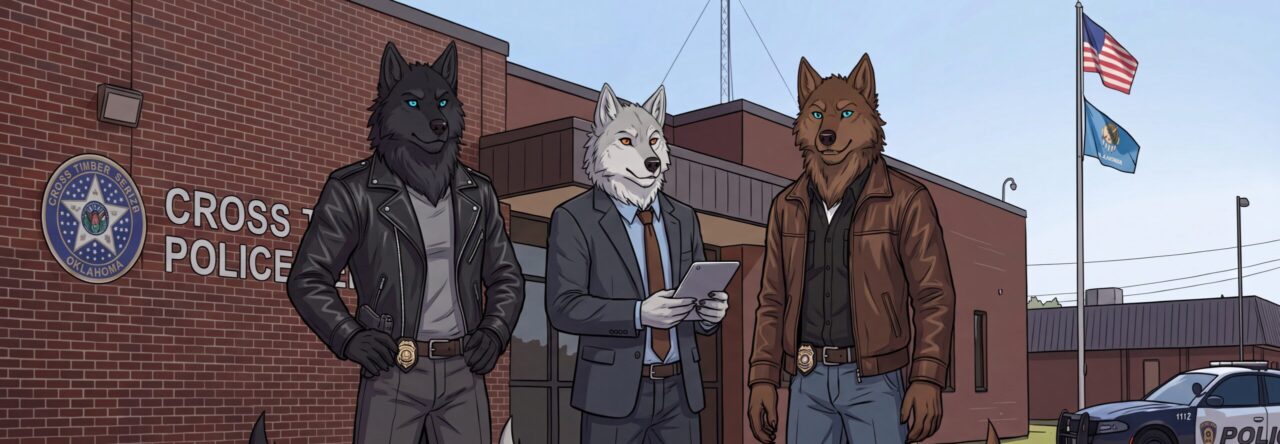
By 11:42 the next morning, Thane had received forty-three emails about shoes.
He was sitting at the long kitchen table in the cabin with a mug of coffee between both hands, his phone facedown beside it like it had personally offended him.
Gabriel stood at the counter assembling breakfast sandwiches with the concentration of someone performing surgery on bacon, eggs, cheese, and toasted bread.
Mark sat at the other end of the table with a laptop open, a second mug of coffee at his elbow, and the quiet look he got whenever a messy thing had become organized enough to be interesting.
Thane turned his phone over.
It buzzed again.
He stared at it.
Gabriel glanced over.
“Another one?”
“Yes.”
“Free boots?”
“No.”
“Free sandals?”
“No.”
“An offer of tremendous wealth and a lifetime supply of rugged outdoor footwear?”
Thane looked at the screen.
“Actually.”
Gabriel stopped buttering a piece of toast.
“Oh.”
Mark looked up.
“Which company?”
“I do not know. Something called Alpine Forge.”
Mark held out one hand.
Thane passed him the phone.
Mark read in silence for several seconds.
Then his ears tipped forward.
“This one is legitimate.”
Gabriel set down the butter knife.
“How legitimate?”
Mark read from the screen.
“‘We would be prepared to discuss a three-year national ambassador agreement, content licensing, outdoor-family campaign usage, and a compensation package beginning at two-point-five million dollars annually.’”
Gabriel stared at Thane.
Thane stared at Mark.
Then he looked down at his own feet.
At his broad brown paws.
At his visible claws.
At the thick pads that had carried him through woods, rain, snow, gravel lots, broken glass, training courses, crime scenes, wet lawns, grocery-store parking lots, and one deeply regrettable attempt to walk across a frozen pond when he was seventeen.
“We do not wear shoes,” Thane said.
Gabriel slowly lowered himself into a chair.
“That is your response?”
“That is the whole situation.”
Mark continued reading.
“They also offer an equity incentive.”
Thane took his phone back.
“Why?”
“Because you accidentally became a footwear movement.”
“I complimented Kaden’s sandals.”
“You created a phrase.”
“I said four words.”
“You created four marketable words.”
Thane looked at the phone again.
The email had a polished logo at the top. There was a signature from a vice president. A direct phone number. A calendar link. Language about authenticity, confidence, outdoor access, family adventure, and the extraordinary response to the Powerful Paws, Powerful You trend.
Gabriel leaned over the table.
“What is the offer after two-point-five million?”
“I do not know.”
“Read it.”
“I am not reading the rest.”
“Thane.”
“No.”
Mark had already opened a spreadsheet.
Thane stared at him.
“Why do you have a spreadsheet?”
“Because there are forty-three emails.”
“You made a spreadsheet about shoe offers?”
“I made a spreadsheet about distinguishing credible commercial inquiries from phishing attempts, novelty solicitations, and people attempting to obtain your personal contact information.”
Gabriel looked at the screen.
“How many are real?”
Mark scrolled.
“Twenty-eight appear credible. Nine are probably real but not worth responding to. Four are obvious scams. One is a comedian asking whether you would appear in a livestream called Barefoot Alpha Takes on the Outdoors.”
Thane closed his eyes.
“Delete that one.”
“Already did.”
Gabriel reached for the phone.
“Any others in the seven figures?”
Mark looked down.
“Six.”
Gabriel put a hand over his heart.
“Six companies want to give you millions of dollars because you said a child had good sandals.”
Thane pushed his phone toward the center of the table.
“Because people are ridiculous.”
Gabriel picked it up.
“No. People are predictable. Outdoor brands see a wolf detective, a wholesome kid, hiking sandals, a slogan, a viral video, and the phrase ‘powerful paws.’ They see a campaign they could not have built in ten years.”
Thane looked at him.
“I do not want a campaign.”
“I know.”
“I do not want money.”
“I know.”
“I do not want people thinking they can buy my badge.”
Gabriel’s teasing expression softened.
“I know that too.”
Mark closed the spreadsheet halfway.
“And you should not accept any offer before Eli reviews it.”
“I am not accepting any offer.”
“Correct,” Mark said. “But the declines should still be consistent.”
Thane stared at the row of email previews.
One from a trail-running company.
One from a work-boot manufacturer.
One from an outdoor chain promising a “historic partnership.”
One from a luxury shoe brand that had apparently decided nothing said rugged authenticity like a permanent full-time werewolf with no shoes at all.
Then he saw one near the bottom.
The subject line was simple.
No pitch. Just a thank-you.
The sender was from KEEN.
Thane paused.
Gabriel saw it.
“Oh.”
Mark reopened the laptop.
“That one is from a Portland address.”
Thane clicked it.
The email was shorter than the others.
No giant figures.
No contract language.
No mention of ambassador programs, equity, ad campaigns, or six-figure appearance fees.
It was from a woman named Rhea Imai, listed as Director of Brand Story.
She wrote that she had seen the original Kaden post, then the follow-up video from the station lobby.
She wrote that the company understood the attention had begun with an honest conversation between an adult and a child, not with a brand campaign.
She wrote that they were grateful Thane had described Kaden’s sandals as “wolf worthy,” but that the line which stayed with them was not even about the product.
Powerful paws, powerful you.
At the bottom, Rhea had added:
We are not interested in making you say something you do not mean. We only wanted to say thank you for making a kid feel strong in something as ordinary as his own two feet.
Thane read it twice.
Gabriel watched his face.
“That one got you.”
“It is not an offer.”
“No,” Mark said. “Not yet.”
Thane looked at the kitchen window.
Sunlight touched the pines beyond the cabin lawn. Somewhere farther down the hill, a squirrel was doing something extremely important and extremely loud in the leaves.
The house felt quiet.
Safe.
Normal.
His phone buzzed again.
Another commercial inquiry.
Thane ignored it.
Then he opened a reply window to Rhea Imai.
Gabriel stopped chewing.
“Oh, you are answering.”
“I am saying thank you.”
“Right,” Gabriel said. “That is how it starts.”
Mark reached for his coffee.
“Keep it concise.”
Thane looked at the blank screen for a moment.
Then typed.
Thank you for writing. I appreciate it.
I should be clear that I do not need an endorsement, free equipment, a spokesperson arrangement, or money. The things I said to Kaden were not a campaign. They were honest.
Wolves do not wear shoes. We have claws, pads, and feet made for rough ground. That is the ultimate power. But people need good footwear, and your sandals and Targhee II boots are rugged, practical, and worth feeling confident in. For humans who do not have awesome clawed feet like we do, KEEN is the next best thing.
That is all I meant.
Thane
Gabriel read over his shoulder.
Then sat back slowly.
“That is going to make them lose their minds.”
“It is a decline.”
“It is an incredibly flattering decline.”
“It is the truth.”
Mark leaned forward.
“You should add that no use of your department position, badge, likeness, name, or image is authorized.”
Thane nodded.
He added a final paragraph.
Also, I am a police detective. Nothing about my work, department, badge, uniform, or city is available for commercial use. I do not want a paid relationship with any company.
He read it once.
Then pressed send.
The email disappeared.
Gabriel looked at the clock.
“How long do you think?”
“For what?”
“The reply.”
“They may not reply.”
Mark glanced at the screen.
“They will.”
Thane looked at him.
“You are both impossible.”
The reply arrived ninety-four seconds later.
Gabriel checked the time.
Then laughed.
“They did lose their minds.”
Thane opened it.
Rhea had responded from her phone.
This is more honest and more powerful than anything a paid spokesperson could give us. May we have a short call? No money. No badge. No department. No pressure. Just a conversation about whether there is a way to film the truth you just wrote.
Gabriel put both hands on the table.
“Oh, no.”
Mark’s expression went thoughtful.
“They are proposing content production.”
Thane looked at the message.
“They want to make a commercial.”
“They want to make a film,” Gabriel said.
“It says content.”
“That is marketing language for ‘we want to make you look cool in slow motion.’”
Thane looked down at his paws again.
“We do not wear shoes.”
Gabriel pointed at him.
“That is the thing they want to film.”
Eli called them thirty minutes later.
Thane had not called him yet.
He had not forwarded the emails.
He had not even decided whether he would answer Rhea again.
But apparently the phrase Powerful Paws, Powerful You had moved fast enough through the world that Eli Carroway had received a message from someone at Red River Community Foundation asking whether the wolves were “considering an apparel partnership.”
He had called Thane immediately.
The attorney appeared on the cabin’s large kitchen display in a crisp charcoal suit, seated in an office that looked as immaculate as everything else about him.
He did not look amused.
Which, in Eli’s case, did not mean he was angry.
It meant he had already identified fourteen ways the situation could become complicated.
“Good morning,” Eli said.
Gabriel waved from the counter.
“Hi, Eli.”
“Gabriel.”
Mark had opened his laptop again.
Thane sat at the table with the KEEN email thread on his phone.
Eli looked at all three of them.
“Would one of you like to explain why three outdoor-equipment companies have contacted my office in the last hour asking for access to a werewolf detective who does not wear shoes?”
Gabriel raised one hand.
“Thane complimented a child’s sandals.”
Eli looked at Thane.
Thane sighed.
“I complimented a child’s sandals.”
Eli took off his glasses.
“Of course you did.”
Thane held up the phone.
“I declined the offers. I told them I do not need money or endorsement deals.”
“Good.”
“One company replied.”
“Which company?”
“KEEN.”
Eli paused.
“KEEN Footwear?”
“Yes.”
“They want to pay you?”
“No. I said no money.”
“They want to use your likeness?”
“Maybe.”
Eli put his glasses back on.
“Then we are not discussing an email anymore. We are discussing a likeness agreement, commercial usage rights, a private-citizen appearance, possible consumer-protection concerns, public-employment ethics, intellectual-property terms, image approvals, location permissions, insurance, release language, and whether anyone involved is about to say the word ‘spokesperson.’”
Gabriel slowly raised one finger.
“Spokeswolf?”
Eli closed his eyes.
“No.”
Gabriel smiled.
“It was worth asking.”
“No, it was not.”
Mark turned his laptop so Eli could see the email thread.
“They explicitly offered no compensation and said they do not want department imagery.”
Eli read the screen.
For once, his expression softened by a fraction.
“They are being smarter than the other companies.”
Thane looked at him.
“So?”
“So,” Eli said, “you do not agree to anything by text. You do not let them use the phrase ‘spokesperson.’ You do not accept money, equipment, royalties, stock, equity, travel reimbursement above actual logistics, gifts, or a continuing relationship. You do not wear a badge. You do not wear a uniform. You do not appear at a police facility. You do not use your official title in any commercial material.”
“Okay,” Thane said.
“And if this proceeds, the agreement will say exactly what they may use, for how long, in which formats, and for what purpose. They do not own your face because you stood near a pair of boots.”
Gabriel looked at the display.
“That seems fair.”
“It is more than fair. It is necessary.”
Thane looked toward the trees outside.
“I do not want to sell anything.”
Eli studied him.
“Then do not.”
“They want a commercial.”
“They want authenticity,” Eli said. “You have already given them something better than a commercial: an actual opinion that you did not manufacture for money.”
Thane looked back at the screen.
“I said their boots were good.”
“You told a child he could feel capable in something he was wearing,” Eli said. “That is not the same as selling him shoes.”
For a second, the kitchen stayed quiet.
Then Eli continued.
“If you decide to do this, it must remain exactly that. One short private-citizen appearance. No payment. No department connection. No children. No product-safety claims. No claim that police endorse footwear. No use of Kaden’s name or image. No perpetual rights. No artificial-intelligence use. No digital replica. No broad ‘all media forever’ clause.”
Gabriel blinked.
“They would ask for that?”
“They would ask for less if they are responsible. But I draft against the sentence somebody might try to add later.”
Mark nodded approvingly.
“That is sound practice.”
Eli looked at him.
“Thank you, Mark.”
Thane considered the phone in his hand.
“What do I tell them?”
Eli’s expression became almost kind.
“Tell them they can call me.”
Chief Adrienne Whitaker had been Chief of Police for six years.
She was not easily surprised.
Cross Timber had surprised her plenty of times, of course. Any city did. Weather, budget cuts, unexpected personnel problems, public meetings, criminal cases, equipment failures, a municipal goat that had once made it into the station lobby and somehow gotten up one flight of stairs.
But she had learned to separate surprise from panic.
The Chief’s office was clean without being sterile. Dark wood shelves. Framed city photographs. A wall map of Cross Timber. A small collection of service pins arranged in a shadow box behind her desk.
Thane, Gabriel, and Mark sat in the chairs across from her the next afternoon.
Deputy Chief Mercer sat to the Chief’s right with a yellow legal pad open in front of him.
Voss and Rusk stood near the wall beside the windows.
Rusk had coffee.
Voss had her arms folded.
Neither looked particularly impressed at first.
Then Chief Whitaker set a printed email packet on her desk.
“Is this accurate?”
Thane looked at the pages.
The subject lines alone were absurd.
National Outdoor Campaign Proposal
A Once-in-a-Generation Brand Partnership
Powerful Paws: Premium Ambassadorship Opportunity
Seven-Figure Creator Offer — Confidential
Let’s Build Something Wild
He looked back at the Chief.
“Unfortunately.”
Mercer leaned over the stack.
“One company offered you six million dollars a year to wear shoes.”
“I would not wear the shoes.”
Mercer nodded slowly.
“That is what makes this difficult to explain to Procurement.”
Gabriel covered his muzzle with one hand.
Chief Whitaker looked at him.
“Do not encourage this.”
“I am trying very hard not to.”
Rusk took a drink of coffee.
“I am not.”
Voss gave him a look.
Rusk ignored it.
Chief Whitaker turned back to Thane.
“You declined every paid offer?”
“Yes.”
“Why?”
Thane looked down at his paws.
Then back up.
“Because I do not need their money. And because I do not want anyone to think they can turn the badge into an advertisement.”
The Chief held his gaze.
“Good answer.”
Mercer nodded.
“It is also the right answer.”
Rusk lifted the email packet.
“One company offered him an equity position.”
Thane looked at him.
“Why are you helping?”
“I am not helping. I am documenting the scale of the absurdity.”
Voss glanced at the packet.
“I read the KEEN exchange.”
Thane’s ears tipped back slightly.
“You did?”
“The Chief asked City Legal to make sure the department had no conflict. I was copied because you are assigned to my investigative section.”
Thane nodded.
Voss’s expression softened.
“You handled it well.”
Gabriel looked at her.
“That is high praise from Voss.”
“It is accurate praise,” Voss said.
Mark’s ears tipped forward.
“That is higher praise.”
Rusk looked at the ceiling.
“Everybody is being unbearable.”
Chief Whitaker opened another folder.
“This is the agreement Eli sent over for preliminary review. I am not here to approve your private life. You are not asking permission to be a private citizen.”
She tapped the document.
“I am here because a national company wants to use the face of a Cross Timber detective in a commercial campaign, and the public will connect those things whether we like it or not.”
Thane nodded.
“Understood.”
“The limits are good,” Mercer said. “No badge. No uniform. No departmental references. No squad vehicles. No city property. No paid relationship. No use of the department name. No suggestion that this office endorses KEEN.”
“Correct,” Mark said.
Mercer looked at him.
“You helped draft this?”
“Eli drafted it.”
“Mark organized the concerns,” Thane said.
Gabriel grinned.
“He made a spreadsheet.”
Chief Whitaker looked at Mark.
“Of course he did.”
Mark accepted that without comment.
The Chief turned to Thane again.
“What exactly do they want to film?”
Thane hesitated.
Then said, “They want to compare my paws to their Targhee II boots on a trail.”
For one second, there was silence.
Rusk lowered his coffee.
Mercer blinked.
Voss looked at Thane.
Chief Whitaker leaned back in her chair.
“They want to compare your clawed feet to hiking boots.”
“Not in a safety-rating way,” Thane said quickly. “No claims. Just visual. Their boots on rough ground. Me on rough ground. The idea is that humans make their own powerful paws.”
Rusk spoke first.
“I hate how much I want to see that.”
Gabriel pointed at him.
“Right?”
Voss gave them both a look.
Then looked back at Thane.
“Did you agree?”
“Not yet.”
Chief Whitaker read the one-page creative summary.
It had been sent by KEEN after Eli’s office began reviewing the agreement.
No child actors.
No Kaden.
No police imagery.
No uniforms.
No tactical setting.
No fake emergency.
No claim that a boot made someone a better officer, better parent, better hiker, or better human.
Just a short outdoor film.
A brown wolf walking a rocky trail.
Human hikers in boots and sandals.
The phrase Powerful Paws, Powerful You.
Chief Whitaker set the page down.
“They came from Portland for this?”
“Small production team,” Thane said. “Five people.”
Mercer stared at him.
“Thane.”
“What?”
“A national footwear company is flying a crew from Oregon to Oklahoma because you told a kid his sandals were wolf worthy.”
Thane shifted in his chair.
“I said they were good sandals.”
Mercer smiled.
“That is not ordinary old you, and you know it.”
Thane looked away.
Voss watched him for a moment.
Then said, “You did not chase attention. You did not turn Kaden into a prop. You declined money. You put boundaries around it. And the only reason they noticed you in the first place is because you made a kid feel good about himself.”
Rusk nodded.
“Also because your paws look objectively dramatic on camera.”
“Rusk,” Voss said.
“What? They do.”
Chief Whitaker reached for a pen.
“Here is the department position. You may proceed as a private citizen if City Legal signs off on the final agreement and Eli remains involved. You do not discuss any active case. You do not reference the department. You do not allow them to use your official identity. You do not wear anything resembling a uniform.”
“Okay,” Thane said.
“And no Kaden Face.”
Thane looked at her.
“I was not going to do the Kaden Face in a hiking-boot commercial.”
Rusk made a small sound.
“Missed opportunity.”
Chief Whitaker looked at him.
“Rusk.”
“Sorry.”
He was not sorry.
Mercer picked up the creative summary again.
“I am impressed.”
Thane looked at him.
“Why?”
“Because companies usually come to a department with an agenda,” Mercer said. “They want access. They want a badge in the background. They want the appearance of public-service approval. These people came to you because you were kind to a kid.”
Gabriel’s expression softened.
Voss nodded once.
Chief Whitaker looked at Thane.
“Do not undersell that.”
Thane did not know what to say.
So he nodded.
That was enough.
Redbud Ridge Outdoor Preserve was twenty minutes northeast of Cross Timber.
It was not a famous place.
That was part of the appeal.
A small stretch of protected woodland and limestone ridges, maintained by a regional land trust and open to hikers, runners, school groups, birdwatchers, and anyone who wanted a quiet place to walk beneath cedar trees without driving three hours into the mountains.
The trail system had rocky rises, hard-packed dirt, exposed roots, shallow creek crossings, patches of wet grass near the low ground, and enough open overlooks to make the horizon look larger than it was.
It was also neutral ground.
No cabin.
No police station.
No city seal.
No department vehicles in frame.
No place that belonged to the wolves or their work.
Just Oklahoma sky, stone, trees, and trail.
The KEEN crew arrived just after sunrise.
They came in two dark production vans with Oregon plates and enough cases, lighting stands, camera gear, batteries, cables, microphones, and neatly packed coffee to make Gabriel decide they were either making a shoe video or invading a small country.
A woman with close-cropped black hair and a green field jacket walked toward the trailhead first.
“Thane?”
He nodded.
“I’m Kendra.” She offered a hand. “Director. This is Luis, camera. Priya, producer. Hannah, sound. Mateo, second camera.”
Thane shook each hand.
Gabriel and Mark stood a little behind him, both dressed casually in outdoor clothes.
Gabriel wore a dark T-shirt, utility pants, and the expression of someone prepared to enjoy every second of this.
Mark wore a gray outdoor shirt, dark cargo pants, and a small cross-body bag containing water, a notebook, first-aid supplies, and what Thane suspected was at least one spare phone battery.
Kendra looked at the three wolves.
“Thank you for coming.”
Thane glanced around.
“You flew all the way from Portland for this?”
Kendra smiled.
“We flew from Portland because the team wanted to meet the person who sent the most honest email we received all year.”
Gabriel put a hand to his chest.
“Oh, he is going to hate that.”
Thane gave him a look.
Kendra laughed.
Then she turned more serious.
“Before we start, I want to say this clearly. We are not here to make you pretend to be somebody. You are not our spokesperson. You are not taking money. You are not endorsing us as a police officer. We have the agreement, the approved language, the usage limits, and Eli’s office has been extremely clear.”
Gabriel looked toward the production vans.
“Eli has a way.”
Kendra’s smile widened.
“He does.”
Mark nodded.
“That is accurate.”
Kendra continued.
“You tell the truth. We film it. We do not use Kaden. We do not use the police department. We do not say anything that makes a product claim we cannot support. We do not ask you to act like hiking boots are magic.”
“Good,” Thane said.
Kendra looked down at his paws.
“Your feet are magic enough.”
Thane stared at her.
Gabriel turned away, laughing into one hand.
Kendra lifted both hands.
“Sorry. That sounded less strange in my head.”
“It is okay,” Thane said.
“It is not,” Gabriel said. “But please continue.”
The crew had brought several pairs of boots and sandals for the human hikers who would appear in the film.
Two adult models waited nearby with a production assistant, both dressed like ordinary people going out for a morning trail walk. One wore a pair of brown Targhee II mid boots. The other wore dark hiking sandals with broad protective toes and sturdy straps.
No one was pretending the hikers were police officers.
No one was pretending Thane had taught them how to hike.
They were simply people on a trail.
The same kind of people Kaden had been imagining when he looked down at his own Keen sandals and decided he could climb rocks.
Kendra led Thane to a flat stretch of limestone near the trailhead.
Luis adjusted a camera mounted low to the ground.
Mateo set another farther up the ridge.
Hannah clipped a small microphone to Thane’s shirt collar.
Kendra crouched beside the monitor.
“First we get the visual sequence. No dialogue. Your paws on the rock. The boots on the rock. The sandals in the grass. Trail movement. Nothing unsafe, nothing fast enough that anyone watching thinks they should try to outrun a wolf in hiking shoes.”
Gabriel raised a hand.
“Important disclaimer.”
Kendra nodded.
“Very important.”
Thane looked down the trail.
The morning light was still soft. Gold through the cedar branches. Cool shadows over the limestone. A thin line of mist hung low near the creek crossing.
He could smell wet stone.
Clay.
Bark.
A rabbit somewhere too far off to matter.
A hawk circling high enough that it was more shape than scent.
It felt good to be outside before the heat built.
Kendra pointed to a mark on the trail.
“Walk from there to the ridge. Natural pace. Do not look at the camera.”
Thane nodded.
“Okay.”
“Rolling.”
The first take was simple.
Thane stepped onto the limestone.
One broad paw at a time.
Claws clicking softly over stone.
Pads gripping rough surface.
The camera stayed low.
Not making him look monstrous.
Not making him look like a superhero.
Just showing what he was.
A wolf moving over ground built for paws.
Then Luis cut to the hiker in the Targhee II boots.
The same line over the rock.
Boot soles gripping the uneven surface.
Then the woman in the sandals crossing wet grass beside the creek.
Then Thane stepping through the same grass, water catching briefly at the edges of his pads.
Kendra watched the monitor.
“Again,” she said. “That was good. I want one slower.”
Thane did it again.
Then again from another angle.
Then a close shot of his claws settling into a shallow crack in the stone.
Then a close shot of the Targhee II boot stepping onto a similar ridge.
No claims.
No artificial race.
No fake comparison.
Just an image.
Paws.
Boots.
Ground.
The way different bodies met the same trail.
Gabriel watched from beside Mark.
“I hate to say it,” he murmured, “but this is actually cool.”
Mark kept his eyes on the monitor.
“Objectively.”
“You are both going to make him impossible.”
“He is already impossible,” Mark said.
Thane heard them anyway.
“I can hear you.”
Gabriel smiled.
“Good. Be more cinematic.”
The dialogue came after the trail shots.
Kendra had written a loose structure.
Not a script.
A set of ideas.
Power did not have to look the same on everyone.
Good equipment was about confidence, not pretending to be something else.
The outdoors belonged to people who were prepared for it.
Thane read the page once.
Then handed it back.
“I cannot say this.”
Kendra looked at it.
“What part?”
“‘Every trail becomes possible.’”
She nodded immediately.
“Fair. Too broad.”
“And this one says ‘unstoppable.’ Nobody is unstoppable.”
Kendra crossed it out.
“Good catch.”
Mark looked at her.
“Thank you.”
Kendra smiled.
“Your lawyer sent notes. Your detective sent more notes.”
Mark did not deny it.
Thane looked toward the trail.
“I can say what I said in the email.”
“Then say that,” Kendra replied.
Luis moved the camera to a small rise overlooking the creek.
The trail curved behind Thane. Trees framed the background. Farther off, the human hikers waited with their boots and sandals, soft-focus enough that they looked like people simply heading somewhere.
Kendra stood beside the monitor.
“Take your time.”
Thane looked at the camera.
He had been in front of cameras before.
News cameras after the shooting.
Department press events.
A hundred cell phones at community festivals.
Kaden’s father filming him in the lobby.
But this was different.
No one was asking him to be a detective.
No one wanted a statement after a crisis.
No one wanted him to make a scary face.
They wanted him to say one true thing.
Kendra lifted a hand.
“Whenever you are ready.”
Thane took a breath.
Then spoke.
“We are wolves. We do not wear shoes.”
Gabriel made a small sound behind the camera.
Thane continued.
“We have claws. We have pads. We have feet made for rough ground. That is our power.”
He looked down at the limestone beneath his paws.
Then back at the lens.
“But people build their own power. Good boots. Good sandals. Something that lets you climb the rocks, cross the creek, get muddy, and keep going.”
The morning breeze shifted through the trees.
Thane looked toward the human hikers on the trail.
“For people who do not have awesome clawed feet like we do, KEEN is the next best thing.”
Kendra did not cut.
Thane kept going.
“Powerful paws, powerful you.”
For a moment, no one spoke.
Then Kendra lowered her hand.
“That was it.”
Thane blinked.
“That was one take.”
“That was the take.”
Luis looked up from the camera.
“Really clean.”
Hannah touched one hand to the headphones over her ears.
“Natural. No wind problem. No traffic.”
Gabriel walked forward slowly.
“You did not sound like you were selling anything.”
“I was not.”
“No,” Gabriel said. “That is why it worked.”
Mark came up beside him.
“The wording is grounded. It avoids unsupported claims. It communicates the concept clearly.”
Thane looked at him.
“Thank you?”
“That was praise.”
Gabriel leaned toward Kendra.
“Write it down. Mark complimented him.”
Kendra laughed.
Then looked at Thane.
“We have one more option. It is not a spoken line. Just a final visual. You stand at the overlook. We shoot from behind. The hikers pass below. Then we cut to the boots. No growling. No police imagery. No logo visible until the final card.”
Thane nodded.
“Okay.”
They filmed it.
The ridge.
The trail.
The boot prints in damp dirt.
Thane’s paws on stone.
A human hand tightening a sandal strap.
A hiker stepping over a root.
A child-sized backpack resting beside a trail marker—not a child in frame, just the suggestion that someone small might be learning to go somewhere new.
Then Thane standing against the wide Oklahoma sky.
Just a wolf who had said a kind thing to a kid and somehow ended up in a national outdoor film.
When Kendra finally called wrap, Gabriel walked up beside him holding a bottle of water.
“You know,” he said, “you looked pretty damn cool.”
Thane took the bottle.
“I was standing on a rock.”
“You were standing on a rock like it had personally wronged you.”
Mark joined them.
“The framing was strong.”
Thane looked at both of them.
“You are not helping.”
Gabriel smiled.
“We are helping your image.”
“I do not have an image.”
Mark looked back at the camera crew breaking down equipment.
“You have a national campaign in production.”
Thane groaned.
Gabriel patted his shoulder.
“Powerful paws, buddy.”
Thane looked at him.
“Do not.”
Gabriel’s smile widened.
“Powerful you.”
The rough cut arrived at 17:18.
The three wolves were already back at the department, dressed for shift in their regular duty clothes. They had barely made it through the front entrance before the desk officer waved them toward the Chief’s conference room.
“Chief wants you upstairs,” she said.
Gabriel looked at Thane.
“Maybe they found out you did the face.”
“I did not do the face.”
“Maybe the boots did it.”
“Gabriel.”
Chief Whitaker, Mercer, Voss, and Rusk were already in the conference room.
The large screen on the wall showed a paused frame from the film.
Thane’s paw on limestone.
Claws visible.
A dark brown boot just beyond it.
The image looked less like a product shot and more like a magazine cover from a world where hiking trails had wolves who carried badges and made children feel brave.
Rusk looked at the screen.
Then at Thane.
“I have a complaint.”
Thane sat down slowly.
“What?”
“This is annoyingly good.”
Gabriel put a hand to his chest.
“I knew it.”
Mercer leaned back in his chair.
“I watched it twice.”
Thane looked at him.
“Why?”
“Because the first time I was trying to decide whether this would turn into an ethics issue. The second time, I was watching it as a human being.”
“And?”
Mercer smiled.
“It is very good.”
Voss sat near the far end of the table with a laptop open in front of her.
She looked at Thane.
“You did exactly what you said you would do.”
“No badge,” Mark said.
“No department reference,” Voss added.
“No payment,” Mercer said.
“No inflated claims,” Mark said.
Rusk folded his arms.
“And somehow, despite all that restraint, they made you look like a mythical wilderness guardian who might appear at sunrise to judge your trail shoes.”
Thane stared at him.
“Rusk.”
“What? That is the feeling.”
Chief Whitaker picked up the remote.
“Watch it.”
The room went quiet.
The video began.
No dramatic opening slogan.
No booming narrator.
Just wind moving through cedar branches.
A close shot of rough limestone.
Then Thane’s paw stepped into frame.
Claws clicking gently over stone.
Cut to a Targhee II boot stepping onto the same ridge.
Cut to a sandal crossing wet grass beside the creek.
Cut to a hand brushing water from a pant leg.
Cut to Thane moving through the trees, broad shoulders low and steady, not posing, not rushing, simply at home on uneven ground.
Then his voice.
We are wolves. We do not wear shoes.
A cut to paws on rock.
We have claws. We have pads. We have feet made for rough ground. That is our power.
A hiker lacing a boot.
A trail sign.
A pair of sandals beside a creek bank.
But people build their own power. Good boots. Good sandals. Something that lets you climb the rocks, cross the creek, get muddy, and keep going.
The shot widened.
Thane stood on the ridge, the Oklahoma woods behind him.
For people who do not have awesome clawed feet like we do, KEEN is the next best thing.
Then the last line.
Powerful paws, powerful you.
The screen went black.
A simple logo appeared.
Then the film ended.
No department name.
No inflated claims.
No attempt to turn a child’s moment into a sales pitch.
Just the phrase.
The trail.
The boots.
The paws.
For a few seconds, nobody spoke.
Then Chief Whitaker leaned back in her chair.
“Well.”
Gabriel grinned.
“Well?”
The Chief looked at Thane.
“That is a national outdoor brand campaign.”
Thane shifted in his chair.
“I was standing on a rock.”
Mercer looked at him.
“You were standing on a rock while a film crew from Portland made you look like an outdoor legend.”
Rusk nodded.
“I have seen every detective in this department try to look cool in a photograph. None of them have ever achieved ‘mythic trail guardian.’”
Voss looked at the paused black screen.
Then at Thane.
“What I like is that it does not make you special because you are a wolf.”
Thane looked at her.
Voss continued.
“It makes the people watching feel like they can be capable too.”
The room quieted again.
Gabriel’s expression softened.
Mark looked down at the table.
Chief Whitaker nodded once.
“That is why it works.”
Thane did not know what to say to that.
So he looked at the screen.
At the place where the video had ended.
At the idea that a few words said to Kaden in a lobby could travel all the way to Portland, then back to a limestone ridge outside Cross Timber, and somehow still remain about the same simple thing.
A kid feeling strong in his own shoes.
Rusk broke the silence.
“I still think they should have used the Kaden Face.”
Voss looked at him.
“No.”
“Just once.”
“No.”
“Very faintly in the background.”
“Rusk.”
He took a drink of coffee.
“Fine.”
The Chief stood.
“You have shift briefing in five minutes. Good work, detectives. And Thane?”
He looked at her.
“Yes, Chief?”
She smiled faintly.
“Do not let anyone convince you that ordinary kindness is ordinary.”
Voss and Rusk’s handoff that evening was mercifully free of footwear.
Mostly.
Rusk had printed a still image from the video and placed it face down on the case-room table before the three wolves arrived.
Thane saw the paper immediately.
“No.”
Rusk looked innocent.
“It is not what you think.”
“It is exactly what I think.”
Rusk turned it over.
The image showed Thane’s paw on limestone beside the Targhee II boot. Someone—almost certainly Rusk—had written beneath it in black marker:
NO BOOTS. NO BADGE. ALL TERRAIN.
Gabriel bent over laughing.
Mark studied the printout. “The claim is broadly defensible.”
Thane picked it up. “I am throwing this away.”
Rusk took it back. “No. It is evidence of cultural history.”
“Rusk.”
Voss slid a thin folder toward them.
“Normal night.”
Thane sat down.
“Good.”
“First call is a property follow-up at a grocery store,” Voss said. “No crime confirmed. A woman left a navy canvas tote in her cart. It contains medication and personal items. Store security shows an older man picked it up by mistake, apparently believing it was his wife’s identical bag.”
Mark opened the folder.
“Victim name?”
“Lila Quinn. She is waiting at the store with her daughter. The tote is time-sensitive because of medication, but no emergency has been reported.”
Gabriel nodded.
“Any identifying information on the man?”
“The manager knows him as a regular customer. Name is Harold Sutter. He paid with his store membership account. The store contacted him once but received no answer.”
“Address?” Thane asked.
“Likely in the system. If he did take it by mistake, we want the bag back without making him feel like a criminal.”
Thane nodded.
“Okay.”
Voss opened the next folder.
“Second call is more routine. A neighborhood association is arguing about a utility trailer that has been parked in a shared alley for three days. The registered owner says it is not abandoned. One neighbor says it is blocking access. You are not being asked to solve municipal parking policy. You are being asked to prevent adults from turning it into a midnight shouting match.”
Gabriel leaned back.
“Classic.”
Rusk looked at Thane.
“Try not to make a commercial about it.”
Thane stared at him.
“Go home.”
Rusk smiled.
“Gladly.”
The grocery store was quiet when Night Shift arrived.
It was after nineteen hundred, the rush long gone. Only a handful of customers moved through the aisles with baskets and small carts, picking up milk, dinner ingredients, pet food, or the things people remembered they needed only after the day had already worn them out.
Lila Quinn waited near the customer-service desk with her daughter.
Lila looked to be in her late sixties. She wore a pale yellow blouse, dark slacks, and the strained expression of someone trying very hard not to panic because panic would not help her find a missing bag.
Her daughter, Nicole, stood close beside her.
“I am sorry to bother you,” Lila said as the wolves approached.
Gabriel shook his head.
“You are not bothering us.”
“I left it in the cart,” Lila said. “I had two bags. I set one in the child seat while I was checking a price, then I went to get the other one. I came back and it was gone.”
“Tell us about the tote,” Mark said.
“Navy blue canvas. White handles. My initials are inside the zipper pocket, but not outside. It has my medication pouch, reading glasses, a notebook, and some groceries.”
The store manager, a tired-looking man named Desmond, stood nearby with a tablet.
“Video shows another customer picking it up,” he said. “He had a bag that looked almost exactly the same.”
Mark watched the footage.
A gray-haired man in a plaid shirt had stopped beside Lila’s abandoned cart, looked down, then picked up the tote and walked toward the exit.
He had not looked around.
He had not hidden it beneath a jacket.
He had not moved with the quick, tight movements of someone trying not to be seen.
He had simply picked it up as if it belonged to him.
“Could be a mistake,” Gabriel said.
“Looks like one,” Thane agreed.
Desmond tapped another screen.
“His name is Harold Sutter. He shops here every Tuesday. Membership account, debit card transaction. We tried the phone number attached to the account. No answer.”
“Did he buy anything unusual?” Mark asked.
“Bread, soup, coffee, cat food.”
“Did he have his own navy tote?” Gabriel asked.
Desmond paused the video.
In the man’s cart sat a second navy bag with white handles.
Nearly identical.
“Looks like it,” Desmond said.
Mark nodded.
“Okay.”
Lila’s daughter looked at her mother.
“So he probably has it?”
“Probably,” Thane said. “We will check.”
They found Harold Sutter at a small duplex near the northern edge of Cross Timber.
A porch light glowed above the front door. A wind chime ticked softly beside a pot of petunias.
Thane knocked.
The door opened after a few seconds.
Harold stood there in slippers, sweatpants, and a faded college sweatshirt. He had a cup of tea in one hand and a puzzled expression on his face.
“Yes?”
“Mr. Sutter?” Gabriel asked.
“Yes.”
“I’m Detective Gabriel. This is Detective Thane and Detective Mark. We are following up on a grocery-store mix-up.”
Harold looked from one wolf to another.
Then at the marked patrol unit parked down the street.
“I did not do anything.”
“We do not think you did,” Gabriel said. “Did you shop at Carter’s Market this evening?”
“Yes.”
“Did you take home a navy canvas tote bag?”
Harold looked down at the floor.
Then back at them.
“I have a navy canvas tote bag.”
“May we ask you to look at it?”
His expression changed.
Not guilty.
Concerned.
“Oh.”
He stepped back inside.
“Wait.”
They heard him moving through the small living room.
A television murmured from the other side of the house.
Then Harold returned carrying the tote.
Navy blue.
White handles.
Exactly as described.
“I thought it was Ruth’s,” he said.
“Who is Ruth?” Thane asked.
“My wife.” Harold looked down at the bag. “She died last year. She had one just like this. I carry it to the store now because I got used to seeing it with me.”
His thumb brushed one of the white handles.
“I did not even check.”
Gabriel’s voice softened.
“It happens.”
Harold opened the bag.
Inside were a pouch of medication, reading glasses, a notebook, and a box of tea.
He looked at the contents.
Then his face folded.
“Oh, no.”
“It belongs to a woman named Lila Quinn,” Mark said. “She is safe. She is waiting at the store with her daughter.”
Harold looked stricken.
“I need to take it back.”
“We can bring it,” Gabriel said. “You do not need to drive at night if you have been drinking tea and settling in.”
Harold gave a small, embarrassed laugh.
“I have not been drinking anything stronger than chamomile.”
“Then you are probably okay,” Gabriel said.
Harold looked at the bag again.
“Will she be angry?”
Thane shook his head.
“She knows it may have been a mistake.”
Harold nodded.
“I am sorry.”
“You can tell her that,” Thane said.
They drove him back to the store.
Lila waited near the service desk with her daughter.
When Harold walked in carrying the tote, she stood immediately.
“Oh.”
“I am so sorry,” he said. “I thought it was my wife’s. Same bag. Same handles. I should have checked.”
Lila looked at the tote.
Then at him.
“My husband had a blue one too,” she said.
Harold looked up.
For a second, both of them understood something nobody else in the store needed explained.
Lila took the bag.
Checked the pouch.
The glasses.
The notebook.
Everything was there.
“Thank you for bringing it back,” she said.
Harold nodded.
“I am sorry.”
“I know,” Lila said.
Nicole put an arm around her mother.
The store manager looked relieved.
Gabriel watched Harold and Lila for a moment.
Then glanced at Thane.
No crime.
No arrest.
No mystery that needed a whiteboard.
Just two people who had each carried something forward because it had belonged to someone they missed.
The bag went home to the right person.
That was enough.
The trailer dispute was exactly as irritating as promised.
The shared alley behind a row of townhomes was too narrow for three adults, one utility trailer, two trash bins, and the amount of emotional history apparently involved.
A middle-aged man named Chris stood beside the trailer with his arms folded.
A woman named Teri stood near her fence with an expression that made it clear she had been waiting all day for someone official to tell Chris he was wrong.
The trailer was parked partly in the alley, partly beside a detached garage.
It had a flat tire.
A stack of lumber sat strapped to the bed.
Nothing about it suggested a crime.
Everything about it suggested a neighborhood group chat that had become hostile around lunchtime.
Officer Grant stood near the alley entrance with a patient expression.
“Glad you are here,” he said as Night Shift approached. “Trailer owner says he is waiting on a tire repair. Neighbor says she cannot get her trash cart through.”
Teri pointed at the trailer.
“It has been there since Saturday.”
“It is Tuesday,” Chris said.
“Exactly.”
“My tire blew.”
“You have a truck.”
“I have a job.”
“So do I.”
Gabriel held up a hand.
“Okay. Nobody gets points for having a job.”
Both adults stopped.
Thane looked at the alley.
The trailer did block one side of the access lane. But there was enough room for a trash cart to pass if it was angled carefully.
The real issue was not the garbage.
The real issue was that Chris had promised to move the trailer Sunday, then Monday, then that morning, and had not.
Mark checked the municipal code Grant had pulled up.
“Trailer may be temporarily parked for loading, unloading, maintenance, or repair,” he said. “But it cannot block access or remain abandoned.”
“It is not abandoned,” Chris said.
“No,” Mark replied. “But it is inconvenient.”
Teri looked at him.
“Thank you.”
Mark continued.
“The tire is visibly flat. The trailer is registered to Mr. Chrisley. There is lumber secured on the bed. That supports temporary repair use.”
Chris nodded.
“Exactly.”
Mark looked at him.
“You still need to move it.”
Chris’s mouth closed.
Gabriel leaned against the fence.
“What happened with the tire shop?”
Chris rubbed his face.
“They said tomorrow morning. I was going to borrow a jack after work.”
“You have one?” Thane asked.
“My brother has one.”
“Where is your brother?”
“Woodward.”
Gabriel looked at the trailer.
Then at Thane.
Thane looked back.
“No.”
Gabriel lifted both hands.
“I did not say anything.”
“You were about to.”
“I was about to ask whether we can help move it ten feet.”
Thane looked at the trailer.
At the flat tire.
At the stack of lumber.
At Teri’s trash cart.
At Chris, who looked embarrassed now that the argument had become something smaller and more solvable than he had expected.
“Can you unhitch it?” Thane asked.
Chris blinked.
“Yeah.”
“Do it.”
Five minutes later, with Grant directing from the alley entrance and Mark checking clearance, Thane lifted one side of the trailer just enough for Chris to guide the tongue and Gabriel to steady the rear corner.
They moved it eleven feet.
No heroics.
No dramatic strength.
Just enough to pull the trailer flush against Chris’s garage wall and open the lane again.
Teri rolled her trash cart through once.
Then twice.
“It fits,” she said.
Chris looked at her.
“I will get the tire fixed tomorrow.”
“Thank you,” Teri said.
Then, after a moment, “I am sorry I yelled.”
Chris nodded.
“I should have moved it sooner.”
Gabriel looked at Grant.
“That was almost peaceful.”
Grant sighed.
“Do not jinx it.”
Teri looked at Thane.
Then down at his paws.
Then back up.
“My grandson says you are the shoe wolf.”
Thane closed his eyes.
Grant made a choking sound.
Teri smiled.
“I did not say it was bad.”
Thane opened one eye.
“Good.”
She rolled the trash cart toward the street.
Behind her, Chris started unstrapping the lumber.
The alley was clear.
Nobody had been arrested.
Nobody had been right enough to need the last word.
For a Tuesday night, that counted as progress.
The rest of the shift stayed light.
A closed restaurant alarm turned out to be a loose exhaust vent rattling against its sensor.
A teenager reported a suspicious person “walking around the park after dark,” who turned out to be a city maintenance worker collecting lanterns from the Summer Movie Night event.
A taxi driver needed help locating the owner of a forgotten backpack, which belonged to a college student who had spent forty minutes convinced he had lost his entire life because it contained a laptop, his student ID, and a very expensive pair of headphones.
At 02:18, Gabriel discovered that Rusk had sent the rough cut of the KEEN film to Bell.
At 02:21, Bell replied with a single message.
THAT IS EXTREMELY COOL.
At 02:23, Bell’s next message arrived.
MY GRANDDAUGHTER SAYS YOU NEED TO DO THE KADEN FACE ON A MOUNTAIN.
Thane stared at the phone.
Gabriel leaned over.
“See? Public demand.”
“No.”
Mark looked at the message.
“Not a formal request.”
“It is not happening.”
Gabriel typed a response before Thane could stop him.
Tell her the mountain is safe. The Kaden Face remains a ground-level community service.
Thane looked at him.
“Delete that.”
Gabriel looked at the screen.
“Too late.”
Mark leaned forward.
“‘Community service’ may create an expectation.”
Gabriel blinked.
“Do not tell Voss I wrote that.”
Mark looked at him.
“I was not going to.”
Gabriel relaxed.
Then Mark added, “Unless she asks.”
Gabriel stared at him.
“You are a menace.”
“I am accurate.”
At 04:46, the final approved KEEN video went live.
Thane knew because all three of their phones buzzed at once.
He looked down at the screen.
A message from Kendra.
It is out. Thank you for trusting us with the truth.
Below it was a link.
Gabriel opened it first.
Of course he did.
The video had been posted to the company’s national account.
Within minutes, the comments began stacking beneath it.
Some were exactly what Thane expected.
That wolf is cooler than I will ever be.
I need those boots now.
The powerful-paws thing got me. Great message for kids.
My daughter has been wearing her sandals around the house all week.
I came for the claws. I stayed because the message is actually good.
Then there were the photos.
Parents posting children in worn sneakers, sandals, hiking shoes, rain boots, soccer cleats, and muddy summer shoes.
A little girl standing on a trail with one boot held in the air.
A boy in a creek wearing blue Keen sandals.
A grandmother posing beside a walker in sturdy walking shoes.
A family at a state park, all holding up their feet beneath the caption:
POWERFUL PAWS, POWERFUL US.
Thane scrolled for a while without saying anything.
Gabriel watched him.
“You okay?”
Thane looked out the windshield.
The city was still dark.
Streetlights reflected faintly on the pavement.
A delivery truck moved through an intersection ahead.
Somewhere, a dog barked once behind a fence.
“Yeah,” he said.
“Too much?”
“A little.”
Gabriel nodded.
“That is fair.”
Mark looked at his own screen.
“KEEN has posted a comment clarifying that the video is a private-citizen collaboration and not a law-enforcement endorsement.”
Thane nodded once.
“Good.”
“And they did not use Kaden’s name.”
“Good.”
Gabriel looked at him.
“You are checking all the things.”
“I want to make sure they did what they said.”
Mark’s voice was calm.
“That is why Eli made the agreement.”
Thane looked at the video one more time.
At the shot of his paw beside the boot.
At the rocky trail.
At the line he had said because it was true.
Then he put the phone away.
“Okay.”
Gabriel smiled.
“You admit it was cool?”
Thane stared out the windshield.
“It was pretty damn cool.”
Gabriel slapped one hand against the dashboard.
“Yes.”
Mark looked at him.
“Objectively.”
Thane sighed.
“You two are never letting that go.”
“No,” Gabriel said happily. “Absolutely not.”
At 06:25, Voss and Rusk arrived for handoff.
Rusk came through the case-room door carrying coffee, a breakfast sandwich, and an expression that made Thane immediately suspicious.
“No,” Thane said.
Rusk stopped.
“I have not said anything.”
“You are smiling.”
“I smile sometimes.”
“You do not smile like that unless something terrible has happened.”
Rusk held up his phone.
“Nothing terrible. Congratulations. You are trending nationally.”
Thane looked at Voss.
Voss set her coffee down.
“Before you say anything, the Chief has already reviewed the final post. City Legal confirms the boundaries are intact.”
“Good,” Thane said.
Rusk turned the phone so they could see.
The video had crossed several million views overnight.
A national outdoor account had reposted it.
A local television station had run the clip under the headline:
CROSS TIMBER DETECTIVE’S ‘POWERFUL PAWS’ MESSAGE REACHES NATIONAL AUDIENCE
Mercer had texted the group at 05:58.
Good work last night. Also, I have now seen three separate adults wearing hiking boots in the administration hallway. I blame all of you.
Gabriel read it aloud.
Then looked at Thane.
“You inspired workplace safety.”
“I did not.”
Rusk took a bite of his sandwich.
“Trailhead Outfitters sold out of the children’s Newport H2 sizes again.”
Thane closed his eyes.
“Why do you know that?”
“Because the manager sent me a picture of the empty shelf.”
Voss looked at Rusk.
“Why does the manager have your number?”
Rusk paused.
“That is a separate conversation.”
“It is not,” Voss said.
Gabriel tried not to laugh.
Rusk looked at Thane.
“Anyway. You have caused another sandal shortage.”
Thane stood.
“I am going home.”
“You still have five minutes on shift,” Mark said.
“I am going home in five minutes.”
Rusk held up his phone again.
“One more thing.”
Thane pointed at him.
“Do not.”
Rusk ignored him.
A message from Chief Whitaker sat at the top of the group thread.
For the record: the KEEN video is excellent. Also, no one is permitted to ask Detective Thane to autograph footwear while he is on duty. This includes department command staff.
Below it, Mercer had replied:
Cowardice.
Rusk had replied:
What about off duty?
The Chief had replied:
Especially you.
Gabriel leaned against the table, laughing helplessly.
Mark read the exchange twice.
Then nodded.
“That is clear policy language.”
Thane stared at all of them.
“You are all terrible.”
Voss looked at him.
“No, we are impressed.”
The room quieted a little.
Rusk lowered his phone.
Mercer’s text was still visible.
The Chief’s message.
The video on a national account.
The ridiculousness of a footwear company flying from Portland to film a wolf detective walking through Oklahoma woods.
And beneath all of it, something simpler.
One child in blue sandals.
One sentence said honestly.
One idea that had found its way into the hands of people who needed to hear it.
Voss looked at Thane.
“You did good.”
Thane nodded once.
“Thanks.”
Rusk picked up his coffee.
Then smiled.
“Powerful paws, Detective.”
Thane pointed toward the door.
“Go home, Rusk.”
Rusk laughed.
“Gladly.”
Outside, dawn rose over Cross Timber.
The parking lot filled slowly with day-shift cars.
A patrol officer crossed the lot wearing dark hiking boots beneath his uniform pants.
Another walked in wearing ordinary running shoes.
A records clerk carried a pair of small children’s sandals in a shopping bag, probably for a grandchild, probably not thinking anyone had noticed.
Thane saw them through the window.
Then looked down at his own paws.
Claws.
Pads.
The feet he had always had.
The power he had never needed to earn.
For humans, maybe it was different.
Maybe a pair of shoes did not make someone strong.
Maybe it only reminded them they were allowed to go somewhere.
Thane picked up his report folder.
Gabriel fell into step beside him.
“You know,” Gabriel said, “for somebody who does not wear shoes, you are very good at footwear.”
Thane looked at him.
“You are lucky I am tired.”
Gabriel smiled.
“Powerful tired.”
Mark joined them on the other side.
“Still powerful.”
Thane sighed.
Then the three of them walked out into the early morning.
No camera crew.
No movie lights.
No trail ridge.
Just the city waking up around them.
And somewhere, probably, a kid was putting on a pair of sandals before breakfast and standing a little straighter in them.