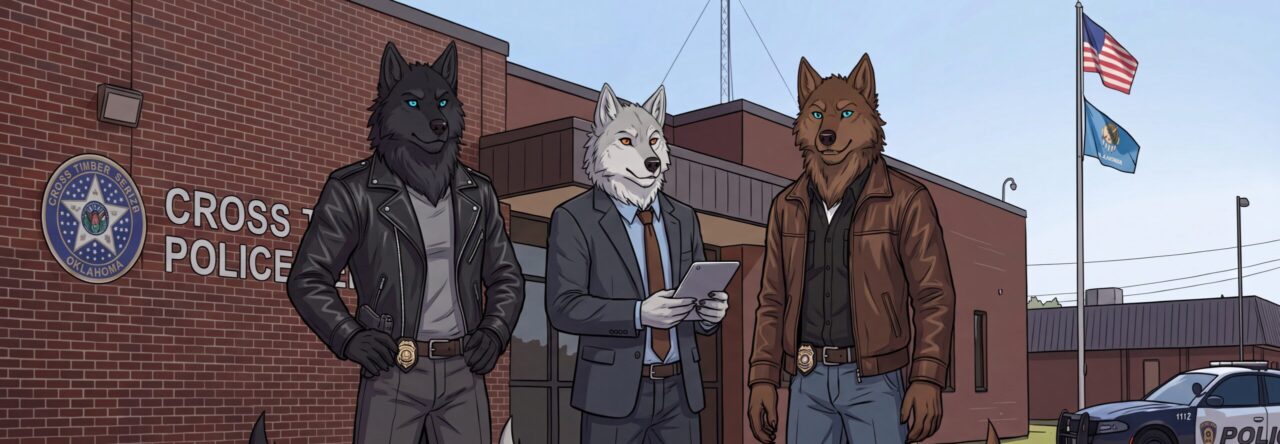
The idea came to Thane on Tuesday afternoon.
Not in the middle of a case.
Not during a briefing.
Not because somebody asked him for money.
It came while he stood in the cabin kitchen, looking out through the wide windows at rain moving softly through the trees.
Gabriel was at the island with a bowl of cereal and his phone. Mark sat at the far end of the long table with his laptop open, reviewing something from the Hawthorne case before shift.
The house was quiet.
No radios.
No sirens.
No case board.
Just rain, coffee, and the hum of Mark’s laptop.
Thane had been thinking about Leah Moreno.
Not the assault itself.
Not the details.
He had been thinking about what happened after.
The calls. The reports. The hospital. The questions. The evidence kit. The patient paperwork. The family trying to figure out what came next. The fact that even with advocates, detectives, medical staff, and a city full of people doing their jobs, there were still gaps.
A hotel room someone could afford for one night but not three.
A phone that had been taken, broken, or left behind.
A lock that needed changing before dark.
A ride to a safe place.
Food.
Child care.
Clothes.
A way to say no to going back somewhere dangerous simply because there was nowhere else to go.
Thane rested both paws on the counter.
“Can I ask you two something?”
Gabriel looked up.
“That sentence has never led anywhere cheap.”
Mark lowered the laptop screen slightly.
“What is it?”
Thane looked between them.
“What happens after somebody asks for help?”
Gabriel’s expression changed.
The joke left it.
“What kind of help?”
“After a crime,” Thane said. “After somebody gets hurt. Or leaves a dangerous place. Or has to get out fast.”
Mark thought for a moment.
“There are victim advocates. Shelters. Community programs. State assistance. Emergency funds.”
“Sometimes,” Thane said.
“Sometimes,” Mark agreed.
“And sometimes there are forms,” Gabriel said quietly. “Waitlists. Business hours. No available rooms. Not enough money.”
Thane nodded.
“That is what I mean.”
Rain slid down the glass outside in silver streaks.
Gabriel looked at the bowl in front of him without seeing it.
“Leah?”
“Partly.”
“And Ray,” Mark said.
Thane looked at him.
“Yeah.”
Mark’s fingers rested on the edge of his laptop.
“People can need help before systems can process the request.”
Thane nodded again.
“That is what I mean.”
Gabriel leaned back on his stool.
“So what are you thinking?”
Thane had not planned the words.
They came anyway.
“I think we should make sure there is money there when people need it.”
Neither of them laughed.
Neither of them looked surprised, exactly.
Mark’s eyes narrowed slightly in the way they did when he had already begun organizing something in his head.
Gabriel’s expression softened.
“Like a fund?”
“Something like that.”
“For victims?” Gabriel asked.
“For whoever needs it,” Thane said. “Victims. Families. Somebody who needs a hotel because they cannot go home. Somebody who needs a phone. Somebody who needs a ride. Somebody who needs food before they start doing desperate things outside a diner.”
Gabriel looked down.
Then nodded.
“That could change somebody’s whole week.”
“Maybe their whole life,” Thane said.
Mark closed his laptop.
“That depends on how it is structured.”
Thane looked at him.
“Of course it does.”
Mark did not apologize.
“A properly managed fund could help with emergency needs without creating a system where people have to perform gratitude for the donor. It could be anonymous. It could use victim advocates, shelters, social workers, and qualified nonprofits to identify needs. It could be broad enough to help people in crisis without being controlled by law enforcement.”
Gabriel pointed his spoon toward Mark.
“See? This is why he is the accountant.”
“I am not the accountant.”
“You have been the accountant since we made our first dollar.”
Mark considered that.
“I am the most qualified person in the pack to evaluate financial structures.”
Gabriel smiled.
“That is accountant language.”
Thane let out a quiet laugh.
Then he looked between them again.
“A million to start?”
Gabriel blinked.
“That is a lot.”
“It is,” Thane said. “But not to us.”
The words hung there.
Not arrogant.
Just true.
The sale of Triad Sentinel Systems had changed everything years ago. The company had started as a small cybersecurity and systems-integration operation built by three wolves who had learned early that people underestimated them until they had already solved the problem.
Then the company had grown.
Contracts became clients. Clients became national work. National work became acquisition offers.
The sale had been more money than any of them had expected to see in one lifetime.
They had bought the cabin and the land because they wanted somewhere safe, somewhere built for them instead of adapted around them. They had invested most of the rest carefully, quietly, and with enough discipline that they could have lived without working for the rest of their lives.
Then they had joined the academy.
Not because they needed a paycheck.
Because they needed a purpose.
Gabriel leaned his elbows on the island.
“A million is still a lot, even for us.”
“I know,” Thane said.
“But it could do a lot.”
“Yeah.”
Mark had gone still.
Thane knew that look.
Numbers were moving behind his eyes.
“An initial million-dollar endowment could support meaningful annual grants,” Mark said. “Especially if part of the capital remains invested and the program has clear emergency disbursement guidelines.”
Gabriel looked at him.
“Translation?”
“It could last.”
Thane nodded.
“That is what I want.”
Gabriel’s ears lifted a little.
“You are Alpha. It is your call anyway.”
Thane looked at him.
“No.”
Gabriel blinked.
“No?”
“No,” Thane said. “I am Alpha. That means your opinions matter more, not less.”
For a moment, Gabriel said nothing.
Then he smiled.
Not teasing.
Not this time.
“Okay,” he said quietly. “Then I think it is a good idea.”
Mark nodded once.
“I agree.”
Thane looked at him.
“Even with the money?”
Mark’s mouth twitched.
“Especially with the money. We have more than enough to be comfortable. There is no reason comfort has to stop with us.”
Gabriel pointed his spoon at him again.
“Pack accountant.”
Mark sighed.
“I am the pack’s accountant.”
Thane laughed.
Gabriel looked between them.
“So what do we call it?”
Thane thought about that.
Not a wolf name.
Not their names.
Not something that sounded like a campaign slogan or a corporation trying to make itself look charitable.
Something quiet.
Something broad enough to become more than one program.
“We call Eli,” Thane said.
Gabriel smiled.
“Now that is a plan.”
Elias Carroway answered on the second ring.
His voice came through Thane’s phone calm and clear, as if he had been expecting a call from three wealthy werewolf detectives at two in the afternoon.
“Thane.”
“Eli.”
“Please tell me this is not a criminal matter.”
Gabriel’s eyes widened.
Thane looked at him.
“What?”
Eli continued before Thane could answer.
“I ask because the last time you called me without scheduling it, one of you had been accused of denting a gated-community fountain with a military vehicle.”
“That was not my fault,” Thane said.
Gabriel leaned toward the phone.
“It was mostly his fault.”
“It was not.”
Mark looked at both of them.
“The fountain was placed in a poor location.”
Eli was quiet for half a second.
Then he said, “I see that maturity remains an aspirational goal.”
Gabriel smiled.
“We are detectives now.”
“Yes,” Eli said. “Which is why I fear you more.”
Thane looked out at the rain.
“This is not criminal.”
“Good.”
“It is about charity.”
The line went silent again.
When Eli spoke, the humor had softened.
“All right,” he said. “Tell me.”
Thane did.
He explained the idea plainly.
A broad community fund.
Anonymous.
No plaques.
No public recognition.
No requirement that recipients know where the money came from.
The first program focused on emergency assistance for people harmed by violence, domestic abuse, sexual assault, stalking, sudden displacement, and other immediate crises.
Help that could happen before bureaucracy caught up.
Gabriel filled in the human parts.
“Not a system where somebody has to prove they are grateful enough,” he said. “Not a system where they have to sit in a waiting room for three days while they decide whether going back somewhere dangerous is easier.”
Mark explained the structure they wanted.
Independent administration.
Need-based criteria.
No detective deciding who got money.
No pack involvement in individual grants beyond identifying that someone might need urgent help.
Eli listened without interrupting.
When they finished, he exhaled softly.
“A million dollars is not difficult,” he said.
Gabriel smiled.
“That is a sentence we enjoy hearing.”
“Anonymous, lawful, sustainable, insulated from your police work, and capable of responding quickly is more complicated.”
“That is why we called you,” Thane said.
“Fortunately,” Eli said, “complicated is what you pay me for.”
Mark leaned closer to the phone.
“What would you recommend?”
“A named fund inside an existing public charity,” Eli said immediately. “Not a private foundation. Not a shell organization. Not something you three control directly. You want independent governance, audited grant procedures, professional staff, and a structure that can receive confidential gifts without placing your names on every public document it produces.”
Gabriel looked impressed.
“You had that ready.”
“I have represented the three of you since before Triad Sentinel had a proper break room. I keep contingency plans.”
Thane looked at the kitchen around him.
“You thought we would want to do this?”
“I thought eventually you would find a way to turn wealth into an emergency response tool.”
Gabriel leaned back.
“That is weirdly flattering.”
“It was not intended to be.”
Mark’s ears shifted.
“Who?”
“Red River Community Foundation,” Eli said. “Regional public charity. Serious board. Strong compliance staff. They already manage restricted community funds for education, housing, food security, medical access, and local nonprofits. I know the executive director. They will not ask invasive questions if I tell them the donor prefers confidentiality and intends to make a substantial initial gift.”
Thane nodded slowly.
“And they can help people fast?”
“They can if we build the right program,” Eli said. “We create a restricted fund under a broad name. Something like the Cross Timber Community Fund. Within it, the first program can be Safe Steps: emergency assistance for people experiencing immediate safety, stability, or recovery needs.”
Gabriel looked at Thane.
“Safe Steps.”
Thane liked it immediately.
“Yeah.”
Eli continued.
“The fund’s administrators and qualified partner organizations decide eligibility. Victim advocates, shelter staff, social workers, emergency-assistance professionals. Not police officers. Not you. You can flag a situation to me, and I can trigger an expedited review. But we do not let instinct become the only standard.”
Thane nodded.
“Good.”
“You find the problem,” Eli said. “I make sure your solution does not create three new ones.”
Gabriel’s smile returned.
“That should be on your business card.”
“It is not.”
“It should be.”
“It will not be.”
Mark asked, “What if someone needs help before a foundation process can move?”
“Then you call me,” Eli said. “I determine whether it belongs under the fund’s emergency protocol, an approved partner’s rapid-response process, or a private direct-vendor payment from your personal account. Hotel, locksmith, phone, groceries, transportation. We can be humane without becoming careless.”
Thane looked down at the counter.
“That is what we want.”
“Then I will make it happen.”
Gabriel looked at Thane.
“Do we wire the million?”
Eli’s voice shifted again, just slightly.
Back into attorney mode.
“You will not wire anything until I send you the funding agreement, restricted-purpose language, confidentiality terms, and investment policy. Mark will read all of it twice. You will sign it. Then your bank will move the money.”
Mark nodded.
“Correct.”
Gabriel looked at him.
“You were going to read it twice?”
“I was going to read it more than twice.”
Eli said, “I will have documents ready by five. We can execute electronically. The foundation can formally establish the Cross Timber Community Fund tomorrow morning. The Safe Steps program can be announced to qualified partner organizations immediately after that.”
Thane looked at Gabriel.
Then Mark.
“Do it.”
Eli was quiet for a moment.
Then he said, “All right, gentlemen. We begin.”
By 17:36, the rain had stopped.
The cabin smelled like coffee, warm electronics, and the faint ozone scent left behind after a summer shower.
Mark had read the agreements three times.
Gabriel had read them once, then spent twenty minutes asking whether “restricted charitable purpose” sounded like a legal spell.
Eli had joined them by secure video from his downtown office. Behind him, floor-to-ceiling windows reflected the Oklahoma City skyline in the early evening light.
He looked exactly like the kind of attorney who could make a board of directors rethink its life choices with one raised eyebrow.
Early fifties.
Silver at the temples.
Dark suit, crisp white shirt, tie loosened only enough to prove that he had been working for too long and refused to be impressed by it.
Carroway & Wexler LLP occupied three floors of a downtown office tower and had represented banks, energy companies, state contractors, public officials, tech companies, hospitals, and enough wealthy families that Eli’s name carried weight in rooms where people usually measured power by who could afford to enter.
But to Thane, Gabriel, and Mark, he was simply Eli.
The man who had handled the Triad Sentinel sale.
The man who had bought the cabin land through three layers of privacy protection and made sure no contractor could use their names in a portfolio.
The man who had explained, without blinking, that the Humvee was not an appropriate company vehicle for a formal merger meeting.
The man who had represented them for years without ever treating them as a novelty.
Mark looked up from the final document.
“I have one question.”
Eli leaned back in his chair.
“Only one?”
“For the public-facing material, the Cross Timber Community Fund will be listed as a fund of Red River Community Foundation.”
“Yes.”
“And the donor identity remains confidential except to the foundation’s executive director, general counsel, finance staff handling the transfer, and required auditors.”
“Yes.”
“Plus you.”
“Plus me.”
“And no grant recipient receives the donor identity unless disclosure becomes legally required.”
“Correct.”
Mark nodded.
“Good.”
Gabriel looked at Thane.
“Did you understand all that?”
“Most of it.”
“That is enough.”
Thane looked at Eli.
“No press release.”
“No press release.”
“No donor plaque.”
“No plaque.”
“No naming rights.”
“No building wing?”
“No building wing.”
Gabriel looked wounded.
“Can we at least name a conference room after the Humvee?”
Eli stared at him.
“No.”
Gabriel sighed.
“Every dream has limits.”
Eli looked at Thane.
“Are you sure about the amount?”
Thane did not hesitate.
“Yes.”
“One million dollars is a significant opening gift.”
“That is why we are doing it,” Thane said. “We want it to matter.”
Eli watched him for a moment.
Then nodded once.
“Very well.”
The signing process took less than ten minutes.
Three secure signatures.
One funding authorization.
A short pause while the bank representative confirmed the wire instructions.
Then it was done.
The Cross Timber Community Fund existed.
Not publicly yet.
Not on a website.
Not on a plaque.
But it existed.
And inside it, the Safe Steps Emergency Assistance Fund had its first million dollars.
Gabriel leaned back in his chair.
“That was weirdly anticlimactic.”
Mark looked at him.
“It was a financial transfer.”
“I know. I expected fireworks.”
Eli closed the file on his screen.
“The fireworks are what happens later. When someone gets a hotel room instead of sleeping in a car. When someone gets a phone and can call for help. When a family gets groceries after a crisis without having to explain themselves to six different agencies.”
Gabriel went quiet.
Thane looked down at his hands.
Eli’s voice softened.
“You will not always see the outcome. That is part of doing it correctly.”
Thane nodded.
“I know.”
“You will receive anonymized impact reports. Numbers. Categories. General outcomes. Nothing that compromises recipients or turns their worst day into a story for donors.”
“Good,” Mark said.
Eli’s expression shifted back toward business.
“I will contact you only when your input is needed. Otherwise, you call me when you see a problem worth solving.”
Gabriel smiled.
“We find the problem. You make sure we do not create three more.”
Eli gave him a tired look.
“You are going to repeat that until I regret saying it.”
“Yes,” Gabriel said.
“Goodbye, Gabriel.”
The call ended.
For a while, the three wolves sat in the quiet great room with the signed documents still open on the tablet.
Outside, rainwater fell from the trees in slow drops.
Thane looked at Gabriel.
“Good?”
Gabriel nodded.
“Good.”
Then he looked at Mark.
“Good?”
Mark closed the tablet cover.
“Very good.”
Thane leaned back.
The idea had been simple.
The reality felt enormous.
Not like a key to the city.
Not like a plaque or a public thank-you.
This was quieter than that.
Better.
A door they had opened without needing anyone to know whose hand had turned the handle.
Night Shift arrived at the station at 17:58.
The Humvee rolled into the lot.
The three wolves walked through the side entrance.
Nobody stopped and stared this time.
No mayor.
No Chief.
No golden key.
Just patrol officers moving through the halls, a dispatcher laughing at something near the front desk, and the familiar scent of coffee that had been reheated too many times.
Gabriel looked around the lobby.
“Honestly, I am a little disappointed.”
Thane looked at him.
“Why?”
“No elected officials. No ceremonial objects. No citywide recognition of our emotional growth.”
Mark walked past them.
“Good.”
Gabriel followed.
“You are impossible.”
They reached the conference room as Voss and Rusk were finishing the handoff board.
Leah Moreno’s case still occupied the center.
The blue card had more notes now.
DARK SUV — LEFT REAR TAILLIGHT DAMAGE
SERVICE ALLEY WITNESS
CAMERA TIME OFFSETS
MISSING PHONE — POWERED OFF 15:39
Kessler stood near the board.
He had a jacket over one arm and a coffee in the other. He looked tired, but focused.
When Night Shift entered, he gave them a small nod.
“Evening.”
“Evening,” Thane said.
Kessler pointed to the vehicle list.
“We narrowed the five possible SUVs to three. One is an employee vehicle at the arts center. One belongs to an attorney with offices across the street. The third is registered to a small property-maintenance company operating in Cross Timber and Norman.”
Mark’s pen paused.
“Which one has the damaged taillight?”
“We do not know yet,” Kessler said. “Vehicle records do not tell us that.”
Rusk took over.
“Property-maintenance company has six dark SUVs. Three were assigned to crews Thursday afternoon. We have their work orders. We are verifying locations, GPS logs, and employee assignments.”
Gabriel looked at the board.
“Any of them at Hawthorne?”
“Not on paper,” Rusk said. “But paper is not geography.”
Voss looked at Night Shift.
“Tonight, you continue the late-hour canvass and check the service alley. We need to know who had legitimate reasons to be around Hawthorne Thursday afternoon and who might have used that legitimacy as cover.”
Thane nodded.
“Understood.”
Voss opened another file.
“There is something else.”
The room quieted.
“A victim advocate at Mercy spoke with Leah this afternoon. Leah remembered one additional detail.”
Gabriel leaned forward.
“What?”
“She remembers hearing a man say, ‘You do not have to make this difficult.’”
No one spoke.
Voss continued.
“It may be useless. It may be a phrase said by a hundred people in a hundred places. But she remembers his voice as calm. Not panicked. Not drunk. Not shouting.”
Gabriel’s expression tightened.
“Controlled.”
“Yes,” Voss said.
Thane looked down at the case file.
That detail felt worse than the others.
Not because it solved anything.
Because it told them something about the man they were looking for.
Someone who had made a choice.
Someone who expected obedience.
Someone who had mistaken another person’s fear for permission.
Voss’s scent changed again.
Only slightly.
Thane caught it.
Gabriel did too.
Neither of them said anything.
Voss looked around the table.
“One more item before you go.”
She reached beneath the case file and pulled out a single-page printout.
“Red River Community Foundation circulated this to victim-services partners today.”
Mark’s eyes moved to it.
His face did not change.
Gabriel’s ears lifted a fraction.
Thane kept his expression still.
The paper carried a simple heading.
SAFE STEPS EMERGENCY ASSISTANCE PROGRAM
Administered through the Cross Timber Community Fund
Below it, the program outlined support for emergency lodging, safe transportation, replacement communications, lock changes, immediate necessities, and other short-term needs connected to safety and recovery.
No donor listed.
No founder.
No wolves.
Voss held the page in one hand.
“Apparently there is a new community fund opening through Red River,” she said. “It has a rapid-response assistance program for people affected by violence, domestic abuse, sexual assault, stalking, and emergency displacement.”
Gabriel leaned back in his chair.
“That sounds useful.”
Voss looked at him.
“It could be.”
Mark kept his eyes on his notebook.
“The program states that it is independent of the police department. Referrals can come through advocates, shelters, hospitals, social workers, and qualified community partners.”
“Yes,” Voss said. “Which is exactly why I am interested.”
Thane looked at the paper.
“People could get help without having to wait.”
Voss’s eyes shifted toward him.
For a moment, something complicated crossed her face.
Not suspicion.
Not yet.
Something closer to relief.
“Potentially,” she said.
Rusk read the page over her shoulder.
“Hotel rooms. Phone replacements. Transportation. Locks.”
“Immediate problems,” Gabriel said.
“Immediate problems,” Voss agreed.
She folded the paper once and placed it inside Leah’s file.
“I am going to contact their program director tomorrow. I want to know their eligibility process, confidentiality standards, and how quickly they can actually move.”
Mark nodded.
“That makes sense.”
Voss looked at all three of them.
“If it is legitimate, it may be useful in cases like Leah’s.”
Thane held her gaze.
“I hope it is.”
Voss watched him for half a second longer.
Then she looked away.
“All right. Hawthorne.”
The garage at Cedar Plaza had started to feel familiar.
That was not comforting.
It was necessary.
The concrete levels.
The echo of tires on the ramps.
The hum of lighting systems.
The stale smell of exhaust, oil, and cleaning products.
The service alley behind the building with its dumpsters, delivery entrances, narrow back doors, and places where a person could pass through without being memorable.
Thane parked the Humvee near the public entrance.
Mark had a list of late-shift personnel.
Gabriel had the witness notes.
Thane had the map in his head.
They started with the maintenance company.
Not the entire company.
Just the nearby work.
The current night supervisor at Hawthorne had agreed to meet them beside the arts center’s loading entrance. He was a tired-looking man named Arturo Bell with a reflective vest, a clipboard, and the resigned patience of someone who had spent twenty years managing buildings after everyone else had gone home.
He knew the maintenance company.
“Westline Property Services?” he said. “Sure. They do some work for half the buildings around here.”
“Do they service Cedar Plaza?” Mark asked.
“Not regularly. Garage has its own maintenance contract. But Westline has crews all over downtown.”
“Any reason one of their vehicles would be in this alley Thursday afternoon?” Gabriel asked.
Arturo shrugged.
“Could be. Could be changing a filter. Checking a leak. Dropping off supplies. Fixing a door. There are always contractors around here.”
Thane watched him.
No deception.
Just the truth of a place that saw too many people to remember any one of them.
“Do you know their vehicles?” Thane asked.
“Dark SUVs, most of them. Company decals on the doors.”
“Would one be in the garage without a work order?”
Arturo frowned.
“Not supposed to be.”
“That is different from no?”
“Yeah,” Arturo said. “That is different from no.”
Mark wrote it down.
“Do you remember seeing one Thursday?”
Arturo thought.
Then shook his head.
“No. But I was inside most of the afternoon.”
“Who else works outside?”
“Food delivery drivers. trash pickup. Some of the restaurant guys. Security. Maybe one of the parking attendants.”
Gabriel nodded.
“We are talking to them.”
Arturo looked between the three wolves.
“You think it was a maintenance guy?”
Thane answered carefully.
“We think somebody may have used a normal-looking place or job to avoid being noticed.”
Arturo’s face changed.
He looked toward the garage.
“That is worse.”
“Yes,” Thane said.
It was.
They continued down the alley.
At the back entrance of a small restaurant, they found a line cook taking a smoke break beside a mop bucket.
He had worked Thursday afternoon.
He had seen nothing specific.
But when Gabriel asked whether anything had seemed off, he looked toward the service door.
“There was a guy yelling,” he said.
“Where?” Gabriel asked.
“Somewhere back there. I could not see him. Thought it was a couple fighting.”
“What did he say?”
The cook shook his head.
“Could not hear words. Just one man’s voice, low but angry.”
“Time?”
“Midafternoon. Around three, maybe.”
“Did you hear anyone else?”
The cook hesitated.
“A woman, maybe. I thought she said no.”
The alley went still.
Gabriel’s face changed.
Not dramatically.
Just enough.
“What made you think that?” he asked.
The cook looked uncomfortable.
“I do not know. It was quick. I had orders up. I did not know what I was hearing.”
“You are not in trouble,” Gabriel said. “You did not know.”
The cook looked down at the cigarette between his fingers.
“I should have looked.”
“You did not know,” Gabriel said again.
Mark wrote the statement down exactly.
No judgment.
No added conclusion.
Just a new piece of the road.
A woman’s voice.
A man’s low angry voice.
The sound of a metal door.
A dark SUV leaving shortly after.
Still not enough.
But more.
At 22:18, Dispatch sent them to a domestic disturbance at a small apartment complex on the south side.
A woman had called from a locked bathroom after her ex-boyfriend came to her apartment to “talk.”
Patrol had arrived first. The man had already left, but the woman was shaken, her door frame was damaged, and she had nowhere else to stay because her sister’s house was full.
Night Shift arrived as patrol was finishing the initial report.
Thane saw the woman sitting on the curb in a blanket, holding her phone with both hands.
A patrol officer knelt near her.
The apartment door stood open behind them.
A damaged latch hung crooked in the frame.
Gabriel stopped beside Thane.
The new Safe Steps paper flashed through both their minds.
Not as a solution.
Not yet.
The program was not supposed to be a secret magic switch.
It was a tool.
A quiet possibility.
The patrol officer looked up as they approached.
“Her name is Tessa. Ex-boyfriend came by drunk, kicked the door, left before we got here. She does not want to stay tonight.”
“Family?” Mark asked.
“Not nearby,” the officer said. “We are working through the usual resources.”
Tessa looked at the open apartment door.
“I cannot stay here,” she whispered.
“No,” Gabriel said gently. “You do not have to.”
The patrol officer checked her phone.
“The shelter is full. We have a victim advocate on call, but they are trying to find a hotel voucher.”
Thane looked at Mark.
Mark understood immediately.
Not because they could decide the outcome.
Because they knew who might help move the process.
Mark stepped aside and took out his phone.
“Eli,” he said quietly when the call connected. “We have an immediate safety issue. Domestic violence survivor. No available shelter bed. Apartment entry compromised. Patrol and victim advocate are on scene.”
Thane heard only one side of the call.
Mark’s voice stayed even.
“No, we do not need names in the fund file from us. The advocate can verify. Yes. We are asking whether Safe Steps can activate rapid response.”
He listened.
Then nodded.
“Thank you.”
He ended the call.
Gabriel watched him.
“Well?”
“The fund’s on-call partner has been notified,” Mark said. “They will coordinate directly with the victim advocate. Hotel authorization can be issued to the provider.”
Tessa looked up from the curb.
She had heard none of the details.
Only the words hotel and authorization.
Her eyes filled.
“Is that for me?”
Gabriel crouched in front of her.
“We are trying to make sure you have somewhere safe tonight.”
“I cannot pay for a hotel.”
“You do not have to figure that out right now,” Gabriel said.
The victim advocate arrived seven minutes later.
A woman named Darlene with a calm voice, a messenger bag, and the practiced gentleness of someone who had walked into too many nights like this one.
She spoke with Tessa privately.
Then checked her phone.
Her expression changed.
She looked toward Thane, Gabriel, and Mark.
Not suspicious.
Surprised.
“The emergency lodging was approved,” she said.
Mark nodded once.
“Good.”
Darlene looked at the authorization email again.
“Red River Community Foundation,” she said quietly. “Safe Steps.”
Gabriel’s ears shifted.
“It sounds like a useful program.”
Darlene looked at all three of them for a long moment.
Then she turned back to Tessa.
“Okay,” she said. “We have somewhere safe for tonight. We will get you there, get your things, and figure out what comes next in the morning.”
Tessa covered her mouth with one hand.
The sound she made was small.
Not quite a sob.
More like the first breath after holding one too long.
Thane looked away.
Not because he did not want to see it.
Because it was not for him.
The patrol officer stayed with Tessa while Darlene arranged transport.
Mark quietly asked about emergency lock replacement for the apartment.
The advocate said that could be evaluated in the morning.
Thane gave the officer a nod.
“Make sure the report notes the damaged entry and the shelter status.”
“I will,” the officer said.
Gabriel stepped back toward the Humvee.
He did not say anything until they were inside.
Then he looked at Thane.
“That worked.”
Thane stared through the windshield at Tessa climbing into the advocate’s vehicle.
“Yeah.”
Mark settled into the rear seat.
“It worked because the advocate handled it.”
“I know,” Thane said.
“And because the fund had an on-call process.”
“I know.”
Gabriel looked back at the apartment.
“She did not have to go back inside.”
No one answered.
They did not need to.
The Humvee pulled away quietly.
No cameras.
No phones.
No applause.
Just a woman going somewhere safe because someone had built a path before the emergency happened.
For Thane, that was enough.
More than enough.
At 01:41, Night Shift returned to Hawthorne.
The service alley was empty now.
The restaurants had closed.
The dumpsters were quiet.
The fluorescent lights above the garage entrance cast hard white pools on wet pavement.
Mark reviewed the new witness statement in the Humvee.
“A low male voice,” he said. “Possible woman saying no. Around fifteen hundred. Exact location unknown.”
Gabriel stared at the alley.
“Enough for a better timeline.”
“Maybe,” Mark said. “Not enough for a conclusion.”
Thane looked toward the service door.
The citrus-cleaner scent was still there.
Common.
Ordinary.
Meaningless by itself.
But now they had a reason to ask a more precise question.
Who had access to that door?
Who knew the camera outage?
Who could move through the service corridor without being noticed?
Who had a dark SUV with a damaged left rear taillight?
And who had a calm voice that expected someone to stop resisting because he had decided she should?
Thane keyed his radio.
“Night Shift to Dispatch. Can you advise whether any officer is available to make a visibility pass through Cedar Plaza every hour until morning?”
Dispatch replied after a moment.
“Copy. I can assign patrol coverage as units clear.”
“Thank you.”
Gabriel looked at him.
“You think they will come back?”
“I do not know.”
Mark looked down at the map.
“Returning would be irrational.”
Thane glanced at him.
“People do irrational things.”
“Yes,” Mark said. “But we cannot turn possibility into expectation.”
“No,” Thane agreed.
They stayed another twenty minutes.
Then returned to the station to write.
At 05:54, Mark finished the overnight canvass supplement.
Gabriel completed the domestic-assist note.
Thane wrote the scene observations from Hawthorne.
The room was quiet except for keyboards.
Behind them, the locked cabinet held the ceremonial key to Cross Timber.
On Thane’s desk, his phone held one new message from Eli.
Safe Steps emergency lodging request approved and properly documented. You did the correct thing by calling. The program is functioning as intended.
Thane read it twice.
Then put the phone face down.
Gabriel looked over.
“Eli?”
“Yeah.”
“Good news?”
Thane nodded.
“Good news.”
At 06:30, Voss, Rusk, and Kessler came through the bureau door.
Day shift.
Coffee.
Files.
The beginning of another day.
Voss saw the new notes on Leah’s board first.
“What changed?”
Mark opened his notebook.
“Late-hour canvass produced one additional witness. Restaurant employee heard a low male voice in the service alley around fifteen hundred Thursday. He believes he heard a woman say no. He did not recognize the significance at the time.”
Voss went still.
Not visibly.
Not to anyone who did not know how closely to watch.
But Thane saw it.
Gabriel smelled it.
Mark simply continued.
“Witness also confirms the sound of a metal door closing hard. He cannot identify the man, vehicle, or exact location. The information supports the service-alley timeline but does not independently identify a suspect.”
Rusk nodded.
“That is useful.”
Kessler moved closer to the board.
“Property-maintenance company gave us GPS records overnight. One SUV was logged two blocks from Hawthorne from fourteen-fifty-eight until fifteen-thirty-six.”
Gabriel’s eyes sharpened.
“Which SUV?”
Kessler looked at the report.
“Dark blue 2018 Ford Explorer. Assigned to a technician named Derek Mays.”
The room went quiet.
“Damaged taillight?” Thane asked.
“We do not know,” Kessler said. “His vehicle is not at his home address this morning. We are not calling him a suspect. We are locating the vehicle and verifying his work assignment.”
Mark nodded.
“Good.”
Voss looked at Night Shift.
“Your witness statement gives us a stronger reason to do that carefully.”
Then she looked at the board.
At Leah’s name.
At the pieces beginning to draw closer together.
“We are not there yet,” she said.
“No,” Thane replied.
“But we are closer.”
Voss looked at him.
“Yes.”
Rusk gathered the files.
“Kessler, with me. We locate Mays and the Explorer. Voss, work the maintenance records and his access. Night Shift—”
He looked at the three wolves.
“Go home.”
Gabriel stood and stretched.
“Breakfast?”
Mark closed his notebook.
“Breakfast.”
Thane picked up his badge wallet.
“No pancakes.”
Gabriel looked betrayed.
“We just started a million-dollar community fund and helped someone get a safe hotel room. That feels like pancake territory.”
“It is not pancake territory.”
“Nothing is pancake territory to you.”
Mark slung his bag over one shoulder.
“One pancake is sufficient.”
Gabriel stared at him.
“You two are becoming a single oppressive government.”
Thane headed toward the door.
“We have a key to the city.”
Gabriel brightened.
“So we do own it.”
“No,” Mark said.
Thane smiled despite himself.
They walked out together.
The city was waking.
The fund had started.
Leah’s case had moved one step forward.
And somewhere inside Cross Timber, a dark blue Explorer with a damaged left rear taillight was waiting to be found.